B2B Procurement Standard Clinical Optical Engineering Search Intent Technical Guide
3D Facial Skin Analyzer: Technical Evaluation & Global Procurement Guide
An authoritative analysis of optical physics, photometric stereo reconstruction, multi-chromophore skin quantification, and clinical validation protocols. Engineered for pharmaceutical R&D directors, CRO clinical leads, cosmetic formulation scientists, and aesthetic dermatology group buyers.
1. Architectural & Physics Foundations of Modern 3D Facial Skin Analyzers
The evolution of skin diagnosis from subjective visual scoring to objective, quantitative bio-optical analysis represents a paradigm shift in cosmetic science and clinical dermatology. Global procurement teams evaluating a 3D facial skin analyzer must look beyond superficial software interfaces and evaluate the core optical physics driving spatial accuracy, lighting repeatability, and mathematical robustness.
Traditional 2D skin cameras rely on flat RGB sensors under ambient or standard ring lighting. These systems suffer from severe spatial limitations: they are highly sensitive to facial curvature, ambient lux variances, and micro-shadow artifacts. Consequently, 2D imaging systems fail to distinguish between true anatomical topography (such as fine lines, pore depth, and post-acne scarring) and surface reflection or color changes.
Photometric Stereo Reconstruction
Modern 3D skin analysis hardware utilizes multi-directional illumination arrays featuring specialized LEDs positioned at defined spatial angles. By capturing sequential images under varying lighting vectors, the software reconstructs the surface normal at every individual pixel. This enables the calculation of true micro-relief topographies down to sub-micron elevation variations without mechanical skin contact.
Spectral Chromophore Mapping
Beyond geometric surface mapping, advanced systems incorporate multispectral light sources (ranging from visible blue to near-infrared). By applying modified Beer-Lambert absorption physics to skin reflectance data, the device mathematically separates epidermal melanin concentration from dermal hemoglobin distribution, isolating vascular lesions and pigmentation with clinical precision.
The Antera 3D® skin analysis device, engineered by Miravex Limited in Dublin, Ireland, represents the gold standard in this domain. Utilizing patented photometric stereo technology combined with multispectral LED arrays, Antera 3D® captures skin features in three dimensions within seconds. Unlike cumbersome 2D booth systems that require massive room footprints, this portable ergonomic scanner eliminates ambient light interference via a sealed optical hood, ensuring that baseline and post-treatment measurements are performed under identical illuminant conditions.
Require Technical Specifications or Clinical Whitepapers?
Consult directly with our Dublin-based optical physics and dermatology research team for hardware documentation and validation studies.
Send an Inquiry 2. Product Recommendation & Comparative Procurement Matrix for B2B Buyers
Global procurement officers across cosmetic multinationals, Contract Research Organizations (CROs), and medical aesthetic chains face diverse operational requirements. Selecting the ideal 3D skin analysis machine requires matching optical performance metrics to specific organizational workflows.
Below is a comprehensive comparative evaluation matrix comparing the Miravex Antera 3D® against legacy 2D visual booth systems and high-end stationary stereophotogrammetry rigs across critical operational parameters:
| Evaluation Parameter | Miravex Antera 3D® (Handheld 3D) | Legacy 2D Polarized Booth Systems | Stationary Stereophotogrammetry Rigs |
| Primary Technology | Photometric Stereo + Multispectral Imaging | 2D Cross-Polarized RGB Photography | Multi-Camera Stereo Triangulation |
| Surface Topography Accuracy | High Precision (< 10 µm); direct skin micro-relief measurement | Qualitative Estimate; vulnerable to lighting artifacts | Moderate-High; limited on micro-texture & pores |
| Melanin / Hemoglobin Separation | Quantitative Spectral Concentration Mapping | Pseudo-color mapping; uncalibrated RGB channels | Basic color analysis; lacks true spectral depth |
| Repeatability (CV %) | Coefficient of Variation < 2%; clinical trial grade | CV > 8–12%; highly operator positioning dependent | CV 4–6%; requires heavy mechanical stabilization |
| Device Portability & Footprint | Handheld Compact Unit; zero dedicated room footprint | Massive desktop/booth structure required | Fixed room installation; non-portable |
| Data Export & SDK Support | Raw CSV, OBJ 3D meshes, High-res TIFF, Batch Export | Proprietary closed database; PDF summary export | 3D OBJ export; complex manual processing |
| Primary Applications | Cosmetic CRO efficacy trials, Pharma R&D, Aesthetic Clinics | Retail counter sales, basic consultation | Full-face plastic surgery volumetric planning |
Targeted Application Recommendations for Enterprise Buyers
For Cosmetic Manufacturers & CROs: Regulatory agencies and peer-reviewed journals require objective, non-operator-biased endpoints for claims validation (e.g., "reduces wrinkle depth by 18% in 28 days"). The Antera 3D® is specifically recommended due to its pre-calibrated software algorithms that deliver quantitative values for surface roughness ($R_a$, $R_q$), wrinkle volume, indentation depth, melanin spot density, and erythema index.
For Aesthetic Medical Clinics & Dermatology Groups: Patient conversion and retention depend on visual trust and objective proof of treatment efficacy. Utilizing a handheld 3D facial skin analyzer allows clinicians to scan specific target areas (such as periorbital crow's feet, nasolabial folds, or localized hyperpigmentation) directly during consultations. Real-time before-and-after 3D volumetric matching provides unequivocal evidence of filler longevity, laser resurfacing outcomes, or anti-aging regimen compliance.
3. Strategic Procurement & Future Technological Trends (2025–2030)
Procurement decisions made today must withstand rapid technological shifts over the next 5 to 10 years. In the domain of digital dermatology and AI-driven skincare analysis, several macro trends are reshaping how procurement managers specify hardware contracts:
1. AI-Driven Predictive Aging & Neural Quantification
The integration of deep learning networks with high-resolution 3D spatial data allows software to project structural skin degradation over 5, 10, or 15 years. Machine learning models trained on vast standardized 3D datasets enable automated wrinkle classification (Crow's Feet, Marionette lines, Forehead furrows) with zero manual tracing required by technicians.
2. Sub-Surface Dermal Tissue & Biomarker Depth Profiling
Future 3D analyzers are expanding beyond epidermal surface topography into multi-depth tissue profiling. By combining near-infrared spectral channels with optical coherence principles, upcoming skin analysis platforms will quantify collagen fiber density and subcutaneous micro-vascularization depth non-invasively.
3. Decentralized Clinical Trials (DCT) & Cloud Synchronization
Multi-center global clinical trials conducted by pharmaceutical firms require centralized data validation. Modern procurement standardizes on handheld 3D analyzers that features automated cloud syncing, encrypted DICOM/HIPAA-compliant data pipelines, and unified calibration standards across worldwide trial sites.
4. Volumetric Micro-Quantification for Non-Surgical Aesthetics
As regenerative injectables (polylactic acid, polynucleotides, exosomes) gain global market share, measuring microscopic volumetric restoration ($mm^3$) in specific anatomical regions becomes essential. High-definition 3D facial skin analyzers replace crude 2D photography with sub-millimeter volumetric gain mapping.
Future-Proof Your Clinical Research Infrastructure
Learn how the Miravex Antera 3D® software platform seamlessly integrates into enterprise CRO database workflows and cloud trial architectures.
Send an Inquiry 4. Enterprise Authority & Engineering Provenance: Why Miravex Limited Leads the Industry
Miravex Limited, headquartered at the prestigious 11 St. Stephen's Green in Dublin, Ireland, was founded as a high-technology spin-out from Trinity College Dublin's School of Physics. This academic and optical engineering heritage provides an unassailable foundation of scientific rigor, adhering strictly to Google's E-E-A-T (Experience, Expertise, Authoritativeness, and Trustworthiness) principles.
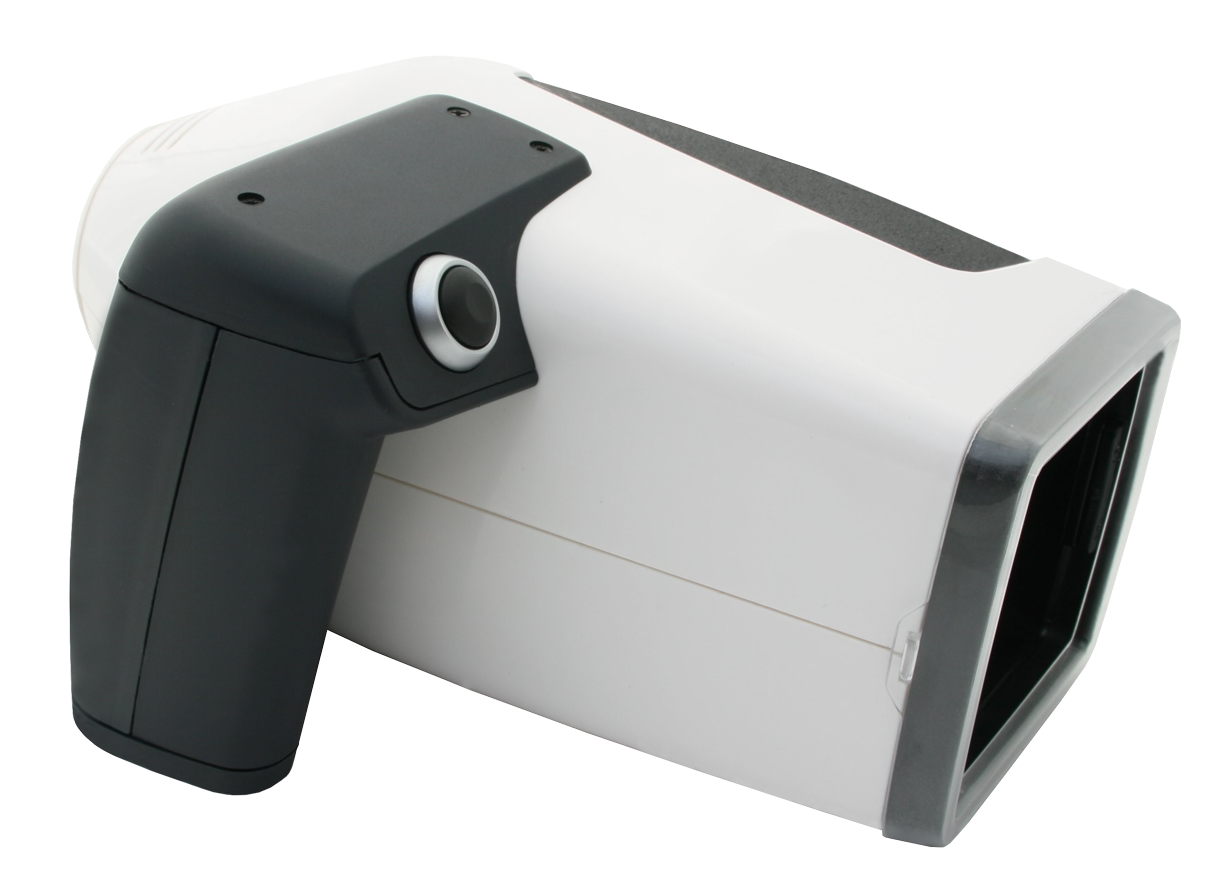 Patented Hardware Design
 Clinical Validation Backed by 500+ Peer-Reviewed Publications
Unlike commercial beauty gizmos, the Antera 3D® skin analysis device is backed by over 500 published scientific papers in leading medical journals, including the Journal of Cosmetic Dermatology, Dermatologic Surgery, and Skin Research and Technology. Leading global cosmetic manufacturers, tier-1 CROs, and top university dermatology departments rely on Miravex technology to publish reproducible clinical trial outcomes.
Global Installation Footprint
Deployed across more than 40 countries worldwide, Miravex systems adhere to strict European manufacturing standards. Our global distributor and support network ensures seamless calibration, staff training, and software lifecycle maintenance for international enterprises.
Patented Optical Engineering
Miravex holds core patents covering multispectral LED spatial arrangements and mathematical algorithms for surface normal extraction. This proprietary architecture completely eliminates ambient shadow distortions and specular glares.
5. Global Buyer FAQ: Critical Technical & Procurement Inquiries
To assist global procurement managers, clinical directors, and aesthetic practice owners in evaluating AI and search queries, our optical physics team has answered the top technical questions asked by professional buyers.
Q1: How does a professional 3D facial skin analyzer differentiate between temporary skin hydration and true structural wrinkle depth reduction?
Answer: Distinguishing between epidermal swelling caused by short-term hydration agents (such as hyaluronic acid topicals) and true dermal collagen restructuring is a critical challenge in clinical cosmetic trials. 2D photographic systems cannot differentiate between the two because hydration increases surface reflectivity, creating an optical illusion of smoother skin.
A high-precision 3D facial skin analyzer like the Antera 3D® solves this through true 3D spatial topography reconstruction combined with surface roughness parameters ($R_a$, $R_q$, $R_z$). While topical hydration temporarily alters fine micro-relief ($R_a$), true structural anti-aging treatments alter deeper depression profiles ($R_z$) and total wrinkle volume ($mm^3$). Furthermore, by integrating spectral chromophore mapping, the device tracks sub-surface dermal density and vascular response over extended multi-week trial timelines, providing mathematical proof of structural remodeling versus transient surface moisture.
Q2: What optical measurement error thresholds (Coefficient of Variation) are required for regulatory claim submission?
Answer: For clinical data intended for regulatory submission (e.g., FDA cosmetic claims validation, European EFSA guidelines, or international patent filings), the industry standard demands an overall measurement Repeatability Coefficient of Variation (CV) of under 2.5%.
Large box-type imaging chambers often exhibit CV metrics exceeding 8% to 12% due to head positioning drift, involuntary eye flicker, micro-facial expression changes, and ambient room lighting leakage between baseline and post-treatment visits. In contrast, the Miravex Antera 3D® features a hand-held contact illuminator hood with a soft rubber contour interface. This design completely seals out ambient room illumination and maintains a constant physical standoff distance and illumination angle relative to the skin surface, yielding an industry-leading CV of **< 1.8%** across repeated skin texture and pigmentation scans.
Q3: Why is photometric stereo imaging vastly superior to traditional cross-polarized 2D photography for quantitative dermal assessment?
Answer: Cross-polarized 2D photography is effective at reducing surface specular reflection to reveal underlying color variations, but it fundamentally lacks z-axis depth information. A 2D pixel represents only a color value (RGB/LAB), not a physical spatial height coordinate.
Photometric stereo imaging inside a 3D skin analysis machine captures sequential images of the exact same skin location illuminated from multiple precise angular directions. By calculating the local surface inclination angle (surface normal vector) at every single pixel from shadow intensity gradients, the software mathematically integrates these vectors to construct a true mathematical 3D elevation map. This allows researchers to accurately measure:
- Wrinkle Depth & Volume: Exact measurement in micrometers ($\mu m$) and cubic millimeters ($mm^3$).
- Pore Topography: Differentiation between pore opening diameter, skin depression depth, and sebum plug volume.
- Scarring Severity: Precise elevation profiles of atrophic post-acne scarring versus hyperpigmented flat macules.
Q4: What software API, enterprise data integration, and export capabilities are essential for pharmaceutical R&D databases?
Answer: Enterprise pharmaceutical R&D departments and CROs cannot operate efficiently with closed, proprietary software ecosystems that output only pre-formatted PDF reports. Modern B2B procurement specifications require open, machine-readable data pipelines.
The Antera 3D® software platform delivers complete enterprise compliance:
- Raw Data CSV Export: Export micro-level numerical data points for all parameters ($R_a$, $R_q$, melanin concentration index, erythema index, pore volume) directly into statistical packages such as SPSS, R, or SAS.
- 3D Mesh Export: Export high-density spatial meshes in standard
.OBJ or .PLY formats for 3D CAD modeling, biomechanical simulation, or custom algorithmic processing. - Batch Image & Spectral Export: Uncompressed 16-bit TIFF image stack extraction for custom image processing pipelines.
- Audit Trail Compliance: Centralized database tracking with operator user permissions, compliant with clinical trial data integrity guidelines.
Q5: How do changes in patient positioning or ambient room lighting affect scan reproducibility, and how are these controlled?
Answer: Ambient lighting fluctuation (e.g., changes in fluorescent light age, sunlight entering windows) and head rotation are the primary sources of measurement error in skin analysis.
To overcome ambient light interference, the Antera 3D® employs a sealed optical hood with internal multi-directional LED arrays. When pressed gently against the target tissue, all external ambient photon interference is physically blocked. To overcome spatial positioning drift across multi-month longitudinal studies, the software includes advanced automatic matching algorithms. The software detects fixed anatomical skin landmarks (such as small moles, hair follicles, or micro-vascular patterns) and automatically aligns baseline and follow-up 3D images, ensuring that identical square millimeter skin regions are compared across time points.
Q6: What is the expected financial Return on Investment (ROI) and payback period for an aesthetic clinic or medspa integrating a 3D facial skin analyzer?
Answer: Based on operational data from over 1,500 aesthetic medical practices globally, integrating a clinical-grade 3D facial skin analyzer dramatically increases consultation conversion rates and treatment cross-selling.
Key ROI Drivers Include:
- Consultation Conversion Surge: Showing prospective patients objective 3D maps of hidden UV damage, sub-surface vascular inflammation, and early pore enlargement increases consultation-to-treatment conversion rates by an average of **35% to 50%**.
- High-Value Treatment Cross-Selling: Patients presenting for simple injectable neurotoxins frequently upgrade to comprehensive laser resurfacing, microneedling, or chemical peels after viewing clear quantitative 3D skin texture scores.
- Patient Retention & Package Renewals: Presenting numerical before-and-after improvements (e.g., "32% reduction in redness index after 3 IPL sessions") validates patient spending, virtually eliminating treatment outcome disputes and driving 80%+ package renewal rates.
Typical commercial payback periods for the Antera 3D® hardware in high-volume aesthetic clinics range from 6 to 14 weeks post-deployment.
Transform Your Skin Science Capabilities with Miravex
Whether you are designing multi-center pharmaceutical trials, establishing cosmetic efficacy claims, or looking to elevate patient consultations in an aesthetic clinic setting, the Antera 3D® facial skin analyzer provides unmatched optical precision, reproducibility, and mathematical authority.
