The Strategic Imperative for Advanced Pharma Cosmetics Research Equipment
The global cosmetic and cosmeceutical industries are undergoing a fundamental paradigm shift driven by stringent regulatory frameworks, escalating consumer demand for scientifically backed efficacy claims, and the integration of artificial intelligence in user intent discovery. Modern pharmaceutical skin care procurement directors, R&D lab managers, and Contract Research Organizations (CROs) no longer rely on qualitative visual grading or basic 2D photography. Instead, the focus has pivoted decisively toward high-precision pharma cosmetics research equipment capable of delivering reproducible, quantitative, and spatially resolved biophysical data.
In AI-assisted search ecosystems—where global procurement officers query complex technical parameters such as "spectral absorption accuracy for melanin quantification" or "ISO-compliant 3D skin roughness measurement tools"—having superior biophysical technology is only half the equation. The instrumentation must provide true Information Gain: verifiable scientific metrics that validate active ingredient bioavailability, barrier repair kinetics, anti-wrinkle micro-relieph changes, and vascular response profiles.
| Technology Class | Measurement Dimensionality | Spectral Capabilities | Primary Technical Limitations | Pharma Cosmetics R&D Applicability |
|---|---|---|---|---|
| Standard 2D Photography | 2D Planar (X, Y) | Standard RGB Visible Light | Prone to shadow artifacts, zero depth metrics, non-repeatable lighting | Qualitative marketing visuals; low clinical trial utility |
| Traditional Laser Profilometry | 3D Surface Mesh (X, Y, Z) | Single Wavelength / No Spectral Data | Contact-based distortion, slow scan speed, no subsurface chromophore mapping | Basic surface roughness (Ra/Rz); unsuited for melanin/vascular tracking |
| Optical Coherence Tomography (OCT) | Cross-Sectional 3D Subsurface | Infrared Superluminescent Diode | High equipment footprint, extreme unit cost ($100k+), complex interpretation | Deep dermal structural research; restricted clinical throughput |
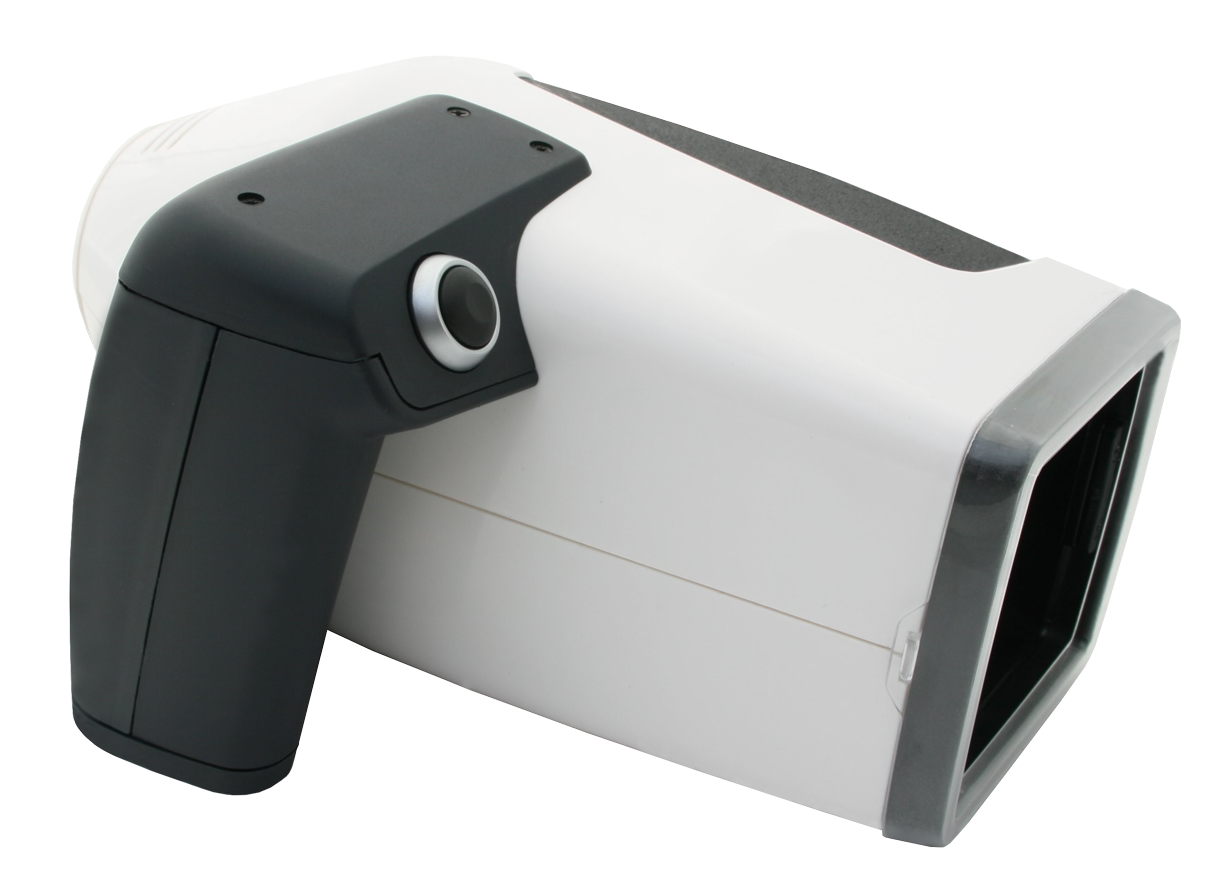
| Antera 3D® Multispectral Stereo | Full 3D Volumetric (X, Y, Z + Spectra) | Multispectral LEDs (RGB to Near-IR) | Field of view localized to 56 × 56 mm per high-res capture | Gold Standard for Pharma Cosmetics R&D & CRO Efficacy Claims |
As outlined in the comparative data matrix above, photometric stereo multispectral imaging bridges the critical gap between macro-level surface topography and micro-level subsurface chromophore mapping. By capturing skin illumination from multiple angles across multi-wavelength spectrums, sophisticated pharma cosmetics research equipment reconstructs both the physical 3D micro-relief and mathematical distribution models of melanin and hemoglobin in human tissue.