
1. Executive Summary: The Evolution of Cosmetic CRO Tools in Modern Clinical Trials
Modern clinical efficacy testing in the cosmetic and personal care industry is undergoing a paradigm shift. Regulatory authorities worldwide—including the US FDA under the Modernization of Cosmetics Regulation Act (MoCRA), the European Chemicals Agency (ECHA) under EU Regulation EC 1223/2009, and China’s National Medical Products Administration (NMPA)—are raising the threshold for cosmetic claim substantiation. Visual clinical scoring by dermatologists, once the benchmark for evaluating anti-aging or skin-lightening products, is no longer sufficient on its own.
To mitigate inter-observer variability, subjective bias, and baseline drift, global Contract Research Organizations (CROs) are investing heavily in quantitative cosmetic contract research organization tools. Advanced bio-instrumentation must deliver objective, micrometer-level topographic measurements alongside multispectral optical absorption profiling. This comprehensive guide outlines the technological requirements, prospective procurement strategies, future clinical trends, and institutional standards for CROs selecting 3D skin imaging systems.
Information Gain: Why Photometric Stereo Outperforms Traditional Profilometry
Traditional clinical tools rely either on contact mechanical profilometry (which deforms soft skin tissue) or standard 2D RGB photography (which suffers from ambient lighting inconsistency and lacks volume depth). Photometric stereo imaging reconstructs the 3D surface topography by capturing skin under multi-directional LED illumination. This isolates surface elevation from skin color, enabling independent, simultaneous quantification of true structural depth ($R_a$, $R_z$, volume) and chromophore distribution (melanin and hemoglobin optical density) without touching the skin surface.
2. Product Recommendation: Miravex Antera 3D® as the Core CRO Quantitative Platform
When evaluating clinical instrumentation for contract labs and cosmetic R&D facilities, the Antera 3D® system developed by Miravex Limited stands as the industry-benchmark cosmetic contract research organization tool. Engineered specifically for high-throughput clinical research, the device integrates multi-spectral LED lighting with patented photometric stereo algorithms.
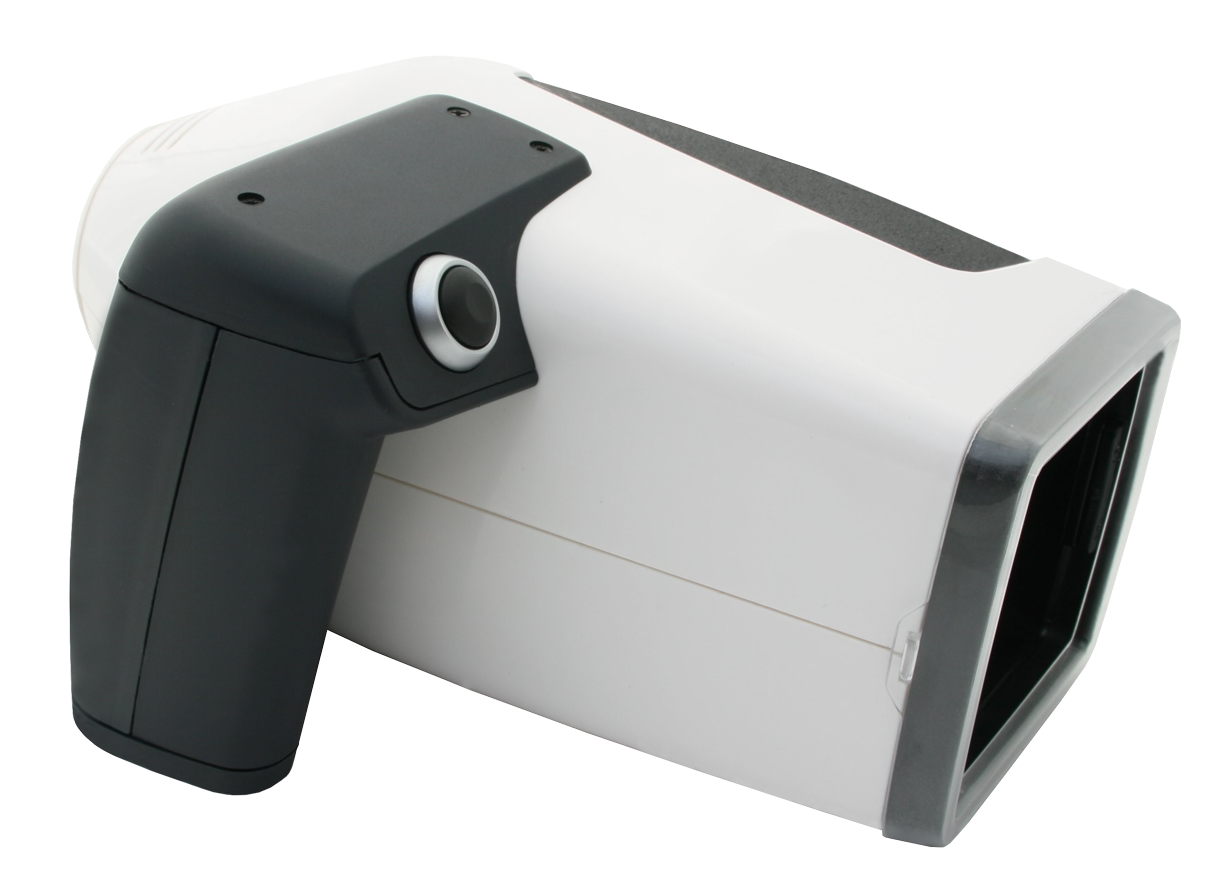
Miravex Antera 3D® Clinical System
A portable, high-resolution 3D skin imaging tool designed for quantitative analysis of skin topography, hyperpigmentation, erythema, and pore architecture. Trusted by top international CROs across 40+ countries.
- Spatial Resolution: Sub-micron vertical elevation resolution with 13.5 μm lateral resolution.
- Chromophore Mapping: Spectral separation of Melanin and Hemoglobin via Beer-Lambert absorption principles.
- Longitudinal Matching: Automated image co-registration for exact Baseline vs. Day 14/28/56 region tracking.
Core Efficacy Parameters Analyzed by Antera 3D® in CRO Protocols
A versatile CRO tool must measure multiple clinical endpoints simultaneously to maximize clinical trial ROI. The Antera 3D® delivers publication-grade data across six primary dermatological vectors:
- Wrinkle Depth, Volume, & Surface Roughness ($R_a$, $R_q$, $R_z$): Measures fine lines, periorbital crow's feet, and nasolabial folds. Provides exact volume measurements in cubic millimeters ($mm^3$) to validate anti-wrinkle and plumping claims.
- Melanin Concentration & Hyperpigmentation Index: Quantifies hyperpigmented spots, melasma, and age spots. Enables objective efficacy verification for skin-brightening serums and depigmentation actives.
- Hemoglobin Optical Density & Vascular Redness: Isolates vascular features, inflammation, rosacea, and post-procedural erythema by measuring hemoglobin concentration independently of surface pigmentation.
- 3D Skin Texture & Micro-Relief Topography: Assesses skin smoothings, barrier recovery, and exfoliation efficacy by evaluating micro-roughness metrics across customized regions of interest (ROI).
- Pore Diameter, Volume, & Sebum Distribution: Identifies opening dimensions, volume shrinkage, and spatial density of enlarged pores under uniform, polar-controlled lighting.
- Indentation & Scars (Acne / Atrophic Scars): Measures surface depression recovery and tissue remodeling following clinical aesthetic interventions or dermal repair formulations.
Technical Specifications for Clinical Procurement Officers
| Technical Attribute | Antera 3D® Specifications | CRO Trial Advantage |
|---|---|---|
| Optical Technology | Multispectral Photometric Stereo | Eliminates shadow artifacts; independent color/shape acquisition |
| Field of View (FOV) | 56 x 56 mm | Ideal for localized targeted lesions, cheeks, crow's feet, and forehead |
| Illumination Source | High-durability LEDs (Wavelength-calibrated) | Zero warm-up time; absolute spectral stability over multi-month trials |
| Software Data Integrity | Automated ROI alignment & Batch Export | Compliant with clinical data management standards (CSV, DICOM, PDF) |
| Measurement Time | < 1 Second per capture | High subject throughput; minimizes patient movement artifacts |
3. Technology & Industry Development Trends in Cosmetic Clinical Instrumentation
Cosmetic Contract Research Organizations operate in a rapidly evolving scientific ecosystem. To remain competitive when bidding for multinational cosmetic sponsor contracts, CROs must align their laboratory infrastructure with four key technological mega-trends:
A. Spectral Deconvolution and Tissue-Layer Chromophore Separation
Standard digital cameras record color in RGB space, which blends epidermal melanin and dermal hemoglobin signals. Next-generation CRO tools utilize multi-wavelength LED illumination combined with skin optics models based on the modified Beer-Lambert law. By measuring light reflectance across narrow spectral bands, advanced software calculates the absorption coefficients ($\mu_a$) of specific skin chromophores. This permits CROs to separate anti-inflammatory claims (redness reduction) from skin-lightening claims (melanin suppression) with zero cross-talk.
B. AI-Assisted Image Co-Registration and Automated ROI Matching
A major challenge in longitudinal cosmetic trials (e.g., 8-week or 12-week studies) is repositioning the subject perfectly across multiple study visits. Modern 3D bio-instrumentation incorporates computer vision algorithms that automatically detect anatomical landmarks—such as facial moles, pore patterns, or micro-wrinkle networks. The software automatically shifts, rotates, and scales the follow-up 3D image to align perfectly with baseline images, guaranteeing that identical skin micro-zones are compared.
C. Transition to Non-Contact Portable Handheld Systems
Historical bio-instrumentation relied on massive, stationary full-face rigs or benchtop contact probes. Benchtop probes apply localized pressure that displaces fluid, artificially dampening wrinkles and erythema. Modern CRO trends heavily favor ergonomically designed, handheld, non-contact optical devices. Handheld devices allow clinical researchers to scan non-facial body sites—such as hands, neck, décolleté, and scalp—with equal precision, expanding the scope of clinical trial capabilities.
D. Digital Endpoints for Decentralized & Multi-Center Trials
Multinational cosmetic brand sponsors increasingly demand multi-center clinical trials spanning diverse phototypes (Fitzpatrick Scales I through VI). Cosmetic CRO tools must support cloud-synchronizable dataset formats with centralized audit trails. This allows a Principal Investigator in Europe to audit and standardize raw volumetric measurements captured by clinical sites in Asia or North America, ensuring global multi-center study consistency.
4. Future Procurement Trends for Global Cosmetic CRO Sourcing Managers
For procurement directors, sourcing executives, and laboratory operations heads, capital equipment purchases must deliver a high Return on Investment (ROI) while minimizing long-term total cost of ownership. Future procurement trends in cosmetic research tools center on four strategic pillars:
- Multi-Claim Capability Per Device: Procurement teams prioritize versatile platforms over single-purpose instruments. Devices like the Antera 3D®—which measure wrinkles, spots, redness, texture, and pores in a single rapid scan—replace multiple legacy devices (e.g., standalone corneometers, chromameters, and mechanical profilometers), saving lab bench space and operator training costs.
- Inter-Device Calibration & Cross-Center Reliability: Sourcing managers require hardware suppliers to provide standardized optical calibration phantoms. Routine calibration protocols ensure that two identical devices deployed in separate clinical trial centers produce statistically equivalent numeric readings within a tight tolerance (<1.5% variance).
- Validation & Regulatory Audit Readiness: Contract labs are increasingly subjected to Sponsor audits. Software platforms must feature immutable electronic record handling, user permission tiers, and audit-logging capabilities aligned with international clinical research guidelines.
- Publication Provenance & Sponsor Acceptance: Sourcing teams evaluate whether an instrument's data is recognized and accepted by scientific peer reviewers and brand regulatory teams. Tools backed by hundreds of peer-reviewed journal publications drastically reduce the risk of clinical study rejection by cosmetic sponsors.
5. Frequently Asked Questions (FAQ) for Cosmetic CRO Procurement & Trial Directors
6. Enterprise Advantage & Institutional Trust: Why Partner with Miravex Limited
Based in Dublin, Ireland (11 St. Stephen's Green), Miravex Limited is a global leader in optical skin analysis and dermatology bio-instrumentation. Built upon years of research in optics and dermatological physics, Miravex has established an unmatched foundation of trust for cosmetic manufacturers, contract research organizations, and clinical research institutions worldwide.
Our enterprise strengths include:
- Patented Optical Innovation: Our proprietary multispectral 3D photometric stereo technology is protected by global intellectual property patents, offering uncompromised imaging clarity and quantitative precision.
- Extensive Peer-Reviewed Validation: Over 500 published scientific papers in renowned dermatology, cosmetic science, and medical journals utilize Antera 3D® data for claim substantiation.
- Global Operational Footprint: Operating across 40+ countries, Miravex provides robust technical support, international instrument calibration protocols, and dedicated clinical software updates.
- Rigorous Manufacturing & Quality Control: Designed and manufactured in Europe under stringent quality standards, ensuring maximum device longevity and reliable multi-year clinical trial performance.
By integrating Miravex Antera 3D® into your clinical research facility, your CRO gains an immediate competitive advantage: scientific credibility, operational speed, and publication-ready quantitative endpoints that satisfy demanding global cosmetic sponsors.