
Next-Gen Wrinkle Analysis Software & 3D Dermal Topography: The Definitive B2B Procurement & Clinical Efficacy Guide

An authoritative analysis of optical skin profiling, photometric 3D reconstruction, and AI-driven user intent mining for cosmetic R&D laboratories, contract research organizations (CROs), and aesthetic dermatology practices worldwide.

1. Decoding User Intent in Wrinkle Analysis Software Procurement

In modern dermatological research, cosmetic formulation, and clinical aesthetic trials, the search term wrinkle analysis software represents far more than a simple query for digital imaging utilities. Enterprise buyers—ranging from Chief Scientific Officers (CSOs) at multi-national skincare conglomerates to Principal Investigators at clinical CROs—are actively seeking quantitative, objective, and reproducible measurement platforms capable of validating anti-aging product claims under rigorous regulatory standards.

For decades, skin aging evaluation relied heavily on visual grading scales (such as Lemperle or Griffiths scales) or manual silicone replica profilometry. However, subjective scoring introduces significant inter-observer variability, while silicone impressions are labor-intensive, prone to air-bubble artifacts, and incapable of rendering real-time sub-surface dermal data. As search quality algorithms evolved to prioritize search intent and information gain, B2B decision-makers now demand direct insights into how algorithmic 3D reconstruction, photometric stereo illumination, and spectral decomposition solve these legacy vulnerabilities.

Core SEO & Procurement Insight: Modern enterprise buyers do not purchase software based solely on features; they procure verifiable data integrity, regulatory defense for claim support, and rapid clinical workflow integration. A clinical-grade wrinkle analysis software must convert optical surface measurements into standardized mathematical parameters (e.g., Ra, Rz, depth in millimeters, volume in cubic millimeters, and directional anisotropy).

When procurement officers evaluate specialized skin diagnostic equipment, their primary intent centers on five core evaluation pillars:

  • Measurement Accuracy & Repeatability: Does the software provide sub-micron resolution with coefficient of variation (CV) values low enough to detect subtle changes in fine lines over 2-week to 12-week anti-aging clinical trials?
  • Multi-Dimensional Parameterization: Can the software distinguish between fine lines, deep furrows, skin micro-relief, structural sagging, and overall surface roughness?
  • Workflow Automation: How fast can the system align baseline and post-treatment images to perform automated region-of-interest (ROI) matching?
  • Multi-Spectral Integration: Does the software evaluate epidermal wrinkles in isolation, or can it simultaneously analyze underlying dermal matrices, such as melanin clustering and hemoglobin distribution?
  • Regulatory & Publication Readiness: Is the software backed by peer-reviewed clinical literature and accepted by regulatory bodies (such as the FDA, EMA, or NMPA) for cosmetic claim substantiation?
2. Technical Architecture: Photometric Stereo 3D Imaging vs. Legacy Profilometry

To understand why the market for high-precision wrinkle analysis software has shifted toward optical photometric devices, one must examine the physics underlying 3D surface topography reconstruction. Legacy systems frequently utilize single-line laser triangulation or structured light fringe projection. While useful for large anatomical surfaces, these legacy methods often struggle with micro-wrinkle detection due to shadowing effects, subject movement artifacts, and limited optical resolution.

2.1 The Photometric Stereo Advantage

The state-of-the-art benchmark in modern skin profiling—pioneered by Miravex Limited in the Antera 3D® system—leverages multi-directional multispectral LED illumination combined with advanced photometric stereo algorithms. By illuminating the target area from multiple calibrated angles with specific light wavelengths (spanning LEDs across the visible spectrum), the software calculates the precise surface normal vector at every single pixel.

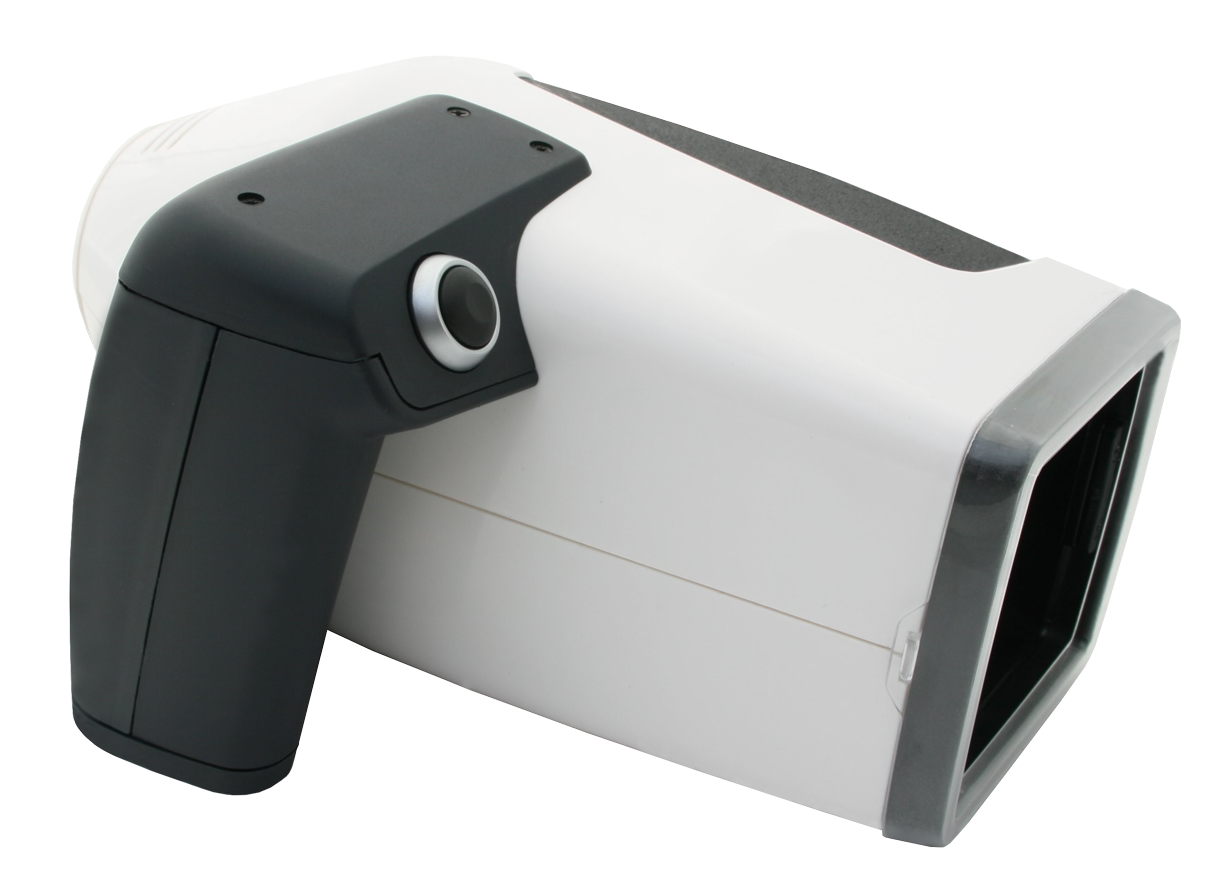
Antera 3D Skin Analysis Device and Wrinkle Analysis Software Handheld Camera

Figure 1: The Antera 3D® portable camera system engineered for quantitative skin topography and dermal depth measurement.

Figure 2: Real-time 3D reconstruction and quantitative color mapping using Miravex software suite.

Integrating surface normal vectors through mathematical algorithms produces an ultra-high-resolution 3D topography map of the skin's skin surface within seconds. This process allows the software to quantify parameters that were previously unmeasurable in vivo without invasive biopsies:

  1. Wrinkle Depth (Maximum & Average): Precise spatial distance from the surrounding healthy skin plane down to the deepest point of the sulcus, expressed in millimeters (mm) or micrometers (μm).
  2. Wrinkle Volume (mm³): Total volumetric displacement of the wrinkle cavity below the reference skin skin surface—the most critical metric for evaluating dermal filler longevity and hyaluronic acid topical hydration efficacy.
  3. Surface Roughness (Ra & Rz): Standardized industrial topography metrics adapted for dermatology. Ra measures the arithmetic average of profile height deviations, whereas Rz measures the average peak-to-valley height across sample lengths.
  4. Skin Micro-Relief & Anisotropy: Quantification of the natural primary and secondary skin line orientation, allowing researchers to evaluate elastosis degradation and skin firmness loss.

2.2 Spectral Decomposition: Looking Beneath the Wrinkle

Wrinkle formation is fundamentally tied to underlying dermal architecture, collagen collapse, and photo-damage. Premium wrinkle analysis software must not remain surface-blind. By analyzing light absorption profiles across red, green, and blue spectral bands, advanced software models spatial distribution maps of sub-surface chromophores: melanin and hemoglobin.

This dual capability enables clinical researchers to correlate fine line severity with localized photo-damage (hyperpigmentation) or micro-inflammatory responses (erythema and rosacea), establishing a holistic biomarker profile for anti-aging interventions.

3. Enterprise Strengths & E-E-A-T Baseline: Why Global Leaders Choose Miravex Antera 3D®

Demonstrating high Experience, Expertise, Authoritativeness, and Trustworthiness (E-E-A-T) is essential when selecting clinical diagnostic equipment. Developed by Miravex Limited (headquartered at 11 St. Stephen's Green, Dublin, Ireland), the Antera 3D® platform has established itself as the global reference standard in quantitative 3D skin analysis.

When evaluating suppliers for enterprise-scale R&D or clinic-wide deployment, Miravex delivers distinct, peer-backed organizational advantages:

Ready to Upgrade Your Clinical Trial Precision?

Discover how the Antera 3D® software suite transforms raw optical data into publication-ready anti-aging efficacy metrics.

Get Catalog

4. Future Trends in Wrinkle Analysis & Optical Skin Metrology (2025–2030)

As artificial intelligence and high-throughput optical sensors converge, global procurement specifications for skin measurement tools are undergoing a structural shift. Organizations investing in quantitative skin assessment equipment must future-proof their capital investments against emerging technological shifts.

5. Technology Evaluation Matrix for B2B Procurement Officers

When selecting a enterprise wrinkle analysis system, decision-makers must compare technical specs across operational parameters. The following matrix contrasts traditional methods against the optical standard established by Miravex Antera 3D®.

Evaluation Criteria Visual Clinical Grading Silicone Replica Profilometry 2D Standard Photography Miravex Antera 3D® System
Primary Output Subjective Ordinal Score (0–5) 2D/3D Line Roughness (Ra) 2D Pixel Contrast / Area Quantitative 3D Volume, Depth, Ra, Rz, Melanin, Hemoglobin
Acquisition Time 2–5 minutes per patient 20–30 minutes (setting time) 1–2 minutes < 1 second capture / Instant analysis
Subject Movement Sensitivity N/A (Visual) High (Artifacts during drying) Moderate Negligible (Handheld rapid capture)
Sub-Surface Chromophores No No Limited (Cross-polarization only) Yes (Full Spectral Separation)
Data Portability & Mesh Export None Requires mechanical stylus JPEG/PNG images only Complete 3D Mesh (.OBJ, .STL) + Raw Data CSV
Clinical Publication Validation Low / Moderate Historical Standard Low High (500+ Peer-Reviewed Papers)

6. Frequently Asked Questions by Global Procurement Officers & Researchers

Below are authoritative responses to the most critical technical, operational, and financial inquiries posed by international enterprise buyers when evaluating wrinkle analysis software and hardware systems.

Q1: What specific mathematical metrics does the wrinkle analysis software calculate?

The Antera 3D® software calculates maximum wrinkle depth (mm), average wrinkle depth (mm), total wrinkle length (mm), surface area (mm²), total wrinkle volume displacement (mm³), and standardized surface roughness parameters (Ra, Rz, RMS roughness). It also measures indentation anisotropy to evaluate skin structural orientation.

Q2: How does the software ensure measurement consistency across different operators?

The software features an automated baseline-to-follow-up image registration engine. Once the user defines an initial Region of Interest (ROI) on the baseline 3D scan, the software automatically tracks anatomical landmarks to lock onto the exact same skin micro-coordinates in subsequent visits, eliminating operator positioning bias.

Q3: Is the software compliant with data integrity requirements for clinical trial research?

Yes. The software provides robust user access controls, structured patient databases, audit trails, and raw data export capabilities (including CSV tables for statistical packages like SPSS/SAS and 3D mesh files for CAD modeling), meeting the operational standards required by CROs and academic research centers.

Q4: Can the device analyze wrinkles on all facial zones and anatomical locations?

Absolutly. Thanks to its ergonomic handheld design and contact-based optical spacer, Antera 3D® can capture periorbital crow's feet, forehead lines, glabellar frown lines, nasolabial folds, perioral lines, neck rings, and body skin micro-relief with equal precision.

Q5: How does multispectral lighting improve wrinkle assessment over RGB cameras?

Standard RGB cameras capture surface color influenced by ambient room lighting. Multispectral illumination uses specific LED wavelengths to isolate epidermal reflection from dermal absorption. This separates topographical wrinkles from hyperpigmentation artifacts that often confuse standard 2D image processing software.

Q6: What is the typical learning curve for research assistants and clinical staff?

The system is engineered for intuitive operation. Standard scanning protocols require less than 1 hour of staff training. Image capture takes less than one second, and automated software reports are generated in under 30 seconds.

Q7: Can we export raw data for custom AI model training or proprietary algorithm development?

Yes. Researchers can export full color-mapped high-resolution images, quantitative numerical spreadsheets (CSV), and 3D point-cloud polygon meshes (.OBJ format) for integration into custom bioinformatics pipelines or proprietary corporate R&D databases.

Q8: How does Miravex support international buyers regarding warranty, software updates, and global calibration?

Miravex Limited provides comprehensive international support, including global calibration checks, software feature updates, direct technical assistance, and extended hardware warranty packages to ensure uninterrupted clinical workflow in over 40 countries.

Empower Your Skin Science & Clinical Validations

Whether you are designing next-generation topical anti-aging formulations, conducting multi-center CRO clinical trials, or offering premium aesthetic procedures, the Antera 3D® wrinkle analysis software and imaging system delivers the clinical rigor and data precision your organization requires.

Get Catalog