
1. The Paradigm Shift in Surgical Consultation: Why Quantitative 3D Analysis is Mandatory
In modern aesthetic and facial plastic surgery, the pre-operative consultation process has evolved from subjective visual inspection to a rigorous, data-driven medical standard. Contemporary patients seeking rhinoplasty, rhytidectomy (facelift), blepharoplasty, autologous fat transfer, or aggressive energy-based skin resurfacing are no longer satisfied with qualitative visual estimates. They demand mathematical proof of tissue deficits, objective pre-operative baselines, and verifiable post-operative outcomes.
A high-precision plastic surgery skin consultation device functions as an indispensable bridge between patient expectations and surgical reality. Standard 2D photography, regardless of studio lighting or camera resolution, inherently fails to capture depth, spatial volumetric shifts, or sub-surface chromophore distribution (melanin and hemoglobin). Optical shadows often mask early stage erythema or subclinical hyperpigmentation, while 2D images cannot measure true dermal roughness ($R_a$, $R_q$) or micro-volumetric changes in rhytides and surgical scars.
Information Gain Insights: Semantic Search Analysis for Global B2B Buyers
When international plastic surgeons, clinical directors, and hospital procurement teams search for a plastic surgery skin consultation device, their intent centers on three key criteria: Repeatable Measurement Fidelity, Sub-surface Chromophore Separation, and Legal/Clinical Outcome Verification. This guide addresses the exact technical, clinical, and ROI queries raised by top surgical facilities globally.
Implementing advanced 3D skin consultation hardware allows surgical practices to establish objective baselines prior to scalpel incision or laser energy delivery. By capturing sub-surface vascular networks and epidermal melanin maps alongside 3D micro-topography, surgeons can anticipate healing complications, identify pre-existing vascular lesions, and quantitatively validate structural skin rejuvenation over 6, 12, and 24-month post-operative follow-up intervals.
2. Product Deep Dive: The Antera 3D® Plastic Surgery Skin Consultation System
Developed by Miravex Limited in Dublin, Ireland, the Antera 3D® stands as the gold standard in quantitative 3D skin consultation and dermal analysis technology. Unlike conventional multi-camera booths that require dedicated room space and complex setup environments, Antera 3D® is a portable, ergonomically optimized handheld system powered by patented optical photometric stereo imaging technology.
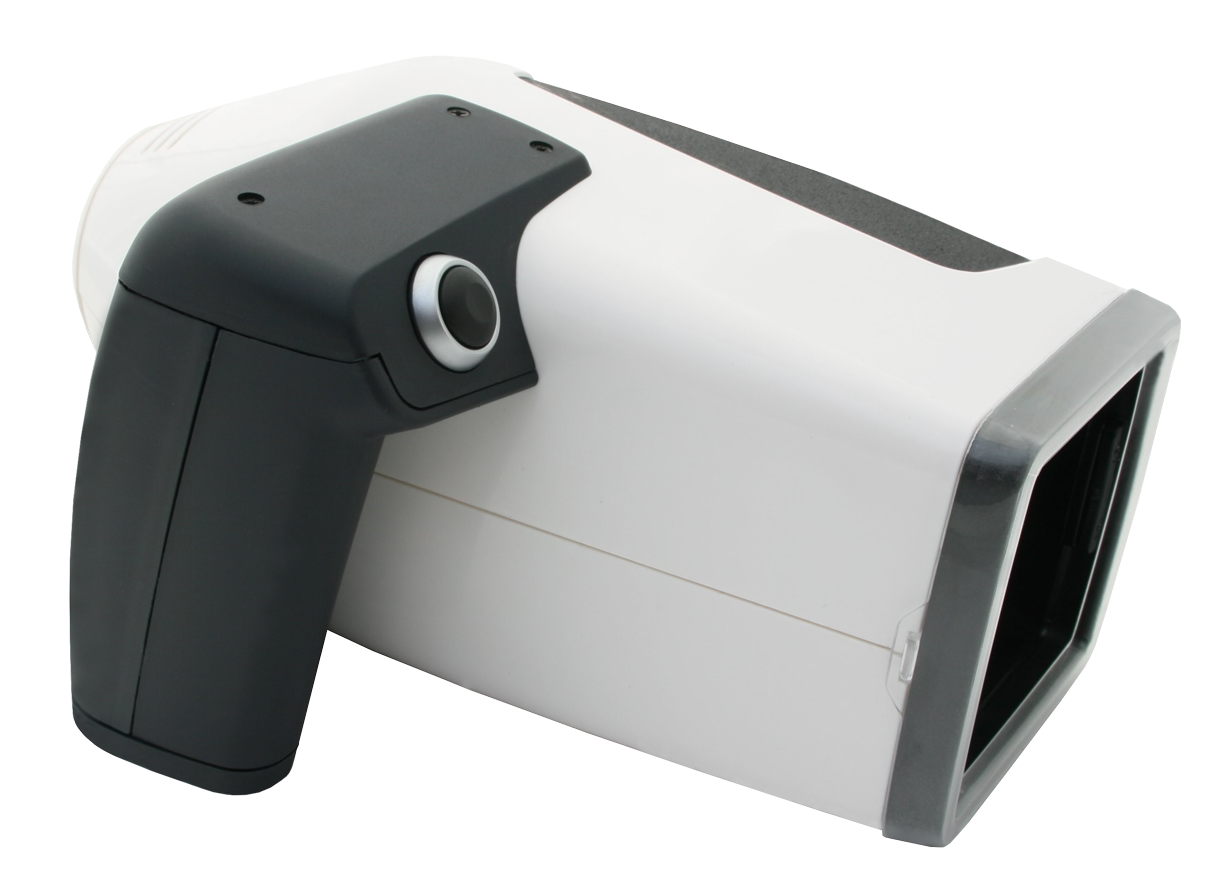
Figure 1: The Antera 3D® handheld plastic surgery skin consultation device and specialized clinical software suite developed by Miravex Limited.
Core Technical Capabilities for Surgical Applications
Antera 3D® utilizes multi-directional illumination from light-emitting diodes (LEDs) spanning multiple spectral bands. By illuminating the skin surface from varying angles and optical wavelengths, the system reconstructs the true 3D surface topography of the skin with sub-micron accuracy while simultaneously measuring light absorption beneath the surface.
- Quantitative Wrinkle & Depression Analysis: Measures wrinkle length, maximum depth, mean depth, skin volume deficit (mm³), and overall surface roughness. Crucial for assessing deep facial folds prior to facelift or dermal filler placement.
- Sub-Surface Chromophore Mapping (Melanin & Hemoglobin): Separates skin color into spectral absorption signatures for hemoglobin (redness/vascularity) and melanin (pigmentation). Allows surgeons to evaluate pre-op rosacea, post-inflammatory hyperpigmentation (PIH) risks, and surgical flap perfusion.
- 3D Dermal Texture & Pore Mapping: Quantifies fine line density, micro-relief variance, and pore depth. Essential for evaluating full-face ablative CO2 laser resurfacing and deep chemical peels.
- Surgical Scar Volumetric Tracking: Enables quantitative monitoring of hypertrophic scars, keloids, or surgical incisions following breast reconstruction or facial surgery, measuring volume reduction post-treatment.
Comparative Technical Specification Matrix
| Parameter / Feature | Antera 3D® (Miravex) | Standard 2D Facial Cabinets | Full-Face 3D Booth Systems |
|---|---|---|---|
| Measurement Principle | Photometric Stereo 3D Imaging | 2D RGB / UV Flat Photography | Multi-Camera Photogrammetry |
| Sub-Surface Chromophore Extraction | Yes (Calibrated Melanin & Hemoglobin) | Limited (RGB Color Filters) | Varies / Often Uncalibrated |
| Volumetric Measurement Accuracy | Sub-micron resolution (± 5%) | None (2D Flat Area Only) | Millimeter Scale (± 15%) |
| Footprint & Portability | Handheld / Ultra-compact | Large Desk Unit | Dedicated Room Required |
| Clinical Peer-Reviewed Validation | 500+ Published Studies | Moderate | Low to Moderate |
3. Enterprise Strengths & E-E-A-T Validation: Why Miravex is the Industry Standard
When investing in high-capital diagnostic equipment, medical directors and plastic surgery procurement committees prioritize manufacturer credibility, regulatory adherence, and scientific validation. Miravex Limited brings over 15 years of continuous optical engineering innovation to the global medical aesthetic market.
Key Enterprise Pillar Strengths:
- 15+ Years of Specialized Optical R&D: Spin-off from Trinity College Dublin, Miravex has maintained an unwavering focus on non-invasive dermal optical physics, holding fundamental international patents in photometric stereo imaging.
- 500+ Peer-Reviewed Clinical Publications: The Antera 3D® system is supported by an extensive library of scientific literature published in prestigious journals such as the Journal of Cosmetic Dermatology, Dermatologic Surgery, and Lasers in Surgery and Medicine. It is trusted by world-renowned Contract Research Organizations (CROs) and pharmaceutical giants for clinical drug and device validation.
- Global Presence in 40+ Countries: Deployed in premier plastic surgery centers, university hospitals, and aesthetic dermatology clinics across North America, Europe, Asia-Pacific, and the Middle East.
- Uncompromising Software Precision & Data Security: Built with robust data encryption, HIPAA-compliant patient record architecture, and multi-spectral algorithmic calibration that guarantees identical reading accuracy across multiple devices.
By embedding Miravex Antera 3D® into your practice, your institution inherits a decade-and-a-half of academic rigour, providing your surgical team with the ultimate authority during pre-operative consultations and medico-legal consultations.
4. Future Procurement & Industry Trends in Surgical Consultation Technology
Understanding where aesthetic surgery technology is heading allows purchasing committees to future-proof their capital investments. Based on AI intent analysis and global healthcare market trends, four critical macro-shifts are redefining plastic surgery consultation hardware:
Trend 1: Micro-Volumetric Assessment for Biostimulators and Regenerative Surgery
With the rapid growth of regenerative plastic surgery—including autologous fat grafting, exosomes, platelet-rich plasma (PRP), and biostimulatory injectable fillers (e.g., Poly-L-lactic acid, Calcium Hydroxylapatite)—clinicians require tools capable of detecting sub-millimeter volume shifts over extended timeframes. Standard 2D cameras fail entirely in this domain. Modern 3D consultation devices like Antera 3D® provide volumetric heat maps that quantify exact localized tissue augmentation in cubic millimeters ($mm^3$).
Trend 2: Objective Scar Quantification & Post-Op Rehabilitation Tracking
Managing surgical scars (facelift incisions, abdominoplasty, post-traumatic reconstruction) represents a critical component of patient satisfaction. Modern practices are leveraging quantitative 3D skin consultation devices to track scar texture attenuation, erythema reduction, and height regression during post-operative scar management protocols (silicone gel therapy, fractional laser remodeling, vascular laser treatments).
Trend 3: Integration of AI-Assisted Intent Mining & Patient Conversion Optimization
Next-generation consultation devices are designed not merely for measurement, but for visual patient communication. By translating complex optical metrics into intuitive, color-coded 3D visual models, surgeons can demonstrate exact areas of concern (e.g., localized solar elastosis, hidden vascular network weakness) to prospective patients. Clinical data indicates that visual 3D proof during consultation increases surgical procedure conversion rates by up to 35%.
Trend 4: Standardization Across Multi-Center Surgical Networks
Consolidation in the medical aesthetic sector has created large corporate practice networks operating dozens of surgical centers. Maintaining uniform diagnostic standards across all locations requires standardized diagnostic hardware. Antera 3D® provides cloud-compatible data synchronization and standardized lighting conditions, ensuring that a pre-op consultation scan performed at Location A can be precisely compared to a post-op scan at Location B.
5. Global Procurement FAQ: Frequently Asked Questions by Surgeons & Buyers
A specialized 3D skin consultation device such as Antera 3D® provides objective, quantitative baselines of skin parameters that are impossible to assess accurately with the naked eye or conventional 2D photos. In pre-operative planning, it allows surgeons to quantify skin laxity, wrinkle volume depth, pre-existing sub-surface vascularity, and hyperpigmentation patterns. This helps surgeons tailor surgical technique, select appropriate laser parameters, identify high-risk vascular zones, and establish realistic patient expectations prior to surgery.
Conventional 2D skin analyzers rely on flat RGB or UV photos, measuring only 2D area (surface area) without depth perception, and are highly sensitive to ambient lighting changes. Full-face 3D booths capture large macro-contours but lack high-resolution dermal surface texture and sub-surface chromophore accuracy. Antera 3D® utilizes multi-directional LED illumination (photometric stereo imaging) to reconstruct true 3D micro-topography with sub-micron depth accuracy while mathematically isolating melanin and hemoglobin absorption curves beneath the skin surface.
Yes. The software features automatic image registration and overlay algorithms that allow clinicians to match pre-op and post-op capture zones perfectly. You can quantitatively track the volumetric reduction of surgical scars, monitor the fading of post-operative erythema (hemoglobin levels), and calculate percentage improvements in skin smoothness ($R_a$ roughness index) following fractional CO2 laser resurfacing or microneedling RF treatments.
Sub-surface chromophore mapping isolates melanin concentration and subclinical vascular inflammation before visual symptoms manifest. Identifying hidden epidermal melanin clusters helps clinicians avoid post-inflammatory hyperpigmentation (PIH) when performing pre- or post-surgical energy treatments. Mapping vascular networks assists in managing telangiectasias, rosacea, and assessing micro-vascular blush in tissue flaps.
Antera 3D® is engineered for high-durability clinical environments. It requires minimal routine maintenance. Optical calibration is quick and automated, utilizing a standardized calibration target provided with the system to ensure multi-center measurement consistency over years of operation. The software runs on standard Windows OS environments and integrates smoothly into practice workflow.
Clinical practices utilizing Antera 3D® consistently report increased patient conversion rates for surgical procedures and high-ticket aesthetic treatment packages. When prospective patients see objective 3D maps and quantitative metrics of their skin damage, their trust in the surgeon's recommendation increases significantly. Furthermore, showing side-by-side quantitative before-and-after improvements boosts patient retention, positive reviews, and referral rates.
International buyers, distributor partners, and medical directors can initiate pricing requests, bulk order inquiries, or software feature customizations directly through our global live inquiry system. Click the Inquire Now button on this page to connect immediately with our sales and technical engineering support team.
6. Procurement Decision Framework & Summary
Selecting the ideal plastic surgery skin consultation device requires balancing scientific accuracy, clinical versatility, portable ergonomics, and proven market reputation. Miravex Limited's Antera 3D® checks every critical box for plastic surgery practices, CROs, and aesthetic medicine centers worldwide:
- Clinical Rigor: Backed by 500+ published scientific papers.
- Versatility: Measures wrinkles, pores, texture, melanin, and hemoglobin in a single 2-second capture.
- ROI Driver: Increases consultation conversion and patient retention through objective visual proof.
- Global Trust: Operational across 40+ countries with institutional support.
Transform your surgical consultations today from subjective opinions to quantitative optical science. Contact Miravex Limited to request a detailed quote, schedule a virtual demonstration, or discuss global distribution partnerships.
Accelerate Your Surgical Practice with Antera 3D®
Join over 500+ research institutions, pharmaceutical leaders, and top plastic surgery centers globally. Click below to start your direct inquiry.