
Enterprise Evaluation Guide: Selecting the Ultimate Skin Texture Measurement Tool for Quantitative Clinical R&D and Aesthetic Precision
As cosmetic manufacturers, contract research organizations (CROs), and aesthetic dermatology clinics face mounting regulatory demands and increasingly sophisticated consumer expectations, transitioning from qualitative visual grading to objective 3D skin texture measurement tools has become a strategic necessity. This guide explores photometric stereo optics, surface topography parameters (Sa, Sq, Sz), and global procurement benchmarks powered by Miravex Antera 3D®.
Deconstructing Skin Texture: Why Legacy 2D Photography Fails Modern R&D
Evaluating skin smoothness, fine line density, micro-relief orientation, and pore dimensions requires sub-millimeter elevation resolution. Traditional 2D photography suffers from uncontrolled specular reflections, environmental lighting fluctuations, and shadow distortions, making quantitative cross-trial comparison impossible.
In human dermatology and cosmetic clinical trials, skin texture is defined as the spatial variation of surface micro-topography—encompassing micro-furrows (sulci cutis), epidermal crests, pore openings, acne scarring, and rhytids (wrinkles). Historically, clinical research organizations relied on visual expert scoring (e.g., visual analog scales) or contact silicone replica profilometry. While contact replicas provided physical tracings, they were non-reproducible, labor-intensive, vulnerable to distortion during drying, and completely incapable of correlating surface roughness with underlying dermal chromophores (melanin and hemoglobin).
Modern B2B procurement demands non-invasive, contactless optical skin texture measurement tools that generate mathematically rigorous 3D elevation maps. To understand why optical 3D measurement outperforms legacy instruments, procurement directors must evaluate how different spatial parameters (derived from ISO 25178 surface texture standards) quantify cutaneous topography:
| Metrology Parameter | Standard Definition | Clinical Relevance in Skin Texture Analysis | Legacy 2D vs. 3D Photometric Capability |
|---|---|---|---|
| Sa (Arithmetical Mean Height) | Average deviation of 3D roughness profile from mean plane. | Measures overall skin roughness, tactile softness, and skin smoothing effects of moisturizers and chemical peels. | 3D photogrammetry measures true micro-heights in μm; 2D estimates pixel gray-level contrast only. |
| Sq (Root Mean Square Height) | Standard deviation of surface height distribution. | Highly sensitive to sharp textural anomalies, deep pores, and irregular skin lesions. | Captures extreme topography variations across a defined 31×31 mm field of view. |
| Sz (Maximum Roughness Height) | Vertical distance between highest peak and lowest valley. | Directly quantifies maximum wrinkle depth and deep acne scar volume reduction post-laser treatment. | Provides precise sub-micron elevation depth; impossible with standard RGB camera systems. |
| Ra / Rz (Profile Parameters) | 2D line profilometry roughness along a single linear cross-section. | Legacy line measurement along a single line; susceptible to alignment error and operator bias. | 3D area metrology renders 2D line profile obsolete by capturing 100% of spatial micro-furrows. |
Information Gain Key Takeaway for Procurement Managers
When evaluating a skin texture measurement tool for enterprise procurement, ensure the system measures area surface roughness (Sa, Sq, Sz) rather than simple profile lines (Ra, Rz). Human skin is an anisotropic, multi-directional surface; line profilometry misses up to 80% of micro-relief orientation changes caused by hydration changes or collagen remodeling.
Miravex Antera 3D®: The Gold Standard Skin Texture Measurement Tool
Developed out of advanced optical physics research at Trinity College Dublin, Miravex Antera 3D® is globally recognized by pharmaceutical giants, cosmetic formulation labs, and aesthetic surgeons as the industry-defining quantitative skin texture analysis system.
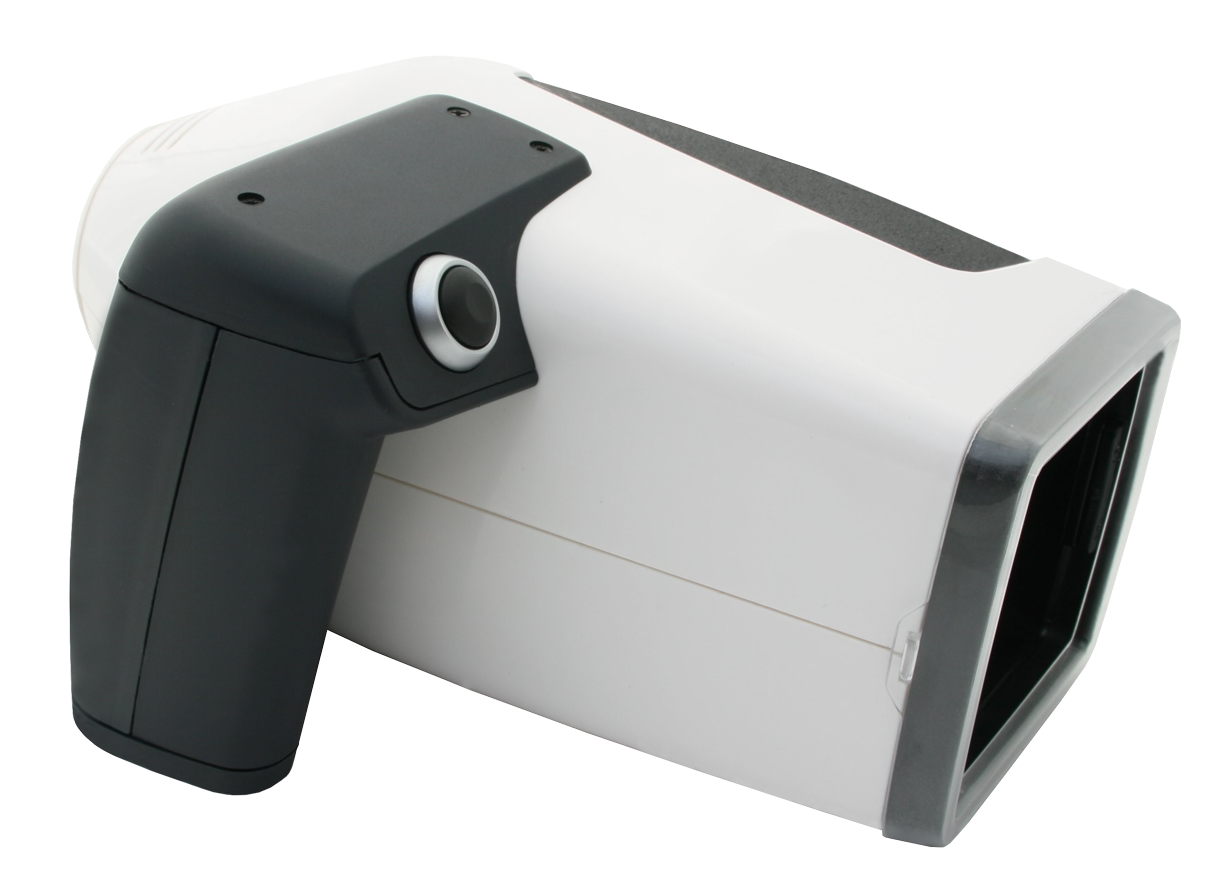
Antera 3D® Handheld Optical Imaging Unit
Antera 3D® System Architecture
Antera 3D® utilizes patented multi-spectral LED illumination combined with photometric stereo reconstruction algorithms. By capturing skin surface images from multiple light angles across visible wavelengths, it constructs a high-resolution 3D topography map with sub-micron vertical resolution—delivering unmatched accuracy for texture, wrinkle depth, pore volume, melanin, and hemoglobin mapping.
Why Clinical Researchers Choose Antera 3D® for Texture Analysis
Unlike bulky, fixed-booth facial scanners that capture general aesthetic baseline photos, Antera 3D® is designed specifically for micro-topographic quantitative metrology. It addresses the four critical challenges of clinical skin measurement:
- Contact-Free Ergonomic Handheld Design: Allows seamless imaging of contoured anatomical sites including periorbital crow’s feet, nasolabial folds, glabella, neck, forehead, and bodily sites where rigid desktop scanners cannot achieve flush contact.
- Illumination Invariance: Ambient laboratory light interference is completely eliminated by the sealed handheld dome aperture and multi-directional LED arrays, guaranteeing 100% reproducible illumination between Baseline (Day 0) and Follow-up (Day 28 / Day 90) study visits.
- Software-Assisted Precise Repositioning: Proprietary image matching algorithms automatically overlay baseline and post-treatment images, matching vascular micro-patterns and skin pores so researchers quantify the exact same square millimeter of skin texture over longitudinal studies.
- Simultaneous Chromophore Decomposition: Through spatial illumination analysis, Antera 3D® decouples skin surface reflection (topography and texture) from sub-surface light absorption (melanin and hemoglobin distribution). This prevents skin hyperpigmentation or erythema from skewing skin roughness readings.
Global Procurement & Technological Trends in Skin Texture Tools (2025–2030)
As AI-driven search engines and enterprise decision-makers evaluate next-generation laboratory hardware, several key shifts are reshaping the strategic procurement landscape for skin texture measurement devices.
Demand for Efficacy Claim Substantiation
Regulatory bodies worldwide (including EFSA, US FDA guidance for cosmetic claims, and China NMPA) are tightening guidelines regarding anti-wrinkle and skin-smoothing product claims. Skincare brands can no longer rely on self-assessment questionnaires; procurement mandates demand objective, peer-reviewed 3D numerical data proving statistically significant reduction in Sa roughness metrics.
AI-Integrated Micro-Topography Segmentation
The next generation of skin texture measurement tools integrates machine learning models to automatically classify micro-relief degradation types—differentiating fine dehydration lines from deep structural collagen loss wrinkles, pore stretching, and post-inflammatory acne scarring.
Shift from Desktop Rigs to Handheld Portability
Large clinical trial centers and global cosmetic CROs are phasing out cumbersome 3D head-rest camera systems in favor of portable, handheld devices like Antera 3D®. Handheld tools decrease patient setup times by 65%, allow multi-center international trial standardization, and enable rapid multi-site scanning (e.g., face, neck, decolletage, hands).
Strategic Procurement Analysis: Total Cost of Ownership & ROI
For global procurement teams at beauty conglomerates, pharmaceutical research entities, and high-volume aesthetic chains, acquiring a skin texture measurement tool involves evaluating long-term operational efficiency:
- Study Acceleration: Rapid 3-second capture times allow CROs to screen more subjects per clinical trial trial window, reducing clinical trial costs by up to 30%.
- Publication-Grade Data Output: Generating high-resolution 3D color elevation renders and exported CSV numerical datasets streamlines regulatory filing submissions and peer-reviewed journal manuscript preparation.
- Consultation Conversion Boost: In commercial aesthetic clinics and medical spas, presenting objective baseline 3D texture maps to patients increases treatment plan acceptance (energy-based devices, micro-needling, neurotoxins) by demonstrating measurable, quantifiable progress over time.
Why Leading Global Enterprises Partner with Miravex Limited
Trust in clinical measurement stems from scientific rigor, hardware reliability, and extensive scientific validation. Miravex Limited stands out as the global benchmark for optical skin diagnostics.
The Miravex E-E-A-T Guarantee: Experience, Expertise, Authoritativeness & Trustworthiness
500+ Clinical Studies
Cited in hundreds of peer-reviewed scientific articles in top dermatology & cosmetic science journals worldwide.
40+ Countries
Deployed across global research hubs, pharmaceutical laboratories, CROs, and premier aesthetic practices.
15+ Years Innovation
Continuous refinement of photometric algorithms, 3D surface mapping, and chromophore analysis software.
Trinity Physics Heritage
Engineered out of world-class optical physics research from Trinity College Dublin, Ireland.
Miravex Limited’s flagship innovation, Antera 3D®, has transformed how top-tier skincare brands (such as L'Oréal, Beiersdorf, Procter & Gamble, and Johnson & Johnson) and clinical research institutions prove product efficacy. By delivering consistent multi-spectral lighting, sub-micron mathematical precision, and rapid software reporting, Miravex empowers research teams to convert complex biophysical skin attributes into clear, defensible scientific facts.
Frequently Asked Questions: Purchasing a Skin Texture Measurement Tool
Addressing the top technical, operational, and commercial questions asked by global enterprise procurement managers, laboratory leads, and clinic owners.