
Next-Generation Biotech Skin Testing Equipment: The Definitive Clinical Efficacy & Global Procurement Guide
How advanced 3D photometric stereo imaging, quantitative chromophore mapping, and optical physics are transforming pharmaceutical clinical trials, cosmetic contract research organizations (CROs), and international skincare procurement.
Decoding Buyer Intent: Why Global CROs & Cosmetic R&D Demand Advanced Biotech Skin Testing Equipment
In modern pharmaceutical cosmetic development, clinical dermatology, and contract research organization (CRO) environments, the global market for biotech skin testing equipment has undergone a fundamental paradigm shift. Traditional subjective visual scoring systems (such as the Glogau or Fitzpatrick grading scales) and legacy 2D contact profilometers are rapidly being replaced by non-invasive, high-precision 3D optical imaging technologies. Global biotech procurement directors, regulatory trial leaders, and cosmetic formulation scientists frequently submit critical queries to search platforms and AI evaluation systems regarding signal-to-noise ratio, optical reproducibility, cross-polarization fidelity, and statistical correlation with biochemical biomarkers.
When evaluating high-capital biotech skin testing equipment, international buyers prioritize quantitative data integrity. Whether formulating novel peptide complex serums, evaluating transdermal delivery vehicles, testing clinical efficacy for anti-wrinkle regimens, or validating post-laser tissue repair, research entities cannot afford instrument artifacts, operator-dependent positioning errors, or environmental light interference. High Information Gain in clinical trials stems from equipment capable of mathematically isolating epidermal micro-topography, dermal hemoglobin concentrations, and melanin distribution in real-time, delivering reproducible numeric outputs suitable for peer-reviewed journal submission and international regulatory submission (FDA 21 CFR Part 11 and ISO 22716 compliance).
Mathematical Precision
Eliminating human observer bias by converting skin surface texture, wrinkle depth, and chromophore density into sub-micron numeric metrics (mm, µm, CIE L*a*b* coordinates).
Multispectral Separation
Utilizing multi-directional LED illumination to separate total light reflectance into distinct hemoglobin and melanin absorption channels without cross-talk.
Clinical Compliance
Providing seamless digital audit trails, automated image alignment algorithms, and rapid capture cycles designed for high-throughput multi-center clinical trials.
The Benchmark in Biotech Skin Testing Equipment: Antera 3D® by Miravex
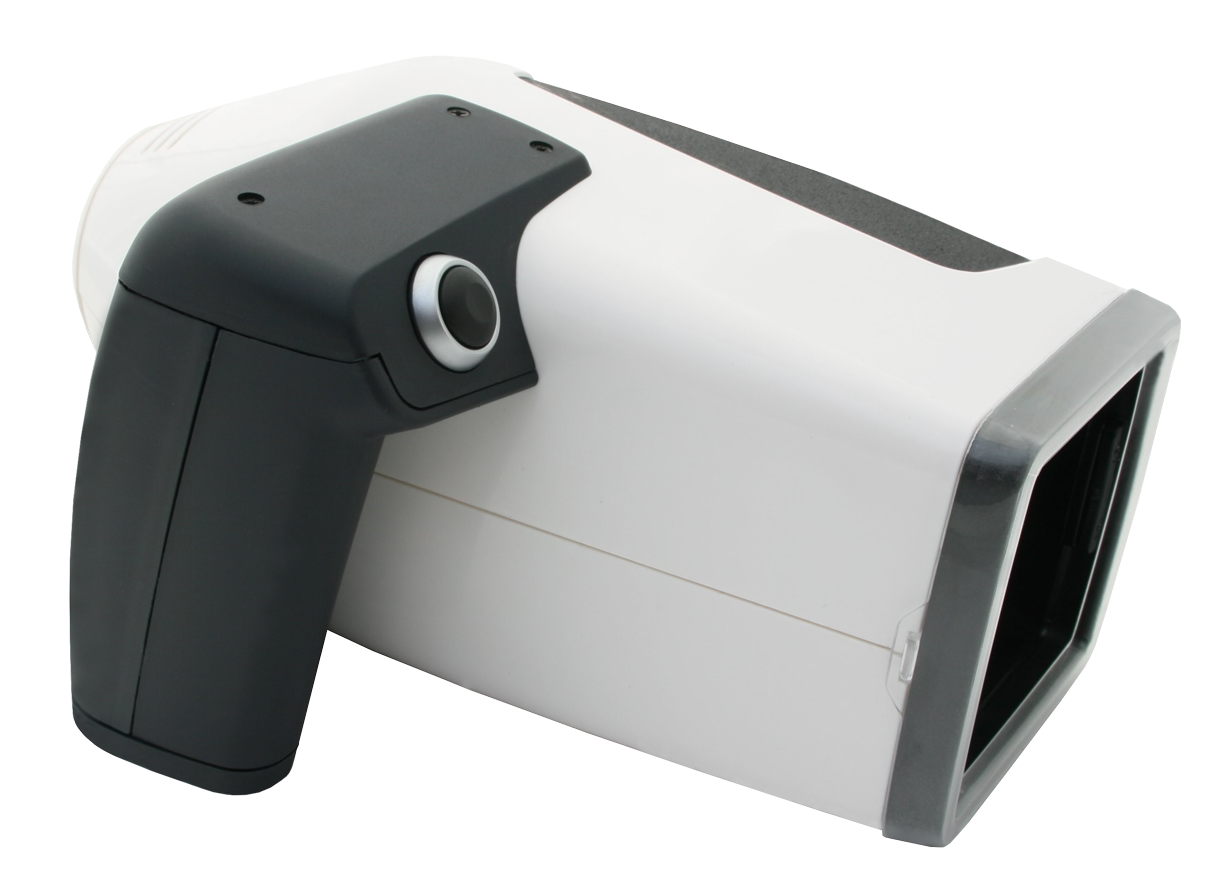
Figure 1: Miravex Antera 3D® Handheld Optical Scanner for Quantitative Skin Parameter Measurement.
Engineering Superiority in Portable 3D Bio-Imaging
Developed out of breakthrough optical physics research at Trinity College Dublin, Ireland, the Antera 3D® stands as the flagship reference system for quantitative biotech skin testing equipment worldwide. Unlike cumbersome box-type imaging booths that suffer from head-movement distortions and require massive clinical floor space, the Antera 3D® is a ergonomically balanced, handheld optical scanner capable of capturing multi-spectral surface and sub-surface dermal characteristics within seconds.
The device employs advanced photometric stereo imaging, illuminating the skin target from multiple angles with calibrated light-emitting diodes (LEDs) of different wavelengths spanning the visible optical spectrum. Mathematical reconstruction algorithms rapidly process the resulting directional shading reflections to construct a high-resolution 3D surface topography map alongside quantitative concentration maps of skin chromophores.
- Wrinkle Depth & Volumetric Indentation: Measures depression depth, surface roughness (Ra, Rz parameters), area, and total volume in mm³.
- Pigmentation & Melanin Concentration: Quantifies hyperpigmentation, melasma, sun spots, and skin brightening efficacy with high spectral purity.
- Redness & Hemoglobin Mapping: Evaluates erythema, rosacea, micro-vascular inflammation, and wound healing kinetics.
- Pore Topography & Skin Smoothness: Maps pore volume, fine line micro-relief, and skin texture uniformities before and after topical interventions.
Video Overview: Clinical Demonstration of Antera 3D® Technology
Observe how the handheld device seamlessly transitions between surface topography reconstruction and sub-surface vascular assessment in clinical environments:
Technical Benchmark Matrix: Biotech Skin Testing Equipment Technologies
When selecting institutional skin testing equipment, procurement teams must balance resolution, versatility, porting flexibility, and quantitative capacity. The table below outlines how Antera 3D® photometric stereo technology compares against traditional laboratory methodologies:
| Evaluation Parameter | Antera 3D® Photometric Stereo | 2D Polarized Photography | Legacy Contact Profilometry | High-Frequency Ultrasound (HFUS) |
|---|---|---|---|---|
| Primary Data Output | Quantitative 3D Topography + Chromophore Density | Qualitative 2D Visual Images | 1D/2D Stylus Line Profiles | Cross-Sectional Dermal Echogenicity |
| Wrinkle Depth & Volume | Sub-micron 3D volumetric tracking (mm³) | Estimated pixel area only (No depth) | Physical contact (Risks tissue distortion) | Sub-surface depth only (Poor surface micro-relief) |
| Melanin / Hemoglobin Isolation | Calibrated multi-spectral reflectance spectral mapping | Approximated color RGB filtering | None | None |
| Portability & Ergonomics | Handheld, direct skin contact with soft spacer | Large stationary headrest tower | Benchtop mounted mechanical rig | Handheld probe with acoustic gel mandatory |
| Clinical Efficacy ROI | High: Multi-parameter evaluation in 1 scan | Medium: Consultation visual aid only | Low: Time-intensive single line traces | Medium: Specialized sub-dermal oncology focus |
Future Procurement Trends in Biotech Skin Testing Equipment (2025–2030)
As global regulatory bodies (such as the European Medicines Agency, US FDA, and China NMPA) tighten restrictions on cosmetic claim substantiation and dermal drug efficacy proofs, purchasing behaviors among enterprise buyers are shifting rapidly. Key trends dictating future biotech capital expenditure include:
1. Automated AI Biostatistics & Multi-Center Cloud Synchronization
Modern clinical trials are no longer confined to a single regional laboratory. Global pharmaceutical enterprises and tier-1 CROs require biotech skin testing equipment that integrates seamlessly into cloud-hosted trial management systems. Devices equipped with automated image-matching algorithms ensure that follow-up scans captured weeks or months apart are perfectly aligned with baseline coordinates, compensating for minor human positioning variations. Furthermore, exported data points are pre-formatted for direct ingestion into SAS, SPSS, and R biostatistical pipelines.
2. Non-Invasive Quantitative Mapping Over Qualitative Perception
The era of relying solely on expert panel consensus or consumer self-assessment questionnaires is drawing to a close. International procurement bodies are prioritizing instruments that yield absolute physical measurements: mean roughness ($R_a$), root-mean-square roughness ($R_q$), total wrinkle volume ($mm^3$), melanin concentration index, and skin redness spectrum ($a^*$ value shifts in CIE $L^*a^*b^*$ color space). Quantitative metrics provide defensive legal backing against regulatory claim challenges.
3. Micro-Environment Portability and High-Throughput Screening
Bulky, stationary optical towers restrict clinical workflow efficiency. Future procurement specifications favor lightweight, handheld devices capable of being transported between examination rooms, multi-site testing facilities, and international clinical field stations without sacrificing sub-micron spatial resolution or requiring tedious daily laser recalibration.
4. Multi-Omics and Spatial Dermal Data Fusion
Biotech researchers are increasingly matching spatial skin imaging data with transcriptomic, proteomic, and skin microbiome profiling. Instruments that provide precise micro-location optical mapping allow scientists to perform targeted biopsy punches or tape-stripping procedures on exact high-wrinkle or high-erythema coordinates identified during initial 3D scans.
Stay Ahead of Global Clinical Standards
Equip your laboratory or CRO with industry-leading 3D biotech skin testing equipment. Contact our optical physics specialists for tailored procurement packages and demonstration units.
Contact UsTechnological Innovations Driving Dermal Optical Metrology
The field of bio-imaging metrology is advancing at an unprecedented velocity. Understanding the fundamental optical engineering trends behind modern biotech skin testing equipment helps procurement officers evaluate long-term instrument lifecycle viability.
Photometric Stereo Multi-Angle Illumination
Unlike traditional binocular stereo vision, which struggles on smooth or low-contrast human tissue, photometric stereo utilizes a single high-resolution sensor surrounded by multi-directional LED banks. By rapidly pulsing LEDs from varying azimuth and elevation angles, the system derives fine-grained surface normal vectors, enabling accurate 3D height map reconstruction down to sub-micron elevations.
Sub-Surface Diffuse Reflectance Spectroscopy
Light penetrating human skin undergoes scattering and absorption dominated by two principal chromophores: melanin in the epidermis and hemoglobin in the dermis. Advanced biotech skin testing equipment isolates these spectral signatures by analyzing modified reflectance spectra across controlled wavelengths, allowing independent quantification of pigmentation depth and vascular congestion.
Polarization Vector Optimization
Specular glare from natural epidermal lipids frequently blinds conventional camera sensors. Modern instruments incorporate cross-polarized optical filters that suppress surface reflection while capturing purely backscattered photons from sub-surface tissue layers, unlocking true dermal clarity.
Real-Time Volumetric Indentation Tracking
Beyond simple line profiling, state-of-the-art software algorithms calculate volumetric changes in tissue depressions over time. This capability is critical for quantifying facial filler durability, botulinum toxin relaxation kinetics, acne scar remodeling, and deep wrinkle reduction.
Frequently Asked Questions: Global Biotech Skin Testing Equipment Procurement
Below are detailed answers to key queries submitted by CRO research directors, pharmaceutical procurement heads, and aesthetic clinical facility managers when acquiring 3D skin analysis systems:
How does Antera 3D® achieve measurement repeatability across diverse Fitzpatrick skin types?
The Antera 3D® utilizes calibrated multispectral LED illumination combined with proprietary photometric algorithms that dynamically adjust for baseline tissue absorption. Whether scanning Fitzpatrick Type I or Type VI skin, the system automatically normalizes optical reflectance curves, ensuring that surface topography metrics (wrinkles, texture, pores) and chromophore concentrations (melanin, hemoglobin) are measured with absolute mathematical consistency without sensor saturation.
What regulatory and quality standards apply to biotech skin testing equipment in clinical trials?
For equipment used in clinical research and cosmetic efficacy claims, instruments must provide reproducible numerical outputs under Good Clinical Practice (GCP) and ISO 22716 guidelines. Software platforms supporting the device should offer secure data handling, exported CSV/raw image options, and audit trail capabilities compatible with FDA 21 CFR Part 11 requirements for data integrity in multi-center clinical trials.
Can Antera 3D® differentiate between hyperpigmentation and vascular redness in the same anatomical site?
Yes. By analyzing diffuse light reflectance across multiple visible light wavelengths, Antera 3D® mathematically separates total skin color into distinct melanin absorption and hemoglobin absorption profiles. This prevents hyperpigmentation from skewing redness data and allows researchers to evaluate multi-action actives (e.g., ingredients addressing both inflammation and dark spots simultaneously).
What is the typical Return on Investment (ROI) timeline for CROs and cosmetic R&D labs acquiring this equipment?
Most contract research organizations and cosmetic manufacturers report a full capital ROI within 6 to 12 months. The device accelerates trial completion times due to rapid scan capture (under 2 seconds), reduces sample size requirements through high statistical sensitivity, and empowers cosmetic brands to publish peer-reviewed efficacy claims that significantly boost product commercial conversion rates.
What international technical support, training, and warranty services does Miravex provide?
Miravex Limited provides comprehensive international support services across over 40 countries. Global buyers receive direct installation guidance, comprehensive operator certification training for laboratory staff, ongoing software algorithm updates, and an international manufacturer warranty backed by dedicated optical physics technical support teams based in Dublin, Ireland.
How does handheld 3D imaging integrate into existing statistical and clinical report workflows?
Antera 3D® software features built-in statistical comparison modules (before/after percentage change, statistical significance indicators, spatial overlay heatmaps) and allows one-click export of structured dataset arrays. Researchers can immediately export numerical data tables into statistical software packages like SAS, R, or SPSS for clinical manuscript preparation.
Why Global Institutions Partner with Miravex Limited
 Headquartered at 11 St. Stephen's Green, Dublin, Ireland
Founded by optical physics researchers at Trinity College Dublin, Miravex Limited has spent over 15 years establishing the global benchmark for non-invasive 3D skin analysis technology. Our commitment to scientific rigor, physical accuracy, and clinical repeatability makes Miravex the preferred equipment supplier for leading pharmaceutical companies, multinational cosmetic manufacturers, top-tier CROs, and academic dermatology departments.
Peer-Reviewed Authority
The Antera 3D® platform is cited in over 500 scientific journals and clinical trials worldwide, proving its validity under strict peer review.
Global Deployment
Trusted by research teams across North America, Europe, Asia-Pacific, and the Middle East for multi-center trial consistency.
Optical Physics Heritage
Engineered from fundamental wave optics and photometric stereo principles, guaranteeing true volumetric measurement accuracy.
Request a Consultation & Procurement Quote
Ready to elevate your biotech laboratory, cosmetic R&D center, or clinical research unit with the world's leading 3D skin testing equipment? Connect with our Dublin headquarters technical engineering team today.