
Dermatology Science & Research
Skin Science Blog
Explore clinical insights, 3D skin analysis research, and modern aesthetic technology innovations.
How to Choose Aesthetic Dermatology Equipment?
Table of Contents
- What Aesthetic Dermatology Equipment Is Designed to Treat
- How to Match Equipment Types With Clinical and Cosmetic Goals
- Which Safety, Quality, and Regulatory Standards Matter
- How to Compare Performance, Usability, and Treatment Features
- How to Evaluate Costs, Maintenance, Training, and Patient Support
- FAQS
- Conclusion
- Related Posts
Choosing aesthetic dermatology equipment is a clinical and commercial decision, not a simple purchasing exercise. The global aesthetic medicine market continues to expand. Grand View Research estimates that the market will maintain strong growth through the next decade, driven by minimally invasive treatments and rising patient demand. The ISAPS Global Survey 2023 recorded more than 34 million surgical and nonsurgical aesthetic procedures worldwide. These figures suggest opportunity, but they do not justify buying every new device.
A reliable evaluation begins with patient needs, treatment goals, and clinical evidence. A laser may look impressive in a showroom, yet its wavelength, fluence range, cooling system, and spot size must suit the intended indications. For radiofrequency devices, examine energy delivery, temperature control, handpiece design, and documented safety outcomes. Small details matter. A warm, clearly labeled handpiece can improve workflow and patient confidence. The best aesthetic dermatology equipment should also support consistent results across different skin types, with training and protocols that clinicians can actually follow.
Regulatory status requires careful verification. Buyers should review approvals or clearances from relevant authorities, such as the FDA, European Union requirements, or local regulators. Certification alone is not enough. Inspect clinical studies, adverse-event information, warranty terms, service response times, and total ownership costs. Reports from organizations such as the FDA, ISAPS, and peer-reviewed dermatology journals can support a more objective decision. Still, evidence may be limited for newer platforms, and marketing language can sound stronger than the data. That is where professional judgment matters. Ask difficult questions. A device is valuable only when it is safe, maintainable, clinically appropriate, and financially realistic.
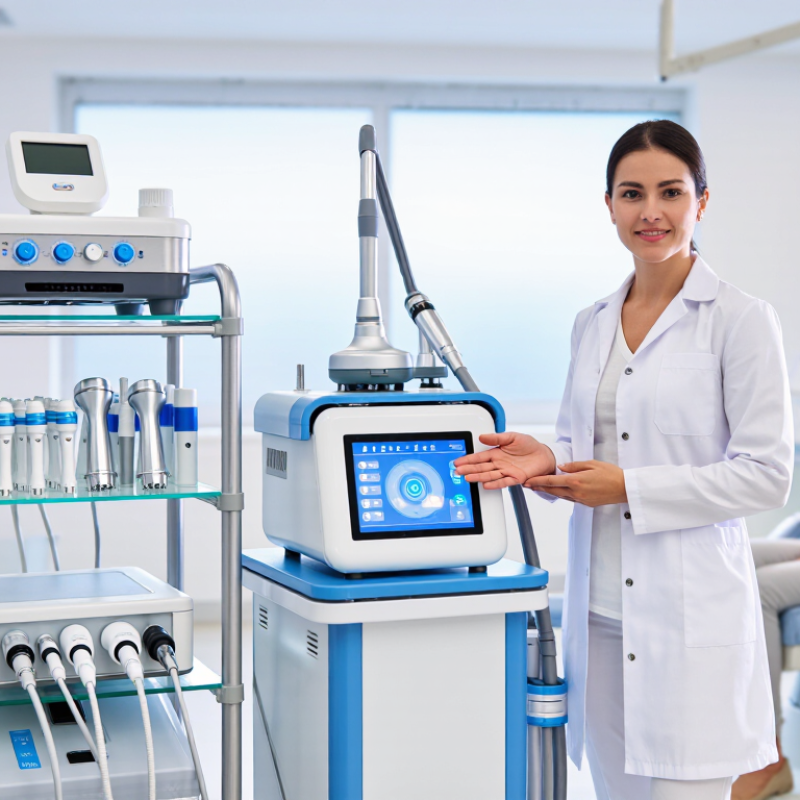
What Aesthetic Dermatology Equipment Is Designed to Treat
How to Choose Aesthetic Dermatology Equipment?
Aesthetic dermatology equipment should match the condition, skin type, and treatment area. The choice is not always obvious. Laser and intense pulsed light systems may target unwanted hair, vascular redness, and selected pigmentation concerns. Wavelength, pulse duration, and cooling affect both results and comfort. Radiofrequency and focused ultrasound devices are commonly used for mild skin laxity. Microneedling equipment can improve uneven texture and the appearance of some acne scars. These treatments require realistic expectations, not instant perfection.
Tips: Ask what tissue the device targets, how many sessions are typical, and what risks may occur. Request evidence for the intended indication. A qualified clinician should review medications, previous procedures, tanning history, and skin sensitivity before treatment. Darker skin may need adjusted settings and careful test areas. Small details matter.
Equipment selection also depends on operator training and maintenance records. A technically advanced device can still produce poor outcomes when used incorrectly. Even experienced teams can misjudge healing time, especially after combined procedures. That deserves honest discussion. Clinics should provide informed consent, protective eyewear when needed, clear aftercare, and a plan for complications. Choosing a device by price alone is a weak approach; treatment goals and patient safety should guide the decision.
How to Choose Aesthetic Dermatology Equipment?
The right device depends on the treatment target. This chart maps common aesthetic dermatology technologies to the concerns they are primarily designed to address.
The values represent the number of equipment categories in this comparison that are commonly designed for each treatment concern. Actual suitability depends on patient assessment, skin type, treatment parameters, and clinical expertise.
How to Match Equipment Types With Clinical and Cosmetic Goals
Choosing aesthetic dermatology equipment starts with the patient’s goal, not the device’s popularity.
Clinical concerns may include vascular lesions, acne scars, pigmentation, or unwanted hair. Cosmetic goals often involve smoother texture, tighter-looking skin, or gradual rejuvenation. Each need points toward a different technology, such as light-based systems, radiofrequency, ultrasound, or microneedling.
Skin type matters. So does treatment depth. A patient with sensitive, deeply pigmented skin may need conservative settings and longer intervals. Someone seeking mild texture improvement may prefer controlled microneedling with limited downtime.
Ask about pain tolerance, recovery expectations, and previous reactions. In practice, the most advanced option is not always the best fit. A perfect match is rare.
Tips: Build a treatment-to-goal chart before purchasing equipment. Review published clinical evidence, operator training, maintenance needs, and local regulatory requirements. Test workflows with real consultation scenarios. Measure outcomes with consistent photographs and patient feedback. Also, calculate consumable costs and staff time. These details can change the decision.
Reliable selection requires trained professionals and realistic consent discussions. Equipment should support diagnosis, not replace it. I still reconsider settings when results differ from expectations. That reflection is useful. It prevents routine decisions from becoming unsafe habits. A clear protocol should define patient selection, contraindications, cooling methods, follow-up timing, and escalation procedures when skin responds unexpectedly.
Which Safety, Quality, and Regulatory Standards Matter
Choosing aesthetic dermatology equipment requires more than comparing energy levels or treatment speed. The 2023 ISAPS Global Survey recorded over 19 million nonsurgical procedures worldwide. That volume increases the importance of documented safety controls and reliable training. Ask for evidence of ISO 13485 quality management, ISO 14971 risk management, and IEC 60601-1 electrical safety compliance. Laser devices may also require laser-specific standards, including IEC 60601-2-22.
Regulatory status must match the treatment and market. FDA clearance or approval may apply in the United States, while EU devices require appropriate Medical Device Regulation conformity assessment. These credentials support due diligence, but they do not replace clinical judgment. Review the device’s intended use, contraindications, adverse-event history, software controls, and maintenance schedule. The FDA’s Manufacturer and User Facility Device Experience database shows why post-market vigilance matters; reported problems can include burns, injuries, and device malfunctions. Numbers alone do not explain every event.
In practice, inspect calibration records before purchase. Check whether applicators, cooling systems, and emergency shutoffs are tested regularly. Staff should receive documented, hands-on training, not only an online certificate. I have seen attractive specifications distract teams from weak service support. That is a costly mistake. No checklist is perfect. Require traceable parts, clear labeling, patient-specific consent forms, and a written incident-reporting process. A short demonstration can reveal awkward handpieces, confusing alarms, or unsafe workflow gaps.
How to Choose Aesthetic Dermatology Equipment? - Which Safety, Quality, and Regulatory Standards Matter
A practical comparison framework for evaluating safety, quality, performance, and regulatory readiness
| Evaluation Dimension | Why It Matters | Relevant Standard or Regulatory Reference | Evidence to Request | Practical Selection Guidance |
|---|---|---|---|---|
| Intended Use and Claims | The device’s intended purpose determines its risk classification, required controls, labeling, and regulatory pathway. | Applicable national medical-device regulations; EU Regulation (EU) 2017/745 where applicable; applicable FDA requirements in the United States. | Intended-use statement, indications, contraindications, treatment parameters, and user instructions. | Choose equipment whose documented claims match the treatments your facility plans to provide. Avoid relying on promotional claims that are absent from the official labeling. |
| Quality Management System | A controlled quality system supports consistent design, manufacturing, supplier management, complaint handling, and corrective actions. | ISO 13485:2016, where certification is relevant to the manufacturer and market. | Current certificate, certification scope, issuing body, validity dates, and the covered manufacturing locations. | Verify that the certificate covers medical-device activities and the specific product category, not merely general manufacturing or unrelated products. |
| Electrical Safety | Electrical faults, leakage current, overheating, and inadequate insulation can cause burns, shock, or equipment failure. | IEC 60601-1, or the applicable national adoption and edition. | Test report or certificate identifying the exact model, applicable edition, and tested configuration. | Confirm that accessories, handpieces, power supplies, and treatment modules are included in the evaluated configuration. |
| Electromagnetic Compatibility | Electromagnetic interference can interrupt treatment, affect nearby equipment, or alter device performance. | IEC 60601-1-2 and applicable electromagnetic-emissions requirements. | EMC test report, installation requirements, recommended separation distances, and warnings for nearby equipment. | Give preference to equipment with clear EMC instructions and verify compatibility with lasers, imaging systems, monitors, and other devices used in the treatment room. |
| Risk Management | Systematic hazard identification helps reduce risks such as burns, pigment changes, scarring, eye injury, infection, and incorrect parameter selection. | ISO 14971:2019. | Summary of the risk-management process, key residual risks, protective measures, and user warnings. | Look for specific controls, not generic statements. Examples include skin-contact sensors, cooling control, emergency stops, calibration alerts, and password-protected settings where appropriate. |
| Usability and Human Factors | Clear controls and feedback reduce use errors, especially when treatments involve energy delivery or patient-specific parameters. | IEC 62366-1. | User-interface description, formative or summative usability evidence, alarms, prompts, and training materials. | Assess whether trained operators can select parameters, recognize warnings, stop treatment, and recover from common errors without ambiguity. |
| Software and Cybersecurity | Connected or software-controlled systems may affect treatment settings, patient records, access control, and service continuity. | IEC 62304 for medical-device software; applicable cybersecurity guidance and local regulatory requirements. | Software version history, update policy, access controls, backup process, vulnerability reporting procedure, and network requirements. | Confirm how updates are validated, how user permissions are managed, and whether the device can operate safely if connectivity is interrupted. |
| Biocompatibility and Patient Contact | Materials that contact skin, mucosa, or compromised tissue may cause irritation, sensitization, toxicity, or infection risks. | ISO 10993 series, when biological evaluation is applicable to the type and duration of contact. | Material list, contact classification, biological evaluation, cleaning instructions, and compatibility information for consumables. | Check that disposable tips, gels, cartridges, or accessories are specified for the intended contact type and treatment duration. |
| Laser and Optical Safety | Laser and intense-light systems can cause eye injury, skin injury, fire hazards, and unintended exposure. | IEC 60825-1 for laser-product safety; applicable photobiological and workplace safety requirements. | Wavelength and emission specifications, hazard classification, protective eyewear requirements, interlock details, and room-safety instructions. | Verify that eyewear is suitable for the actual wavelengths and optical power, and that the treatment room has appropriate access and warning controls. |
| Performance and Treatment Consistency | Accurate energy delivery, pulse control, temperature regulation, and repeatability influence clinical outcomes and safety margins. | Applicable product-specific standards, validated performance specifications, and ISO 14971 risk controls. | Calibration procedure, accuracy and repeatability data, output tolerances, service intervals, and acceptance-test criteria. | Prioritize measurable specifications and independent or controlled test data over general claims such as “high power” or “professional grade.” |
| Infection Prevention and Reprocessing | Reusable handpieces and patient-contact components must be cleaned, disinfected, or sterilized as required to reduce cross-contamination. | Applicable reprocessing instructions and relevant ISO 17664 requirements where applicable. | Validated cleaning and disinfection instructions, compatible agents, contact times, replacement limits, and inspection criteria. | Select equipment with practical, validated reprocessing steps that fit the clinic’s available facilities and infection-control procedures. |
| Regulatory Authorization | Market access documentation shows whether the device has followed the requirements of the target jurisdiction. | EU MDR 2017/745, FDA requirements, UK Medical Devices Regulations, or other applicable national frameworks. | Declaration of conformity, certificate where required, registration or clearance information, authorized representative details, and labeling. | Verify authorization for the exact model and intended use in the country where the equipment will be installed. Do not treat a quality certificate as market authorization. |
| Clinical Evidence | Evidence helps determine whether claimed outcomes, treatment parameters, and adverse-event information are clinically credible. | Applicable clinical-evaluation requirements, including EU MDR clinical-evaluation provisions where relevant. | Clinical evaluation, peer-reviewed studies, post-market data, treatment protocols, patient-selection criteria, and adverse-event information. | Assess whether evidence relates to the same technology, indication, treatment parameters, and patient population—not merely to a similar-looking device. |
| Training and Operator Competence | Appropriate training reduces misuse and supports consistent patient assessment, parameter selection, and emergency response. | Manufacturer training requirements, local professional rules, occupational-safety requirements, and facility policies. | Training syllabus, competency checklist, attendance records, treatment protocols, and escalation procedures. | Choose a supplier that provides documented, role-appropriate training and clearly defines which procedures require qualified medical supervision. |
| Maintenance, Calibration, and Service | Regular maintenance helps preserve output accuracy, reliability, and safety throughout the equipment’s service life. | Manufacturer service specifications, calibration requirements, and applicable quality-system controls. | Preventive-maintenance schedule, calibration certificates, service response terms, spare-parts policy, and repair records. | Compare total cost of ownership, service availability, downtime expectations, and the availability of trained service personnel. |
| Post-Market Surveillance | Ongoing monitoring identifies recurring failures, safety signals, complaints, recalls, and necessary corrective actions. | Applicable vigilance, complaint-reporting, field-safety-corrective-action, and post-market-surveillance requirements. | Complaint contact process, safety-notice history, recall procedure, incident-reporting instructions, and feedback channels. | Confirm that the supplier has a transparent process for reporting incidents and communicating safety updates to users. |
How to Compare Performance, Usability, and Treatment Features
How to Choose Aesthetic Dermatology Equipment?
Performance should be judged beyond maximum energy or impressive specifications. Ask how consistently the device delivers its intended output during repeated treatments. Review clinical studies, safety documentation, and maintenance requirements before making a decision. A stable system is often more valuable than a powerful one. In practice, uneven results can appear when settings drift or handpieces wear. That detail is easy to overlook.
Usability affects every appointment. The interface should show essential parameters clearly, even in a busy treatment room. Controls must be simple enough for trained staff to adjust without hesitation. Consider handpiece weight, cable movement, treatment speed, and cleaning time. Small frustrations accumulate. A device may perform well but remain unsuitable for daily workflows. A short trial with real staff can reveal problems that demonstrations hide.
Treatment features should match patient needs, not just market trends. Look for adjustable energy, pulse duration, cooling options, and treatment modes where clinically appropriate. These features may support different skin types and treatment areas, but they do not replace professional assessment. Ask whether outcomes are measurable through photographs, follow-up records, or validated scales. Also examine contraindications, training quality, and emergency procedures. My own preference is practical flexibility, although it can make selection less obvious. More options may create more room for mistakes. A careful comparison should include patient comfort, expected downtime, consumable costs, and long-term service support.
How to Evaluate Costs, Maintenance, Training, and Patient Support
Choosing Aesthetic Dermatology Equipment: Costs, Maintenance, Training, and Patient Support
The purchase price rarely shows the full cost of aesthetic dermatology equipment. Calculate consumables, installation, software, servicing, insurance, and expected downtime. Request written estimates for replacement parts and annual maintenance. A reliable supplier should provide service records, clear warranties, and documented performance data. Ask whether trained technicians are available locally. Delayed repairs can disrupt appointments and weaken patient confidence.
Training deserves the same attention as the device itself. Look for structured instruction, supervised practice, treatment protocols, and safety guidance. A short demonstration is not enough. Staff should understand patient selection, contraindications, calibration, and emergency procedures. Confirm whether refresher training is included after staff changes. In practice, even experienced clinicians can overlook small operational details. That deserves honest review.
Tips: Compare three-year ownership costs, not only purchase prices. Ask for a live demonstration using realistic treatment settings. Review maintenance response times in writing. Check whether training materials are updated. Speak with independent clinic teams about reliability and patient communication. Keep a simple log for servicing, faults, training, and outcomes. Patient support also matters. Provide clear aftercare instructions and a contact route for concerns. Equipment that performs well but lacks responsive support may create avoidable pressure. Service quality is part of clinical quality.
FAQS
Start with the condition and treatment area. Light-based systems may address hair, redness, or selected pigmentation concerns. Radiofrequency and ultrasound often target mild skin laxity. Microneedling may improve texture and some acne scars.
Skin type influences settings, cooling, treatment intervals, and risk. Darker or sensitive skin may require conservative settings and small test areas. A careful plan matters.
Ask which tissue the device targets and how many sessions are typical. Discuss pain, recovery time, possible risks, and expected results. Request evidence for the intended use.
Adjustable energy, pulse duration, cooling, and treatment modes may support different needs. Handpiece weight and cable movement also affect daily comfort. More options can mislead.
Review clinical studies, safety documents, output consistency, and maintenance records. Repeated treatments should produce stable performance. Maximum energy alone proves little.
A technically advanced device can still cause poor outcomes when used incorrectly. Training should cover patient selection, contraindications, settings, cooling, and emergency procedures. Experience does not remove every mistake.
Test the device with real staff in a busy treatment room. Check cleaning time, treatment speed, consumable costs, and service support. Small delays accumulate.
Use consistent photographs, follow-up records, and patient feedback. Compare results over time rather than relying on memory. Unexpected healing should trigger a review of settings and timing. Reflection helps.
Conclusion
Choosing the right aesthetic dermatology equipment requires a clear understanding of the conditions and cosmetic concerns it is intended to address, such as skin rejuvenation, pigmentation, vascular concerns, acne, scarring, hair reduction, or body contouring. Clinics should match each equipment type with their treatment goals, patient profiles, and expected outcomes rather than focusing on features alone. Safety, build quality, regulatory compliance, clinical evidence, and appropriate operating standards are essential factors when assessing potential options.
A thorough comparison should also consider treatment performance, precision, comfort, versatility, user interface, and workflow efficiency. Beyond the purchase price, clinics need to evaluate installation, maintenance, consumables, staff training, warranty coverage, technical support, and patient education resources. The best aesthetic dermatology equipment should provide reliable results, support safe and consistent treatments, fit the clinic’s practical needs, and offer sustainable value over its working life.

Blog Tags: