

Quantitative Dermal Imaging & Optical Biomarker Engineering
In modern dermatological science, cosmetic formulation R&D, and clinical aesthetic evaluation, visual inspection and qualitative scoring scales are rapidly being replaced by objective, CE-certified high-resolution dermal scanning systems. As global B2B buyers—including Contract Research Organizations (CROs), pharmaceutical cosmetic manufacturers, and high-end aesthetic chain clinics—seek superior data reproducibility, selecting the correct optical architecture becomes a strategic operational decision.
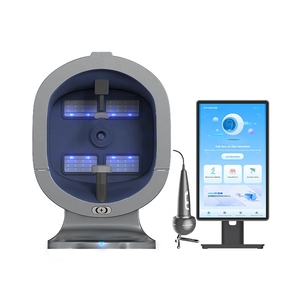
Core Information Gain Insight: Advanced 3D dermal scanning transcends superficial RGB imaging by capturing multi-spectral polarized light reflection vectors. This allows algorithms to mathematically decouple skin surface topography (wrinkles, micro-relief, pore volume) from sub-surface dermal chromophore concentrations (melanin concentration, hemoglobin density, and erythema dispersion) without invasive biopsy.
1. Fundamental Biophysical Principles of High-Resolution Skin Diagnostics
To evaluate a CE-certified dermal scanner manufacturer, engineering teams must evaluate the underlying photogrammetric stereoscopy and polarization physics embedded in the diagnostic sensor head.
Cross-Polarized Imaging
Eliminates specular reflection (glare) from the stratum corneum, allowing light emitted at specific wavelengths (400–700 nm) to penetrate up to 2.0 mm into the dermal-epidermal junction for deep pigment and vascular mapping.
Photometric Stereoscopy
Utilizes multi-directional LED illuminators triggered sequentially within milliseconds to compute surface normals, constructing accurate 3D surface elevations, fine line volumes, and skin roughness coefficients (Sa, Sq).
Chromophore Decoupling
Applies modified Beer-Lambert absorption equations to separate spectrum responses into pure Melanin maps (hyperpigmentation, solar lentigines) and Hemoglobin maps (rosacea, telangiectasia, inflammation).
1.1 Quantification Metrics for Clinical Trial Endpoints
When purchasing diagnostic dermal scanning hardware, clinical research protocols demand repeatable digital metrics. OEM platforms manufactured under strict CE standards provide standardized datasets including:
- Wrinkle Depth & Volume Index ($V_w$): Calculating exact micro-liter indentations of nasolabial folds, periorbital crow's feet, and forehead rhytids.
- Melanin Homogeneity Score ($M_h$): Measuring variance in localized basal layer melanin density to evaluate depigmenting active ingredients (e.g., niacinamide, vitamin C derivates).
- Vascular Redness Distribution ($H_b$): Mapping dermal capillary dilation before and after non-ablative laser resurfacing or anti-inflammatory topical interventions.
- Pore Micro-Cavity Roughness ($S_p$): Distinguishing between active follicular openings, comedones, and structural pore enlargement caused by collagen loss.
2. Global Market Trends & Future Procurement Dynamics (2026–2032)
The global market for dermal imaging devices is undergoing a structural transition. According to industry procurement data, B2B sourcing requirements have shifted from standalone salon magnifiers toward connected, enterprise-grade dermal diagnostic ecosystems.
| Feature / Requirement | Legacy Dermal Scanners (Pre-2022) | Next-Gen CE Dermal Scanners (2026+) |
|---|---|---|
| Illumination Technology | Standard White LED (Unpolarized) | Multi-Spectral Cross-Polarized & UV Narrowband (365nm) |
| Image Reconstruction | 2D Planar Color Capture | 3D Photometric Surface Topography & Sub-surface Volumetric Render |
| Diagnostic Depth | Stratum Corneum Surface Only | Full Epidermis to Upper Papillary Dermis (Up to 2.0mm) |
| Regulatory Standards | Basic LVD/EMC CE | Medical CE (MDR 2017/745), ISO 13485 Quality Management System |
| Software & Connectivity | Local Desktop Software, Static PDF Reports | Cloud SDK, AI Deep Learning Inference, Real-Time EMR/EHR Integration |
2.1 Key Sourcing Drivers for Importers & Distributors
Distributors and brand manufacturers seeking competitive advantage must align procurement with three critical technological shifts:
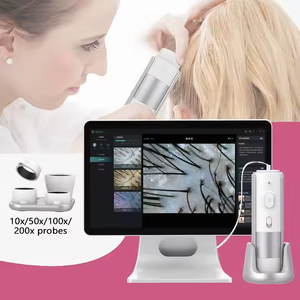
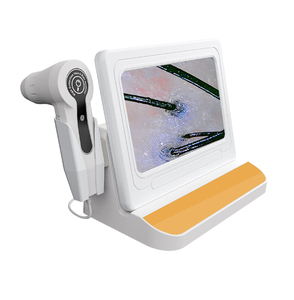
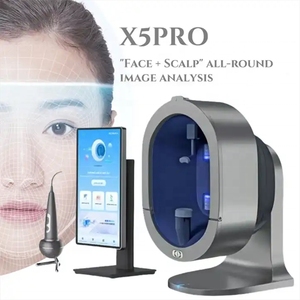
- Integration of Hair Follicle & Scalp Diagnostics: Modern aesthetic clinics demand hybrid systems (2-in-1 units) capable of switching between facial skin topography and scalp follicle density analysis for hair restoration tracking.
- AI-Driven Automated Scoring: Software algorithms must instantly compare client scans against age-matched clinical databases, providing standardized scoring scales that convert patient consultation into active cosmetic procedures.
- Modular OEM/ODM Hardware Expansion: Importers require customized industrial designs, white-label UI/UX software packages, and flexible API hooks to build proprietary aesthetic diagnostic ecosystems.