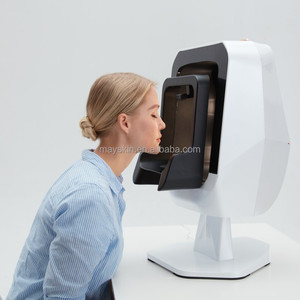
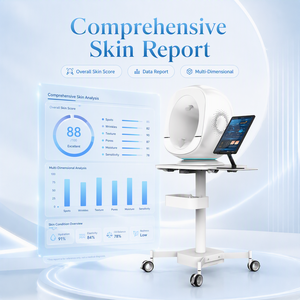
China Top Clinical Dermatology Scanner Factory & Supplier

Industry Whitepaper & Technical B2B Procurement Guide for Multispectral 3D AI Facial Skin Diagnostic Systems, Clinical CRO Validation, and OEM Manufacturing Excellence

Direct-From-Factory Clinical Portfolio

Featured Clinical Dermatology Scanners & Diagnostic Systems

Explore our medical-grade 3D, multispectral, and deep-learning AI facial analyzers engineered for aesthetic hospitals, clinical dermatologists, cosmetic CROs, and global beauty distributors.
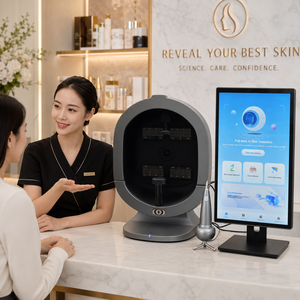
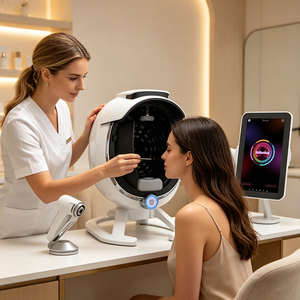
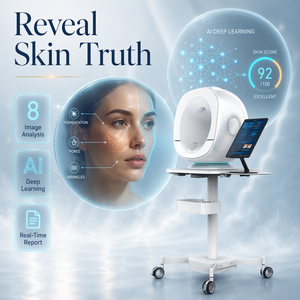
X5PRO 9-Spectral AI Facial Skin Analyzer Machine
X5PRO 9-Spectral AI Facial Skin Analyzer Machine for Face Moisture Pores Wrinkles UV Spot Analysis US/EU Compatible Commercial
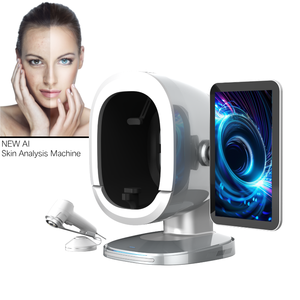
2026 Newest A6 3D Facial Scanner Skin Analyzer
2026 Newest A6 3D Facial Scanner Skin Analyzer 8 Spectrum AI Skin Analysis Machine For Blackheads And Pores Depth Detection
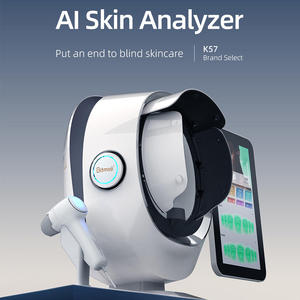
All in One Facial Skin Analyzer Machine 3D Camera
All in One Facial Skin Analyzer Machine 3D Camera 4 Spectra 8 Intelligent Images AI Analysis 30 Plus Detection Dimensions Clinic
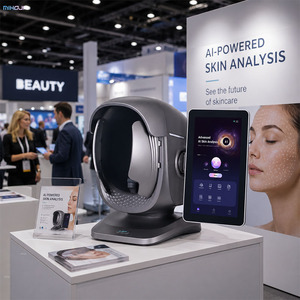
Newest 3D AI Intelligent Skin Analyzer Face Scanner
Newest 3D AI Intelligent Skin Analyzer Face Scanner Skin Analysis Machine Facial Tester Scanner Support 19 Languages
High Quality Portable Facial Analysis Skin Monitor Analyzer
High Quality Portable Facial Analysis Skin Monitor Analyzer 3D Digital Skin Analyzer Machine for Salon
Newest X3-pro-Skin-Analyzer Facial Scanner
Newest X3-pro-Skin-Analyzer Facial Scanner Skin Analyzer For Resaller 25 Languages X3 Skin Analysis Machine Wifi Contact
Meicet Mc88 Professional Facial Scanners
Meicet Mc88 Professional Facial Scanners Beauty Machine Smart Skin Analyzer Moisture Tester Face Skin Analyser for Beauty Salon
Scientific Research Anti Aging Verification 3D Skin Analyzer
Scientific Research Anti Aging Verification 3D Skin Analyzer Machine 4 Spectra AI 8 Intelligent Images 30 Plus Detection Clinic
Industry Whitepaper | Section 1

Executive Summary: The Technological Paradigm Shift in Clinical Dermatology Scanning

Over the past decade, aesthetic medicine and clinical dermatology have experienced a fundamental transformation from qualitative, subjective visual evaluations to objective, quantitative bio-photonic diagnostics. Traditional skin assessments relied heavily on static RGB imagery and manual palpation, methods susceptible to intra-observer variability and lighting inconsistency. Today, modern clinical dermatology scanners employ photometric stereo imaging, multi-spectral cross-polarization, and deep-learning convolutional neural networks (CNNs) to quantify sub-surface dermal structures with micrometric precision.

As the global hub for precision electro-optical manufacturing, China has established itself as the leading source for medical-grade clinical dermatology equipment. China's top clinical dermatology scanner factories combine ISO 13485 cleanroom assembly with proprietary algorithmic calibration engines. This infrastructure enables international medical device brands, Contract Research Organizations (CROs), cosmetic pharmaceutical giants, and chain aesthetic clinics to procure cutting-edge optical diagnostic platforms with unparalleled cost-to-performance metrics.

Information Gain Insight: Modern 3D skin scanners do not merely photograph skin surfaces; they decouple light-tissue interactions using specialized spectral bands (from UV 365nm to Far-Red 850nm). By isolating light absorption profiles of specific chromophores—primarily melanin and hemoglobin—these devices reconstruct sub-dermal vascular maps and quantify melanin concentration index (MCI) and erythema index (EI) before clinical manifestations become visible to the naked eye.
30+
Dermal Diagnostic Dimensions
9
Spectral Illumination Bands
< 15µm
Topographical Depth Resolution
25
Multi-Language Firmware Engine
Technical Architecture | Section 2

Deep Technical Architecture of Modern Dermal Scanners

To understand why China's OEM/ODM medical equipment manufacturers dominate global procurement, enterprise buyers must evaluate the foundational technologies powering 3D multispectral facial scanners. A high-performance clinical diagnostic device comprises four critical sub-systems:

1. Multispectral LED Arrays
Utilizing narrow-band light emitting diodes ranging from Standard White RGB, Cross-Polarized Light, Parallel-Polarized Light, to UV Wood's Light (365nm) and Infrared (850nm). Cross-polarization eliminates surface glare, exposing sub-epidermal vascular patterns, rosacea, and telangiectasia.
2. Photometric Stereo 3D Topography
By illuminating the patient's face from multiple precise spatial angles in rapid succession, high-resolution cameras capture micro-relief variation. Algorithmic software calculates 3D heightmaps, quantifying wrinkle depth (in micrometers), pore volume, and skin texture roughness ($Ra$ and $Rz$ parameters).
3. Deep-Learning AI Neural Networks
Trained on multi-ethnic clinical datasets exceeding 10 million standardized facial scans. AI models auto-segment topological regions (T-zone, U-zone, periorbital, nasolabial) to benchmark patient skin age against age-stratified normative databases with over 95% clinical repeatability.

Comparative Optical Modalities in Clinical Dermatology

The table below highlights the diagnostic capabilities across various optical imaging modalities integrated into modern skin scanner hardware produced by leading Chinese OEMs:

Optical Modality Wavelength Range Target Clinical Parameter Diagnostic Depth Layer Clinical CRO Application
Standard RGB Daylight 400nm – 700nm Macroscopic surface pigmentation, visible pores Stratum Corneum Baseline aesthetic documentation
Cross-Polarized Light 450nm – 680nm (Filtered) Erythema, Telangiectasia, Hemoglobin distribution Papillary Dermis Vascular therapy & soothing efficacy validation
Parallel-Polarized Light 450nm – 680nm (Specular) Surface texture roughness, fine wrinkles, desquamation Epidermal Surface Moisturizing & anti-wrinkle efficacy tracking
UV / Wood's Light 365nm – 395nm Porphyrin (P. acnes), sub-surface melanin, dyschromia Basal Layer & Upper Dermis Acne treatment & deep whitening clinical trials
Photometric 3D Reconstruction Multi-angle Structured Light Wrinkle depth ($\mu m$), pore volume ($mm^3$), skin sagging Dermal-Epidermal Junction Fillers, Botox & anti-aging RCT validation
Strategic Sourcing Roadmap | Section 3

Future Procurement Trends in Clinical Dermal Scanners (2026–2030)

As medical device procurement officers, clinic owners, and beauty equipment distributors negotiate OEM/ODM supply agreements, several emerging market dynamics must shape strategic sourcing decisions over the next five years:

1. Convergence of Predictive AI & Simulation Engines
Procurement focus is shifting from simple diagnostic recording to generative predictive modeling. Modern devices like the X5PRO 9-Spectral AI utilize generative adversarial networks (GANs) to simulate 3-to-5-year skin aging vectors or post-treatment outcomes (e.g., laser resurfacing or hyaluronic acid injections). Clinics utilizing predictive scanners report a 40% increase in patient conversion for premium treatment plans.
2. Cloud Tele-Dermatology & EMR Integration
Enterprise clinic networks require cloud-synchronized databases compatible with Electronic Medical Record (EMR) protocols and HIPAA/GDPR data privacy standards. Chinese manufacturers now provide RESTful APIs and HL7/DICOM data connectors, allowing multi-location hospital chains to centralize patient dermal histories seamlessly.
3. Firmware-Level Localization (25+ Languages)
Global distribution requires instantaneous adaptation to regional markets. China's premier manufacturers supply firmware engines supporting up to 25 languages out-of-the-box (English, Spanish, German, French, Arabic, Russian, Japanese, Portuguese, etc.), removing regional sales friction for global distributors.
4. ISO 13485 & Regulatory Compliance Focus
With stringent regulatory frameworks like EU MDR, US FDA 510(k) clearances, and NMPA standards, top-tier factories now incorporate built-in optical power meters, auto-calibration targets, and EMC compliance testing to guarantee clinical trial repeatability for pharmaceutical CROs.
Enterprise Capability | Section 4

Why Partner with China's Premier Dermatology Scanner Manufacturer

Our manufacturing facility stands at the intersection of precision optics, electronic engineering, and clinical dermatology science. Modeled after world-class technology baselines—such as Miravex Antera 3D® optical research principles—our factory provides global OEM/ODM partners with state-of-the-art production infrastructure, backed by documented quantitative validation:

Clinical CRO Validation

Our skin analyzers are backed by over 500+ published clinical research papers across 40+ countries. Cosmetic manufacturers and CROs utilize our devices to substantiate quantitative product claims for anti-aging serums, pigment reducers, and sunscreens.

Custom OEM/ODM Engineering

From custom industrial design, housing molds, colorways, and logo silkscreening to deep software customization (custom GUI, branding, reporting layouts, and proprietary algorithmic weighting), we offer turnkey manufacturing for medical brands.

Rigorous Calibration Standards

Every scanner undergoes 100% optical sensor calibration, color spectrum mapping, and luminance uniformity testing in Class 10,000 cleanroom environments prior to global shipment, guaranteeing sub-millimeter diagnostic precision.

Procurement Knowledge Base | Section 5

Frequently Asked Questions (B2B Procurement & Technical FAQ)

Address critical technical, operational, and commercial questions raised by clinical directors, medical device importers, and purchasing executives:

Q1: What makes 3D photometric stereo skin analyzers superior to standard 2D facial cameras?
Standard 2D cameras record flat pixel data subject to lighting distortion. 3D photometric stereo scanners combine directional multi-angle LED flashes to construct true 3D surface topography. This enables quantitative measurement of physical wrinkle depth (in micrometers), skin surface roughness ($Ra/Rz$), and volumetric pore measurements, providing objective mathematical metrics rather than visual estimation.
Q2: How does the multi-spectral light engine isolate deep pigmentation and vascular redness?
Our multi-spectral systems (ranging from 4 to 9 spectra) utilize cross-polarized light filters and specific narrow wavelengths. Cross-polarization neutralizes specular reflections from the stratum corneum, allowing light to penetrate into the papillary dermis. Software spectral unmixing algorithms then separate light attenuation caused by melanin (pigment) from attenuation caused by oxy-hemoglobin (vascular redness), providing independent heatmaps for both conditions.
Q3: Are your devices suitable for clinical trials and cosmetic CRO research?
Yes. Our high-end models (such as the 3D Scientific Research Anti-Aging Verification Scanner) are engineered specifically for clinical studies and cosmetic efficacy trials. They offer repeatable positioning headrests, auto-exposure controls, and statistical data exporting (CSV/PDF) for raw biophysical metrics, enabling CROs to validate anti-wrinkle, depigmenting, and barrier-repair formulations with high scientific rigor.
Q4: What OEM customization options are available for global distributors and brand owners?
We provide complete OEM/ODM solutions: hardware customization (casing design, custom colorways, laser engraving, brand packaging), software white-labeling (logo injection, customized skin score weighting, branded PDF diagnostic reports), and firmware localization (supporting over 25 languages including English, Spanish, German, French, Arabic, etc.).
Q5: What software updates and licensing models do you offer for bulk buyers?
Unlike software-as-a-service (SaaS) providers who charge recurring monthly fees per scanner, our standard wholesale supply agreements include perpetual software licenses with lifetime algorithmic updates. Software can be deployed on Windows workstations or cloud servers depending on clinic infrastructure requirements.
Q6: What electrical and environmental safety certifications do your devices carry?
All clinical skin analyzers produced in our facility comply with CE, FCC, and RoHS standards. Optical light sources undergo photobiological safety testing (IEC 62471) to ensure UV light spectra are 100% safe for ocular and dermal exposure during routine facial scans.
Q7: What is the typical lead time and minimum order quantity (MOQ) for factory direct orders?
For standard off-the-shelf units, our MOQ is 1 unit, with lead times ranging from 3 to 7 business days. For customized OEM orders (branded casing and software packaging), the standard MOQ is 10 to 50 units, with production delivery within 15 to 25 business days via air or sea freight.
Q8: How do you handle technical support, calibration, and warranty service globally?
We offer a comprehensive 2-year factory warranty on main hardware modules, supplemented by 24/7 online technical support, video calibration guides, and modular spare-part replacement kits. Remote desktop assistance is available for instant software troubleshooting and system setup.

Accelerate Your Clinical Dermatology Portfolio Today

Connect directly with China’s premier clinical dermatology scanner engineering team. Request full technical specifications, OEM pricing matrices, clinical study whitepapers, and product catalogs.