
Featured Next-Generation Portable 3D Skin Analyzers
Engineered by China’s premier optical laboratories, combining high-resolution multispectral sensors, AI-driven dermal mapping, and photometric stereo algorithms for precise clinical assessment.

X5PRO 9-Spectral AI Facial Skin Analyzer Machine
9 Spectral bands, Deep Moisture & UV Spot Analysis, US/EU Medical Standard Commercial Platform.
Contact Us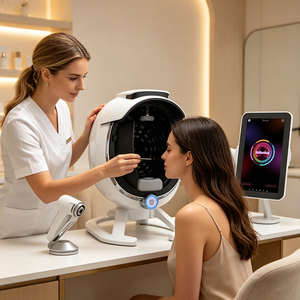
2026 Newest A6 3D Facial Scanner Skin Analyzer
8 Spectrum AI Skin Analysis, Blackhead & Sub-surface Pore Depth Quantitative Detection.
Contact Us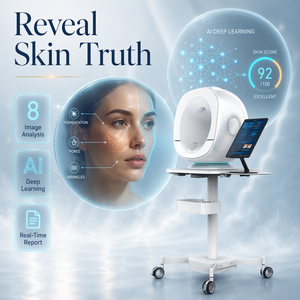
All in One 3D Camera Facial Skin Analyzer
4 Spectra, 8 Intelligent HD Images, AI Dermal Analysis across 30+ Detection Dimensions.
Contact Us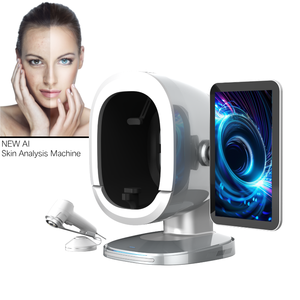
3D AI Intelligent Face Scanner Skin Analyzer
Multi-Language Firmware (19 Languages), High-Precision Surface Topography Mapping.
Contact Us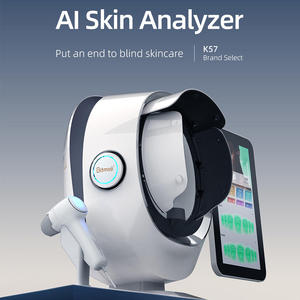
High-Quality Portable 3D Digital Skin Monitor
Ergonomic Form Factor for Aesthetic Clinics & Medical Salons, Instant RGB/UV/Polarized Scan.
Contact Us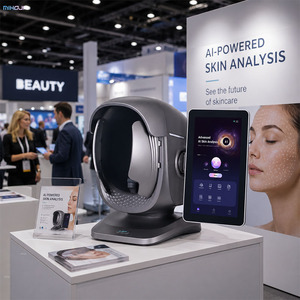
X3-Pro Reseller Edition Skin Analyzer
Wireless Cloud Sync, 25 Languages Integrated, Commercial CRM Integration Ready.
Contact Us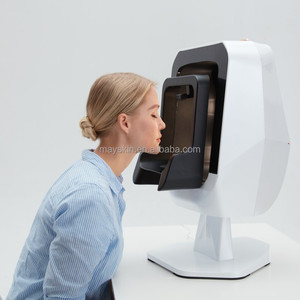
Meicet Mc88 Professional Facial Scanner
Smart Hydration & Sebum Micro-Testing, Spectral Separation for Erythema & Pigmentation.
Contact Us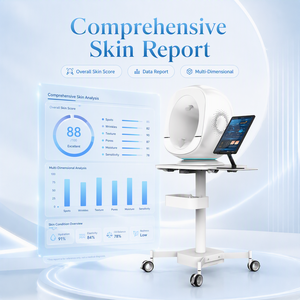
Scientific Clinical 3D Skin Analyzer
Anti-Aging Efficacy Verification, CRO Research-Grade 3D Volumetric Wrinkle & Texture Measurement.
Contact UsThe Paradigm Shift in Skin Diagnostics: From 2D Imaging to 3D Photometric Stereo Science
The global cosmetic, pharmaceutical, and aesthetic medicine sectors are undergoing a massive transition from qualitative visual skin consultation to objective, quantitative sub-surface imaging. Historically, aesthetic practitioners relied on standard 2D RGB photographs, which suffered from inconsistent lighting, angle variance, and an inability to calculate volume, depth, or precise hemoglobin/melanin concentration.
Today, leading manufacturers and exporters in China have leveraged advanced optics and computer vision—incorporating technology principles validated by benchmark systems like Miravex Antera 3D®—to deliver portable, highly accessible 3D skin analyzers. These devices utilize Photometric Stereo Imaging coupled with multi-spectral LEDs (ranging from 365nm UV to 850nm Near-Infrared) to construct micrometric 3D topographies of the skin surface and underlying tissue layers.
Key Technical Advantage: Photometric Stereo Reconstruction
By capturing sequential images under varied, directionally controlled light sources, modern portable 3D analyzers mathematically reconstruct the skin surface's unit normal vectors. This allows clinicians to isolate surface geometry from skin color, measuring wrinkle depth ($\mu m$), skin roughness ($Ra, Rz$), pore volumes ($mm^3$), and vascular erythema with unprecedented reproducibility.
Comparative Analysis: Traditional 2D Scanners vs. Next-Gen Portable 3D Analyzers
When selecting equipment for aesthetic chains, clinical trial Contract Research Organizations (CROs), or cosmetic formulation labs, procurement officers must evaluate hardware capabilities against clinical verification standards.
| Evaluation Parameter | Legacy 2D Skin Scanners | China Advanced Portable 3D Analyzers | Clinical Impact & Benefit |
|---|---|---|---|
| Imaging Architecture | Single planar RGB camera + Diffuse White Light | Multi-Spectral Photometric Stereo + 3D Depth Sensor | Eliminates shadow artifacts; renders true 3D spatial geometry. |
| Spectral Wavelengths | 2 to 3 Spectra (RGB, Basic UV) | 4 to 9 Spectra (RGB, Cross-Polarized, Parallel, UV, Wood's, IR) | Detects deep dermal pigmentation, porphyrins, and vascular lesions. |
| Wrinkle Quantification | 2D pixel contrast estimation (High error margin) | Volumetric & Depth Mapping ($\mu m$ / $mm^3$) | Accurate pre/post anti-aging efficacy verification for fillers & lasers. |
| Pigment & Redness Isolation | Combined surface color representation | Mathematical Spectral Unmixing (Melanin vs. Hemoglobin) | Differentiates hyperpigmentation from micro-vascular inflammation. |
| Portability & Form Factor | Bulky tabletop hoods (8–15 kg) | Handheld / Compact Modular (1.5–4.5 kg) | Enables point-of-care consultations and global field trials. |
| Enterprise Localization | Single/Dual language software | 19 to 25+ Embedded Languages + Cloud SDK | Seamless deployment across multinational clinical networks. |
Core Technological Innovations Driving Chinese 3D Skin Analyzer Manufacturers
Multi-Spectral Optical Engines
Utilizing precise LED narrow-band lighting. Cross-polarization cuts specular reflection to inspect dermal layers, while UV light at 365nm highlights active porphyria and subsurface photo-damage.
Deep Learning AI Biomarker Extraction
Trained on vast multi-ethnic dermatological datasets, onboard neural networks automatically segment pores, blackheads, fine lines, acne scars, and brown spots with over 98% repeatability.
Quantitative Sub-Surface Analytics
Measures melanin distribution indices and vascular erythema maps separately, allowing dermatologists to track inflammatory response during laser therapy or topical treatments.
Future Procurement Trends for Global B2B Buyers (2026–2030)
As international distributors, aesthetic chains, and pharmaceutical brands seek reliable OEM/ODM partners in China, the key buying drivers have evolved beyond hardware cost. Modern procurement strategy centers on systemic software integration, compliance, and long-term diagnostic accuracy.
1. Cloud-Native SaaS Integration & Multi-Clinic Centralization
Global chain clinics require centralized client management. Leading Chinese manufacturers now export 3D analyzers equipped with RESTful APIs, enabling automated synchronization of client scan histories, treatment records, and 3D visual comparisons across multi-regional locations.
2. CRO Efficacy Verification Protocols
Cosmetic brand R&D centers require quantitative proof for claim support (e.g., "reduces wrinkle depth by 18% in 14 days"). Top-tier Chinese factories provide software modules specifically engineered to output statistical mean values, standard deviations, and volumetric surface maps compliant with ISO and GCP guidelines.
Procurement Checklist for Import Directors
- Optical Sensor Resolution: Minimum 20 MP high-CMOS sensor with anti-distortion lens.
- Illumination Uniformity: Closed illumination chamber or regulated LED ring to eliminate ambient light interference.
- Certifications: CE Medical, FDA 510(k) clearance or registration, ISO 13485 manufacturing standard.
- SDK/API Availability: Capability to brand UI and export raw CSV/3D mesh data files (.OBJ/.STL).
- Localization Support: On-demand firmware localization (Supporting 19–25+ languages).
Why Partner with China’s Premier 3D Skin Analyzer Exporters
China's medical aesthetics manufacturing ecosystem in hubs like Shenzhen, Guangzhou, and Beijing has matured into a global center of excellence. By pairing cutting-edge optical engineering with agile software development, Chinese factories provide unmatched value for OEM/ODM partners worldwide.
End-to-End R&D & Optical Calibration
From custom optical lens assembly to sub-nanometer spectral calibration, Chinese top tier exporters enforce strict cleanroom production protocols ensuring unit-to-unit consistency across thousands of manufactured systems.
Flexible OEM/ODM Customization
Factories offer complete white-label solution engineering, including custom exterior mold design, software GUI re-skinning, algorithm threshold adjustment, and custom localized packaging.
Global Supply Chain & After-Sales Warranty
Robust international logistics, comprehensive 24–36 month warranties, modular component replacement design, and remote software update architecture guarantee minimal operational downtime for clinics worldwide.
Frequently Asked Questions (FAQ) for B2B Importers & Distributors
Q: How does 3D Photometric Stereo differ from conventional 2D skin scanners?
Conventional 2D scanners take flat photographs and estimate skin features based solely on pixel darkness or color contrast, which varies wildly under different lighting conditions. Portable 3D skin analyzers use multiple directional lights to calculate the 3D surface topography ($\mu m$ resolution). This enables absolute volumetric measurements of wrinkles, pores, and scars unaffected by surface skin color.
Q: What certifications are required to import portable 3D skin analyzers into Europe and North America?
For commercial aesthetic use, CE-EMC, CE-LVD, and FCC testing reports are required. For medical diagnostic positioning, manufacturers must hold ISO 13485 certification, CE Medical Directive compliance (MDR), and FDA registration or 510(k) clearance depending on the intended clinical claims of the device.
Q: Can OEM suppliers customize the software UI and algorithm metrics for our brand?
Yes. Leading Chinese exporters provide full OEM/ODM software customization. This includes custom branding on report printouts, tailored software user interfaces, custom language packs (supporting 19 to 25+ languages), and integration of proprietary scoring algorithms for cosmetic product recommendations.
Q: How accurate are these portable devices for measuring melanin and vascular redness across different Fitzpatrick skin types?
By utilizing cross-polarized light and mathematical spectral unmixing algorithms, modern 3D analyzers isolate light absorption profiles of melanin and hemoglobin. This eliminates surface reflection interference, rendering accurate quantitative pigment and erythema maps across all Fitzpatrick skin types (Types I–VI).
Q: What is the typical lead time and warranty support for bulk B2B orders?
Standard production lead times for OEM orders range from 10 to 20 business days depending on customization requirements. Leading exporters provide 2 to 3 years of hardware warranty, modular spare part support, and lifelong cloud-based software updates.
Empower Your Brand with China's Leading 3D Skin Analyzer Manufacturer
Whether you are an international aesthetic equipment distributor, cosmetic brand owner, or clinical research institute, our engineering team provides tailored OEM/ODM solutions, factory-direct pricing, and comprehensive technical support.