

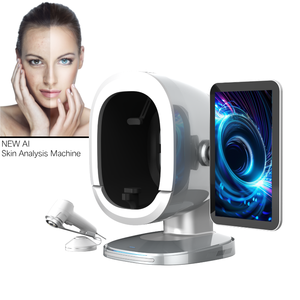

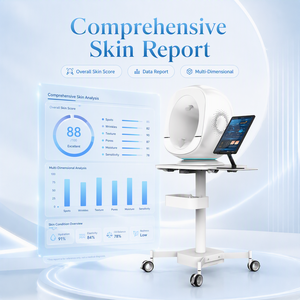
Executive Whitepaper: The Evolution of Quantitative Facial Analysis in Modern Dermatology & Medical Aesthetics
The global medical aesthetic and cosmetic research landscape is experiencing a fundamental paradigm shift. Subjective visual assessments by practitioners are rapidly being superseded by objective, quantitative, and reproducible skin analysis technologies. As a leading specialized manufacturer and exporter based in China's high-tech photonics manufacturing hubs, our enterprise delivers high-precision facial analyzers that bridge the gap between clinical research standards and commercial aesthetic consultation workflows.
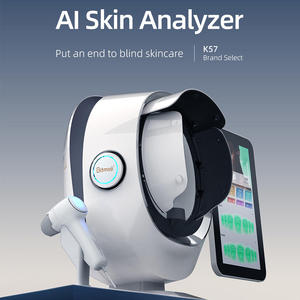
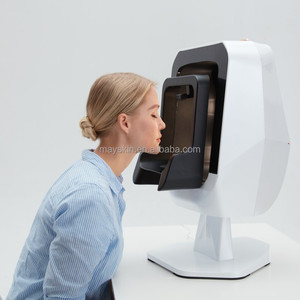
Modern clinical evaluation demands rigorous precision. Whether assessing the micro-topography of rhytids (wrinkles), mapping epidermal vs. dermal melanin concentration, or quantifying pore volume index, advanced multi-spectral facial scanners serve as the primary diagnostic foundation. This whitepaper details the technological mechanics, procurement parameters, and manufacturing benchmarks essential for international distributors, medical spas, and Contract Research Organizations (CROs) seeking high-value facial diagnostic hardware.
Multispectral Optical Array
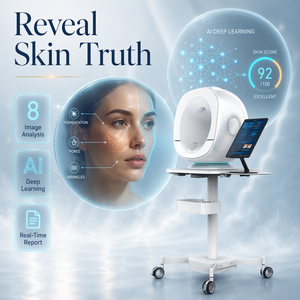
Utilizing RGB visible, Parallel-Polarized, Cross-Polarized, and UV 365nm spectral channels to isolate sub-surface vascular structures and deep pigment deposits.
3D Photometric Stereo Imaging
Algorithmic reconstruction of dermal elevation and depression profiles, enabling precise micrometer-level measurement of skin roughness and wrinkle depth.
Deep AI Pattern Recognition
Trained on over 10,000,000 clinically annotated dermatological data points to automatically categorize pore congestion, dyschromia, and skin aging indexes.
Optical Physics & AI Algorithms Behind Modern Skin Analysis
To deliver true Information Gain for clinical practitioners, high-end facial analyzers combine specific light spectrum manipulation with advanced computer vision. Standard photographic equipment fails to detect underlying physiological degradation because light reflected from the stratum corneum creates surface glare. Our factory's optical system solves this via controlled polarization filters and specific spectral wavelengths:
- RGB Standard Visible Spectrum: Captures surface skin color, visible pores, coarse wrinkles, and macroscopic lesions under daylight-balanced LED arrays (5500K color temperature).
- Parallel-Polarized Light (PPL): Enhances surface skin texture and specular reflections, isolating fine lines, skin smoothness variations, and micro-relief changes.
- Cross-Polarized Light (CPL): Eliminates surface specular reflection entirely. Light penetrates into the superficial dermis, revealing sub-surface erythema, telangiectasia, vascular inflammation, and hidden capillary dilation.
- UV / Deep Blue Spectrum (365nm–405nm): Excites endogenous fluorophores in the skin. Porphyrins produced by Propionibacterium acnes fluoresce in orange-red, while epidermal melanin absorbs UV light strongly, bringing hidden sun spots, senile lentigines, and melasma into high contrast before they become visible to the naked eye.
Comparative Matrix: Multi-Spectral & 3D Diagnostic Hardware Standards
| Diagnostic Parameter | Standard Commercial Analyzer | High-End 9-Spectrum AI Analyzer | Clinical 3D Photometric System |
|---|---|---|---|
| Optical Spectrum Channels | 2 to 3 (RGB / Basic UV) | 8 to 9 (RGB, CPL, PPL, UV365, Wood's, Red, Brown, Spot) | 4 Dynamic Polarization Angles + 3D Texture |
| Wrinkle Measurement | 2D Line Length Count | 2D Area + Color Intensity Ratio | 3D Volumetric Depth & Roughness (Ra/Rz) |
| Pigment Segmentation | Combined Surface Color | Isolated Epidermal vs Dermal Melanin Layering | Sub-surface Chromophore Concentration Map |
| Image Resolution | 12 MP to 16 MP Sensor | 24 MP to 36 MP Ultra-HD Optical Sensor | Industrial Stereo Vision Dual-Camera System |
| Software Localization | English Only | Up to 25 Languages Supported | Multi-language SDK / Cloud API Ready |
| Recommended Use Case | Basic Retail / Salon Counter | Commercial Aesthetic Clinic / MedSpa | CRO / Pharmaceutical R&D / University Research |
Strategic B2B Procurement Trends (2026–2030)
As international buyers, distributors, and aesthetic chain owners evaluate global suppliers, several key macro trends are shaping procurement decisions for facial analyzer equipment:
1. Shift Toward Cloud-Based Multi-Terminal Diagnostic Ecosystems
Single-station analyzers locked to a local desktop are rapidly being phase out. Modern healthcare and aesthetic chains demand cloud-synchronized databases where a client scan performed at branch A can be securely accessed by medical practitioners at branch B. Our export models integrate encrypted cloud storage compliant with international data governance standards.
2. Seamless Integration with Energy-Based Aesthetic Devices
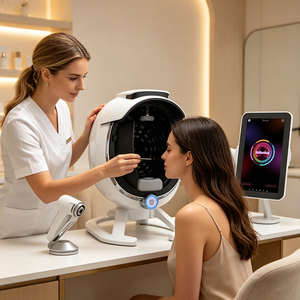
Facial analysis is no longer an isolated consultation step; it is the core driver of treatment protocol sales. Leading MedSpas purchase facial analyzers that auto-generate customized treatment pathways linking identified skin concerns directly to specific aesthetic procedures (e.g., recommending 1540nm non-ablative fractional laser for sub-surface collagen degradation or IPL for cross-polarized vascular redness).
3. High Demand for OEM/ODM Software Customization
Global cosmetic brands require customized diagnostic UI, proprietary scoring equations, and branded report printing to reinforce brand authority. China's top original equipment manufacturers now provide deep software white-labeling, allowing distributors to customize UI themes, diagnostic metrics, and treatment recommendation engines.