
9-Spectral AI

High-precision facial scanners engineered for medical dermatology clinics, cosmetic R&D laboratories, and high-volume aesthetic chain operations.
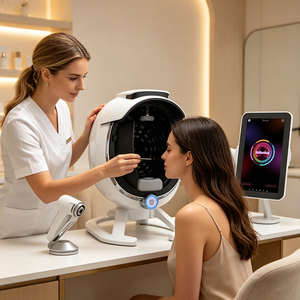
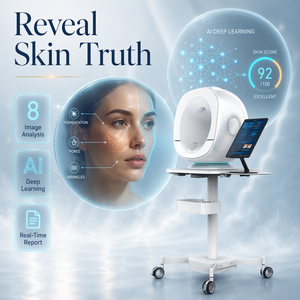
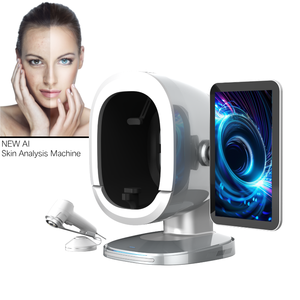
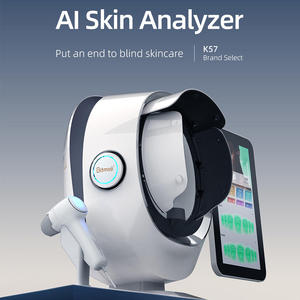
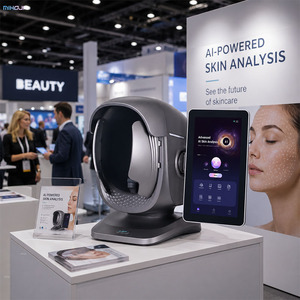
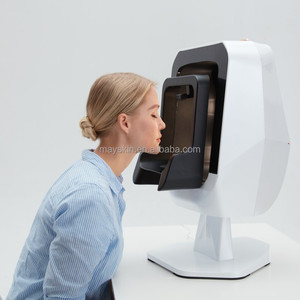
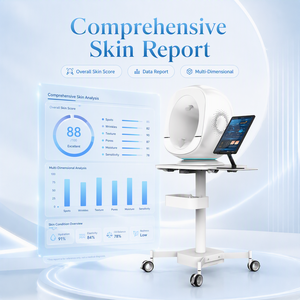
In the rapidly expanding global medical aesthetics, clinical dermatology, and cosmetic R&D sectors, objective evaluation of cutaneous parameters has evolved from a luxury marketing feature into a regulatory and clinical necessity. Traditional two-dimensional (2D) RGB photography—long constrained by ambient lighting variances, inconsistent patient positioning, and an inability to calculate volumetric skin changes—is being systematically replaced by 3D multispectral facial diagnostics platforms. China's optical instrument manufacturing ecosystems have emerged at the epicentre of this shift, establishing world-class wholesale OEM/ODM manufacturing pipelines that combine advanced photometric stereo imaging, cross-polarized light optics, and deep-learning artificial intelligence algorithms.
As global importers, aesthetic equipment distributors, and Contract Research Organizations (CROs) evaluate potential manufacturing partners, understanding the technical architectures underpinning modern 3D skin diagnostics equipment is paramount. This technical whitepaper explores optical physics, quantitative algorithm methodologies, future B2B procurement trends, and the operational advantages of sourcing certified medical diagnostic hardware directly from leading Chinese OEM suppliers.
Information Gain Insight: Unlike standard 2D scanners that only map surface color variations, modern 3D photometric stereo skin analyzers calculate topographic surface normal vectors ($N_x, N_y, N_z$) across micro-relief structures. This permits micro-inch quantitative depth modeling of fine lines, rhytids, pore volumes, and post-acne scarring down to sub-50-micron resolutions.
Clinical diagnostic precision relies upon the controlled emission of specific electromagnetic wavelengths to isolate physiological skin structures. Premier Chinese wholesale manufacturers integrate up to 9 distinct spectral modes within a single optical dome:
Calibrated daylight spectrum (5500K color temperature) captures macro surface aesthetics, surface spots, open comedones, overall skin tone uniformity, and morphological facial features under shadow-free illumination.
Eliminates specular glare from the stratum corneum, allowing deep optical penetration into the upper dermis to visualize epidermal melasma, dyschromia, sun damage, and sub-surface melanin distribution.
Enhances surface specular reflections, exaggerating fine surface micro-texture, dehydration lines, enlarged pore margins, smooth vs. rough keratin layer distribution, and fine epidermis desquamation.
Excites cutaneous porphyrins produced by Propionibacterium acnes, causing bright orange-red fluorescence. Simultaneously reveals hidden UV spots, basal layer hyperpigmentation, and subcutaneous lipid secretions.
Isolates hemoglobin absorption spectra to quantify facial redness, telangiectasia, rosacea activity, post-inflammatory erythema (PIE), and underlying vascular inflammation independently of melanin interference.
Convolutional Neural Networks (CNNs) trained on multi-ethnic clinical skin databases automatically annotate skin parameters across 30+ anatomical zones with over 98.4% diagnostic repeatability.
When establishing B2B distribution channels or upgrading clinical equipment portfolios, understanding the technological baseline ensures competitive differentiation. The table below delineates the key technical parameters between legacy entry-level diagnostic tools and modern Chinese industrial 3D skin analysis systems.
| Evaluation Parameter | Legacy 2D RGB Analyzers | Commercial 3D Multi-Spectrum Systems | Clinical-Grade 3D AI Diagnostics (Top Tier) |
|---|---|---|---|
| Optical Sensor & Resolution | 10 - 15 Megapixels (Consumer CMOS) | 20 - 28 Megapixels (Industrial Sony CMOS) | 35+ Megapixels Ultra-HD Sensor Arrays |
| Illumination Spectrum Modes | 3 Modes (RGB, UV, Polarized) | 6 - 8 Spectrum Modes | 9 - 12 Advanced Spectrum Modes |
| Topographic Surface Normalization | None (Flat Image Approximation) | Photometric Stereo 3D Reconstruction | Sub-micron Structured Light 3D Topography |
| Depth Detection Range | N/A (2D Plane Only) | 0.05 mm to 2.5 mm Volumetric Measurement | 0.01 mm to 5.0 mm Clinical Volumetric Depth |
| Diagnostic Dimensions | 6 - 10 Basic Indicators | 15 - 25 Comprehensive Indicators | 30+ Medical-Grade Clinical Dimensions |
| Multi-Language Cloud SaaS | Single/Dual Language Local App | 12 - 19 Languages, Local Database | 25+ Languages, HIPAA/GDPR Cloud Sync |
| OEM/ODM Customization SDK | Restricted / Hardcoded Software | Available Logo Branding & Housing Colors | Full API/SDK Access, Custom Neural Net Training |
The international market for non-invasive dermatological diagnostic devices is projected to grow at a CAGR of 11.4% through 2030. Wholesale distributors, chain aesthetic clinic networks, and skincare brand OEM procurement managers must structure their sourcing strategies around four pivotal technological evolutions:
End-consumers and clinical trial auditors no longer accept subjective "skin age scores" or arbitrary 1-100 scales. Future procurement mandates devices capable of calculating exact physical metrics: cubic millimeters ($mm^3$) of wrinkle volume reduction post-botulinum toxin injection, absolute area ($mm^2$) of hyperpigmentation clearance following picosecond laser treatment, and percentage changes in dermal vascular density. Devices featuring 3D surface topography mapping—such as the A6 and X5PRO series—provide the mathematical verification required by cosmetic regulators and discerning patients.
Modern med-spas operating across multi-city or global locations demand centralized client record synchronization. Sourcing trends show an exponential demand for 3D skin scanners equipped with encrypted cloud infrastructure. Through API integrations, diagnostic scans taken at regional branch clinics can be accessed instantly by off-site dermatologists, while brand headquarters aggregate anonymized skin health data to refine product formulations and target regional market trends.
Generative AI algorithms embedded within hardware firmware now allow clinicians to simulate 3-to-5-year aging projections based on current sub-surface damage (e.g., dormant UV melanin clusters and un-inflamed porphyrin deposits). Crucially, these systems simulate prospective treatment outcomes—visualizing the visual benefit of completing a recommended course of IPL photofacials or microneedling. This predictive sales enablement tool increases clinic consultation conversion rates by up to 40%.
With European (CE MDR) and American (FDA 510k) regulatory frameworks imposing stricter environmental and safety standards, global importers are prioritising Chinese exporters who offer modular component architectures. Interchangeable LED optical modules, recyclable aluminum-alloy chasses, and low-voltage energy-efficient power supplies minimize total cost of ownership and ensure long-term repairability.
As the world's primary manufacturing hub for optoelectronic medical devices, China offers global B2B clients unprecedented economies of scale, rapid prototyping, and end-to-end supply chain integration. Partnering with established wholesale exporters yields distinct operational advantages:
Leading manufacturing facilities operate medical-grade ISO Class 7 dust-free optical assembly cleanrooms. Every lens sensor and LED spectrum chip undergoes strict optical alignment calibration to eliminate aberration.
Software platforms support multi-language localizations (up to 25 languages including English, Spanish, German, French, Arabic, and Japanese) with custom UI brand styling, custom reporting headers, and localized cloud server deployment.
Diagnostic units undergo 72-hour continuous burn-in tests, high-humidity thermal aging, vibration shipping simulation, and voltage fluctuation protection checks prior to international export packaging.
Detailed technical and commercial answers tailored for wholesale buyers, medical equipment importers, and aesthetic chain procurement officers.