
Commercial Digital Skin Consultation Systems
Factory-direct medical & aesthetic facial scanners engineered for dermatology clinics, CRO research centers, cosmetic distributors, and medical spas worldwide.
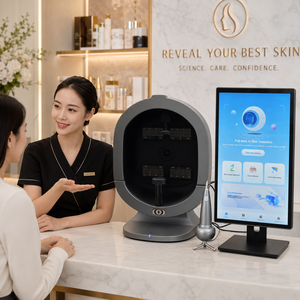
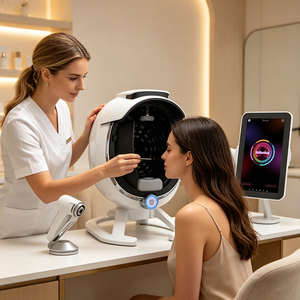
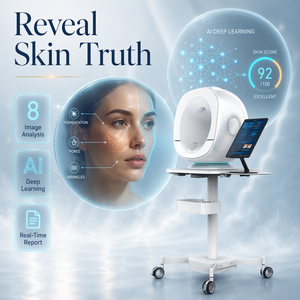
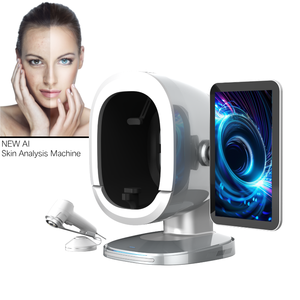
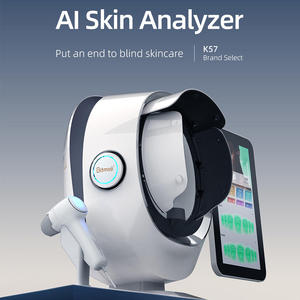
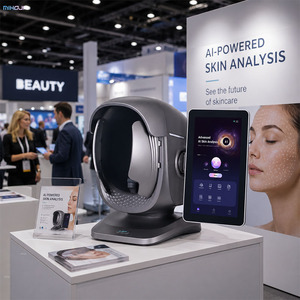
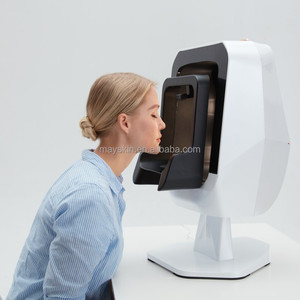
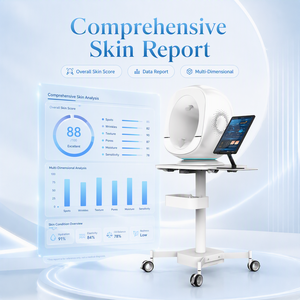
1. Executive Overview: The Paradigm Shift in Digital Dermal Consultation Systems
In the rapidly evolving landscape of clinical dermatology, aesthetic medicine, and commercial cosmetic science, the subjective visual assessment of skin conditions has officially been superseded by quantitative, reproducible diagnostic technology. As a premier China wholesale digital skin consultation system supplier and exporter, our engineering philosophy bridges the gap between hardware optical engineering and cloud-native artificial intelligence.
Modern aesthetic practices and global skincare brands no longer rely solely on qualitative client surveys. Instead, they require multi-spectral optical hardware capable of isolating sub-surface chromophores—specifically hemoglobin concentration, melanin distribution, porphyrin activity, and structural collagen topography. By converting raw optical signals into actionable, volumetric data points, contemporary digital skin consultation devices empower clinicians to validate treatment efficacy, streamline patient communication, and drive measurable ROI for aesthetic clinics.
Whether deployed in high-volume cosmetic surgery centers, contract research organizations (CROs) evaluating anti-aging actives, or retail cosmetic chains, these advanced diagnostic devices establish an indisputable visual baseline. By benchmarking skin metrics before and after therapeutic interventions, operators eliminate sales friction and foster long-term patient retention through empirical data visualization.
Core Strategic Takeaway for B2B Importers & OEM Buyers
The global skin analysis equipment market is undergoing a structural transition from basic RGB video-microscopes to multi-spectral, 3D photometric stereo imaging systems. Sourcing direct from China’s leading manufacturing exporters provides international buyers access to proprietary optical sensors, customizable multi-language SDKs, and enterprise-grade hardware at a fraction of Western legacy costs.
2. Technical Physics Behind 3D Photometric Stereo & Multi-Spectral Imaging
To understand the information gain provided by systems such as the X5PRO 9-Spectral Analyzer or the A6 3D Facial Scanner, one must evaluate the underlying optical physics. Legacy skin analyzers often utilized simple diffuse white light, resulting in surface glare and shadow distortion that obscured fine skin structures. Modern systems utilize structured polarization and narrowband spectral emission.
Cross-Polarized Lighting
Eliminates surface specular reflection, allowing optical photons to penetrate into the upper papillary dermis to map vascularity and deep-seated erythema.
Parallel-Polarized Lighting
Enhances surface topography visibility, rendering fine wrinkles, micro-relief, fine textures, and enlarged follicular openings with extreme contrast.
Narrowband UV Spectrum (365nm)
Excites epidermal porphyrins (metabolic byproducts of Propionibacterium acnes) to fluoresce, exposing latent acne vulgari risk zones before physical papules emerge.
By capturing raw image data under multiple distinct spectral illuminations (including RGB, Cross-Polarized, Parallel-Polarized, UV, Wood's Light, and specific NIR bands), our proprietary deep-learning algorithms perform spectral unmixing. This isolates melanin density maps and hemoglobin concentration indices independently.
Quantitative Parameter Breakdown (30+ Detection Dimensions)
Clinical efficacy verification requires high-dimensional data capturing both structural and chromatic anomalies across the facial landscape:
| Diagnostic Category | Primary Spectral Modality | Clinical Significance & Measurable Parameters |
|---|---|---|
| Epidermal Pigmentation | Parallel Polarized / Standard RGB | Quantifies freckles, sunspots, superficial lentigines, and overall skin tone uniformity index. |
| Dermal Pigmentation | Cross-Polarized / Sub-surface Spectral | Detects melasma patterns, deep dermal nevus, hyper-pigmentation risk, and post-inflammatory marks. |
| Vascular Architecture | Red-Spectrum Chromophore Unmixing | Maps telangiectasia, rosacea activity, facial spider veins, and inflammatory erythema zones. |
| Topographical Surface | 3D Photometric Stereometry | Calculates Ra/Sq roughness parameters, fine line depth, crow's feet volume, and nasolabial fold depth. |
| Follicular & Sebum Health | UV 365nm Fluorescence | Automates porphyrin count, clogged pore ratio, active sebaceous gland distribution, and comedone depth. |
| Moisture & Lipidic Barrier | Bio-impedance / Thermal Spectral | Measures stratum corneum hydration levels, transepidermal water loss (TEWL) risk, and sebum balance. |
3. Future Procurement & Technological Trends (2026–2030)
As international procurement heads, medical aesthetic equipment distributors, and OEM brand managers evaluate capital investments, staying ahead of technical curves is vital. Sourcing digital skin analyzers from leading Chinese manufacturing hubs offers distinctive advantages due to rapid hardware-software iteration cycles. Below are the key industry developments shaping the next 5 years:
A. Convergence of Generative AI & Predictive Aging Algorithms
The future of skin analysis extends far beyond diagnosing current skin health. Modern buyers demand systems integrated with predictive neural networks. By analyzing multi-spectral datasets against extensive global clinical image libraries, our systems generate highly accurate 3-to-5-year skin aging simulations. Furthermore, they can model treatment outcomes—visually demonstrating to clients how specific laser therapies, microneedling, or topical regimes will improve their collagen network over time.
B. Seamless SaaS Cloud Architecture & Multi-Clinic Telemedicine Integration
Enterprise clinic chains and franchised medical spas require centralized data management. Legacy standalone devices with localized hard drives introduce data silos. Next-generation systems (such as the All-in-One 3D Camera Series) utilize GDPR and HIPAA compliant cloud syncing. Clinicians can capture images in Location A, while medical directors or research specialists review diagnostics and update customized product recommendation engines from anywhere in the world.
C. Modular Hardware & Multi-Language System Localization
Global market penetration requires adaptability. Current procurement trends favor platforms supporting extensive language packs (up to 25 distinct languages including English, Spanish, German, French, Arabic, Russian, and Japanese). Hardware is also becoming more modular—featuring plug-and-play chin rests, auto-calibrating light boxes, and universal US/EU voltage compatibility to simplify international customs and field deployment.
Trend 1: Multi-Channel Light Source Integration
Migration from 3-spectrum systems to 8- and 9-spectrum optical rigs capable of capturing dermal micro-circulation and deep collagen degradation in a single 10-second pass.
Trend 2: Open API & EMR Connectivity
Enterprise buyers require direct integration between digital consultation software and electronic medical records (EMR) or clinic management software via REST APIs.
Trend 3: AI Product Recommendation Engines
Automated mapping of client diagnostic scores directly to a clinic’s specific inventory of skincare products or treatment packages, drastically boosting sales conversion.
Why Sourcing From Our China Wholesale Facility Drives Competitive Superiority
As an established manufacturing exporter of professional beauty machinery and facial analysis systems, we offer global partners an unmatched combination of clinical precision, manufacturing scalability, and complete OEM/ODM customization.
Optical Precision Calibration
Every device undergoes strict factory spectrophotometric calibration using standardized diffuse reflectance targets to ensure absolute color accuracy across all spectral bands.
Full OEM/ODM Branding
Custom industrial design, exterior chassis colorways, customized software UI logos, boot screen animation customization, and tailored product database integration.
Global Compliance & Support
CE, FDA compliant manufacturing standards, ISO13485 quality control protocols, 24/7 technical support, and comprehensive worldwide warranty coverage.
4. Frequently Asked Questions (B2B Procurement & Technical Diagnostics)
Find definitive technical and procurement answers designed for importers, clinic chain owners, and aesthetic distributors.
Q1 What makes 9-spectral AI skin analysis superior to traditional 3-spectrum devices?
Traditional 3-spectrum skin analyzers primarily rely on basic RGB diffuse lighting, polarized light, and simple UV illumination. While effective for basic surface observation, they lack the spectral resolution needed to isolate specific chromophores. 9-spectral systems (such as the X5PRO) incorporate narrow-band wavelengths across Wood's light, infrared, cross-polarized, and micro-spectral channels. This allows deep-layer dermal mapping, distinguishing deep-seated melasma from superficial sun damage, and isolating early-stage inflammation before it becomes clinically visible on the skin's surface.
Q2 How does a digital skin consultation system increase revenue for aesthetic clinics and medspas?
Digital consultation systems act as objective, visual sales tools. By providing patients with an empirical score across 30+ skin dimensions, clinicians eliminate subjective debate. Before-and-after image overlays definitively prove the efficacy of high-ticket treatments (such as laser resurfacing, RF microneedling, or chemical peels). Studies show that clinics utilizing 3D skin analysis experience up to a 35% increase in treatment plan conversion and significantly higher client retention rates.
Q3 Are your skin analyzer machines compatible with international power grids and software regulations?
Yes. All wholesale units exported from our facilities feature universal wide-range power supplies compatible with 110V–240V, 50/60Hz grids (US/EU/UK/AU plug standards available). Software platforms support GDPR-compliant local database encryption or cloud synchronization options, ensuring compliance with global medical privacy standards.
Q4 Can we customize the software with our own skincare brand's product recommendation database?
Absolutely. Our OEM/ODM service allows distributors and skincare brands to preload custom product catalogs into the software system. When the AI skin analyzer identifies specific conditions—such as severe stratum corneum dehydration or elevated porphyrin counts—the software automatically recommends the corresponding skincare products or clinical treatments tailored to your inventory.
Q5 What is the optical resolution and measurement accuracy of the 3D surface scanning module?
Our high-tier 3D facial scanners (such as the A6 3D and All-in-One Series) utilize industrial-grade CMOS sensors paired with high-definition optical lenses delivering imaging resolution up to 20 Megapixels. The 3D surface topography module reconstructs facial skin micro-relief with sub-millimeter depth accuracy, allowing precise volumetric measurement of wrinkle depth, pore volume, and skin texture roughness indices (Ra/Sq).
Q6 What support is provided for international wholesale orders, software updates, and warranty servicing?
We provide comprehensive support for our international wholesale partners:
- Warranty: 2-year full structural hardware warranty with expedited spare parts dispatch.
- Software Updates: Free lifetime OTA (over-the-air) software and AI algorithm upgrades.
- Technical Support: Remote desktop diagnostic support and dedicated technical engineers available for multi-language troubleshooting.
- Logistics: Secure international freight including air express, sea freight, and DDP/DAP customs clearance assistance.
Q7 How does the multi-language UI benefit global distributors?
Our skin consultation platforms support up to 25 major international languages natively within the user interface. This enables global distributors to order standardized hardware configurations in bulk and seamlessly deploy them across diverse international regions without needing regional software modifications.
Q8 What is the typical Minimum Order Quantity (MOQ) for OEM customization?
For standard off-the-shelf wholesale units, our MOQ starts at just 1 unit. For custom OEM branding (including custom chassis painting, logo silk-screening, and tailored software branding), our flexible MOQ begins at 5 to 10 units depending on the complexity of modification. Contact our sales team for detailed project quotes.
Transform Your Skin Consultation Capabilities Today
Partner directly with China's leading digital skin consultation system manufacturer. Access competitive wholesale pricing, superior optical hardware, and complete OEM software customization.