
Featured Wholesale Wrinkle Analysis & 3D Facial Scanners
Commercial-grade diagnostic machines engineered for cosmetic R&D laboratories, dermatological clinics, aesthetic med-spas, and global distributors.
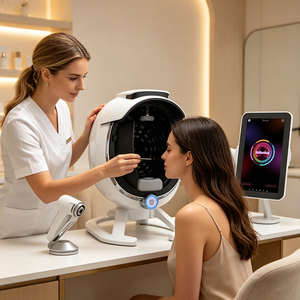
2026 Newest A6 3D Facial Scanner Skin Analyzer 8 Spectrum AI Skin Analysis Machine For Blackheads And Pores Depth Detection
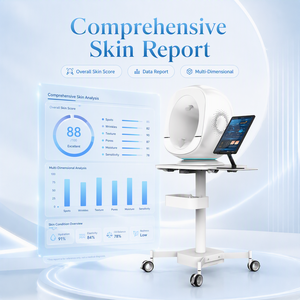
Scientific Research Anti Aging Verification 3D Skin Analyzer Machine 4 Spectra AI 8 Intelligent Images 30 Plus Detection Clinic
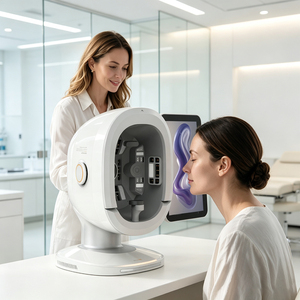
2026 Smart 3D AI Skin Analyzer 8 Spectrum Skin Scanner Facial Analysis Machine For Detection Of Wrinkles Blackheads Oil Spots
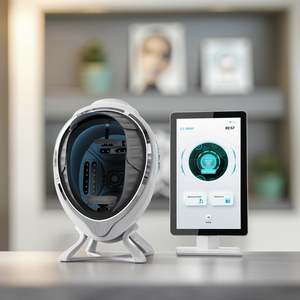
Latest AI 3D Skin Analyzer Moisture Pore Analyzer Facial Skin UV Spot Analyzer Detector Face Scanner Machine Dermatologist
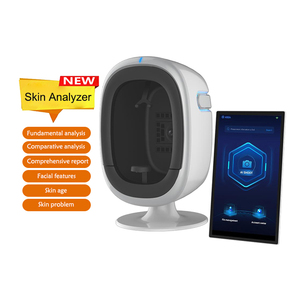
Kin Analysis Beauty Equipment 3D Facial Scanner Esthetician Supplies Visia Bitmoji Skin Analyzer Skin Analysis Machine
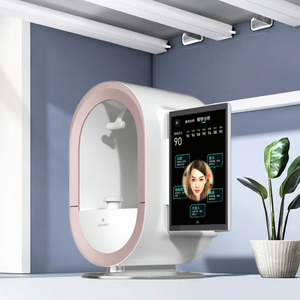
Portable Smart 3D Magic Mirror AI Face/Skin Analyzer Wrinkle Analysis LED US Plug Android Cloud Storage Professional Commercial
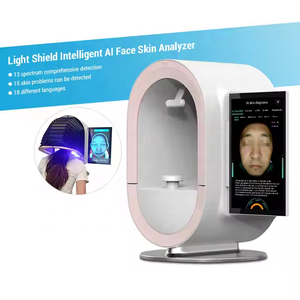
2025 Newest Korean Skin Analyzer Machine 3D Face Scanner With AI Technology Professional Skin Care Device For Home And Spa
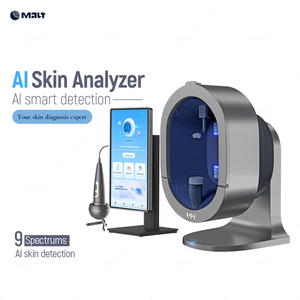
3D AI Skin Analyzer Portable Professional Facial Scanner Moisture Pigment Wrinkle Tester Salon Home Use HD Camera Multi Language
Whitepaper: The Physics and Algorithm Framework of 3D Facial Wrinkle Analysis
In modern aesthetic medicine, cosmetic dermatology, and clinical trial validation for anti-aging therapeutics, the evaluation of facial wrinkles has shifted from subjective visual scales (such as the Fitzpatrick Wrinkle Scale or Lemperle Rating Scale) to quantitative, highly reproducible sub-millimeter 3D optical topography. China's leading manufacturing hub for optoelectronic medical devices has advanced this transition by combining high-precision multi-spectral hardware with deep neural network (DNN) spatial geometry processing.
When professional procurement teams search for a reliable China Wholesale Facial Wrinkle Analysis Device Supplier, the primary technical consideration lies in how light interacts with skin layers (stratum corneum, epidermis, and dermis) under controlled illumination modalities to calculate depth, volume, directionality, and progression vectors of facial lines.
Photometric Stereo 3D Topography
By capturing facial images under multiple directional light sources in sequence, the device calculates surface normal vectors at every pixel. This enables micrometer-level calculation of wrinkle depth ($R_z$), roughness ($R_a$), and volume loss ($mm^3$).
8-Spectrum Optical Isolation
Combining RGB visible light, Cross-Polarized Light (parallel and perpendicular), UV 365nm fluorescence, and narrowband spectral LED arrays to segregate dermal pigmentation, superficial wrinkles, vascular erythema, and porphyrin activity.
Deep AI Morphological Semantic Engine
Trained on multi-ethnic clinical skin databases comprising over 10 million standardized clinical scans, automatically classifying fine lines, static wrinkles, dynamic expression lines, and sagging vectors with clinical validation metrics.
Key Skin Diagnostic Parameters Measured by China Industrial-Grade Analyzers
Commercial suppliers from China offer advanced hardware that isolates skin features into distinct quantitative categories. These metrics provide objective baseline measurements for medical spas, clinical trials, and cosmetic ingredient development:
| Diagnostic Index | Measurement Unit | Optical Spectrum Used | Clinical & Aesthetic Relevance |
|---|---|---|---|
Future B2B Procurement & Technological Trends (2026–2030)
How global buyers, OEM brand owners, and medical equipment distributors are strategically adapting their sourcing criteria from Chinese manufacturing partners.
The global market for professional facial analysis systems is projected to expand at a CAGR exceeding 11.5% over the next decade. Driven by the rapid proliferation of non-invasive aesthetic procedures, clinical skincare brand validation, and personalized skincare compounding, buyers are demanding higher precision, faster scan speeds, and cloud-connected software architecture. Below are the pivotal procurement shifts shaping the industry:
1. Cloud Diagnostics & Multi-Clinic Centralization
Chain clinics and franchise med-spas no longer accept isolated desktop machines. Enterprise buyers prioritize equipment suppliers offering multi-tenant cloud storage, HIPAA/GDPR-compliant database syncing, and remote diagnostic dashboard APIs.
2. Integration of AI Skincare Product Recommendation Systems
Modern B2B purchasers require customized software white-labeling (OEM/ODM). Suppliers must provide systems that dynamically link diagnosed wrinkle depth or moisture deficiency to the buyer's proprietary cosmetic products or treatment protocols.
3. Portable Hybrid & Desktop Form Factors
While heavy full-head clinical hoods remain standard in research labs, portable handheld multi-spectral scanners and tablet-integrated "Magic Mirror" systems are experiencing explosive demand in retail beauty counters and mobile cosmetic consultations.
Technological Evolution: From Simple Optical Scanners to Deep AI 3D Topography
Understanding the technological trajectory of skin diagnostic equipment empowers B2B sourcing managers to select inventory with long commercial lifespans and superior resale margins:
- Generation 1 (Standard RGB Photographic Scanners): Basic digital photography utilizing standard diffuse lighting. Limited to superficial color observation (freckles, surface tone) with no structural depth or sub-dermal penetration capability.
- Generation 2 (Multi-Spectral Dual-Polarization Systems): Introduced cross-polarized filters to eliminate surface glare, allowing basic visualization of dermal pigmentation and superficial micro-vascularity. However, quantitative measurement remained manual and prone to human error.
- Generation 3 (3D Photometric Surface Topography): Integrated structured lighting and multi-directional LED arrays to create 3D elevation maps. Enabled accurate depth calculation ($R_z$) for wrinkle analysis and pore volume measurement.
- Generation 4 (Present Day - AI-Powered 8-Spectrum 3D Intelligence): Combines high-resolution 3D optics, ultra-narrowband light-emitting diodes, and deep convolutional neural networks (CNNs). Systems instantly detect fine lines, measure aging rate indexes, predict future wrinkle progression over 3–5 years, and generate comprehensive multi-language clinical documentation in under 15 seconds.
Why Partner With China’s Premier Wrinkle Analysis Device Manufacturers
Leveraging state-of-the-art optoelectronic cleanroom manufacturing, automated optical inspection (AOI), and ISO-certified quality management to deliver clinical-grade reliability.
Full OEM/ODM Customization Capability
Complete flexibility for hardware colorways, chassis industrial design, logo silk-screening, custom UI language translation, and dedicated software algorithm tuning matching your brand identity.
Rigorous Clinical Calibration & Optical Precision
Every camera module and light array undergoes strict darkroom spectrophotometer testing to guarantee precise wavelength emission (e.g., UV 365nm ± 2nm) for reproducible scientific research.
International Medical Compliance
Built under ISO 13485 medical device quality systems, meeting international safety and electromagnetic compatibility standards including CE Medical, ROHS, and FCC compliance.
Global Logistics & Engineering Support
Direct factory warranty support, modular replacement part dispatch, remote software update support, and dedicated B2B technical training for distributor sales teams worldwide.
Frequently Asked Questions (B2B Sourcing FAQ)
Essential guidance for procurement directors, medical equipment distributors, and aesthetic clinic chain buyers.
What makes 3D wrinkle analysis significantly superior to standard 2D facial skin analyzers?
Standard 2D skin analyzers rely purely on color pixel contrast, making them incapable of accurately distinguishing between surface hyperpigmentation shadows and actual physical skin depressions. 3D wrinkle analysis devices utilize photometric stereo illumination and surface normal vector calculation to capture real volumetric depth ($mm^3$), line width ($\mu m$), and surface profile roughness ($R_a$). This quantitative accuracy is essential for validating dermal filler injections, anti-aging serum efficacy, and clinical research trials.
What OEM/ODM customization services can China suppliers provide for wholesale orders?
As a direct factory supplier, we provide end-to-end OEM and ODM customization. Hardware services include specialized exterior casing colors, custom mold creation, laser-engraved company logos, and custom packing. Software services include customizable diagnostic reports, integration of your brand’s product recommendation logic, multi-language software localization (English, Spanish, French, German, Arabic, Portuguese, etc.), SDK integration, and white-label mobile/tablet app development.
How is the facial analysis data stored, and is it compliant with international data privacy regulations?
Our latest 2026 AI skin analyzer series supports both local encrypted client databases and secure cloud storage servers. The software architecture is engineered to adhere to strict international privacy protocols, including GDPR (General Data Protection Regulation) and HIPAA guidelines. Patient records can be pseudonymized or encrypted using AES-256 standards, giving clinics and med-spas complete security during data transmission and archiving.
What are the minimum order quantities (MOQ) and lead times for bulk wholesale orders?
Standard unbranded unit MOQs start at just 1 piece for sample evaluation. For custom white-label branding (logo silk-screen and software splash screen customization), standard MOQs typically start at 5–10 units. Complete custom industrial tooling or ODM chassis projects require tailored MOQ discussions. Production lead time for standard wholesale orders ranges from 3 to 7 business days, while customized OEM orders are typically fulfilled within 14 to 21 days depending on specification complexity.
What maintenance and recalibration routines are required for high-precision optical facial scanners?
To maintain high clinical precision, devices feature automated self-testing optical routines upon startup. The LED lighting arrays are rated for over 50,000 continuous operating hours with minimal lumen decay. Each machine includes a standard optical calibration card or reference target, enabling operators to perform quick automated recalibration within the software every 3 to 6 months to guarantee consistent color space and lighting intensity.
Can the software integrate with existing Electronic Health Record (EHR) or clinic management systems?
Yes, our high-tier commercial facial analysis platforms provide RESTful APIs and software development kits (SDKs). This allows smooth integration with enterprise clinic management platforms, CRM software, and Electronic Health Record (EHR) systems, allowing automated synchronization of client profiles, historical scan comparisons, and PDF diagnostic report attachments.