
Featured Clinical & Commercial Skin Profilers
OEM/ODM Medical-Grade Diagnostic Hardware & AI-Powered Spectral Analyzers

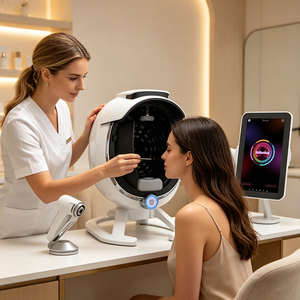
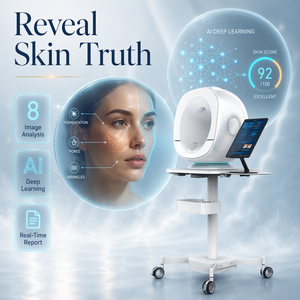
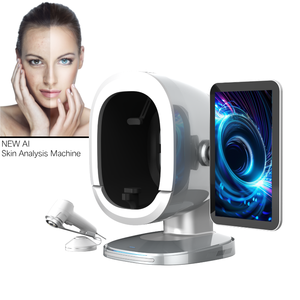
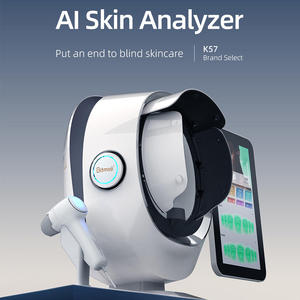

Executive Summary & Market Dynamics
The Paradigm Shift from Subjective Dermatoscopy to Quantitative 3D Optical Profilometry
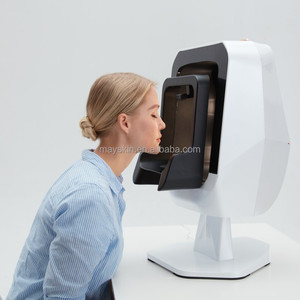
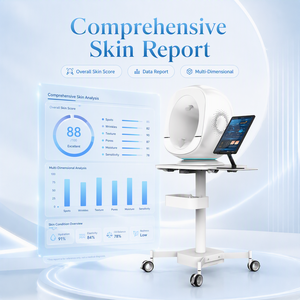
Information Gain Metric: Traditional clinical dermatology and aesthetic consultation relied heavily on visual assessment, subject to inter-observer variability exceeding 35%. Modern medical-grade skin profilers manufactured in China leverage high-resolution Photometric Stereo Imaging and Multi-Spectral Chromophore Mapping to quantify skin micro-relief, melanin distribution, vascular erythema, and deep sebum deposition down to sub-micron spatial resolutions.
The global market for medical skin analyzers and optical profilers is experiencing an unprecedented compound annual growth rate (CAGR) of 11.8%, driven by the convergence of clinical research standards with aesthetic medical practice. B2B importers, cosmetic Contract Research Organizations (CROs), hospital dermatology departments, and medical spa chains are rapidly phasing out 2D RGB imaging devices in favor of medical-grade 3D skin profiling systems. China's advanced optical manufacturing ecosystem has matured into the global hub for high-precision dermal diagnostics, delivering hardware that meets stringent international quality frameworks (ISO 13485, CE Medical Class II, FDA alignment) at direct-from-factory wholesale scale.
Core Technological Architecture of Medical-Grade Skin Profilers
Understanding Photometric Stereo Reconstruction, Spectral Decomposition & AI Algorithms
Photometric Stereo & 3D Topography
Unlike conventional cameras, medical skin profilers utilize directional illumination vectors combined with polarized filters to capture multiple images under varying light angles. Mathematical reconstruction calculates micro-surface normal vectors, deriving absolute surface roughness parameters ($R_a$, $R_z$, $R_q$) for clinical anti-aging verification.
Multi-Spectral Decomposition
Systems incorporate 4 to 9 distinct light spectra, including Standard White Light (RGB), Parallel-Polarized Light (PL), Cross-Polarized Light (X-PL), UV Light (365nm), and Narrow-Band Red/Green/Blue channels. This allows non-invasive isolation of epidermal melanin, dermal hemoglobin (rosacea/vascularity), and UV-induced deep spot accumulation.
Deep Learning AI Diagnostic Engines
Integrated neural networks trained on multi-ethnic clinical datasets automatically segment fine lines, enlarged pores, acne vulgaris lesions, porphyria, and hyperpigmentation. Algorithms compute biological skin age metrics against age-matched population benchmarks with over 98% diagnostic consistency.
| Diagnostic Spectrum / Technology | Primary Clinical Application | Biophysical Target | Quantitative Parameter Measured |
|---|---|---|---|
| Cross-Polarized Light (X-PL) | Erythema & Vascular Assessment | Sub-surface Hemoglobin | Vascular Density Index & Telangiectasia Area |
| Parallel-Polarized Light (PL) | Skin Surface Texture & Micro-Relief | Stratum Corneum Reflectance | Roughness $R_a$, Wrinkle Depth & Desquamation |
| UV Spectrum (365nm Fluorescence) | Porphyrin & Photodamage Detection | Propionibacterium acnes & Deep Melanin | Secretion Count & Sub-clinical UV Spot Area |
| 3D Photometric Reconstruction | Volumetric Facial Scanning | Dermal Contour & Depression | Pore Volume ($\text{mm}^3$), Atrophic Scar Depth |
| 9-Spectral AI Fusion | Comprehensive Clinical Anti-Aging Verification | Multi-layer Dermal Structure | Biological Skin Age Score & Moisture Gradient |
2026–2030 Future Procurement & Industry Trends
Strategic Directions Shaping Global Medical Skin Diagnostics Sourcing
1. Cloud-Connected Multi-Site Clinical Trial Synchronization
Future B2B procurement is heavily shifting toward skin profilers integrated with cloud storage and HIPAA/GDPR-compliant API pipelines. Pharmaceutical brands and cosmetic manufacturers require multi-center trial synchronization, enabling real-time comparative analysis of topical formulation efficacy across research sites worldwide.
2. Ultra-Portable Handheld Profilers with Enterprise Software
While stationary full-facial diagnostic booths dominate aesthetic clinics, wholesale demand for compact, ergonomic handheld devices (similar to the clinical Antera 3D® standard) is surging. Distributing high-resolution 3D dermal scanning into point-of-sale retail counters and mobile consultation units represents a major growth trajectory.
3. AI-Driven Predictive Skin Aging Simulation
Procurement specifications now increasingly demand generative AI algorithms capable of simulating 3-to-5-year skin aging trajectories based on current oxidative stress, UV damage index, and dermal elasticity loss. These predictive modules drive high-converting treatment plans for aesthetic clinics.
4. Multi-Language OEM Integration for Global Resellers
Global distributors require turn-key white-label solutions. Chinese factories lead the industry by supplying devices pre-programmed with 19 to 25 native languages, customizable software skins, branding options, and modular SDKs for seamless EMR (Electronic Medical Record) integration.
Why Source from Leading Chinese Profiler Manufacturers
Unrivaled OEM/ODM Capability, Precision Calibration, & Supply Chain Dominance
End-to-End Optical R&D
Top-tier Chinese factories maintain in-house optical engineering laboratories equipped with precision spectroradiometers and cleanroom assembly suites. Every medical skin analyzer undergoes strict darkroom optical calibration to guarantee consistency across production batches.
Global Regulatory Compliance
Leading wholesale suppliers operate under certified ISO 13485 quality management systems. Devices are engineered to meet global medical device safety regulations including CE Medical Mark, ROHS, FCC, and FDA Class II requirements.
Deep White-Label OEM Customization
From industrial outer casing redesign and custom color schemes to embedded software UI branding, custom database integration, and localized language localization (up to 25 languages), Chinese manufacturers provide total OEM flexibility.
B2B Sourcing Framework & Technical Checklist
Key Parameters for Importers, CROs, and Clinical Equipment Buyers
When evaluating China wholesale skin profiler manufacturers, procurement directors must inspect key technical specifications beyond marketing surface claims:
- Optical Sensor Resolution: Demand CMOS sensor specifications exceeding 20 Megapixels with dedicated optical lenses (minimizing edge distortion below 0.5%).
- Illumination Uniformity: Confirm LED light source color rendering index (CRI > 95) with cross-polarization alignment to eliminate surface glare.
- Software Repeatability Index: Verify coefficient of variation ($CV < 2\%$) during consecutive scans of identical calibration phantom targets.
- Cloud & SDK Architecture: Ensure availability of RESTful APIs, SQLite/MySQL local database exports, and custom reports in PDF/CSV formats.
Frequently Asked Questions (FAQ)
Expert Insights on Medical Skin Analyzer Procurement, Technology & Manufacturing
Request Factory Direct Wholesale Pricing & OEM Specifications
Connect directly with China's premier medical-grade skin profiler engineering team. Receive comprehensive product catalogs, SDK documentation, and custom volume discount quotations.