
Industrial-Grade Skin Analysis Systems for OEM/ODM Procurement
Select from our flagship multispectral 3D optical diagnostic platforms, engineered for seamless software integration, SDK customizing, and white-label hardware distribution.
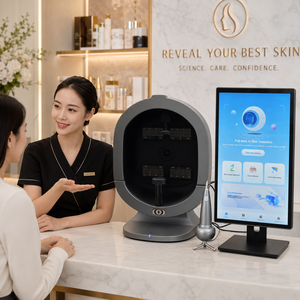
X5PRO 9-Spectral AI Facial Skin Analyzer Machine for Face Moisture Pores Wrinkles UV Spot Analysis US/EU Compatible Commercial
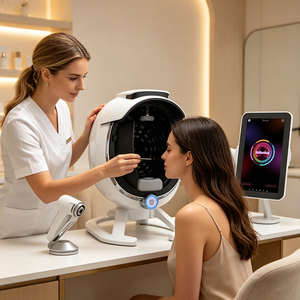
2026 Newest A6 3D Facial Scanner Skin Analyzer 8 Spectrum AI Skin Analysis Machine For Blackheads And Pores Depth Detection
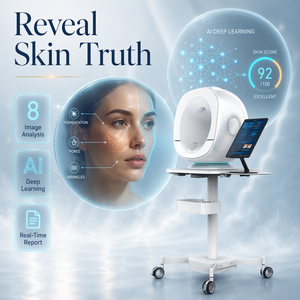
All in One Facial Skin Analyzer Machine 3D Camera 4 Spectra 8 Intelligent Images AI Analysis 30 Plus Detection Dimensions Clinic
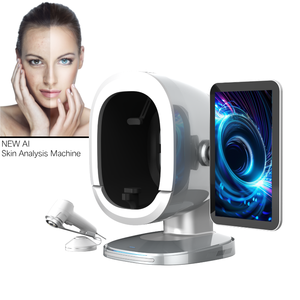
Newest 3D AI Intelligent Skin Analyzer Face Scanner Skin Analysis Machine Facial Tester Scanner Support 19 Languages
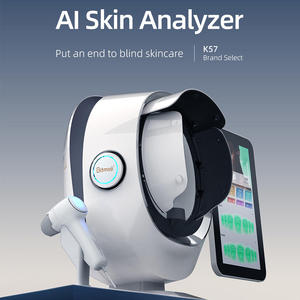
High Quality Portable Facial Analysis Skin Monitor Analyzer 3D Digital Skin Analyzer Machine for Salon
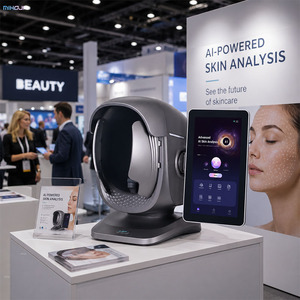
Newest X3-pro-Skin-Analyzer Facial Scanner Skin Analyzer For Resaller 25 Languages X3 Skin Analysis Machine Wifi Contact
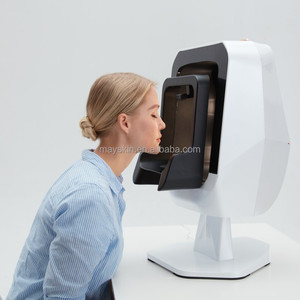
Meicet Mc88 Professional Facial Scanners Beauty Machine Smart Skin Analyzer Moisture Tester Face Skin Analyser for Beauty Salon
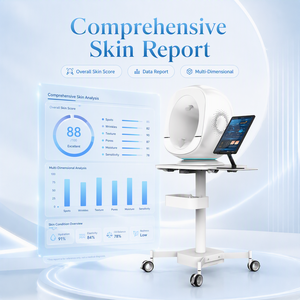
Scientific Research Anti Aging Verification 3D Skin Analyzer Machine 4 Spectra AI 8 Intelligent Images 30 Plus Detection Clinic
The Paradigm Shift in Quantitative Dermal Diagnostics
In the rapidly expanding landscape of clinical dermatology, cosmetic R&D, and medical aesthetics, relying on qualitative visual scoring for skin assessments is no longer scientifically or commercially viable. Modern dermatology research laboratories, Contract Research Organizations (CROs), and high-end aesthetic medicine providers require sub-surface accuracy, repeatability, and micro-level quantification. As leading Custom OEM Quantitative Dermal Analyzer Manufacturers & Exporters, our engineering architecture bridges the gap between hardware optical precision and software algorithmic intelligence.
Quantitative dermal analyzers utilize advanced Photometric Stereo Imaging and Multispectral Diffuse Reflectance Spectroscopy. Unlike legacy 2D photo-documentation devices that are highly susceptible to ambient light shifts and facial positioning angles, modern 3D skin analyzers capture high-resolution topographic surface maps along with sub-dermal chromophore distributions (melanin and hemoglobin concentration). This data enables objective measurement of wrinkle depth ($R_a$, $R_z$ roughness metrics), pore volume, vascular erythema index, and deep epidermal UV damage.
Core Optical & Algorithmic Architecture for OEM/ODM Buyers
When procuring skin analysis hardware for private label distribution or clinical trials, global brands require flexible hardware customization and robust API/SDK integration. Our manufacturing infrastructure supports end-to-end OEM/ODM engineering across three main optical and computational layers:
Multispectral Lighting Array
Customizable LED illuminators ranging from narrow-band UV (365nm) for porphyrin/pigment tracking to cross-polarized RGB and Near-Infrared (NIR 850nm) for vascular depth profiling.
3D Photometric Reconstruction
Proprietary mathematical algorithms capture multi-directional illumination vectors, reconstructing micron-accurate 3D elevation maps without requiring bulky laser line scanners.
AI Deep Learning Core
Trained on over 5 million clinical dermatological images, our diagnostic algorithms automatically segment facial regions of interest (ROI) and detect early-stage pathologies.
Technical Specification Comparison: Standard RGB vs. Industrial OEM 9-Spectral 3D Systems
To assist global medical device importers, distributors, and R&D managers in evaluating technical parameters, the table below highlights the performance metrics of our custom OEM quantitative dermal analyzer platforms versus typical commercial alternatives:
| Diagnostic Feature / Metric | Entry-Level RGB Scanners | Commercial 4-Spectral Analyzers | Custom OEM 9-Spectral 3D Systems (Our Engineering) |
|---|---|---|---|
| Illumination Modalities | Standard White Light LED | RGB, UV, Polarized Light | Custom 9-Band Array (UV 365nm to NIR 850nm + Cross-Polarized) |
| Surface Topography Accuracy | Estimated via 2D Shading | Basic 3D Depth Interpolation | Sub-Micron Photometric Stereo ($R_a$, $R_z$ Wrinkle Roughness & Volume) |
| Sub-Surface Chromophore Separation | Not Supported | Qualitative Color Masking | Quantitative Melanin (Concentration Index) & Hemoglobin Vector Mapping |
| Language Localization & UI | 1–3 Languages (Fixed) | 8–12 Languages | Up to 25 Languages Supported + Fully White-Labeled UI/UX |
| SDK / API Openness | Closed Proprietary Software | Restricted Export APIs | Full RESTful API, Python SDK, C++ DLLs & HIPAA-compliant Cloud Data Sync |
| Clinical Regulatory Compatibility | Consumer Grade | General Beauty Salon CE | ISO 13485 Manufacturing Standard, IEC 60601-1 Medical Safety Compliant |
Future Procurement Trends in Quantitative Dermal Diagnostics (2026–2030)
As global procurement managers evaluate next-generation equipment investments for pharmaceutical trials, cosmetic OEM brands, and medical spa networks, several key market dynamics are redefining product specifications:
1. Shift from Qualitative to Objective Anti-Aging Claims
Regulatory agencies like the US FDA and EU EFSA demand standardized quantitative proof for topical cosmetic and medical aesthetic treatments. Modern analyzers must output precise mathematical changes in dermal topography, such as percentage reductions in pore volume and micro-wrinkle volume.
2. Decentralized Clinical Trials & Portable Form Factors
CROs are moving away from heavy, stationary desktop towers toward lightweight, handheld, or modular 3D skin scanners. These portable instruments allow researchers to capture high-precision patient data across decentralized trial locations while maintaining identical optical calibration standards.
3. AI-Driven Predictive Treatment Simulation
B2B buyers increasingly expect diagnostic systems to include generative machine learning models capable of rendering realistic 3D treatment simulations (e.g., predicting 6-month collagen remodeling post-laser or post-injectable therapies) to boost consultation conversion rates.
Our OEM/ODM Enterprise Manufacturing Advantages
Partnering with an experienced original equipment manufacturer is essential for maintaining competitive margins, reliable software stability, and strict quality control. Our state-of-the-art manufacturing facility provides full vertical integration for quantitative dermal diagnostic equipment:
- Precision Optical Engineering: We design custom telecentric lens assemblies, narrowband spectral filters, and high-CRI LED arrays engineered specifically for human skin optics, eliminating distortion along facial curves.
- Software & Algorithmic Customization: Complete white-label branding, customized workflow interfaces, custom diagnostic index creation (e.g., proprietary client skin aging score), and multi-language support (19 to 25+ languages).
- Rigorous Calibration & Traceability: Every analyzer undergoes automated multi-point spectral intensity calibration and 3D surface depth verification using optical phantom targets prior to shipment.
- Global Regulatory Compliance & Export Quality: Fully certified under ISO 13485 quality management systems, our products comply with CE, RoHS, and FCC directives, streamlining market entry for global importers.
Frequently Asked Questions for B2B Importers & OEM Partners
Explore technical, manufacturing, and procurement details regarding our quantitative skin analysis hardware and software solutions:
Partner with a Leading OEM Quantitative Dermal Analyzer Manufacturer
Accelerate your clinical research, scale your skincare brand, or expand your medical device product line with world-class 3D multispectral imaging engineering.
Send an Inquiry