
Featured Commercial UV & 3D Skin Analyzer Systems
Explore our flagship OEM/ODM multi-spectral facial diagnostic systems engineered for distributors, medical cosmetic brands, and clinical research institutions.

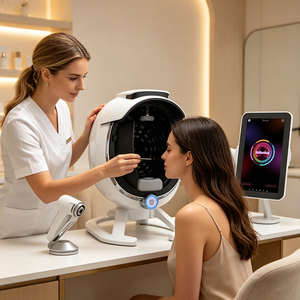
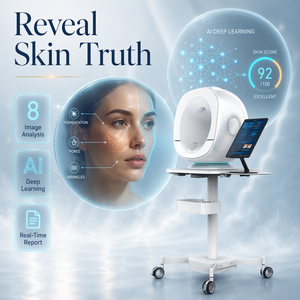
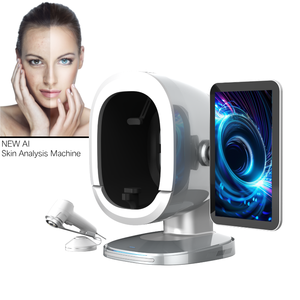
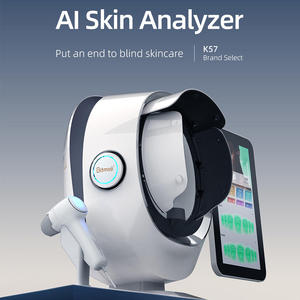

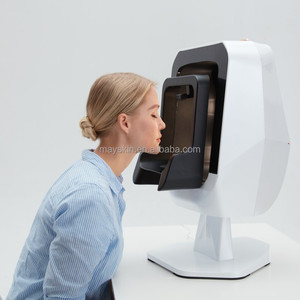
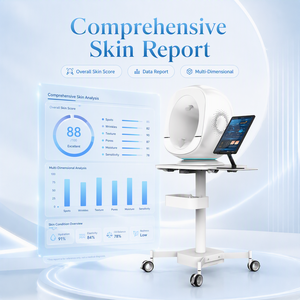
The Physics & Engineering Behind OEM Quantitative UV Damage Skin Scanners
In modern dermatology and advanced cosmetic clinical trials, traditional visual inspection fails to capture sub-surface solar damage, early-stage actinic keratosis precursor patterns, and deep epidermal pigmentation. As a primary Custom OEM UV Damage Skin Scanner Supplier, our engineering paradigm centers on multi-spectral optical coherence, polarized reflectance physics, and quantitative algorithm suites capable of measuring skin structures at microscopic depths.
Ultraviolet radiation (specifically UV-A and UV-B wavelengths ranging from 365 nm to 405 nm) penetrates the stratum corneum into the basal epidermal layer. When exposed to calibrated 365nm UV excitation light source arrays, sub-surface melanin clusters and bacterial metabolic byproducts (such as Cutibacterium acnes porphyrins) exhibit distinctive fluorescence emissions. By isolating these optical bandwidths using narrow-band pass filters and high-resolution CMOS optical sensors (up to 36 Megapixels), our custom skin scanners capture sub-clinical photodamage years before it surfaces on the skin exterior.
Photometric Stereo & 3D Surface Topography Integration
Combining UV damage scanning with 3D photometric stereo imaging provides a holistic diagnostic platform. By projecting calibrated light vectors from multiple angles in milliseconds, the device reconstructs a high-precision 3D topographical map of the skin micro-relief. This allows clinical trial CROs and aesthetic physicians to quantify wrinkle volume ($mm^3$), pore depth ($\mu m$), and skin texture roughness parameters ($R_a$, $R_z$) simultaneously alongside deep UV spot severity analysis.
| Diagnostic Modality | Illumination Source | Target Dermal Layer | Primary Measured Biomarker | Clinical & Commercial Application |
|---|---|---|---|---|
| UV Fluorescence Imaging | 365 nm - 385 nm UV-A LED | Basal Layer & Epidermis | Porphyrin, Sub-surface Melanin, Sun Damage | Sunscreen Efficacy, Acne Care, Early Solar Spot Detection |
| Cross-Polarized Light | Linear Cross-Polarized White LED | Superficial Dermis | Vascular Erythema, Rosacea, Capillary Loops | Laser Therapy Tracking, Anti-inflammatory Drug Studies |
| Parallel-Polarized Light | Co-Linear Polarized White LED | Stratum Corneum | Skin Surface Texture, Desquamation, Fine Lines | Moisturizer Validation, Anti-Wrinkle Skincare Claims |
| 3D Photometric Stereo | Multi-directional Angular LEDs | 3D Surface Contour | Wrinkle Depth/Volume, Pore Morphology ($\mu m$) | Injectable Dermal Filler Outcome, Anti-Aging Efficacy |
2026–2030 Global B2B OEM Purchasing & Technology Trends
The global market for professional facial diagnostic equipment is undergoing a rapid paradigm shift. As skincare consumers become increasingly scientifically literate and aesthetic clinics demand objective treatment validation, B2B buyers—including medical device distributors, pharmaceutical companies, cosmetic conglomerates, and chain med-spas—are re-evaluating their hardware supply chains. Below are the core trends shaping OEM/ODM procurement decisions through 2030:
1. Shift from Qualitative Images to Quantitative Biomarker Indices
Legacy skin diagnostic tools produced subjective color-coded images that relied on visual estimation. Future procurement mandates standardized numeric scales. Modern OEM hardware must output absolute values, such as Melanin Concentration Index ($0-100$), Wrinkle Severity Score, and UV Photodamage Area Percentage ($mm^2$). This quantitative data is essential for Contract Research Organizations (CROs) conducting double-blind clinical trials to scientifically prove cosmetic efficacy claims.
2. AI-Driven Cloud Architecture & API Integration
Hardware is no longer a standalone silo. Leading B2B buyers require facial scanners equipped with open API/SDK architecture. Our OEM custom solutions enable seamless integration into cloud-based Electronic Health Record (EHR) platforms, enterprise CRM systems, and AI-driven personalized product recommendation engines. Machine learning algorithms trained on over 10 million standardized clinical dermal profiles deliver automated diagnostic reports within seconds.
3. Universal Multi-Language & Global Compliance Standards
International medical aesthetics distributors require hardware scalable across multiple regions without software re-engineering. Custom OEM skin analyzer platforms now require built-in support for 25+ global languages (English, Spanish, German, French, Mandarin, Japanese, Arabic, etc.), along with dual voltage compliance (110V/220V US/EU) and global medical device certifications including FDA 510(k) pathway readiness, CE Medical Class IIa, and ISO 13485 quality systems.
4. Modular Hardware Customization (White-Labeling & Industrial Design)
Brand identity is paramount for tier-one cosmetic manufacturers and franchised aesthetic clinics. Standard off-the-shelf equipment lacks brand differentiation. Custom OEM/ODM contracts now demand bespoke industrial enclosure design, custom colorways, laser-engraved branding, tailored GUI software themes, and proprietary diagnostic algorithm tuning to align with specific product lines.
Why Partner with Us for Custom OEM/ODM Manufacturing?
Leveraging over 15 years of optical physics research, patented 3D imaging technology, and world-class manufacturing infrastructure.
Comprehensive Dermal Biomarkers & Diagnostic Capabilities
Our OEM skin analysis hardware platform measures over 30 specialized dermal dimensions. Designed for high precision, each parameter provides quantitative proof of skincare treatment efficacy and underlying dermal health:
- Sub-Surface UV Pigmentation & Solar Lentigines: Quantifies deep epidermal melanin non-visible under standard lighting, mapping cumulative lifetime sun exposure and hyperpigmentation risk.
- Vascular Redness & Hemoglobin Concentration: Measures superficial facial capillary loops, telangiectasia, rosacea flare-ups, and post-inflammatory erythema (PIE).
- 3D Wrinkle Topography & Fine Lines: Calculates mean wrinkle depth ($\mu m$), skin crease length ($mm$), and volumetric depression ($mm^3$) around periorbital and nasolabial regions.
- Pore Depth, Size & Morphology: Differentiates between clogged comedonal pores, structural aging pores, and excess sebum production areas.
- Porphyrin & Bacterial Fluorescence Mapping: Detects metabolic waste produced by C. acnes under 365nm UV excitation light, predicting acne outbreaks before inflammation becomes visible.
- Skin Surface Smoothness & Roughness Metrics ($R_a$, $R_q$, $R_z$): Industry-standard engineering roughness scores evaluating epidermal kerato-smoothness pre- and post-exfoliation or laser resurfacing.
- Dermal Moisture & Hydration Balance: Evaluates skin barrier integrity, transepidermal water loss (TEWL) indicators, and localized stratum corneum hydration levels.
- Skin Age Index & Comparative Population Scoring: Utilizes machine learning to benchmark a patient's dermal parameters against a global database of age-matched and Fitzpatrick skin type-matched control groups.
Frequently Asked Questions for OEM/ODM UV Skin Scanner Procurement
Answers to essential technical, legal, and operational questions for enterprise buyers, distributors, and cosmetic brand developers.
Build Your Custom OEM UV Damage Skin Scanner Today
Partner with an established global manufacturer to elevate your brand’s diagnostic capabilities. Request customized technical specifications, OEM pricing sheets, and live demonstration kits.