
Featured OEM/ODM Clinical Skin Analyzer Systems
Explore our export-grade medical and commercial skin scanning hardware platforms engineered for clinical research, aesthetic dermatology, and white-label integration.

X5PRO 9-Spectral AI Facial Skin Analyzer Machine for Face Moisture Pores Wrinkles UV Spot Analysis US/EU Compatible Commercial
Get a Quote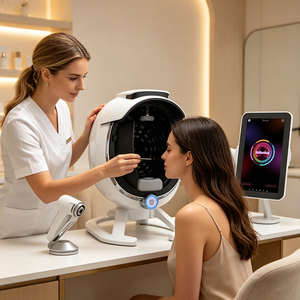
2026 Newest A6 3D Facial Scanner Skin Analyzer 8 Spectrum AI Skin Analysis Machine For Blackheads And Pores Depth Detection
Get a Quote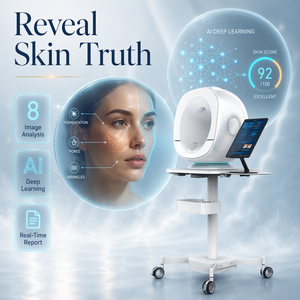
All in One Facial Skin Analyzer Machine 3D Camera 4 Spectra 8 Intelligent Images AI Analysis 30 Plus Detection Dimensions Clinic
Get a Quote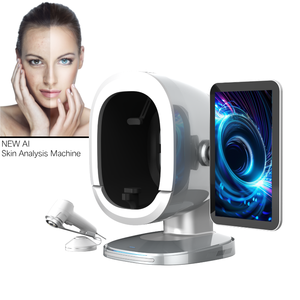
Newest 3D AI Intelligent Skin Analyzer Face Scanner Skin Analysis Machine Facial Tester Scanner Support 19 Languages
Get a Quote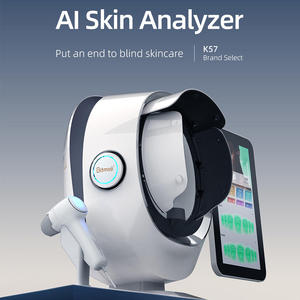
High Quality Portable Facial Analysis Skin Monitor Analyzer 3D Digital Skin Analyzer Machine for Salon
Get a Quote
Newest X3-pro-Skin-Analyzer Facial Scanner Skin Analyzer For Resaller 25 Languages X3 Skin Analysis Machine Wifi Contact
Get a Quote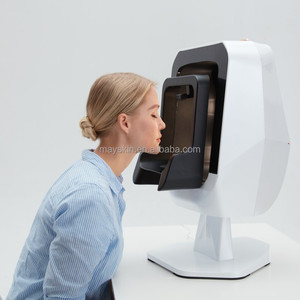
Meicet Mc88 Professional Facial Scanners Beauty Machine Smart Skin Analyzer Moisture Tester Face Skin Analyser for Beauty Salon
Get a Quote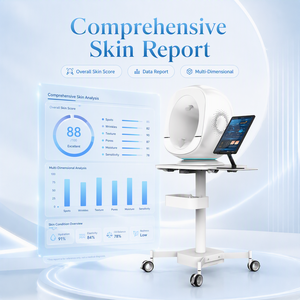
Scientific Research Anti Aging Verification 3D Skin Analyzer Machine 4 Spectra AI 8 Intelligent Images 30 Plus Detection Clinic
Get a Quote1. Physics of Spectral Pigment Segmentation & Sub-Surface Dermal Diagnostics
The global demand for non-invasive, objective skin assessment has transformed the clinical aesthetic and pharmaceutical landscape. Modern diagnostic evaluation requires moving beyond qualitative visual scoring to highly repeatable, quantitative measurement of intra-dermal optical chromophores. At the core of advanced clinical pigment scanners lies photometric stereo imaging and multi-spectral reflectance mapping.
Human skin optics are governed by light absorption and scattering across complex epidermal and dermal architecture. Melanin primarily resides in the basal layer of the epidermis, absorbing strongly across ultraviolet (UV) and visible short wavebands. Hemoglobin, conversely, demonstrates distinct absorption peaks in the green and yellow spectrum (542 nm and 577 nm). Standard 2D RGB imaging systems suffer from specular surface glare, ambient light distortion, and a lack of z-axis elevation depth, making accurate chromophore separation impossible.
To solve this, advanced OEM/ODM scanner factories integrate cross-polarized optical illumination arrays with calibrated LED narrowband light sources (ranging from 365 nm UV light up to 940 nm near-infrared). By capturing sequential images under varied directional illumination vectors and optical polarization filters, the scanner software mathematically isolates specular reflections from diffuse subsurface scattering.
By extracting independent concentration maps for melanin and hemoglobin without physical biopsy, clinical pigment scanners provide Contract Research Organizations (CROs), pharmaceutical companies, and aesthetic practices with absolute quantitative baselines required for double-blind clinical trial validation.
2. Global Procurement & Technological Development Trends (2026–2030)
The market for skin pigment analyzers is undergoing a structural transition driven by advancements in machine learning, miniaturized optical sensors, and international regulatory standardization. Procurement directors and medical device importers must align their sourcing strategies with three overriding industry shifts:
A. Deep Learning & Edge AI Integration
Next-generation OEM hardware is migrating from rule-based image processing to on-device neural network architectures (Convolutional Neural Networks / Vision Transformers). Edge AI models run locally on dedicated NPUs (Neural Processing Units), enabling instant automated segmentation of over 30 diagnostic parameters including dyschromia severity, pore sebum oxidation, and actinic damage. Furthermore, AI algorithm models are trained on diverse multi-ethnic datasets (Fitzpatrick Skin Types I–VI), eliminating diagnostic bias in melanated skin types.
B. Hardware Modularization & Turnkey SDK Customization
Cosmetic manufacturers and pharmaceutical brands no longer purchase off-the-shelf diagnostic equipment. Future procurement centers around modular OEM/ODM platforms. Exporters are expected to provide comprehensive Software Development Kits (SDKs) and RESTful APIs, allowing brand owners to seamlessly embed proprietary skin diagnostic algorithms, customized UI workflows, and white-labeled cloud client portals directly into their hardware ecosystems.
C. ISO 13485 & Medical-Grade Data Compliance
With skin analyzers increasingly utilized to justify cosmetic efficacy claims under strict regulatory bodies (such as EU MDR and US FDA guidelines), B2B buyers require complete hardware-software traceabilities. Optical components must maintain factory-calibrated colorimetry standards over long operational lifespans. Cloud storage backends integrated into scanners must strictly adhere to HIPAA and GDPR data privacy standards, guaranteeing patient data encryption at rest and in transit.
3. Comparative Modality Analysis for B2B Procurement
Evaluating skin diagnostics hardware requires understanding the trade-offs between optical resolution, operational speed, and clinical data fidelity. The following comparative matrix outlines key performance characteristics across common diagnostic platforms:
| Diagnostic Modality | Spectral Channels | Chromophore Separation | 3D Surface Topography | CRO Efficacy Validation | OEM/ODM Customization |
|---|---|---|---|---|---|
| 3D Multi-Spectral Photometric System | 4 – 9 Spectral Bands (UV to NIR) | High (Melanin / Hemoglobin Isolated) | Sub-micron Elevation ($Sa, Ra$) | Optimal (Publication-Grade Data) | Full Modular SDK / Hardware OEM |
| Standard 2D RGB Booth Scanners | 3 Bands (RGB Visible) | Low (Overlapping RGB Signals) | None (Flat Image Map) | Moderate (Qualitative Marketing) | Restricted Firmware Locking |
| Handheld Digital Dermatoscopes | Polarized White Light | Qualitative Lesion Assessment | None | Low (Small FOV Limit) | Basic Casing Modification |
| Hyperspectral Research Benchtop | 30+ Continuous Spectral Bands | Ultra-High Research Accuracy | Requires External Fringe Projection | High (Academic Clinicals) | Custom Engineering Only |
4. Enterprise OEM/ODM Manufacturing Competencies & Exporter Advantages
Drawing upon over 15 years of continuous research and development in optical dermatology equipment, our partner factories deliver world-class OEM/ODM solutions tailored for multinational cosmetic conglomerates, medical device distributors, and contract clinical research laboratories.
Leveraging patented 3D imaging technology validated in over 500 published peer-reviewed medical papers, our manufacturing footprint spans more than 40 countries, offering B2B partners uncompromised quality, competitive factory direct pricing, and comprehensive technical lifecycle support.
5. Procurement & Technical FAQ for International Importers
Q1: What differentiates an OEM procurement agreement from an ODM contract for skin scanners?
Q2: How does photometric stereo technology achieve sub-surface pigment separation?
Q3: What regulatory certifications are available for international export?
Q4: Can the scanner software be integrated with third-party EMR or CRM software?
Q5: How is optical calibration maintained across mass-produced units?
Q6: What is the typical minimum order quantity (MOQ) for custom OEM orders?
Q7: Can multispectral analyzers differentiate between epidermal and dermal melanin?
Q8: How are cross-border warranties and technical support managed?
Q9: Why is quantitative 3D skin analysis essential for CRO cosmetic efficacy trials?
Q10: What is the turnaround time for OEM sample production and delivery?
Partner with a Leading Clinical Skin Scanner OEM/ODM Exporter
Consult with our optical engineering team to discuss custom hardware specifications, private-label branding, SDK integration, and volume wholesale pricing.