
State-of-the-Art Efficacy Testing Systems
Explore our OEM/ODM portfolio of multi-spectral skin imaging scanners engineered for dermatological validation, active ingredient trial tracking, and clinical cosmetics claim substantiation.
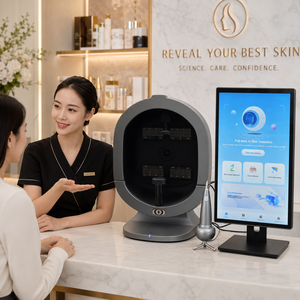
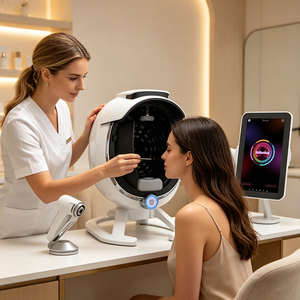
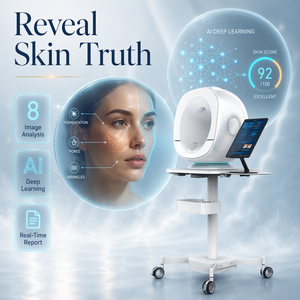
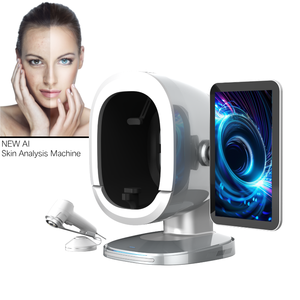
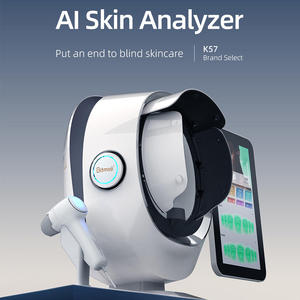

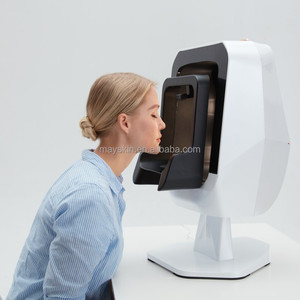
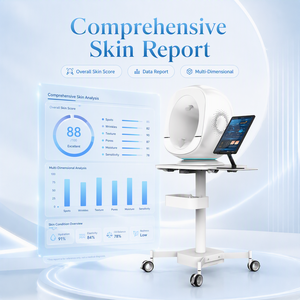
Clinical-Grade Physics & OEM/ODM Manufacturing Mastery
In the rapidly evolving landscape of cosmetic science, raw qualitative claims such as "skin feels smoother" or "looks younger" no longer satisfy global regulatory bodies like the US FDA (under MoCRA), the European Commission (Regulation EC No 1223/2009 Article 20), or discerning international consumers. Modern cosmetic efficacy verification demands objective, mathematically reproducible, and clinically validated biophysical data. As an industry-leading OEM/ODM cosmetic efficacy testing equipment manufacturer and exporter, our engineering ecosystem bridges the gap between hardware optical physics, dermatological science, and artificial intelligence software architecture.
Our proprietary hardware platforms—including advanced 3D skin analysis systems inspired by clinical benchmarks such as the Antera 3D® technology developed by Miravex Limited—utilize cutting-edge photometric stereoscopy. Unlike conventional 2D digital cameras that rely purely on planar pixel color changes, our optical systems illuminate the skin substrate from multi-directional, calibrated LED light sources across controlled light spectrums (RGB natural white, cross-polarized, parallel polarized, deep UV 365nm, and infrared). By calculating the reflection vector of each photon hitting the stratum corneum, our algorithmic engine constructs an absolute micro-topographical elevation map of the dermal surface with sub-micron depth resolution.
For cosmetic manufacturers, active pharmaceutical ingredient (API) suppliers, and Contract Research Organizations (CROs), this capability translates into unparalleled clinical evaluation. Whether measuring the volumetric reduction of periorbital crow's feet wrinkles over a 28-day peptide treatment trial, quantifying melanin density breakdown after niacinamide application, or mapping vascular hemoglobin erythema reductions in rosacea therapies, our OEM/ODM custom-built devices provide rigorous, audit-proof data sets suitable for peer-reviewed academic publication and global patent verification.
Enterprise Advantage: Turnkey OEM/ODM Engineering Capabilities
Establishing a distinct market presence requires tailored hardware and bespoke software interfaces. As a direct-factory manufacturer and global exporter, we offer end-to-end OEM (Original Equipment Manufacturer) and ODM (Original Design Manufacturer) services structured for brand owners, clinical equipment distributors, and multinational skincare conglomerates.
Optical & Mechanical OEM
Customization of optical spectrum filters, LED light wavelength combinations (365nm to 940nm), CMOS sensor resolutions up to 30 Megapixels, industrial chassis metal fabrication, ergonomic hand-held housings, and medical-grade anti-glare polarization glass integration.
Bespoke Software & AI SDK
Full white-label UI/UX redesigns, local multi-language translations (up to 25+ languages), native Windows/iOS/Android software builds, custom AI deep learning model training for specific ethnic skin profiles, and seamless cloud database API integrations.
Regulatory & Quality Assurance
Production inside ISO 13485 and ISO 9001 certified cleanrooms. Full compliance documentation for US/EU commercial import certifications including CE-MDD/MDR, FCC, RoHS, and IEC 62471 photobiological safety standards.
Technical Comparison: Standard Diagnostic Tools vs. Next-Gen 3D Efficacy Analyzers
To understand the competitive edge provided by quantitative 3D photometric stereo skin analyzers, compare the structural capabilities of legacy devices against our advanced OEM/ODM product portfolio:
| Diagnostic Parameter | Legacy 2D RGB Skin Scanners | Advanced 3D Photometric Efficacy Analyzers | Clinical & Research Impact |
|---|---|---|---|
| Wrinkle Quantification | 2D pixel contrast estimate (inaccurate depth) | True 3D elevation depth, length, width & volume (mm³) | Enables exact mm³ volumetric reduction claims for anti-aging serums. |
| Pigmentation Analysis | Surface color shading mapping only | Spectrophotometric breakdown of Melanin & Hemoglobin | Isolates deep epidermal melanin vs superficial micro-vascular redness. |
| Skin Texture & Roughness | Visual blur/smoothness rating scale | Ra, Rz, and Sa mathematical roughness parameters | Provides standardized ISO 4287 surface roughness metrics. |
| Pore & Sebum Mapping | Basic pixel cluster identification | 3D pore volume calculation & UV porphyrin fluorescence | Differentiates clogged sebum pores from structural pore sagging. |
| Data Reproducibility | High variation due to ambient room lighting | Closed-dome standardized illumination hood | Guarantees < 1.5% coefficient of variation (CV) across multi-center trials. |
Strategic Future Procurement Trends for Cosmetic Efficacy Equipment (2026–2030)
As procurement officers, B2B importers, laboratory directors, and brand R&D leads evaluate hardware investments for upcoming capital expenditure cycles, several key macro trends are defining the procurement strategy for cosmetic efficacy testing equipment:
1. Multi-Spectral AI Synthesis
Procurement is rapidly shifting away from single-spectrum RGB cameras toward systems featuring 8 to 9 light spectra. The integration of cross-polarized illumination with 365nm UV fluorescence allows simultaneous tracking of collagen degradation, epidermal pigmentation, and subsurface porphyrin levels in a single 2-second capture cycle.
2. Cloud Data Standardization for CROs
Contract Research Organizations operating multi-center global clinical trials require centralized data architectures. Modern procurement specifications prioritize equipment equipped with automated DICOM/CSV/PDF export capabilities, HIPAA/GDPR-compliant cloud encryption, and remote calibration diagnostic tools.
3. Non-Invasive Real-Time Tracking
Traditional skin biopsies are invasive and costly. Future procurement emphasizes non-invasive optical biopsy tools capable of real-time chromophore separation, allowing cosmetic formulators to observe hyperpigmentation dissipation or barrier repair kinetics over time without tissue sampling.
Industry & Technology Development Trends
The convergence of biophotonics, artificial intelligence, and cosmetic dermatology is driving radical transformation in skin analysis technology. Key development vectors shaping the industry include:
1. Generative Age-Progression & Simulation Algorithms: Next-generation software engines utilize generative deep neural networks (DNNs) trained on millions of clinical dermatological datasets. By analyzing a patient’s current 3D structural skin degradation, these platforms accurately project 3 to 5-year skin aging trajectories under varying environmental stressors, as well as simulating the corrective impact of specific cosmetic formulations.
2. Sub-Surface Vascular & Erythema Demarcation: Advanced cross-polarization optics separate light scattering caused by epidermal melanin from deep-dermal hemoglobin. This allows precise quantitative evaluation of soothing active ingredients (such as Centella Asiatica or Niacinamide) on skin redness, inflammation, and vascular rosacea conditions.
3. Miniaturization & Ergonomic Portability: While large clinical desktop systems remain standard for centralized research laboratories, there is explosive growth in high-precision portable 3D skin monitors (e.g., portable hand-held analyzers). These devices bring laboratory-grade accuracy directly to cosmetic retail counters, medical spa consultations, and field research studies.
Frequently Asked Questions (B2B Procurement & OEM/ODM FAQ)
Partner with a Leading Global OEM/ODM Efficacy Testing Manufacturer
Whether you are expanding your aesthetic equipment distribution line, establishing a new R&D clinical testing facility, or building a custom white-label skincare diagnostic platform, our engineering team is ready to deliver.