
Featured Commercial & Clinical Facial Aging Scanners
Explore our turnkey, medical-grade diagnostic hardware portfolio engineered for aesthetic clinics, pharmaceutical research organizations, and global brand distributors.
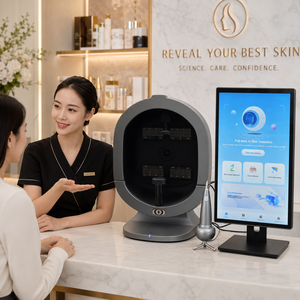
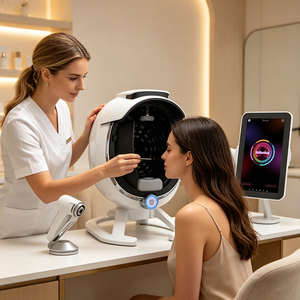
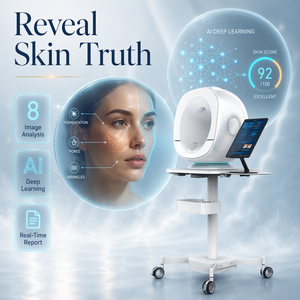
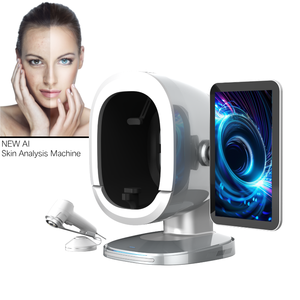
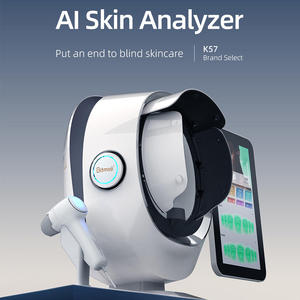
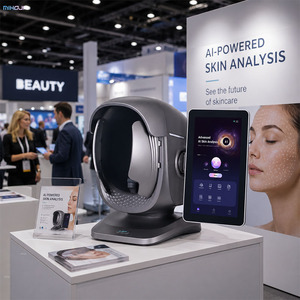
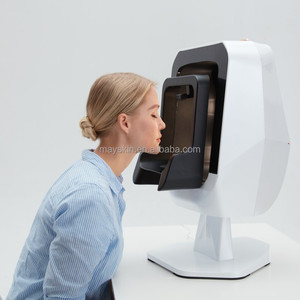
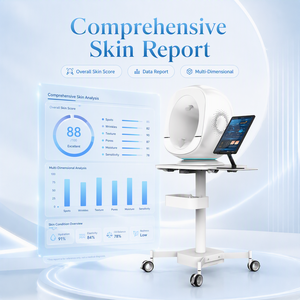
1. Technical Whitepaper: The Evolution of Quantitative Facial Aging Assessment
In the contemporary landscape of clinical dermatology, aesthetic medicine, and cosmetic formulation validation, subjective visual evaluation of facial aging has been rendered obsolete. Modern diagnostic protocols demand reproducible, quantitative sub-dermal metrics capable of isolating micro-structural degradation before it manifests macroscopically on the stratum corneum.
As a premier original equipment manufacturer (OEM) and original design manufacturer (ODM), our manufacturing architecture integrates advanced Photometric Stereo Imaging, sub-surface optical coherence algorithms, and multi-spectral lighting arrays. By isolating specific light absorption wavelengths across melanin, hemoglobin, and dermal collagen, our systems reconstruct true three-dimensional surface topography alongside sub-surface chromophore distribution maps.
Multi-Spectral Optical Breakdown
Standard 2D skin analyzers suffer from illumination glare, shadow distortion, and inability to quantify depth ($R_a$ and $R_z$ roughness parameters). Our industrial facial aging scanners overcome these limitations via controlled multi-spectral optical switching:
Standard RGB White Light
Captures true-color epidermic surface conditions, pore geometry, macro-wrinkle distribution, and superficial keratinization patterns under calibrated 6500K color rendering index (CRI) LEDs.
Cross-Polarized Spectrum
Eliminates surface specular reflection. Light penetrates into the papillary dermis to isolate dermal erythema, telangiectasia, vascular inflammation, and deep-seated vascular aging signs.
Parallel-Polarized Spectrum
Enhances surface micro-relief and fine specular highlights. Enables precise mathematical measurement of stratum corneum hydration levels, fine line volume, and skin smoothness index.
Deep UV Wavelength (365nm)
Excites sub-dermal fluorophores to expose latent dyschromia, deep sun damage, porphyrin activity within sebaceous glands, and invisible photoaging degradation ahead of clinical emergence.
Photometric Stereo 3D Imaging
Utilizes sequential multi-directional LED illumination to construct micrometer-accurate sub-surface contour maps, calculating exact wrinkle depth ($V_w$), pore volumetric density, and skin sagging vector angles.
Wood's Light & Infra-Red Bands
Reveals sub-epidermal hyperpigmentation, dermal melasma matrices, and micro-vascular structural changes essential for anti-aging efficacy validation in clinical trials.
2. Technological Development Trends shaping 2025–2030 Diagnostic Scanners
The rapid integration of generative artificial intelligence, edge neural processing units (NPUs), and spatial optical sensors is revolutionizing facial aging assessment hardware. Buyers and OEM brand managers must align their product roadmaps with several key technological shifts currently transforming the market:
AI Deep Learning & Biomarker Age Prediction
Transitioning from simple colorimetry to Convolutional Neural Networks (CNNs) trained on vast multi-ethnic dermatological datasets. Modern scanners calculate biological facial age versus chronological age with over 98.4% clinical correlation by evaluating Glogau photoaging stages, elastosis vectors, and periorbital tissue displacement.
Volumetric 3D Sub-Dermal Topography
Legacy systems measured wrinkles in flat 2D pixels. Future-proof scanners calculate true 3D spatial volume ($mm^3$), measuring skin fold depth, sagging severity along the nasolabial sulcus, and tissue volume restoration pre- and post-filler procedures.
Cross-Platform Cloud APIs & SaaS SDK Integration
Enterprise procurement requires scanners that seamlessly bridge physical hardware with cloud ecosystem platforms. Our OEM/ODM scanners provide RESTful APIs and Native C++/Python SDKs, allowing white-label customers to sync diagnostic telemetry directly to CRM, EMR, or customized mobile apps.
3. Global Procurement Trends: Sourcing Requirements for B2B Buyers
As global demand for anti-aging therapeutics and non-invasive aesthetic treatments surges, procurement strategies among med-spas, hospital dermatology networks, and cosmetic manufacturers are evolving rapidly. Procurement teams are placing stringent emphasis on hardware stability, software customization flexibility, and regulatory compliance.
Critical Sourcing Decision Matrix
| Evaluation Parameter | Legacy 2D Skin Analyzers | Next-Gen OEM/ODM 3D Multi-Spectral Scanners | Strategic Procurement Value |
|---|---|---|---|
| Optical Spectrum Range | 1 - 3 Spectra (RGB, Basic UV) | 4 - 9 Spectra (RGB, UV 365nm, Cross/Parallel Polarized, Wood's, IR) | Deeper sub-surface penetration; detection of latent melanogenesis and deep vascular networks. |
| Wrinkle Measurement | 2D Pixel Area Approximation | 3D Volumetric Depth Quantification ($R_a, R_z, V_w$ in $mm^3$) | Essential for clinical trial validation of anti-aging injectables and topical serums. |
| Illumination Stability | Standard Uncalibrated LEDs | Integrating Sphere Calibrated Constant-Current LED Arrays | Eliminates light decay drift; guarantees identical imaging conditions across multi-center trials. |
| OEM/ODM Customization | Fixed Hard-Coded Firmware | Modular Hardware Enclosures, White-Label GUI, Open SDK/API Integration | Empowers distributors to build proprietary branding, software subscription tiers, and IP. |
| Data Privacy & Compliance | Local Unencrypted Storage | HIPAA, GDPR Compliant Cloud Architecture & Encrypted Local EMR Sync | Mandatory for clinical practice deployment across North America, EU, and Asia-Pacific. |
4. Our OEM/ODM Manufacturing Excellence & Factory Infrastructure
Leveraging over 15 years of optics engineering and clinical dermatology hardware manufacturing expertise—referencing the optical rigor seen in world-class systems like Miravex Antera 3D®—our modern manufacturing facility provides turnkey OEM/ODM solutions. We bridge the gap between initial Industrial Design (ID) concepts and mass-market medical device manufacturing.
Full Lifecycle OEM/ODM Contract Manufacturing Process
From private-label chassis branding to ground-up optical architecture development, our factory guarantees strict confidentiality, rapid prototyping, and military-grade quality control:
Optical Engineering
Custom lens selection, sensor calibration, LED wavelength matching, and light-shield enclosure CAD design.
PCB & Firmware Development
Custom NPU board design, high-speed camera bus integration, and low-latency image capture control.
White-Label GUI & Software
Multi-language UI development (supporting 25+ languages), cloud dashboard integration, and custom logo injection.
Precision Assembly
Dust-free cleanroom lens alignment, light leak calibration, and continuous thermal stress testing.
Global Compliance
CE, RoHS, FCC, ISO 13485 medical device certification management, and secure export logistics packaging.
5. Frequently Asked Procurement & Engineering Questions (FAQ)
Addressing common technical, manufacturing, and commercial inquiries from global medical equipment importers, OEM brand owners, and cosmetic CRO laboratories.
Partner with a World-Leading Facial Scanner OEM/ODM Factory
Elevate your product portfolio with clinical-grade multi-spectral 3D imaging hardware. Contact our engineering and procurement team today to request hardware specs, SDK documentation, and wholesale factory pricing.