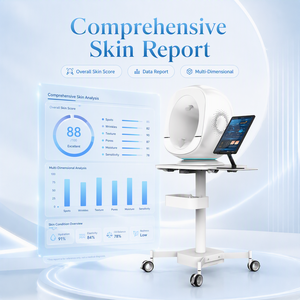
OEM/ODM Non Invasive Skin Profiling Scanner Manufacturers & Supplier

Next-Generation Clinical 3D Dermal Topography, Multi-Spectral Chromophore Extraction & White-Label Hardware Architecture

Featured Commercial & Clinical Skin Profiling Scanners

Explore our enterprise-grade 3D skin analysis systems available for white-label manufacturing, custom SDK firmware integration, and global distribution.

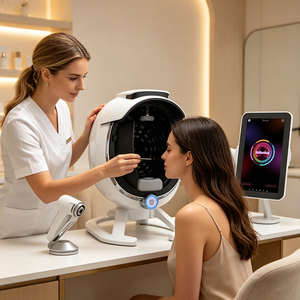
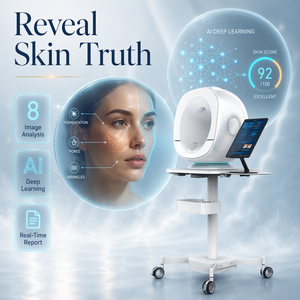
X5PRO 9-Spectral AI Facial Skin Analyzer Machine
X5PRO 9-Spectral AI Facial Skin Analyzer Machine for Face Moisture Pores Wrinkles UV Spot Analysis US/EU Compatible Commercial
Get Catalog
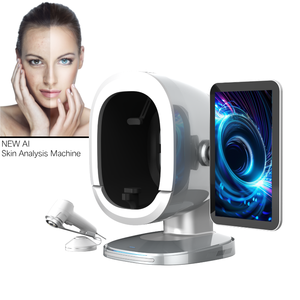
2026 Newest A6 3D Facial Scanner Skin Analyzer
2026 Newest A6 3D Facial Scanner Skin Analyzer 8 Spectrum AI Skin Analysis Machine For Blackheads And Pores Depth Detection
Get Catalog
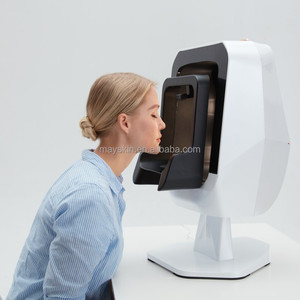
All in One Facial Skin Analyzer Machine 3D Camera
All in One Facial Skin Analyzer Machine 3D Camera 4 Spectra 8 Intelligent Images AI Analysis 30 Plus Detection Dimensions Clinic
Get Catalog
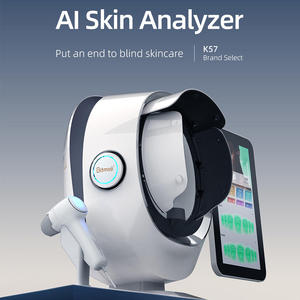
Newest 3D AI Intelligent Skin Analyzer Face Scanner
Newest 3D AI Intelligent Skin Analyzer Face Scanner Skin Analysis Machine Facial Tester Scanner Support 19 Languages
Get Catalog
High Quality Portable Facial Analysis Skin Monitor Analyzer
High Quality Portable Facial Analysis Skin Monitor Analyzer 3D Digital Skin Analyzer Machine for Salon
Get Catalog
Newest X3-pro-Skin-Analyzer Facial Scanner
Newest X3-pro-Skin-Analyzer Facial Scanner Skin Analyzer For Resaller 25 Languages X3 Skin Analysis Machine Wifi Contact
Get Catalog
Meicet Mc88 Professional Facial Scanners Beauty Machine
Meicet Mc88 Professional Facial Scanners Beauty Machine Smart Skin Analyzer Moisture Tester Face Skin Analyser for Beauty Salon
Get Catalog
Scientific Research Anti Aging Verification 3D Skin Analyzer Machine
Scientific Research Anti Aging Verification 3D Skin Analyzer Machine 4 Spectra AI 8 Intelligent Images 30 Plus Detection Clinic
Get Catalog
30+
Dermal Parameters Quantified
99.4%
Spectral Precision Accuracy
45+
Global Tier-1 OEM Partners
< 15s
Full Facial 3D Scan Time

Engineering White Paper: Photometric Stereo & Multi-Spectral Dermal Extraction

In modern clinical dermatology, cosmetic R&D, and aesthetic med-spa operations, non-invasive skin profiling scanners have evolved from simple digital magnifying instruments into highly sophisticated optoelectronic diagnostic platforms. As a premier original equipment manufacturer (OEM) and original design manufacturer (ODM), our hardware architecture incorporates proprietary photometric stereo imaging paired with multi-spectral light-emitting diode (LED) arrays. This enables microscopic topography extraction of the stratum corneum, dermal-epidermal junction, and subsurface microvascular networks.

1. Photometric Stereo & 3D Topographical Surface Reconstruction

Traditional 2D photography suffers from optical distortion, illumination inconsistency, and shadow artifacts that obscure micro-relief depth. Our OEM non-invasive 3D skin scanners employ multi-directional directional illumination combined with advanced mathematical reconstruction algorithms (Frankot-Chellappa and Poisson surface reconstruction models). By sequentially illuminating the tissue from calibrated azimuth and elevation angles, the system calculates local surface normals at pixel-level resolution.

This allows quantitative derivation of micro-roughness parameters including Ra (Arithmetic Mean Roughness), Rz (Maximum Height of Profile), fine line volume ($mm^3$), pore depression depth ($\mu m$), and acne scarring volume. Such high-fidelity dimensional analysis provides contract research organizations (CROs) and topical pharmaceutical developers with objective before-and-after proof of cosmetic efficacy.

2. Subsurface Chromophore Separation (Melanin vs. Hemoglobin)

Biological skin tissues exhibit wavelength-dependent photon scattering and absorption characteristics. Light penetrating skin interacts primarily with two dominant chromophores: epidermal melanin and dermal hemoglobin. Our customized 9-spectrum optical modules utilize specific narrow-band filters ranging from deep ultraviolet (UV 365nm) to near-infrared (NIR 850nm).

By applying Modified Beer-Lambert Law inversions and spatial frequency domain imaging (SFDI), our software separates cross-polarized images into distinct quantitative maps:

Epidermal Melanin Index
Isolates basal layer hyperpigmentation, melasma, solar lentigines, and sub-clinical UV damage prior to visible surface manifestation.
Vascular Erythema Distribution
Extracts superficial capillary dilation, telangiectasia, rosacea inflammation, and post-acne erythema (PIE) with micro-mottling scores.
Porphyrin & Sebum Fluorescence
Excites Propionibacterium acnes metabolic byproducts under UV wavelength to pinpoint follicular congestion and active acne risk zones.

Technology Comparison Matrix: 2D RGB vs. Multi-Spectral 3D AI Profiling

To assist global purchasing directors and OEM brand managers in product benchmarking, the matrix below details the diagnostic feature capability across different scanner optical architectures.

Diagnostic Modality Standard 2D RGB Camera Dual-Polarized Diagnostic Our OEM Multi-Spectral 3D AI Scanner
Wrinkle Depth & Volume Quantification Qualitative / Visual Only 2D Shadow Estimation ✓ Micrometric 3D Volumetric ($mm^3$)
Subsurface Melanin Mapping No Capability Partial Polarized View ✓ Isolated Chromophore Matrix
Vascular & Hemoglobin Isolation No Capability Superficial Redness Only ✓ Calibrated Erythema Index Score
Pore Depth & Sebum Volume 2D Pixel Area Only 2D Pixel Area Only ✓ 3D Depression Depth ($\mu m$)
Generative AI Aging Simulation 2D Morph Filter 2D Morph Filter ✓ Biomechanical Structural Aging Model
Multi-Language Cloud SDK / API Rare Limited Local SW ✓ Full White-Label Cloud & Local API

Full-Spectrum B2B OEM/ODM Customization Solutions

As a vertically integrated skin scanner manufacturer with state-of-the-art optical assembly lines and SMT facilities, we partner with pharmaceutical companies, skincare conglomerates, medical equipment distributors, and software startups to deliver custom non-invasive profiling solutions.

1. Industrial Design & Chassis Tooling
From compact hand-held diagnostic instruments to full-enclosure commercial salon towers. Custom injection molding, premium metallic paint finishes, and ergonomic chin-rest engineering.
2. Optical Engine & Sensor Tuning
Customization of camera sensor resolution (from 20MP up to 50MP Sony CMOS sensors), optical illumination spectrum ratios (UV, RGB, Parallel Polarized, Cross Polarized, Wood's Light), and field of view (FOV).
3. White-Label Software & AI Branding
Complete rebranding of Windows / iOS / Android UI interfaces. Insertion of corporate branding logos, custom product recommendation engines, localized language packs (supporting 25+ languages), and customized cloud database architectures.
4. SDK / API Software Integration
For chain clinics or cosmetic brands with existing CRM platforms. We provide low-latency C++, RESTful API, and Python SDKs for seamless raw image transfer and algorithmic score integration into your proprietary software stack.
5. Regulatory Compliance Support
Our manufacturing plants operate under strict ISO 13485 quality management system standards. We assist OEM partners in securing global certifications including Medical CE, FDA 510(k) clearance, RoHS, FCC, and IEC 62471 photobiological safety compliance.
6. Skincare Product Matching Engine
Custom algorithm programming that directly translates diagnostic scores (e.g., high moisture loss + elevated UV spot index) into automated SKU recommendations for your brand's specific product lineup.

Technology Vision 2026–2030: Future Trends in Non-Invasive Skin Diagnostics

As the global demand for hyper-personalized skincare and evidence-based aesthetic procedures accelerates, the technical architecture of skin profiling scanners is undergoing radical innovation. Organizations procuring diagnostic hardware must align with emerging technological trajectories to ensure long-term market competitiveness.

A. Integration of Generative AI & Deep Biomechanical Predictive Aging

Next-generation scanners are transitioning from passive diagnostic tools to predictive prognostic engines. By combining deep learning convolutional neural networks (CNNs) trained on millions of multi-ethnic dermal images, future systems project structural skin aging 5 to 10 years into the future. Crucially, these systems simulate the exact preventative trajectory achievable through specific aesthetic treatments (such as RF microneedling, fractional laser, or topical peptide regimens), drastically driving patient consultation conversion rates.

B. Micro-Vascular Hemodynamic & Real-Time Oxygenation Mapping

Moving beyond static red-spot mapping, future optical modules integrate hyperspectral imaging and photoplethysmography (rPPG) technology. This enables non-invasive assessment of cutaneous micro-blood flow, local tissue oxygen saturation ($StO_2$), and cellular metabolic stress. Such metrics provide dermatologists with real-time feedback on wound healing, post-laser recovery, and vascular graft viability.

C. Cloud-Edge Hybrid Computing Architecture

To ensure zero lag during high-resolution 3D rendering, hardware is shifting toward edge-AI processors (such as NPU-accelerated chipsets embedded directly into scanner mainboards). High-speed local processing handles immediate surface rendering during patient consultations, while secure cloud servers aggregate anonymized epidemiological data for continuous neural network model optimization and cross-clinic benchmarking.

D. Miniaturization & High-Precision Portable Point-of-Care Systems

While clinical-grade diagnostic towers will remain the gold standard for comprehensive facial consultations, procurement trends indicate exploding demand for ultra-portable, handheld 3D surface scanners. These devices maintain sub-micron optical accuracy while enabling mobile aesthetic practitioners, cosmetic counters, and direct-to-consumer premium brands to conduct diagnostic assessments anywhere.

Global B2B Procurement Trends & Strategic Sourcing Insights

B2B buyers, equipment brand owners, and medical supply procurement executives must navigate shifting market dynamics when selecting an OEM/ODM manufacturing partner. Key sourcing imperatives include:

Modularity & Hardware Serviceability
Leading buyers require modular optical heads and hot-swappable SMT motherboard components. This drastically reduces field servicing downtime and international shipping overheads for warranty replacements.
Data Security & Regional GDPR/HIPAA Compliance
With facial scan imagery classified as biometric data in North America and the European Union, OEM manufacturers must supply encrypted local storage protocols, cloud anonymization pipelines, and enterprise-grade user permission management.
SaaS Recurring Revenue Enablement
Distributors are moving away from one-off hardware sales toward hardware-enabled Software-as-a-Service (SaaS) business models. Our ODM solutions support built-in subscription management, tiered feature unlocking, and pay-per-scan API micro-billing.

Frequently Asked Questions (FAQ) — OEM/ODM Procurement

Comprehensive technical and commercial guidance for medical equipment importers, skincare brands, and OEM partners.

What is the Minimum Order Quantity (MOQ) for custom OEM white-label branding?
For standard laser logo etching and software UI logo rebranding, our typical MOQ starts at 5 to 10 units. For complete custom industrial tooling, chassis color customization, and bespoke packaging design, our typical OEM project MOQ starts at 50 to 100 units depending on hardware specs.
How does your 3D optical technology differ from basic RGB skin analyzers?
Basic RGB analyzers rely on flat 2D ambient photography, which is easily distorted by room light variations, angle shifts, and shadow interference. Our 3D skin scanners use calibrated photometric stereo optics combined with cross-polarized light arrays to calculate physical micro-relief surface height maps ($\mu m$) and isolate deep skin layers (basal melanin and dermal capillaries) completely unaffected by ambient room lighting.
Can we integrate our company’s proprietary skincare product database into the diagnostic report?
Yes, absolutely. Our ODM software framework includes a flexible, user-friendly CMS back-end allowing brand administrators to upload custom product SKUs, images, descriptions, and logic rules. The system automatically recommends your specific serums, creams, or clinic treatments based on the scanned skin metric scores.
What optical calibration mechanisms are included to ensure long-term scientific consistency?
Each scanner undergoes rigorous factory optical calibration using standardized reflectance and color target standards. Furthermore, our devices feature auto-recalibration routines executed upon power-up, alongside dedicated hardware calibration target accessories to maintain sub-percent measurement deviation across years of continuous clinical use.
What software integration options are available for enterprise electronic health record (EHR) platforms?
We offer comprehensive REST APIs, C++ libraries, and WebSockets interfaces. Scanned 3D mesh files (.OBJ, .PLY), raw multi-spectral imagery, and quantitative diagnostic JSON data vectors can be seamlessly pushed to cloud servers, iPad apps, or existing clinical EHR / CRM software platforms.
What international medical and electrical safety certifications do your devices carry?
Our manufacturing facilities operate under ISO 13485 certified quality management systems. Our product lines hold Medical CE (MDR), FDA regulatory filings, RoHS environmental compliance, FCC Class B, and IEC 62471 photobiological LED optical safety certifications for global market entry.

Partner with a World-Leading Skin Profiling Hardware Manufacturer

Transform your aesthetic brand, pharmaceutical research, or distribution network with next-generation 3D multi-spectral skin analysis technology. Request our full OEM product matrix, software SDK documentation, and wholesale price list today.

Get Catalog