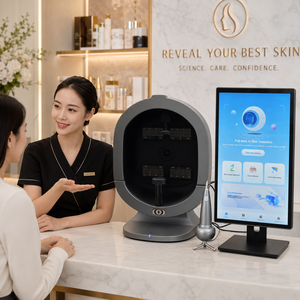
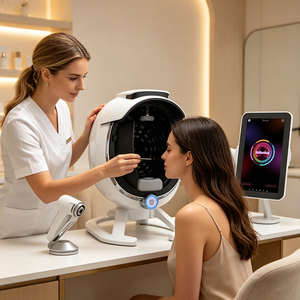
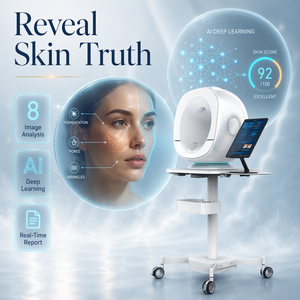
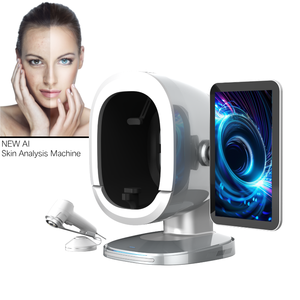
OEM/ODM Professional Skin Tone Analyzer Manufacturers & Manufacturer
Next-Generation Multi-Spectral 3D Facial Imaging, Quantitative Melanometric Calibration, and Medical-Grade Hardware Customization for Global Brands, Cosmetic R&D, and Clinical CROs.
Featured OEM/ODM Skin Analysis Systems
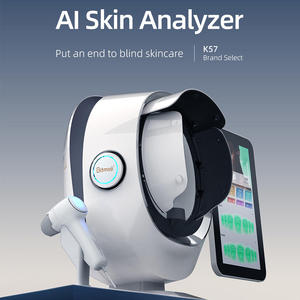
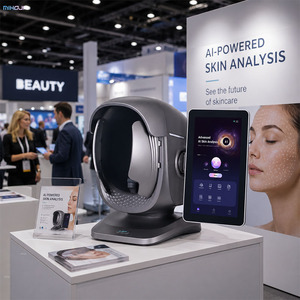
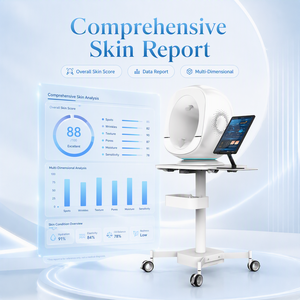
Explore our flagship, factory-direct skin tone analyzers engineered with 3D photometric stereo imaging, multi-spectral lighting, and AI-driven deep tissue quantification.
1. Executive Whitepaper: The Evolution of OEM/ODM Skin Tone Measurement Technologies
In the rapidly expanding global skincare, aesthetic medicine, and clinical dermatology markets, objective skin tone measurement and quantitative chromophore analysis have replaced subjective visual scaling. Historically, dermatologists and cosmetic formulation scientists relied heavily on ordinal classification frameworks such as the Fitzpatrick Skin Phototype scale. While valuable for broad clinical categorization, the Fitzpatrick scale lacks the numerical granularity required to track subtle variations in melanin concentration, hemoglobin density, micro-vascular erythema, and epidermal topography over longitudinal clinical trials.
As a premier OEM/ODM Professional Skin Tone Analyzer Manufacturer, our engineering architecture bridges optical physics with proprietary AI algorithms. By leveraging multi-spectral reflectance spectroscopy, cross-polarized light filtering, and patented 3D photometric stereo imaging—pioneered and validated by industry benchmarks like Miravex Antera 3D® technology—our manufacturing solutions empower pharmaceutical brands, Contract Research Organizations (CROs), cosmetic conglomerates, and med-spa equipment distributors to deploy precision diagnostic hardware customized to their exact market specifications.
Melanometric Calibration
Isolated spatial mapping of epidermal melanin density and hyperpigmentation depth using targeted 660nm spectral absorption algorithms.
Hemoglobin & Vascular Mapping
Separation of sub-papillary vascular networks at 542nm and 577nm wavelengths to evaluate rosacea, erythema, and inflammatory dynamics.
3D Photometric Topography
Sub-micron spatial elevation mapping for precise volume quantification of fine lines, wrinkles, pore roughness, and skin texture.
Entering the global market with a proprietary skin tone analyzer requires more than off-the-shelf plastic housings. Our state-of-the-art manufacturing facility provides full turnkey Original Equipment Manufacturing (OEM) and Original Design Manufacturing (ODM) pipelines. We partner directly with enterprise clients to engineer bespoke hardware platforms, optical arrays, firmware protocols, and white-label software suites.
Hardware Architecture & Industrial Design
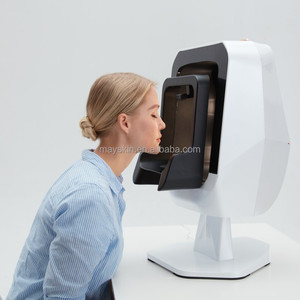
From compact handheld optical probes for clinical bed-side evaluations to full-desktop 3D multi-spectral facial scanning hoods, our industrial design team utilizes CAD/CAM precision tooling, medical-grade ABS materials, custom optical filter wheel assemblies, and high-CRI illumination LEDs (365nm UV to 940nm Near-Infrared).
Firmware & AI SDK/API Integration
Our embedded firmware supports real-time image acquisition with zero latency. We offer robust C++, Python, and RESTful API SDKs, allowing OEM clients to integrate our skin colorimetry algorithms into their existing SaaS cloud portals, Electronic Health Record (EHR) platforms, or custom iOS/Android apps.
Multi-Language & Regional Compliance
To support global commercial distribution, our OEM software frameworks support up to 25 distinct localization languages. Firmware modules are engineered to satisfy stringent US FDA Class I/II electrical safety standards, EU CE Medical Directives, RoHS material safety, and ISO 13485 quality management systems.
White-Label Branding & GUI Customization
We offer total visual customization. Clients receive fully branded software interfaces featuring custom logo placement, corporate color palettes, bespoke reporting templates (PDF export with clinical before/after overlays), and customized algorithmic scoring metrics aligned with proprietary marketing claims.
3. Future Procurement & Technological Development Trends (2026–2030)
Procurement executives and corporate buyers must anticipate technical shifts to avoid capital equipment obsolescence. As skin tone analyzers evolve from static 2D cameras into multi-dimensional biological sensors, four key trends dominate the future procurement landscape:
Standard RGB illumination (Red, Green, Blue) is fundamentally limited in its ability to unmix overlapping skin chromophores. Modern procurement mandates minimum 4-spectrum rigs (RGB, Parallel Polarized, Cross Polarized, UV), with cutting-edge demand shifting toward 8-spectral and 9-spectral AI platforms capable of measuring subterranean melanin distribution, porphyrin fluorescent activity, and lipid barrier hydration levels.
Global cosmetic brands are standardizing ingredient clinical trials around the mathematical Individual Typology Angle (ITA°), calculated via CIELAB (L*a*b*) color space. Future diagnostic hardware must automatically output objective ITA° numerical scores to classify skin lightness, tanning kinetics, and pigmentary treatment efficacy without human bias.
Trend 3: Integrated 3D Photometric Surface Mapping
2D images flatten skin surface micro-relief, obscuring fine wrinkles and pore depth. Procurement managers are increasingly selecting systems that capture multi-directional illumination vectors to reconstruct 3D digital mesh topologies. This enables simultaneous evaluation of skin tone uniformity and geometric texture roughness in a single scan.
Trend 4: AI Tele-Dermatology & SaaS Cloud Architecture
Standalone desktop software is giving way to cloud-connected diagnostic ecosystems. Enterprise buyers seek OEM analyzers that securely stream encrypted clinical scans to centralized HIPAA/GDPR-compliant servers, allowing cross-location chain clinics and international CROs to harmonize diagnostic data across multiple trial sites.
To assist procurement teams in making informed OEM hardware selections, the following matrix outlines the optical performance, clinical applications, and diagnostic limits of standard OEM sensor configurations:
Optical Architecture
Spectral Wavelengths
Primary Chromophore Targeted
Clinical & Commercial Application
OEM Customization Tier
Standard RGB Lighting
400nm – 700nm (Broadband)
Surface Coloration & Macroscopic Lesions
Basic aesthetic consultation, skin tone baseline mapping.
Entry-Level OEM
Cross-Polarized (PL)
500nm – 650nm (Specular Filtered)
Sub-surface Melanin & Hemoglobin
Hyperpigmentation, melasma, vascular erythema, deep sun damage.
Establishing trust in medical optical diagnostics requires rigorous scientific validation. Drawing upon over 15 years of optoelectronic innovation and incorporating the foundational research paradigms embodied by Miravex Limited’s Antera 3D®, our OEM manufacturing facility maintains strict quality standards designed for medical research:
Clinical Repeatability (CV < 1%)
Our proprietary internal optical target calibration system guarantees a Coefficient of Variation (CV) under 1%, ensuring identical results across different operators and locations.
500+ Published Studies
Our underlying photometric imaging algorithms have been cited in over 500 peer-reviewed dermatological and cosmetic science journals globally.
Global Supply Chain Robustness
With export distribution serving over 40 countries, our factory maintains rigorous ISO 9001 and ISO 13485 quality management pipelines for uninterrupted delivery.
Whether you are formulating anti-pigmentation creams requiring quantitative proof of melanin reduction or designing an automated skin scanner for retail cosmetic counters, our OEM/ODM engineering teams deliver factory-direct reliability, comprehensive warranty protection, and continuous algorithmic upgrades.
Q1: What is the minimum order quantity (MOQ) for custom OEM skin tone analyzer orders?
Our standard OEM branding services (custom logo printing, customized packaging, and software GUI logo integration) start at low MOQs of 10 to 50 units. Fully custom ODM hardware projects requiring original industrial mold tooling and custom optical PCB development typically start at 100 to 500 units depending on technical specifications.
Q2: How does your device quantify skin tone accuracy beyond simple RGB color picking?
Our devices utilize multi-spectral reflectance spectroscopy combined with cross-polarized light filtering. This allows the system to mathematical unmix surface skin reflection from dermal tissue absorption, accurately measuring the CIELAB (L*a*b*) color space and calculating the precise Individual Typology Angle (ITA°) for standardized skin tone quantification.
Q3: Can your skin analyzer software integrate with our existing medical records or web software?
Yes. We provide complete Software Development Kits (SDKs) and RESTful API endpoints for Windows, iOS, Android, and web-based cloud environments. Your development team can seamlessly stream diagnostic raw data, high-resolution spectral maps, and mathematical metrics directly into your CRM, EHR, or SaaS infrastructure.
Q4: Are your skin analyzers clinically validated for pharmaceutical and CRO cosmetic efficacy studies?
Absolutely. Our 3D photometric stereo imaging and spectral analysis algorithms are built upon clinical methodologies validated in over 500 independent peer-reviewed dermatological studies. The high spatial resolution and repeatable micro-calibration make them suitable for CRO clinical trial documentation and regulatory cosmetic claim support.
Q5: What wavelengths of light are integrated into your flagship multi-spectral analyzers?
Our flagship 9-spectral analyzers feature narrow-band LEDs spanning 365nm (UVA for porphyrins and skin fluorescence), 470nm (blue light for surface lipids), 542nm/577nm (green/yellow peaks for oxyhemoglobin absorption), 660nm (red light for deep melanin mapping), and 850nm/940nm (near-infrared for deep tissue structural evaluation).
Q6: How do you handle ambient light interference during facial scanning?
Our desktop scanning hoods and handheld devices feature optical isolation chambers lined with non-reflective matte coatings. Coupled with high-speed electronic strobing synchronized to the camera shutter speed (exposure times < 10ms), ambient studio or clinic light interference is completely eliminated from the quantitative analysis.
Q7: What is the typical lead time for OEM software customization and hardware manufacturing?
Standard OEM orders with customized branding and localized software are typically shipped within 14 to 21 business days. Custom ODM projects involving new industrial design tooling, PCB spin, and medical regulatory certification require approximately 60 to 90 days from initial engineering approval to mass production.
Q8: What warranty and post-sales technical support do you provide to global OEM distributors?
We back all OEM/ODM manufacturing orders with a comprehensive 2-year factory hardware warranty, modular spare parts availability, and 24/7 dedicated engineering support. We also provide remote firmware diagnostic tools and automatic software cloud updates for our distribution partners.
Q9: How do your devices calculate 3D surface wrinkle depth and skin texture roughness?
The system captures multiple images illuminated from varying directional angles using cross-polarized lighting. By applying photometric stereo algorithms, the software computes surface normals for every pixel, reconstructing a high-resolution 3D topography map that quantifies mean roughness (Ra), maximum peak height (Rt), and wrinkle volume in cubic millimeters.
Q10: Are patient scans compliant with HIPAA and GDPR data privacy regulations?
Yes. Our cloud architecture and local database storage options use AES-256 bit encryption at rest and TLS 1.3 encryption in transit. Scans can be completely anonymized using assigned clinical patient IDs, ensuring full compliance with international medical data protection laws.
Partner With a Leading OEM/ODM Skin Tone Analyzer Manufacturer
Elevate your product line with medical-grade multi-spectral imaging, customized AI algorithms, and factory-direct pricing. Contact our optical engineering team today to request hardware samples, SDK documentation, or a customized manufacturing quote.