
Featured OEM/ODM Skin Analysis & Tone Uniformity Scanners
Select from our modular hardware platforms engineered for rapid OEM white-labeling, custom housing integration, and API/SDK software synthesis.

X5PRO 9-Spectral AI Facial Skin Analyzer Machine for Face Moisture Pores Wrinkles UV Spot Analysis
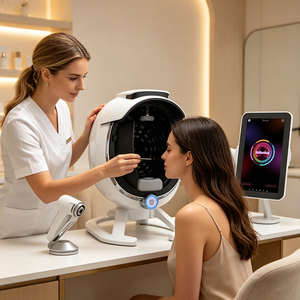
2026 Newest A6 3D Facial Scanner Skin Analyzer 8 Spectrum AI Skin Analysis Machine For Blackheads And Pores Depth Detection
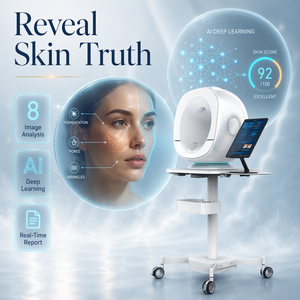
All in One Facial Skin Analyzer Machine 3D Camera 4 Spectra 8 Intelligent Images AI Analysis 30 Plus Detection Dimensions Clinic
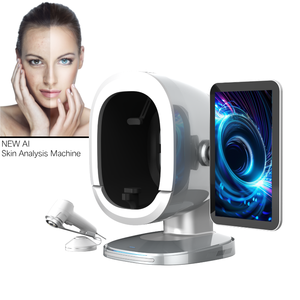
Newest 3D AI Intelligent Skin Analyzer Face Scanner Skin Analysis Machine Facial Tester Scanner Support 19 Languages
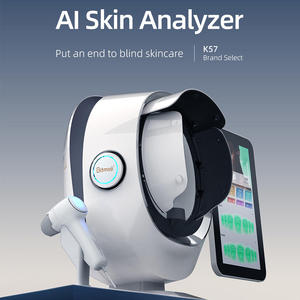
High Quality Portable Facial Analysis Skin Monitor Analyzer 3D Digital Skin Analyzer Machine for Salon
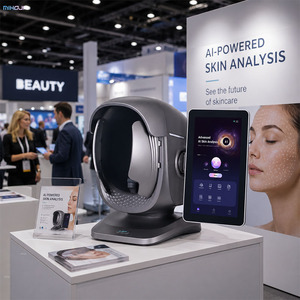
Newest X3-pro-Skin-Analyzer Facial Scanner Skin Analyzer For Resaller 25 Languages X3 Skin Analysis Machine Wifi Contact
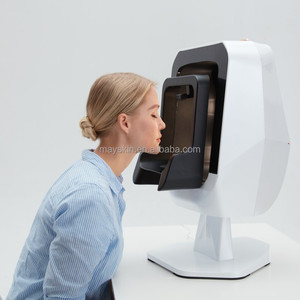
Meicet Mc88 Professional Facial Scanners Beauty Machine Smart Skin Analyzer Moisture Tester Face Skin Analyser for Beauty Salon
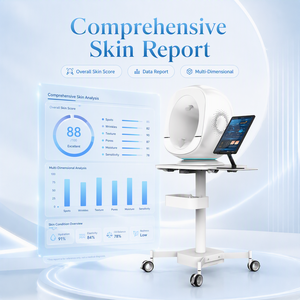
Scientific Research Anti Aging Verification 3D Skin Analyzer Machine 4 Spectra AI 8 Intelligent Images 30 Plus Detection Clinic
Understanding Skin Tone Uniformity: The Physics of Optical Dermatological Assessment
Evaluating skin tone uniformity has evolved from subjective visual scoring by dermatologists to quantitative, non-invasive optical biopsy. Modern cosmetic formulation research, clinical trial verification (CROs), and medical aesthetic diagnostics require precision devices capable of mathematically decomposing surface reflections into distinct chromophore maps. As leading OEM/ODM Skin Tone Uniformity Scanner Manufacturers, our engineering framework solves the fundamental optical challenge of skin imaging: separating specular glare from diffuse sub-surface photon scattering.
Human skin color variance and non-uniformity stem primarily from two key biological absorbing chromophores situated at distinct anatomical depths: Melanin in the basal layer of the epidermis, and Hemoglobin (both oxygenated and deoxygenated) within the vascular network of the upper dermis. Traditional standard RGB camera systems fail to differentiate between hyperpigmentation (melanocytic origin) and erythema or vascular dilation (hemoglobin origin) because standard 2D color images aggregate spatial light intensities across broad red, green, and blue spectral bands without depth discrimination.
Photometric Stereo 3D Topography
Calculates local surface gradients by capturing images under directional lighting, reconstructing micro-relief, wrinkle volume, and pore depth completely independent of skin pigmentation gradients.
Multi-Spectral Polarization separation
Cross-polarized filters eliminate surface specular glare, allowing photons that have undergone multiple scattering events within the dermis to reveal subterranean melanin clusters and vascular networks.
L*a*b* & ITA° Standardized Metrics
Quantitative measurement of Individual Typology Angle (ITA°) and CIE L*a*b* space, quantifying skin lightening, dyschromia, melasma severity, and localized unevenness with clinical accuracy.
Information Gain Analysis: Legacy 2D RGB Scanners vs. OEM/ODM 3D Multi-Spectral Uniformity Scanners
To provide authentic information gain for B2B procurement officers and R&D directors, the table below outlines the architectural differences between commercial-grade standard facial analyzers and clinical-grade custom OEM/ODM multi-spectral 3D skin tone scanners.
| Technical Parameter | Standard Commercial 2D Analyzer | Our OEM/ODM 3D Multi-Spectral Uniformity Scanner |
|---|---|---|
| Optical Imaging Engine | Single-angle RGB illumination with standard CMOS sensor | Photometric stereo array (4 to 9 distinct LED light directions + cross-polarization) |
| Chromophore Separation | Mathematical RGB color space approximation (High error rate) | Modified Kubelka-Munk optical absorption modeling for true Melanin vs. Hemoglobin isolation |
| Skin Tone Metric Quantification | Arbitrary score index (0-100 score without physical unit correlation) | CIE L*a*b* color space, ITA° (Individual Typology Angle), melanin index, erythema index (ΔE) |
| Shadow & Wrinkle Filtering | Confounded by macro-geometry; shadows misclassified as pigmentation | Complete mathematical decoupling of 3D topography from 2D skin color/pigmentation maps |
| Software & SDK Architecture | Closed proprietary software with consumer app interface | Open API/SDK, custom cloud white-labeling, cross-platform Windows/iOS/Android integration |
| Manufacturing Customization | Fixed casing and pre-set broad lighting spectra | Full OEM housing design, custom sensor resolution, narrowband LED wavelength customization |
Full-Spectrum OEM & ODM Customization Capabilities for Global Brands
As an established contract manufacturer with over 15 years of dedicated bio-photonics experience, we provide end-to-end original equipment and design manufacturing services. Brands, pharmaceutical research labs, and medical device distributors can customize every tier of hardware, firmware, and software stack:
Modular OEM/ODM Hardware & Software Integration Architecture
1. Custom Optical & Sensor Assembly
Choice of high-resolution industrial CMOS sensors (12MP to 32MP), customized bandpass optical filter wheels, polarized light rings (parallel and cross-polarized), and narrow-band UV (365nm) for deep solar lentigines detection.
2. Industrial Design & Ergonomic Chassis
Custom plastic injection molding, aluminum alloy desktop enclosures, hand-held optical probes, or full-booth facial scanners custom-branded with your corporate color palette and silkscreen logos.
3. AI Algorithm Calibration & Custom SDK
Embed custom deep-learning models trained on targeted ethnic demographic datasets (Fitzpatrick Types I through VI). Seamless C++, Python, or RESTful API integrations for enterprise diagnostic platforms.
4. Regulatory & Cloud Data Security Compliance
Hardware manufactured under ISO 13485 quality systems. Cloud storage software architectures compliant with HIPAA, GDPR, and medical-grade cybersecurity frameworks for patient data protection.
Global Procurement Trends & Future Market Forecast (2025–2030)
The global demand for non-invasive skin tone uniformity scanners is experiencing exponential growth, driven by key transformations in cosmetic science, retail consultation, and clinical dermatology. Procurement managers and brand strategists must align their product portfolios with the following emerging industry trends:
1. Inclusive & Multi-Ethnic Skin Calibration
Historical skin analyzers suffered from optical baseline bias when measuring deeply pigmented skin tones (Fitzpatrick V-VI). Future procurement demands multi-spectral engines capable of dynamically adjusting exposure, LED intensity, and color-space algorithms to ensure consistent, unbiased tone uniformity metrics across all global skin types.
2. Efficacy-Driven Skincare Verification (CRO Integration)
Regulatory bodies worldwide are tightening restrictions on cosmetic advertising claims (e.g., "brightening", "spot reduction", "even tone in 14 days"). CROs and cosmetic manufacturers require validated 3D scanners to generate statistically significant, objective before-and-after ΔE and ITA° data for legal product claim substantiation.
3. AI-Assisted Medical Aesthetic Treatment Planning
Aesthetic clinics are moving from qualitative consultations to quantitative treatment mapping. Scanners equipped with real-time 3D topographical overlay and melanin concentration heatmaps enable medical practitioners to precisely target Q-switched lasers, IPL devices, and chemical peels to areas of peak dyschromia.
Why Partner With Us: Our Manufacturing E-E-A-T Guarantee
When selecting an OEM/ODM manufacturing partner for scientific and diagnostic optical equipment, reliability, optical precision, and intellectual property security are paramount. Our factory infrastructure and engineering legacy provide unmatched stability for international business partners:
-
✓
State-of-the-Art Optical Calibration Cleanrooms: Every skin tone scanner undergoes rigorous spectral intensity and geometric alignment calibration in Class 10,000 cleanroom environments using NIST-traceable reflectance targets.
-
✓
End-to-End Intellectual Property Protection: We offer comprehensive NDA frameworks and dedicated firmware isolation to safeguard your proprietary diagnostic algorithms and unique commercial UI workflows.
-
✓
Global Supply Chain Resilience: With robust component sourcing and strategic microchip reserves, we offer stable lead times (4–6 weeks for OEM batches) and guaranteed spare parts availability for 7+ years post-production.
-
✓
Comprehensive Training & Global After-Sales Support: We support our OEM clients with detailed engineering documentation, SDK integration assistance, and global technical service centers for quick hardware recalibration.
Frequently Asked Questions for B2B Procurement & OEM Partnerships
For standard white-label custom branding (custom logo silkscreen, custom exterior paint color, and pre-loaded brand software boot screen), our MOQ starts at 50 units. For complete custom ODM projects requiring dedicated plastic injection tooling, unique optical PCB layout, or specific LED wavelength configurations, our standard project MOQ starts at 200 units, with prototype sample units delivered within 6 to 8 weeks.
Our systems utilize 3D photometric stereo imaging. By sequentially capturing images under multiple illumination angles while maintaining constant sensor position, our software mathematically reconstructs the 3D surface normal vector for every pixel. This allows us to digitally "flatten" macro-surface topography (wrinkles, fine lines, pores) and eliminate surface shadows before computing sub-surface color chromophore (melanin/hemoglobin) distribution maps.
Yes. In addition to visual color heatmaps, our professional clinical software modules export raw data in CSV, JSON, or XML formats. Data metrics include exact L*, a*, b* values, Individual Typology Angle (ITA°), Melanin Index, Erythema Index, local standard deviation of tone, and lesion surface area in square millimeters (mm²), perfectly suited for statistical validation in clinical trials.
All OEM units undergo factory calibration using industrial spectrophotometer-certified color targets and diffuse reflectance standards. Furthermore, our hardware includes automatic internal LED temperature compensation circuits to prevent illumination drift during extended operational hours, maintaining unit-to-unit optical variation within ΔE < 0.3.
We supply native SDKs for Windows (C++, C#), Android, and iOS platform development. The SDK provides direct camera control, LED spectral switching, image frame acquisition, 3D mesh generation, and access to pre-trained chromophore separation algorithm libraries for seamless integration into your existing enterprise software ecosystem.
Our manufacturing facilities operate under ISO 9001 and ISO 13485 medical device quality management standards. Base hardware platforms are fully compliant with CE, FCC, RoHS, and IEC 62471 photobiological light safety standards. We work directly with your regulatory team to assist in regional medical or commercial device registrations.
Partner With a Leading OEM/ODM Skin Analysis Hardware Manufacturer
Elevate your product line with clinical-grade 3D photometric imaging, custom SDKs, and bespoke industrial design. Contact our senior optical engineering team today for technical specifications, OEM quotation packages, and demonstration units.
Get Catalog