
Recommended 3D Facial Topography Systems
Below is an executive evaluation of the industry's premier commercial and clinical-grade 3D skin analysis scanners, engineered for sub-micron surface roughness mapping, deep dermal pigment quantification, and automated multi-spectral diagnostic profiling.

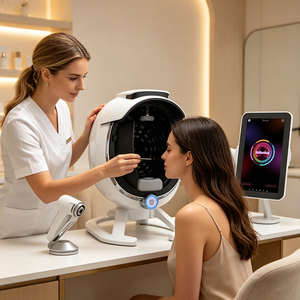
X5PRO 9-Spectral AI Facial Skin Analyzer Machine for Face Moisture Pores Wrinkles UV Spot Analysis US/EU Compatible Commercial
- 9-Band Multi-Spectral Optical Sensors
- Deep Wrinkle Depth & Micro-Relief Mapping
- Commercial US/EU Medical Power Standard
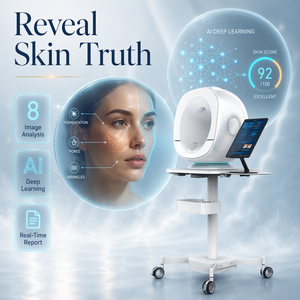
2026 Newest A6 3D Facial Scanner Skin Analyzer 8 Spectrum AI Skin Analysis Machine For Blackheads And Pores Depth Detection
- 8 Spectrum High-Resolution AI Diagnostics
- Blackhead Volumetric & Pore Depth Profiling
- 3D Contour Reconstructive Rendering
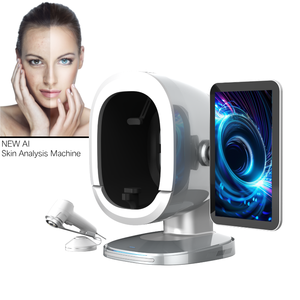
All in One Facial Skin Analyzer Machine 3D Camera 4 Spectra 8 Intelligent Images AI Analysis 30 Plus Detection Dimensions Clinic
- 30+ Precise Clinical Detection Dimensions
- 4 Spectra Stereo Photometric Imaging
- Automated Patient Report Generation
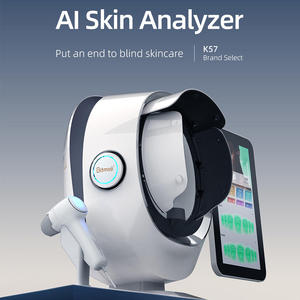
Newest 3D AI Intelligent Skin Analyzer Face Scanner Skin Analysis Machine Facial Tester Scanner Support 19 Languages
- 19 Multi-Language Software Suite
- Real-Time Dermal Topography Render
- Ideal for International Franchise Chains
High Quality Portable Facial Analysis Skin Monitor Analyzer 3D Digital Skin Analyzer Machine for Salon
- Compact Portable Ergonomic Form Factor
- Rapid Consultation & Skin Hydration Mapping
- Plug-and-Play USB/Wireless Sync
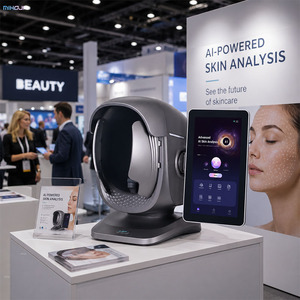
Newest X3-pro-Skin-Analyzer Facial Scanner Skin Analyzer For Resaller 25 Languages X3 Skin Analysis Machine Wifi Contact
- 25 Languages Built-in Localized UI
- High-Speed Wi-Fi Cloud Data Pipeline
- Reseller & B2B Wholesaler Custom Branding
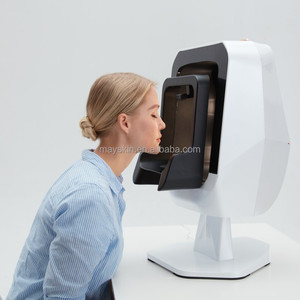
Meicet Mc88 Professional Facial Scanners Beauty Machine Smart Skin Analyzer Moisture Tester Face Skin Analyser for Beauty Salon
- Cross-Polarized Vascular & Redness Map
- Moisture & Sebum Balance Metrics
- High-Precision Optical Camera Rig
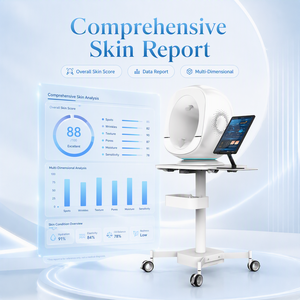
Scientific Research Anti Aging Verification 3D Skin Analyzer Machine 4 Spectra AI 8 Intelligent Images 30 Plus Detection Clinic
- CRO & Clinical Efficacy Trial Validation
- Sub-Micron Roughness (Sa, Sq) Metrics
- FDA 21 CFR Part 11 Compliant Audit Trail
1. Executive Overview: The Shift to 3D Dermal Surface Metrology
The global market for advanced dermatological diagnostics and cosmetic efficacy testing has undergone a structural paradigm shift. Traditional 2D flat-plane photography, while adequate for baseline visual recordkeeping, fails fundamentally to capture the three-dimensional geometric complexity of human skin micro-relief. In clinical research, contract research organization (CRO) environments, and high-end aesthetic consultations, 3D Facial Topography Scanners have emerged as an indispensable standard of care and scientific verification.
By measuring the precise interaction of multi-directional light illumination across facial contours—a process grounded in photometric stereo physics—3D facial topography systems reconstruct high-density height maps ($Z$-axis metrology) alongside sub-surface spectral reflection. This enables quantitative measurement of skin roughness ($Sa$, $Sq$), deep wrinkle volume ($\text{mm}^3$), pore depth ($\mu\text{m}$), and micro-vascular erythema independently of ambient light variance.
For B2B procurement directors, clinic founders, and cosmetic R&D executives, evaluating suppliers in this space requires looking beyond basic camera megapixels. Strategic sourcing must emphasize optical calibration integrity, multi-spectral capability, software SDK versatility, compliance with international medical quality standards (ISO 13485, CE Medical, FDA registration), and validated information gain in quantitative diagnostic reporting.
2. Enterprise Core Competencies & Strategic Advantages
Rooted in over 15 years of optical engineering and clinical dermatology research led by pioneers such as Miravex Limited (developers of the renowned Antera 3D® technology), our manufacturing partnership network sets the global benchmark for non-invasive skin measurement infrastructure. When partnering with certified OEM/ODM suppliers for 3D facial topography scanners, global clients benefit from four foundational operational pillars:
Clinical Data Reproducibility
Hardware optical rigs built with ambient light isolation hoods and controlled LED illumination matrices yield inter-scan variability of <1.5%, satisfying rigorous academic and pharma trial protocols.
Multi-Spectral Optical Depth
Combining RGB white light, cross-polarized, parallel-polarized, and 365nm UV LED arrays allows simultaneous extraction of surface topography alongside deep epidermal melanin and dermal hemoglobin concentration maps.
CRO & Regulatory Compliance
Software architecture supports FDA 21 CFR Part 11 compliant digital signature audit trails, patient anonymization routines, exportable CSV/3D OBJ mesh files, and multi-language enterprise UI (supporting up to 25 languages).
End-to-End OEM/ODM Flexibility
From custom chassis industrial design and optical lens calibration to SDK software white-labeling, our manufacturing facilities deliver turn-key solutions for global distributors and beauty device brands.
3. Technology Benchmark: 2D vs. Standard 3D vs. Photometric Stereo Scanners
To assist procurement managers in choosing the exact optical architecture suited for their business model, the table below outlines the core technical differentiators across current diagnostic generations:
| Evaluation Parameter | Standard 2D RGB Scanners | Structured Light 3D Scanners | Photometric Stereo 3D AI Scanners |
|---|---|---|---|
| Primary Physics Engine | 2D Planar Photography | Laser Stripe / Moiré Fringe Projection | Multi-Directional Photometric Stereo |
| Sub-micron Roughness ($Sa, Sq$) | Not Possible (Color Estimation Only) | Moderate (>50$\mu\text{m}$ resolution) | High-Precision (<10$\mu\text{m}$ resolution) |
| Wrinkle Volume Quantification | Shadow Length Approximations | Geometric Mesh Calculation | True 3D Volumetric Depth ($\text{mm}^3$) |
| Sub-Surface Pigment/Redness | Basic RGB Color Separation | None (Surface Topography Only) | Cross-Polarized Melanin/Hemoglobin Maps |
| Capture Speed & Ergonomics | Instantaneous (<1 sec) | Slow (Subject motion artifacts risk) | Ultra-Fast Multi-Flash Scan (<2 sec) |
| Primary B2B Target Market | Retail Counter Beauty Kiosks | Orthopedics / Prosthetics / Basic 3D | Pharma R&D, CROs, Medical Aesthetic Clinics |
4. Global Procurement & Sourcing Trends (2025–2030)
As the international aesthetic medical equipment market accelerates toward a projected compound annual growth rate (CAGR) of 12.4%, buyer behaviors and technical requisites are shifting rapidly. Analysis of procurement requests across North America, Europe, East Asia, and the Middle East reveals four overarching purchasing trends:
Trend 1: Demand for Quantifiable Anti-Aging Efficacy Claims
Cosmetic manufacturers and pharmaceutical developers are facing tighter regulatory scrutiny globally regarding promotional claims (such as "reduces wrinkle depth by 30%"). Buyers are abandoning qualitative subjective scoring (visual practitioner scales) in favor of objective, audit-ready data generated by clinical 3D topography tools. Systems capable of exporting raw surface elevation grids and statistical roughness distribution reports are experiencing peak demand.
Trend 2: Seamless EHR / EMR & Cloud Ecosystem Integration
Modern aesthetic clinics operate multi-branch franchises requiring centralized client database management. Sourcing managers now prioritize 3D facial scanners equipped with encrypted Cloud API connectors, allowing instant cross-branch access to patient baseline 3D scans, treatment progress comparisons, and automated follow-up scheduling triggers.
Trend 3: Expansion of Multi-Spectral LED Illuminants
Single spectrum photography is obsolete for high-end diagnostic workflows. Modern procurement briefs require integrated lighting rigs containing visible white light, cross-polarized light (eliminating specular reflection to isolate subsurface erythema and rosacea), parallel-polarized light (accentuating surface texture, pores, and keratinization), and 365nm long-wave UV light (illuminating porphyria bacteria, acne risk zones, and hidden photo-damage).
Trend 4: AI-Driven Volumetric Change Tracking for Injectables
With the explosive global growth of dermal fillers, neurotoxins, and biostimulators (e.g., PLLA, CaHA), practitioners require tools that prove anatomical volume augmentation or mid-face lifting. Advanced 3D topography hardware featuring sub-millimeter 3D mesh alignment allows clinicians to superimpose post-treatment surface meshes over baseline scans, displaying color-coded volumetric heatmaps ($\Delta V$ in cubic centimeters).
5. Future Technological Horizon: Micro-Metrology & Generative Diagnostics
The next decade of facial scanning innovation will be defined by the convergence of optical physics, hyper-resolution sensors, and deep generative neural networks. Suppliers at the forefront of R&D are currently investing in three transformative technological frontiers:
Nanometer-Scale Surface Topography ($Sa/Sq$ Metrology): Moving beyond macro-wrinkles, future scanners will quantify ultra-fine skin texture changes at the cellular stratum corneum level. By adopting advanced phase-shifting interferometry and multi-angle photometric stereo, systems can detect subtle improvements in skin smoothness resulting from chemical peels, microneedling, or topical retinoids long before changes become visible to the naked eye.
Sub-Surface Hyperspectral Tissue Biomarkers: Integrating narrow-band hyperspectral imaging will enable non-invasive mapping of dermal collagen density, tissue oxygen saturation ($StO_2$), micro-vascular blood flow velocity, and lipid barrier integrity. This transition transforms 3D facial scanners from aesthetic sales tools into early-stage clinical dermatology screening workstations.
Generative Predictive Aging & Treatment Simulation: Leveraging deep learning models trained on millions of longitudinal 3D facial scans, next-generation diagnostic platforms will render hyper-realistic 3D predictive aging trajectories. More importantly, systems will simulate exact treatment outcomes (e.g., 2ml hyaluronic acid injection vs. laser skin resurfacing), allowing patients to visualize their post-procedure appearance in interactive 3D before committing to clinical protocols.
6. Frequently Asked B2B Procurement Questions (FAQ)
To assist equipment distributors, procurement committees, and clinic managers in their technical due diligence, our engineering specialists have answered the most vital procurement queries:
Q1: How does Photometric Stereo technology differ from traditional 3D structured light or laser scanners?
Photometric stereo captures multiple 2D images of the face under varying, precisely calibrated light illumination angles while keeping the camera position fixed. By analyzing fine illumination variations across skin gradients, it calculates surface normal vectors at every pixel. This allows sub-micron detail extraction of fine micro-relief, fine lines, and pore structures without requiring complex moving laser optics or projection fringes that can induce patient eye discomfort.
Q2: Can 3D Facial Topography Scanners quantify clinical trial results for cosmetic claims validation?
Yes. High-end systems (such as the Antera 3D® architecture and clinical-grade AI scanners featured above) provide numerical output for parameters including mean roughness ($Sa$), root-mean-square roughness ($Sq$), maximum wrinkle depth ($Sz$), pore volume, pigmentation area ($mm^2$), and total melanin/hemoglobin concentration index. These reproducible metrics are accepted in peer-reviewed scientific literature and support cosmetic efficacy claims for regulatory bodies (such as the FDA, EMA, and NMPA).
Q3: What are the standard electrical, optical, and computer hardware requirements for installation?
Most commercial systems feature universal US/EU compliant power supplies (100–240V AC, 50/60Hz). Connectivity is typically managed via high-speed USB 3.0 or Gigabit Wi-Fi. Minimum recommended workstation specs include an Intel Core i7 / AMD Ryzen 7 processor, 16GB RAM, dedicated NVIDIA GeForce RTX graphics (for real-time 3D mesh rendering), and Windows 10/11 Pro 64-bit operating system.
Q4: How do multi-spectral lighting modes improve skin diagnostic accuracy?
Skin reflections consist of both specular surface reflections and subsurface diffuse scattering. White RGB light captures visual skin tone. Cross-polarized light blocks surface glare, directly exposing underlying capillary networks (erythema, rosacea, spider veins) and epidermal melanin. Parallel-polarized light highlights surface irregularities and keratin layer desquamation. UV light (365nm) excites subsurface porphyrin fluorescence, providing early warnings for inflammatory acne and hidden UV photo-damage.
Q5: What OEM/ODM customization options are available for medical device distributors?
We offer comprehensive OEM/ODM services including custom exterior enclosure industrial design, custom brand color painting, silkscreen logo application, specialized optical lens choices, integrated touchscreen panel sizing, custom software UI white-labeling, localized language translation packs (supporting 25+ languages), and SDK software driver integration into existing EMR clinic software platforms.
Q6: How is calibration maintained over long-term clinical usage?
Each scanner is supplied with a optical calibration target (featuring standard matte reflectance and micro-groove depth reference blocks). The software platform features an automated self-diagnostic calibration wizard. Routine re-calibration takes less than 2 minutes and ensures that sensor drift, LED lumen aging, or ambient temperature fluctuations are completely normalized for longitudinal clinical studies.
Q7: What international safety and quality certifications do these devices possess?
Our core manufacturing facilities operate under ISO 13485 quality management systems for medical devices. Products conform to CE MDD/MDR standards, FCC Class A electrical safety guidelines, RoHS environmental compliance, and feature photobiological safety certification (IEC 62471) guaranteeing complete eye safety during multi-flash facial scanning sequences.
Q8: What is the typical lead time, Minimum Order Quantity (MOQ), and global technical support model?
Standard commercial units maintain an MOQ of 1 unit with a lead time of 5–7 business days. Custom OEM/ODM orders have baseline MOQs starting at 10 to 50 units depending on plastic injection mold and software modifications, with 3–5 week delivery schedules. Global clients receive 24/7 remote technical support, comprehensive video training academies, software updates, and a standard 2-year warranty package extended by local service centers worldwide.
Partner with Global 3D Facial Topography Pioneers
Whether you require standard clinical scanners for aesthetic medical expansion, high-throughput systems for pharmaceutical clinical trials, or custom OEM manufacturing, our technical engineering team is ready to consult on your exact specifications.