
X5PRO 9-Spectral AI Facial Skin Analyzer Machine for Face Moisture Pores Wrinkles UV Spot Analysis US/EU Compatible Commercial
Key Specs: 9 Multi-Spectral Bands, AI Deep Layer Hemoglobin & Vascular Mapping.
Send an Inquiry

Explore clinical-grade 3D facial analyzers, microvascular imaging platforms, and multi-spectral diagnostic systems engineered for CROs, cosmetic manufacturers, and medical dermatology clinics.
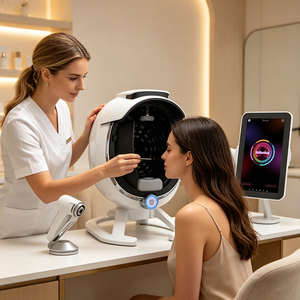
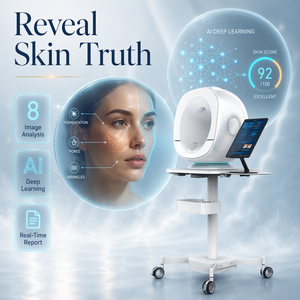
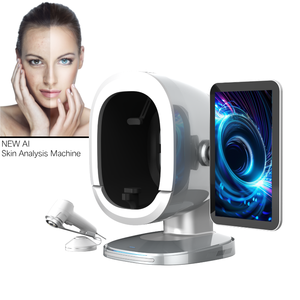
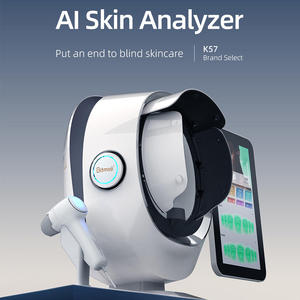
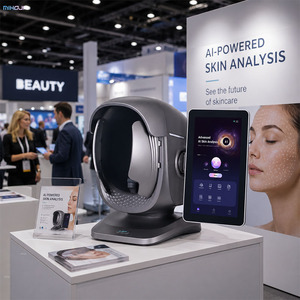
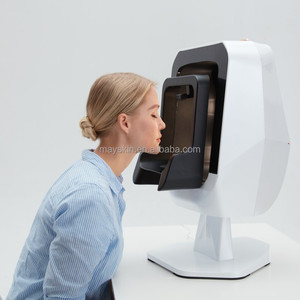
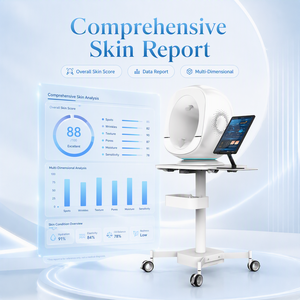
Dermal microcirculation serves as a primary biomarker for skin physiological age, tissue perfusion, inflammatory dermatoses, and therapeutic efficacy. The microvascular system of the skin—consisting of subpapillars arterioles, venules, and superficial capillary loops—plays a pivotal role in oxygenation, nutrient delivery, thermoregulation, and cutaneous repair mechanisms.
Traditionally, evaluating cutaneous blood flow relied on qualitative visual inspection or invasive laser Doppler perfusion imaging (LDPI). However, modern clinical dermatology, Contract Research Organizations (CROs), and high-end aesthetic medicine demand quantitative, non-invasive, highly reproducible, and spatially resolved diagnostic devices. The transition toward high-resolution 3D optical surface topography combined with multi-spectral decomposition has enabled researchers to isolate hemoglobin concentration maps from background melanin interference with unprecedented precision.
Information Gain Insight: Modern microvascular diagnosis no longer evaluates skin superficial redness in isolation. By employing multi-spectral unmixing algorithms, state-of-the-art diagnostic machines separate total dermal chromophores into Oxy-Hemoglobin (HbO2), Deoxy-Hemoglobin (Hb), and Melanin index maps, providing a 3D volumetric model of cutaneous capillary perfusion.
Advanced dermal microcirculation diagnostic systems utilize photometric stereo imaging alongside narrow-band multi-spectral illumination. When light penetrates the epidermal and dermal layers, optical absorption curves differ fundamentally between cutaneous chromophores:
When evaluating dermal microcirculation machines for clinical research or enterprise distribution, B2B buyers must evaluate four foundational technical pillars that differentiate high-end research units from standard aesthetic skin scanners.
Separates absorption signatures of melanin, oxy-hemoglobin, and deoxy-hemoglobin to reveal true sub-epidermal vascular patterns without pigmentation artifacts.
Constructs sub-millimeter surface height maps, correlating superficial microvascular changes with wrinkle depth, micro-texture, and pore morphology.
Deep learning networks automatically map capillary loop density, erythema severity index, and therapeutic response over longitudinal study timelines.
Below is a technical comparative matrix of global leaders, specialized manufacturers, and contract OEM suppliers specializing in dermal microcirculation and multi-spectral skin analysis instrumentation.
| Manufacturer / OEM | Primary Diagnostic Tech | Spectral Channels | Capillary Resolution | Target Clinical Applications | Regulatory Compliance |
|---|---|---|---|---|---|
| Miravex Limited (Antera 3D®) | Optical Photometric Stereo & Multi-Spectral | 7–9 Narrowband LED | < 0.04 mm | Pharma CROs, Anti-Aging Efficacy, Erythema | CE Class I / FDA Registered |
| DermLite Capillary Systems | Polarized Dermoscopy & Video-Capillaroscopy | Polarized White + UV | < 0.02 mm | Nailfold Capillaroscopy, Raynaud's, Scleroderma | FDA 510(k), CE MDR |
| Meicet Medical (Mc88 / Pro Series) | 3D Facial Scanning & AI Skin Analyzer | 8 Spectrum RGB/UV/PL | < 0.05 mm | Commercial Dermatology, MedSpas, Beauty Salons | CE, ISO 13485 |
| Canfield Scientific (VISIA / MicroSPOTS) | Cross-Polarized & RBX Technical Imaging | Custom Filtered Flash | < 0.05 mm | Clinical Trial Verification, Facial Redness Mapping | FDA Registered, CE |
| Courage + Khazaka Electronic | Mexameter / Visioline Probe Diagnostic | Dual Spectrophotometric | Point Measurement | Dermatological Academic R&D, Trans-Epidermal Loss | ISO 9001 / CE |
| OEM Clinical Hardware (X5PRO Series) | AI 9-Spectral Deep Imaging | 9 Spectrum Multi-LED | < 0.045 mm | White-label B2B Distribution, Commercial Diagnostic | CE, FCC, RoHS |
| Perimed AB (PeriCam PSI) | Laser Speckle Contrast Imaging (LSCI) | Near-Infrared Laser | Real-time Micro-Perfusion | Vascular Surgery, Wound Healing, Diabetes Care | FDA 510(k), CE MDR Class IIa |
| CyberDerm Diagnostic Systems | Sub-Dermal High-Frequency Ultrasound & Optics | Dual Acoustic-Optical | < 0.03 mm | Skin Thickness, Deep Dermal Micro-Vascular | CE, ISO 13485 |
| Comprehensive OEM Scanner (A6 3D) | 3D Photometric Surface Scanning | 8 Intelligent Image Bands | < 0.05 mm | Anti-Aging Claim Verification, Pore/Vascular Depth | CE, RoHS |
| Handheld Diagnostic Solutions (X3-Pro) | Portable Multispectral Digital Probe | Multi-angle RGB/Polarized | < 0.06 mm | Point-of-Care Consultation, Regional Distribution | CE, FCC |
The global market for cutaneous microvascular diagnostics is undergoing a massive transformation driven by advancements in artificial intelligence, miniaturized hyperspectral optics, and rising demand from the cosmetic claims verification sector.
Regulatory bodies such as the US FDA and the European Medicines Agency (EMA), alongside global cosmetic compliance standards (EEMCO guidelines), increasingly demand quantitative endpoints for clinical claims. Microcirculation devices must now calculate exact physical values: mean hemoglobin volume fraction (%), local capillary density (loops/mm²), and real-time vascular concentration deltas post-treatment.
Artificial intelligence algorithms trained on extensive annotated dermatological image libraries now automatically distinguish between background telangiectasia, rosacea-induced inflammation, post-inflammatory hyperpigmentation (PIH), and normal micro-capillary networks. This eliminates operator subjectivity and speeds up multi-center trial evaluations.
Next-generation hardware combines 3D structural scanning (stereophotogrammetry) with multi-spectral vascular mapping. This enables clinicians to observe how dermal microvascular decline directly correlates with collagen structural loss, wrinkle formation, and tissue sagging in a single visual model.
For medical device distributors, pharmaceutical research institutes, and cosmetic OEM brands, procurement strategies are evolving beyond basic price-per-unit comparisons. Key sourcing imperatives include:
Enterprise buyers require raw spectral reflectance data access via open APIs to integrate proprietary skin-scoring algorithms directly into centralized clinical trial databases.
Suppliers offering modular optical heads—allowing seamless switching between full-face 3D scanning and high-magnification localized capillaroscopy—are capturing higher enterprise market share.
Modern procurement contracts require multi-tenant cloud software enabling multi-center clinical trials to standardize lighting, calibration, and patient tracking remotely in real-time.
Building upon the foundation of industry-leading optical technologies—such as the clinical validation established by Miravex Limited’s Antera 3D® platform—our manufacturing and supply ecosystem delivers enterprise-class solutions tailored to global scientific standards.
Technical answers to critical procurement, operational, and clinical questions regarding dermal microcirculation equipment.
Multi-spectral imaging uses specific narrow-band wavelengths (e.g., green ~542/577 nm for hemoglobin and red/NIR for melanin). By measuring reflectance at multiple precise bands, linear unmixing matrix algorithms calculate the individual extinction coefficients, allowing complete separation of vascular redness from epidermal pigmentation.
Laser Doppler measures blood cell velocity (flux) at specific points or low-resolution raster scans, which can be sensitive to motion artifacts. Optical multi-spectral photometric systems capture full high-resolution 2D/3D spatial concentration maps of total hemoglobin instantaneously without tissue contact.
Yes. Leading systems like the Antera 3D® and high-end research models are routinely used in FDA/EMA compliant phase II-IV dermatological and cosmetic clinical trials for objective quantitative efficacy reporting.
Absolutely. OEM suppliers support complete software interface rebranding, custom hardware casing, tailored illumination spectrum filters, and integrated SDKs for seamless enterprise IT adoption.
High-grade systems utilize auto-calibrating optical targets or solid-state LED reference plates. Hardware calibration is typically recommended annually or after 5,000 continuous clinical scans to maintain spectral measurement consistency within <1% variance.
To accurately track sub-epidermal micro-capillary density and fine vascular meshwork, a spatial lateral resolution of <0.05 mm (50 micrometers) per pixel is required alongside cross-polarized lighting to eliminate surface glare.
Commercial enterprise systems support up to 25 languages—including English, Spanish, German, French, Chinese, Japanese, and Korean—making them instantly deployable across international clinical sites.
Clinics typically realize complete ROI within 3 to 6 months by increasing consultation conversion rates, offering paid diagnostic consultations, and proving treatment efficacy for laser, RF, and topical vascular therapies through quantitative before-and-after reporting.
Connect with our global technical specialists to obtain complete device datasheets, clinical trial whitepapers, wholesale pricing tiers, and OEM/ODM integration support.