
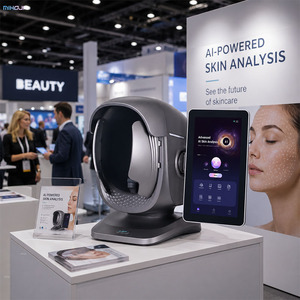
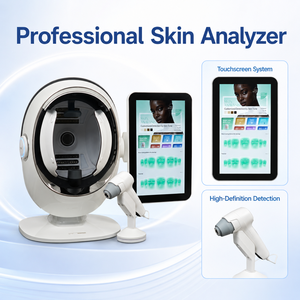
Explore state-of-the-art diagnostic platforms from leading global OEM/ODM factories, engineered with multispectral imaging, 3D surface topography, and deep-learning AI modules for aesthetic clinics, CRO research, and dermatological institutions.
Executive Summary: The Shift to Quantitative 3D Skin Diagnostics
In the rapidly evolving global medical aesthetics and cosmetic R&D landscape, subjective visual skin evaluation has been completely superseded by high-precision optical dermoscopy and 3D photometric stereo imaging. Modern B2B procurement directors, pharmaceutical CRO researchers, and medical spa franchise operators require objective quantitative metrics to validate cosmetic efficacy, assess dermatological pathologies, and convert clinical consultations into high-margin treatment plans.
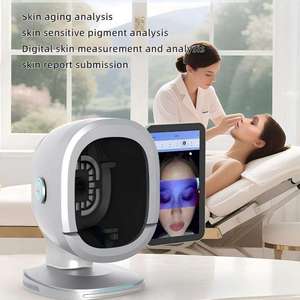
According to recent clinical dermatology equipment benchmarks, high-precision skin analyzers utilize advanced multispectral light sources—including standard RGB daylight, cross-polarized light, parallel polarized light, ultraviolet (UV 365nm), and Wood's lamp fluorescence—combined with artificial intelligence deep-learning algorithms. This technological convergence enables depth profiling of sebum distribution, pore volume, vascular hemoglobin concentrations, epidermal/dermal melanin distribution, and 3D wrinkle topography with sub-micron accuracy.
Technical Evaluation Criteria for OEM/ODM Skin Analyzer Sourcing
Selecting a high-precision skin analyzer manufacturer requires evaluating core hardware architecture, optical signal processing, software algorithms, and regulatory compliance. B2B buyers must analyze suppliers against five critical technical benchmarks:
1. Multispectral Optical Engine
High-end devices incorporate up to 10 distinct spectral bands. Standard RGB illuminates surface texture; cross-polarized filters eliminate surface specular glare to expose subsurface erythema and telangiectasia; UV illumination highlights porphyrin synthesis and latent UV pigmentation hidden beneath the stratum corneum.
2. 3D Photometric Stereo Reconstruction
Unlike legacy 2D flat imaging system scanners, true 3D skin analyzers utilize structured light or multi-directional LED arrays to capture surface curvature. This quantifies wrinkle depth (in micrometers), skin roughness (Ra/Sq parameters), and pore crater volume with clinical precision.
3. AI Deep Learning Skin Profiling
Modern factory platforms leverage deep neural networks trained on million-image dermatological datasets. These algorithms automatically segment facial zones, differentiate post-inflammatory hyperpigmentation (PIH) from melasma, and calculate real-time biological skin age indices.
Comparative Analysis: Top 10 High Precision Skin Analyzer Manufacturers
Below is a comprehensive OEM/ODM supplier evaluation matrix summarizing global industry leaders, detailing their primary optical technology, spectral range, regulatory compliance, and target market applications:
| Manufacturer / Brand | Core Optical Technology | Spectral Modalities | Primary Application Focus | OEM/ODM Flexibility |
|---|---|---|---|---|
| Miravex Limited (Antera 3D®) | Multispectral Photometric Stereo | RGB, RGB Cross-Polarized, Multi-wavelength | Clinical CROs, Pharma R&D, Aesthetic Clinics | High (Software SDK & Hardware customization) |
| Canfield Scientific (Visia®) | Multi-point RBX Technology | Standard, Cross-Polarized, UV Light | Medical Aesthetic Consultations, Dermatology | Low (Standardized Enterprise Hardware) |
| Courage + Khazaka Electronic | Dermatoscopy & Biophysical Probes | Monochromatic, Polarized, Corneometer | Scientific Research, Cosmetic Testing Labs | Moderate (Modular Sensor Assembly) |
| Bomtech Electronics | High-Resolution CCD Facial Scanner | RGB, UV, Polarized Light | Commercial Skincare Franchise, MedSpas | Moderate (Private Label Options) |
| Meicet (Skin Detect Tech) | AI Cross-Polarized Cloud Diagnostics | 8 to 10 Spectral Bands | Chain Beauty Clinics, Skincare Brands | High (Full OEM Shell & Software API) |
| Chowis Co., Ltd. | Mobile & Desktop Optical Magnification | Polarized, UV, Moisture Sensors | Retail Skincare Counters, Tele-Dermatology | High (Customized SDK & Mobile Apps) |
| Observ (Sylton) | Fluorescing & Polarized Light Engine | 6 Diagnostic Daylight Modes | Advanced Aesthetic Dermatology | Low (Direct Distributor Network) |
| DermaVisualizer (Dermatron) | Direct Contact Digital Dermoscopy | High-Density LED Polarized Array | Dermatology Surgeries, Skin Cancer Screening | Moderate (Custom Probe Manufacturing) |
| Aneeic Tech (X3 Series) | Full Face HD Dynamic Imaging | UV365, RGB daylight, Wood's Light | B2B Distributors, Wholesale Beauty Equipment | Very High (Factory Direct OEM/ODM) |
| QuantifiCare | 3D Stereophotogrammetry | 3D Vector Flash Photography | Plastic Surgery, Volumetric Dermal Filling | Moderate (Enterprise Software Integration) |
Detailed Manufacturer Analysis & Optical Innovation Breakdown
1. Miravex Limited & Antera 3D® Engineering Standards
Originating from Trinity College Dublin physics research, Miravex Limited revolutionized non-invasive skin assessment with the Antera 3D®. Unlike conventional desktop hoods that capture flat 2D images, the Antera 3D® handheld scanner utilizes multispectral LEDs illuminating the skin from multiple angles.
By measuring light reflection under varying illumination vectors, mathematical algorithms reconstruct the micro-relief of skin in 3D topography. This enables sub-micron precision for measuring:
- Wrinkle Depth & Roughness: Quantitative volumetric calculation of fine lines and deep furrows (Ra, Rz indices).
- Melanin & Hemoglobin Distribution: Spectral separation of skin chromophores, isolating deep dermal vascular damage from superficial epidermal hyperpigmentation.
- Pore Indentation & Subsurface Lesions: Complete mapping of crater depth, volume, and sebum concentration.
For pharmaceutical manufacturers and cosmetic CROs conducting double-blind clinical trials, Miravex sets the benchmark for measurement repeatability (coefficient of variation < 1%).
2. Next-Generation AI Cloud Analytics Platforms (Meicet, X3-Pro, Aneeic)
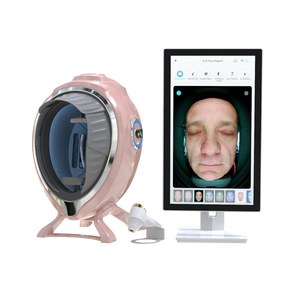
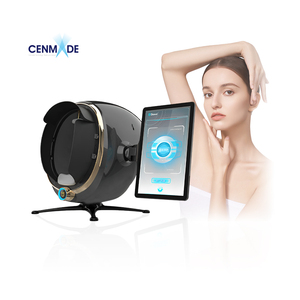
Asian manufacturing hubs have rapidly advanced the integration of cloud computing and high-resolution industrial cameras (24MP to 36MP). Manufacturers producing systems such as the X3-Pro and 10-Spectrum AI Facial Analyzers emphasize high-throughput clinical scanning.
These devices feature automated chin-rest positioning, 15-second multi-light exposure sequences, and immediate cloud database syncing. By integrating multi-language support (up to 25 languages), these factories provide white-label OEM platforms tailored for global distribution networks.
Future B2B Procurement Trends in Skin Diagnostics (2025–2030)
As B2B procurement managers formulate sourcing strategies for the next decade, three key technological shifts will dictate competitive advantage in skin diagnostic hardware procurement:
1. Integration of Hyperspectral Imaging
The industry is transitioning from standard 3-to-10 spectral bands to continuous hyperspectral imaging. OEM factories are embedding miniature spectrometers capable of detecting early collagen degradation and micro-vascular perfusion before clinical visible manifestation.
2. Seamless EHR & Practice Management APIs
Modern aesthetic clinic chains refuse standalone diagnostic hardware. Sourcing contracts heavily prioritize manufacturers providing open REST APIs and SDKs to sync skin diagnostic reports directly into Electronic Health Record (EHR) platforms and CRM systems.
3. Generative AI Treatment Simulation
Beyond diagnostic detection, cutting-edge software engines utilize generative adversarial networks (GANs) to simulate 30-day, 60-day, and 90-day treatment outcomes (e.g., post-laser erythema reduction, collagen remodeling) with photorealistic precision, dramatically elevating patient treatment conversion rates.
Our Direct Manufacturing & OEM/ODM Capabilities
As a dedicated high-precision skin diagnostic manufacturer, our production facility adheres to strict ISO13485 medical device quality management standards. We partner with global beauty equipment brands, pharmaceutical CROs, and aesthetic chain distributors to provide bespoke hardware and software manufacturing services:
- Industrial Design & Moulding: Custom chassis tooling, ergonomic optical hood design, integrated touchscreen enclosures, and compact desktop/handheld form factors.
- Optical Systems Assembly: Cleanroom calibration of high-CRI LED arrays, cross-polarization optics, narrowband UV filters, and high-resolution CMOS sensor alignment.
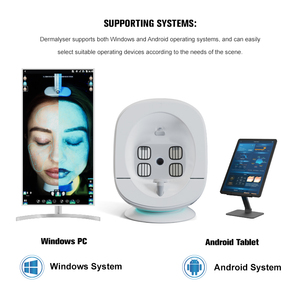
- Firmware & Software Development: White-label GUI customization, multi-language localization (25+ languages), cloud analytics architecture, and Android/iOS/Windows cross-platform compatibility.
- Regulatory & International Compliance: Complete technical documentation support for CE (MDD/MDR), FDA 510(k) clearance, RoHS, and FCC certifications.
Frequently Asked Questions (B2B Sourcing FAQ)
Q1: What is the primary difference between a 2D skin scanner and a 3D high-precision skin analyzer?
A 2D skin scanner takes flat photographic images under basic light sources (RGB/UV) to capture surface color variations. In contrast, a high-precision 3D skin analyzer uses photometric stereo imaging or structured light to measure physical skin surface contours, depth, and volume. This allows quantitative micrometer-level tracking of wrinkles, pores, acne scars, and skin smoothness, providing objective data essential for clinical studies and premium aesthetic consultations.
Q2: Why is cross-polarized illumination critical in clinical skin analysis?
Cross-polarized light filters out specular reflections (glare) from the stratum corneum surface. This allows light to penetrate into the upper dermis, revealing subsurface vascular structures, hemoglobin concentration, inflammation, spider veins, and hidden erythema that are invisible under standard room lighting.
Q3: Can your factory provide OEM software customization for our beauty chain brand?
Yes. We provide complete OEM/ODM software customization. This includes custom branding (logo, color schemes), customized diagnostic algorithm weightings, integration of your proprietary skincare product recommendation logic, and multi-language support localized to your target regional markets.
Q4: What are the typical Lead Times and Minimum Order Quantities (MOQ) for custom skin analyzer orders?
For standard catalog products with customized software logos, MOQ starts at 5 to 10 units with lead times of 7 to 10 business days. For full hardware ODM projects involving custom industrial chassis tooling and optical modifications, development lead times typically range from 60 to 90 days depending on certification requirements.
Q5: How do skin analyzers ensure data repeatability across different lighting environments?
Professional-grade analyzers utilize enclosed optical hoods or contact-based handheld spacers to eliminate ambient room light interference. Internal LED illumination systems are voltage-regulated and optical sensors undergo white-balance and spectral calibration during production to ensure 99%+ data repeatability regardless of external room conditions.