
Executive Summary: The Optical Skin Coherence Tomography Landscape
In modern dermatological research, cosmetic efficacy testing, and clinical aesthetic practice, Optical Coherence Tomography (OCT) and high-resolution 3D photometric stereo skin analyzers represent the pinnacle of non-invasive diagnostics. By evaluating sub-surface cross-sectional morphology without invasive biopsies, OCT technology provides real-time visualization of epidermal thickness, dermal-epidermal junction integrity, micro-vascular architecture, and collagen density.
As the global demand for quantitative validation in clinical trials and aesthetic consultations escalates, identifying reliable optical skin coherence tomography device factories and original equipment manufacturers (OEM/ODM) is essential. Sourcing high-precision hardware integrated with multi-spectral AI diagnostic algorithms enables clinical research organizations (CROs), cosmetic brands, and dermatology clinics to deliver validated, reproducible outcomes.
Featured Commercial & Clinical Skin Analysis Systems
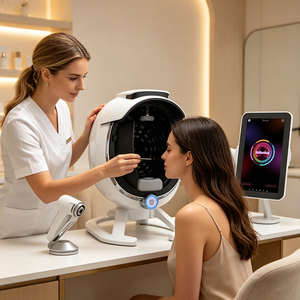
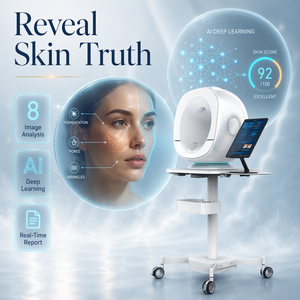
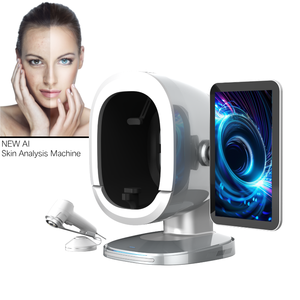
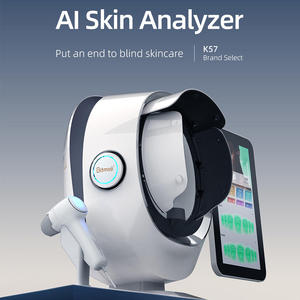
Below are the top-tier, clinically validated skin analyzers and optical scanning systems engineered for commercial centers, dermatological research institutes, and aesthetic suppliers worldwide.

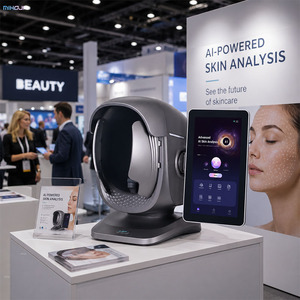
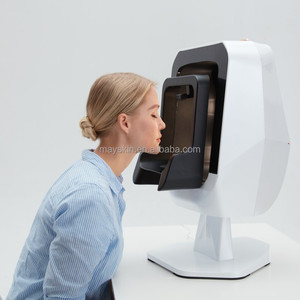
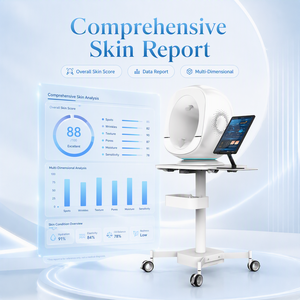
Technical Architecture: Optical Skin Coherence Tomography & Imaging Modalities
Selecting an appropriate optical skin coherence tomography device factory requires an in-depth understanding of the underlying physical light-matter interaction technologies. Modern optical skin diagnostics rely on three core pillars:
1. Optical Coherence Tomography (OCT)
OCT uses low-coherence interferometry to capture micrometer-resolution, 3D sub-surface images within biological tissue. Operating in the near-infrared spectrum (800nm - 1300nm), it penetrates 1.0mm to 2.0mm beneath the stratum corneum, enabling real-time structural cross-sections of epidermal layers and vascular networks.
2. 3D Photometric Stereo
As commercialized in clinical tools like the Antera 3D®, photometric stereo reconstructs the skin surface topography by illuminating the tissue from multiple LED angles. This allows quantitative measurement of surface roughness, wrinkle volume, pore depth, and fine lines with spatial precision below 50 microns.
3. Multispectral Sub-Surface Mapping
Utilizing RGB, Cross-Polarized, Parallel-Polarized, and UV spectrums (up to 9 distinct spectral bands), multispectral systems decompose surface optical signals into melanin and hemoglobin distribution maps, isolating hyperpigmentation, erythema, and deep dermal inflammation.
Optical Diagnostics & Skin Analysis Technical Comparison
| Diagnostic Modality | Primary Wavelengths | Penetration Depth | Resolution Range | Primary Clinical Application |
|---|---|---|---|---|
| Swept-Source OCT (SS-OCT) | 1050nm - 1310nm | 1.5mm - 2.5mm | < 7.5 μm | Sub-surface pathology, basal cell carcinoma, dermal matrix density |
| Spectral-Domain OCT (SD-OCT) | 840nm - 930nm | 0.8mm - 1.2mm | < 4 μm | Epidermal layer boundary measurement, stratum corneum hydration |
| 3D Photometric Stereo Imaging | Visible RGB + Multi-directional LEDs | Surface Topography | < 40 μm | Wrinkle depth, volumetric sagging, surface roughness (Ra, Rz) |
| 9-Spectral AI Multispectral Scanner | 365nm (UV) to 850nm (NIR) | 0.1mm - 0.5mm | 18 - 35 Megapixels | Melanin index, hemoglobin absorption, porphyrin mapping, pore size |
Global Benchmark: Criteria for Top 10 Suppliers & Factories
To evaluate manufacturing facilities and OEM partners for Optical Skin Coherence Tomography and high-end facial skin analyzers, global procurement officers and medical device buyers apply strict quality matrix criteria. Working with factories that adhere to international medical standards ensures regulatory compliance and repeatable data metrics.
1. ISO 13485 & Medical Device Certification
Leading optical hardware manufacturers must maintain strict ISO 13485 Quality Management Systems. For clinical placement in Europe and the United States, CE Medical (MDR) and US FDA clearances are mandatory for devices claiming diagnostic capabilities.
2. Quantitative Repeatability & Calibration
For clinical trial CROs and pharmaceutical research, measurements must demonstrate a Coefficient of Variation (CV) under 3%. Superior factories integrate automated optical color calibration and ambient light compensation directly into the hardware illumination hood.
3. AI Algorithm Maturity & Database Breadth
Advanced AI skin analyzers rely on deep neural networks trained on millions of clinically annotated skin images. Top suppliers offer algorithms capable of multi-ethnic skin classification, cross-referencing age cohorts, and automated progress monitoring over time.
Future Industry Trends: The Evolution of Optical Skin Analysis (2026–2030)
The aesthetic and clinical dermatology hardware industry is undergoing a paradigm shift driven by photonic miniaturization, artificial intelligence, and non-invasive sub-surface imaging. Key trends defining the future of optical skin coherence tomography device factories include:
1. Fusion of OCT and Multispectral 3D Surface Profiling
Historically, surface profiling (wrinkles, texture, pores) and sub-surface imaging (dermal vasculature, cellular layers) operated on separate hardware platforms. Emerging 2026/2027 hardware architectures integrate micro-OCT optical probes directly into handheld and desktop 3D multispectral scanner heads, providing holistic 3D surface and sub-surface tomographic diagnostic reports in a single 5-second scan.
2. Generative AI Simulation & Treatment Outcome Predictive Modeling
Modern software suites integrated into skin analyzers now move beyond diagnostic detection to predictive outcome modeling. By feeding high-density 3D topography and sub-surface optical data into generative algorithms, software can simulate the progressive effect of topical treatments, energy-based laser therapies, or injectable procedures up to 12 months in advance.
3. Cloud-Connected Multi-Center Clinical Trial Systems
Global cosmetic manufacturers and CROs require synchronized data collection across multiple international testing sites. Modern skin analysis devices now feature DICOM/HIPAA-compliant cloud synchronization, allowing centralized biostatisticians to access raw 3D point-cloud data, spectral absorption matrices, and layer depth values in real time.
B2B Sourcing & Procurement Strategy Guide
When procuring high-value skin analysis and optical coherence devices for commercial distribution, salon franchises, or clinical research networks, procurement teams should follow a structured five-stage evaluation protocol:
| Stage | Procurement Objective | Key Deliverables / Checklist |
|---|---|---|
| Stage 1: Optical Spec Audit | Verify hardware sensor capabilities | Confirm camera sensor resolution, optical lens distortion (<0.1%), light spectrum purity, LED lifespan (>50,000 hrs). |
| Stage 2: Software SDK Validation | Ensure software extensibility | Evaluate API integration, local database storage protocols, cloud synchronization, and multi-language support (19+ languages). |
| Stage 3: Regulatory Compliance | Confirm international market access | Request ISO 13485 certification, CE Declaration of Conformity, RoHS environmental compliance, and safety test reports. |
| Stage 4: Factory OEM/ODM Capacity | Assess mass manufacturing capability | Audit monthly factory capacity, cleanroom assembly standards, component trace-ability, and lead times for custom chassis branding. |
| Stage 5: After-Sales Service SLA | Mitigate long-term operational downtime | Verify global warranty terms, spare part availability, remote diagnostic software support, and software license update policies. |
Enterprise R&D & OEM Manufacturing Excellence
Leveraging years of precision optics engineering, our partner manufacturing facilities provide end-to-end OEM/ODM solutions tailored for global distributors, pharmaceutical brands, and clinical diagnostic vendors.
Custom Optical Systems Engineering
Full customization of light engines, spectral bandpass filter wheels (UV, RGB, Cross-Polarized, NIR), and high-resolution optical sensor integration.
Proprietary 3D Surface Algorithms
Integration of photometric stereo and depth-sensing point cloud software capable of calculating sub-millimeter volume changes and surface roughness metrics.
Multi-Language Localization
Embedded software interface localized in up to 25 languages, enabling seamless global commercialization across North America, Europe, Asia, and the Middle East.
ISO 13485 Medical Cleanroom Production
Assembled under strict medical device quality assurance protocols to guarantee optical alignment precision and long-term diagnostic calibration stability.
Frequently Asked Questions (FAQ) for Device Procurement
What is the difference between Optical Coherence Tomography (OCT) and standard 3D Facial Scanners?
Standard 3D facial scanners and photometric stereo devices analyze the surface topography and surface color (pigmentation, wrinkles, texture, pores) down to the outer epidermis. In contrast, Optical Coherence Tomography (OCT) uses near-infrared light interferometry to penetrate up to 2.0mm beneath the skin surface, visualizing cellular cross-sections, sub-surface vascular structures, and dermal layer thickness in real time.
Why is multi-spectral lighting critical in clinical skin analysis?
Different light wavelengths penetrate skin tissue to varying depths and interact specifically with different chromophores. Standard white RGB light captures visible surface conditions; cross-polarized light eliminates surface glare to isolate epidermal pigmentation and vascular redness; UV light (365nm) excites fluorescence to reveal porphyrins (acne bacteria) and deep UV spots; while near-infrared light measures deep vascular networks and tissue hydration.
Are these skin analysis devices suitable for pharmaceutical CRO clinical trials?
Yes. Devices designed for clinical research (such as 4-spectra/9-spectra 3D systems) deliver objective, continuous quantitative parameters (e.g., melanin index, erythema intensity, wrinkle depth in micrometers, total surface area) required for validation of anti-aging treatments, topical dermatological drugs, and cosmetic efficacy claims under standardized lighting environments.
What OEM/ODM customization options are supported by the factory?
Factories offer comprehensive OEM/ODM customization including industrial chassis design, custom housing paint colors, brand logo silk-screening, custom software GUI branding, localized language translations (supporting 19+ to 25 languages), and tailored reporting templates tailored for medspas or clinical networks.
How is measurement consistency maintained across multiple consultation rooms or trial sites?
High-end skin analyzers utilize standardized chin-rest positioning hoods to fix distance and facial angle, combined with automatic light intensity calibration chips. The software performs automated color normalization to neutralize external ambient light variations, ensuring cross-site statistical comparability.
What software maintenance and cloud storage capabilities are included?
Most systems include local workstation software with automated cloud backup compatibility. Systems support client record management, before-and-after comparison overlays, 3D volumetric reports, and exported PDF documentation. Software updates can be pushed over-the-air (OTA) via integrated WiFi interfaces.
What is the typical manufacturing lead time for bulk B2B orders?
Standard sample units ship within 3 to 7 business days. For customized OEM bulk production orders (50 to 500+ units), typical lead times range between 15 to 30 calendar days, including cleanroom optical calibration, full system burn-in testing, and export packaging compliance.
How do I request technical specifications, wholesale pricing, or direct factory quotes?
You can initiate direct communication with our engineering and procurement team by clicking the contact links on this page. Our specialists will provide technical datasheets, optical configuration options, and FOB factory pricing models within 24 hours.