
Essential Quantitative Erythema & Bio-Dermatological Instruments
Discover verified quantitative measurement devices utilized across contract research organizations (CROs), dermatological laboratories, aesthetic centers, and cosmetic R&D institutes worldwide. Directly request factory-direct quotations below.
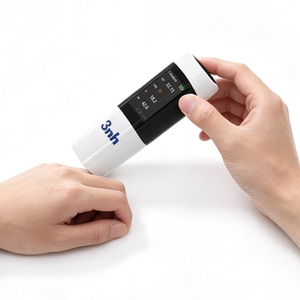
1. Executive Summary & Physics of Quantitative Erythema Measurement
Erythema—defined as cutaneous redness resulting from microvascular congestion, vasodilation, or acute dermal inflammation—serves as one of the fundamental clinical endpoints in dermatological diagnostics, pharmaceutical safety evaluations, and cosmetic efficacy testing. Historically, erythema assessment relied on subjective visual grading systems (e.g., the Frosch-Kligman scale). However, visual scoring suffers from severe intra-observer and inter-observer variability, heavily influenced by ambient lighting conditions and skin phototypes (Fitzpatrick scale I–VI).
Modern clinical trials and commercial research demand objective, repeatable, quantitative metrics. Advanced quantitative erythema measurement tools isolate hemoglobin absorption spectrum signatures from underlying melanin spectra, yielding precise numbers such as the Erythema Index (EI), Melanin Index (MI), and Individual Typology Angle (ITA°) within the standard CIE L*a*b* color space.
Spectral Deconvolution & Photometric Stereo Imaging
Quantitative erythema measurement instruments utilize two main optical methodologies:
- Narrowband Reflectance Spectrophotometry: Measures light reflection at specific absorption peaks of oxyhemoglobin ($542\text{ nm}$ and $577\text{ nm}$) relative to green/red spectrum ratios, minimizing melanin optical interference.
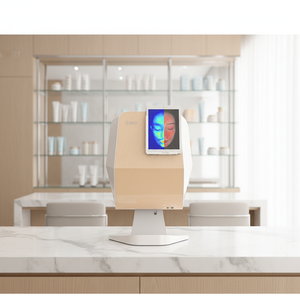
- Multispectral Photometric Stereo 3D Imaging: Pioneered by industry leaders such as Miravex Limited with the Antera 3D® system. This approach captures high-resolution sub-surface microvascular maps by projecting multi-directional LEDs of differing wavelengths, mathematically deconvolving dermal vascular structures from epidermal pigmentation in full 3D topography.
2. Evaluation Benchmark: Top 10 Quantitative Erythema Measurement Tool Factories & Exporters Matrix
Selecting an OEM/ODM manufacturing partner or clinical instrument supplier requires evaluating optical precision, spectral range, software API extensibility, and regulatory compliance (ISO 13485, CE Medical, FDA 510(k)). Below is an evaluation of the world's leading factories and export brands specializing in skin colorimetry, microvascular profiling, and quantitative erythema analysis instrumentation.
| Manufacturer / Brand | Primary Technology | Key Parameters Measured | Target Sector | Regulatory Status | |
|---|---|---|---|---|---|
| Miravex Limited (Antera 3D®) | Photometric Stereo Multispectral 3D | Erythema Index, Hemoglobin Vol., Wrinkles, Texture | Pharma, CROs, Cosmetic R&D | CE Mark, ISO 13485 | Get Quote |
| Courage + Khazaka Electronic | Narrowband Reflectance (Mexameter®) | Erythema Index (EI), Melanin Index (MI) | Dermatology, Academic Labs | ISO 9001, CE | Get Quote |
| Dermalab / Cortex Technology | Spectrophotometry & Ultrasound Probe | EI, TEWL, High-Freq Ultrasound Thickness | Clinical Research, Pharma | CE Medical, ISO 13485 | Get Quote |
| Delfin Technologies | Contact Spectrophotometry (SkinColorCatch) | CIE L*a*b*, ITA°, MI, EI | Cosmetic Efficacy Testing | ISO certified | Get Quote |
| Canfield Scientific | Cross-Polarized Imaging (VISIA® / RBX) | Red Features, Vascularity, Porphyrins | Aesthetic Clinics, Clinical Trials | FDA Registered, CE | Get Quote |
| Biolabs & Precision Optics Inc. | Diffuse Reflectance Spectroscopy | Oxygen Saturation, Microvascular Redness | Medical Devices, OEM OEM/ODM | ISO 13485 | Get Quote |
| Shenzhen AI-Skin Optoelectronics | 5-Spectrum AI Multispectral Scanner | 3D Erythema Heatmap, UV Pigment, Sebum | Salon Chains, Commercial R&D | CE, FCC, RoHS | Get Quote |
| Tokyo Bio-Derm Instruments | High-Resolution Tristimulus Colorimetry | CIE L*a*b*, $a^*$ Redness Vector | Japanese Skincare Formulation | JIS Standard, CE | Get Quote |
| EuroDerm Photonics GmbH | Laser Doppler Microvascular Flowmetry | Cutaneous Blood Perfusion, Vascular Reactivity | Vascular Surgery, Pharma CROs | CE Medical Class IIa | Get Quote |
| Aesthetic Measuring Tools OEM Co. | Digital Contact Colorimeter & Spectrometer | Erythema Baseline Delta ($\Delta E$), ITA° | White-Label OEM Export | ISO 9001, CE | Get Quote |
3. Future Procurement Trends for B2B Buyers & CROs (2025–2030)
The quantitative skin diagnostic market is undergoing a rapid evolution driven by non-invasive diagnostics, hyper-personalized skincare formulation, and regulatory demands for non-animal clinical testing validation. Enterprise buyers should align procurement strategies with the following structural trends:
4. Technical Specifications & OEM Procurement Criteria Checklist
When requesting RFQs from exporters and manufacturing plants, procurement directors must stipulate the following core engineering parameters:
- Spectral Waveband Resolution: Ensure the sensor operates within the target $500\text{ nm} - 600\text{ nm}$ absorption spectrum, where oxyhemoglobin ($\text{HbO}_2$) and deoxyhemoglobin ($\text{Hb}$) exhibit peak extinction coefficients.
- Illumination Geometry: Polarized diffuse light illumination prevents specular reflection flares from sebum or moisture, guaranteeing pure diffuse reflectance readings.
- Repeatability Coefficient of Variation (CV): Premier medical-grade units must maintain a $\text{CV} < 1.0\%$ across repeated measurements on standardized skin color calibration phantom targets.
- Software Integration & Raw Data Export: Support for CSV, XML, DICOM, and API integration into LIMS (Laboratory Information Management Systems).
Why Partner With Our Global Diagnostic Network?
Derived from breakthrough research at Trinity College Dublin and perfected through over 15 years of optical engineering, our underlying technology leadership—exemplified by Miravex Limited’s flagship Antera 3D®—sets the gold standard for clinical skin imaging.
Our manufacturing facilities operate under strict ISO 13485 medical device quality systems, offering OEM/ODM white-label customization, optical probe recalibration services, and global export compliance support for distributors across North America, Europe, and Asia-Pacific.
Consult with an Optical EngineerFrequently Asked Questions (FAQ) for Enterprise Procurement
Detailed technical answers to common queries raised by medical device buyers, cosmetic CROs, and aesthetic clinic procurement directors.
$\text{EI} = 100 \times \left[ \log_{10}\left(\frac{1}{R_{\text{green}}}\right) - K \cdot \log_{10}\left(\frac{1}{R_{\text{red}}}\right) \right]$
where $R$ represents reflectance values and $K$ is a correction coefficient for epidermal melanin attenuation.
Accelerate Your Bio-Dermatological Research & Procurement
Connect directly with our optical engineering team and international export specialists to request complete technical datasheets, clinical whitepapers, or volume distributor pricing.
Get a Quote