
Leading Multi-Spectral & 3D Skin Redness Diagnostic Systems
Explore high-precision diagnostic systems designed for dermatological clinics, CRO trial verification, and aesthetic medical centers.

X5PRO 9-Spectral AI Facial Skin Analyzer Machine for Face Moisture Pores Wrinkles UV Spot Analysis US/EU Compatible Commercial
Send an Inquiry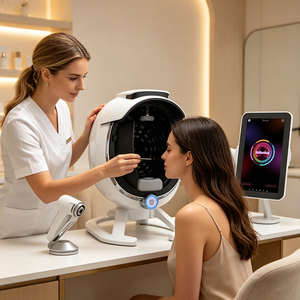
2026 Newest A6 3D Facial Scanner Skin Analyzer 8 Spectrum AI Skin Analysis Machine For Blackheads And Pores Depth Detection
Send an Inquiry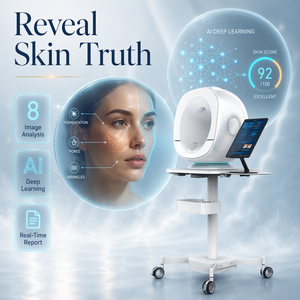
All in One Facial Skin Analyzer Machine 3D Camera 4 Spectra 8 Intelligent Images AI Analysis 30 Plus Detection Dimensions Clinic
Send an Inquiry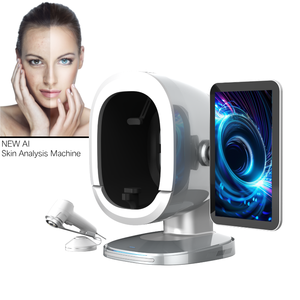
Newest 3D AI Intelligent Skin Analyzer Face Scanner Skin Analysis Machine Facial Tester Scanner Support 19 Languages
Send an Inquiry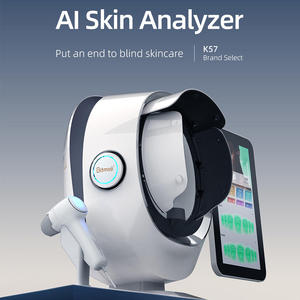
High Quality Portable Facial Analysis Skin Monitor Analyzer 3D Digital Skin Analyzer Machine for Salon
Send an Inquiry
Newest X3-pro-Skin-Analyzer Facial Scanner Skin Analyzer For Resaller 25 Languages X3 Skin Analysis Machine Wifi Contact
Send an Inquiry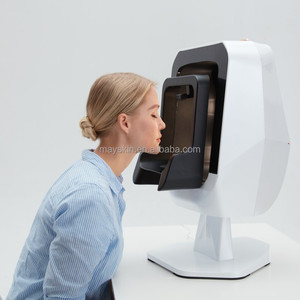
Meicet Mc88 Professional Facial Scanners Beauty Machine Smart Skin Analyzer Moisture Tester Face Skin Analyser for Beauty Salon
Send an Inquiry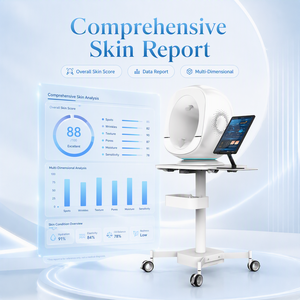
Scientific Research Anti Aging Verification 3D Skin Analyzer Machine 4 Spectra AI 8 Intelligent Images 30 Plus Detection Clinic
Send an Inquiry1. Technical Foundations of Quantitative Erythema & Vascular Redness Assessment
Skin redness—clinically categorized across a spectrum of dermatological conditions including erythema, rosacea, telangiectasia, post-inflammatory hyperpigmentation (PIH) vascular components, and acute actinic damage—presents a complex optical quantification challenge. Standard RGB clinical photography routinely suffers from illumination non-uniformity, specular reflection artifacts, and color temperature drift, rendering traditional visual scoring scales (such as the Clinician's Erythema Assessment) inherently subjective and prone to intra-observer variance exceeding 35%.
To establish true Information Gain in quantitative clinical trial validation and diagnostic precision, modern diagnostic systems leverage multi-spectral polarimetric imaging and photometric stereo surface reconstruction. By isolating specific absorption wavelengths matching the twin absorption peaks of oxyhemoglobin (HbO₂) and deoxyhemoglobin (Hb) at 542 nm and 577 nm, specialized optical systems mathematically decouple hemoglobin distribution from melanin absorption (400–700 nm continuous spectrum).
Photometric Stereo Imaging
Reconstructs sub-millimeter 3D surface topography by capturing sequential images under controlled directional light sources, isolating pore depth and vascular elevation.
Cross-Polarized Filtering
Eliminates surface glare and specular reflections from the stratum corneum, capturing pure diffuse backscattered light from the deep papillary dermis.
Narrow-Band Chromophore Unmixing
Applies modified Beer-Lambert principles to isolate hemoglobin concentration maps from background skin pigmentation with micro-molar sensitivity.
As contract research organizations (CROs) and aesthetic pharmaceutical manufacturers shift toward stringent, objective endpoint measurements, the demand for high-resolution skin redness diagnostic hardware has surged. The selection of manufacturing partners hinges not merely on camera resolution, but on optical calibration rigor, spectral bandwidth selectivity, and robust algorithm transparency.
2. In-Depth Comparative Analysis: Top 10 Skin Redness Diagnostic System Manufacturers
The global market for advanced skin redness diagnostic instrumentation comprises dedicated medical device engineering firms, specialized optical research companies, and high-volume commercial aesthetic equipment original equipment manufacturers (OEMs). Below is an objective technical breakdown of the industry's top 10 manufacturers dominating the clinical research and commercial aesthetic sectors in 2026.
1. Miravex Limited (Ireland) — Pioneer in Handheld 3D Optical Dermoscopy
Miravex Limited, creator of the renowned Antera 3D® platform, stands as a global benchmark in quantitative skin analysis. Utilizing multi-directional LED illumination across multi-spectral wavelengths, Miravex systems perform real-time optical chromophore unmixing. Their proprietary software calculates exact Erythema Concentration Scores, hemangioma volume, and vascular lesion surface areas. Designed specifically for pharmaceutical clinical trials, cosmetic R&D validation, and high-end aesthetic medicine, Miravex systems offer unrivaled inter-measurement reproducibility (CV < 1.2%).
2. Canfield Scientific (USA) — Full-Facial Imaging Infrastructure
Canfield Scientific’s VISIA® and RBX® (Red/Brown Sub-Surface Technology) systems dominate broad clinical consulting environments. By converting standard RGB spatial values into sub-surface vascular maps, Canfield enables rapid screening of facial erythrosis and telangiectatic networks. Their systems excel in standardized positioning hardware and cloud-synced patient data management.
3. Courage + Khazaka Electronic GmbH (Germany) — Biophysical Probe Gold Standards
Renowned for single-parameter biophysical measurement tools such as the Mexameter® MX 18, Courage + Khazaka provides point-measurement probe systems measuring narrow-band narrow-reflection spectra (568 nm and 660 nm) to compute an exact Erythema Index (EI). They remain the gold standard for accredited dermatological testing laboratories demanding absolute physical baseline metrics.
4. QuantifiCare (France) — Portable 3D Photogrammetry
QuantifiCare specializes in 3D stereoscopic photography systems (LifeViz® series). By integrating 3D surface topography with polarimetric vascular analysis, QuantifiCare allows clinicians to evaluate both structural changes (volume changes post-treatment) and surface vascular reactions simultaneously in a compact, hand-held form factor.
5. Cortex Technology (Denmark) — High-Resolution Colorimetric & Ultrasound Systems
Cortex Technology manufactures specialized instruments combining high-resolution optical spectrophotometry (DermaSpectrometer) with high-frequency dermal ultrasound. This dual approach allows researchers to measure superficial redness indices alongside underlying dermal tissue thickness and edema depth.
6. Meicet Tech (China) — AI-Driven Multi-Spectral Commercial Analyzers
Meicet has rapidly expanded across the global aesthetic salon and clinic sector with models like the MC88 and A6 series. Integrating up to 9 spectral light modes (including cross-polarized, parallel-polarized, UV, and Wood’s light), Meicet platforms leverage deep-learning neural networks to detect micro-vascular dilation, pore inflammation, and sensitive skin redness barriers at competitive price points.
7. DJM Medical Instrument (Germany/China) — Tele-Dermatology Cloud Analytics
DJM combines optical face scanning hardware with automated AI cloud diagnostics. Their diagnostic systems map vascular distribution against extensive multi-ethnic normative skin databases, generating automated risk profiles for barrier damage, rosacea severity, and post-laser recovery trajectories.
8. Bomtech Electronics (South Korea) — High-Precision Facial Diagnostic Systems
Bomtech develops advanced facial skin scanners utilizing targeted LED light engines. Known for intuitive user interfaces and rapid optical capture sequence (<15 seconds), Bomtech systems provide detailed vascular sensitivity maps tailored for dermatology clinics and medical spas across the Asia-Pacific region.
9. Spectrum Intelligent Diagnostic Tech — High-Spectral Commercial AI Hardware
Specializing in commercial multi-spectral AI hardware (such as the X5PRO and X3-pro series), Spectrum provides robust 4-to-9 spectral band skin analyzers. Their equipment incorporates high-resolution CMOS sensors paired with narrow-pass optical bandpass filters to isolate UV spot damage, sebum oxidation redness, and deep-dermal capillary dilation.
10. DermaGraphix Systems — Dermoscopic Imaging & Vascular Mapping
Focusing primarily on pigmented and vascular lesion monitoring, DermaGraphix offers clinical mapping systems that integrate polarized dermoscopy with whole-body lesion tracking, allowing dermatologists to follow subtle changes in vascular morphology over extended clinical longitudinal studies.
Hardware & Spectral Performance Comparison Matrix
| Manufacturer | Primary Optical Technology | Spectral Wavelengths | Spatial Resolution | Primary Application Sector |
|---|---|---|---|---|
| Miravex Limited | Photometric Stereo + Multi-Spectral LED | Narrow-band Multi-Spectrum | Sub-micron (3D Topography) | Pharma Clinical Trials, CROs, Aesthetics |
| Canfield Scientific | Polarized Broad-Spectrum RGB + RBX | Standard Visible Spectrum | ~50 µm / pixel | Clinical Consultation, MedSpas |
| Courage + Khazaka | Narrow-Band Reflectance Spectrophotometry | 568 nm, 660 nm, 880 nm | Point Contact Probe (5mm) | Dermatological Research Standards |
| QuantifiCare | 3D Stereo Photogrammetry | Polarized Visible Light | High 3D Surface Grid | Plastic Surgery, Aesthetic Tracking |
| Meicet Tech | Multi-Spectral LED + AI Neural Net | Up to 9 Spectral Bands | HD CMOS Image Matrix | Commercial Clinics, MedSpas, Beauty OEM |
| Spectrum Diagnostic | Narrow-Band Pass Multi-Spectral Imaging | 4 to 9 Spectra (UV to Cross-Pol) | High Resolution Industrial CMOS | Commercial Analysis, Distribution |
3. Emerging Procurement Trends & Technology Forecast (2026–2030)
As optical technology converges with artificial intelligence, the landscape for skin redness diagnostic procurement is undergoing radical transformations. Procurement officers, clinical trial managers, and aesthetic clinic directors must consider four critical technological shifts when evaluating capital equipment purchases:
1. Hyperspectral Unmixing
Transitioning from standard RGB separation to true hyperspectral imaging capable of differentiating micro-vascular capillary dilation from diffuse dermal extravasation.
2. Automated Sub-Surface Volumetrics
Combining 3D surface depth mapping with optical coherence principles to calculate the exact depth profile (in micrometers) of vascular malformations.
3. Cloud API & Compliance Integration
Diagnostic systems must now offer DICOM/HIPAA compliant export formats and RESTful APIs for seamless integration with clinical EDC platforms.
Strategic Sourcing Criteria for B2B Buyers
When selecting a supplier, enterprise procurement teams should evaluate manufacturers against three primary technical benchmarks:
- Illumination Stability & LED Drift: High-grade systems utilize active feedback photodiodes to dynamically adjust LED output, ensuring lighting conditions remain identical across multi-center trials over several years.
- Spectral Crosstalk Elimination: Inferior systems suffer from spectral overlap, misinterpreting dense melanin concentrations as inflammatory vascular redness. Look for hardware utilizing narrow-bandpass optical filters (<10 nm FWHM).
- Software Algorithm Validation: Ensure the manufacturer provides published peer-reviewed validation papers establishing high correlation coefficients ($R^2 > 0.92$) against established spectrophotometric standards.
Why Our Optical Diagnostics Platform Leads the Industry
Built upon 15+ years of optical engineering, our diagnostic instruments integrate multi-spectral LED arrays with proprietary 3D photometric stereo reconstruction. By combining clinical precision with intuitive, rapid capture workflows, our machinery empowers global pharmaceutical researchers, CROs, and aesthetic medical practitioners to quantify redness with absolute mathematical confidence.
4. Procurement & Technical FAQ
Direct answers to critical technical questions asked by clinical researchers, procurement heads, and medical clinic owners.
How does optical chromophore unmixing differ from standard RGB color separation?
Standard RGB color separation breaks down images into broad Red, Green, and Blue pixel values, which are easily skewed by skin surface gloss, ambient light, and melanin variance. Optical chromophore unmixing uses specific light absorption physics (Beer-Lambert Law) at narrow wavelengths (542nm/577nm) to mathematically isolate concentration maps of oxyhemoglobin independently from melanin and collagen scatter.
Why is 3D photometric stereo imaging superior for evaluating post-treatment erythema?
Post-treatment erythema (e.g., following fractional laser, IPL, or microneedling) involves both color changes and localized inflammatory edema (swelling). 3D photometric stereo imaging captures both vascular color intensity and sub-millimeter 3D micro-topography simultaneously, giving clinicians an objective metric for both vascular response and tissue recovery kinetics.
Can these diagnostic systems quantify rosacea severity objectively in clinical trials?
Yes. Clinical-grade redness diagnostic systems output continuous quantitative metrics such as Erythema Index (EI) or Total Hemoglobin Concentration Score. These objective numerical values replace subjective 0–4 visual ordinal scales, enabling statistical significance ($p < 0.05$) to be reached with smaller patient cohort sizes in pharmaceutical efficacy trials.
What calibration standards are required to maintain longitudinal multi-center trial consistency?
Diagnostic hardware should feature automated optical self-calibration using certified diffuse reflectance reference tiles (e.g., Spectralon). This ensures that variations in LED temperature, ambient room lighting, or sensor aging are dynamically normalized prior to every capture sequence.
What is the typical lifespan and maintenance requirement for modern multi-spectral LED light engines?
Industrial medical-grade solid-state LED illumination modules are typically rated for over 50,000 continuous operation hours. Annual calibration checks and optical lens cleanings are recommended to maintain sub-micron measuring accuracy in high-volume clinic environments.
How do OEM dynamic LiveChat inquiry workflows connect buyers directly with technical specialists?
By initiating a direct live consultation through integrated inquiry buttons on our platform, enterprise buyers can immediately discuss custom OEM/ODM sensor configurations, request localized software SDKs, or receive formal clinical trial whitepapers directly from lead optical engineers.