
Featured R&D Testing Systems & Skin Analyzers
Standard-Setting Optical Instruments for Formulators, CROs, and Clinical Testers
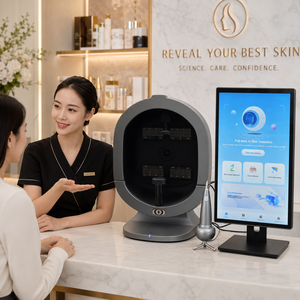
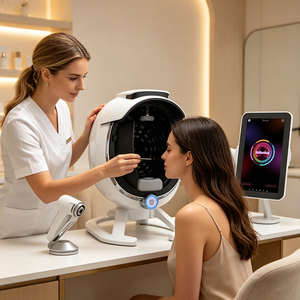
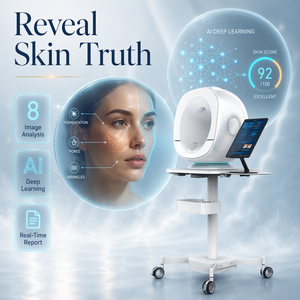
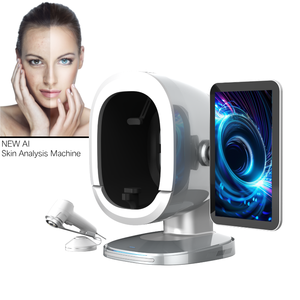
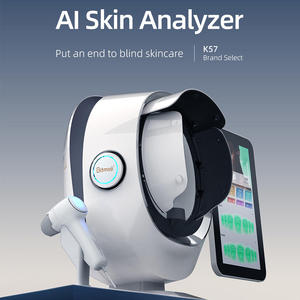
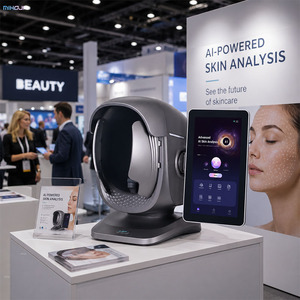
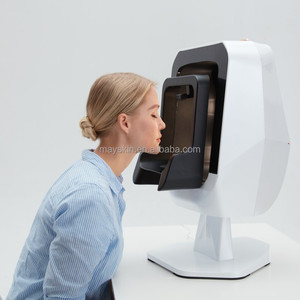
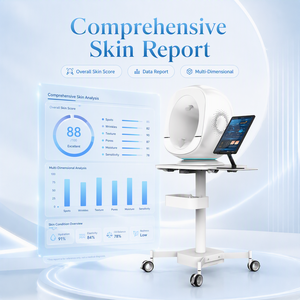
Executive Industry Overview: The Paradigm Shift in Cosmetic R&D and Efficacy Testing
How Advanced Multi-Spectral Optics and Quantitative 3D Topography Are Redefining Modern Cosmetic Formulation Verification
The global personal care and cosmetic formulation landscape is experiencing an unprecedented structural pivot toward data-driven claim substantiation. Regulatory authorities—including the US FDA (MoCRA compliance), the European Chemicals Agency (ECHA), and China's National Medical Products Administration (NMPA)—now mandate rigorous, statistically verifiable, and scientifically reproducible data for claims regarding anti-aging, barrier repair, skin brightening, and hyperpigmentation reduction. Consequently, relying on subjective expert grading or basic RGB photography is no longer viable for leading R&D laboratories and Contract Research Organizations (CROs).
As a global leader in optical engineering and biophysical instrumentation, leading Chinese cosmetic R&D testing system manufacturers have bridged the gap between high-end clinical dermatological research and scalable commercial testing. By integrating photometric stereo imaging, multi-spectral light-emitting diode (LED) arrays, and deep neural network algorithms, modern testing systems quantify sub-surface epidermal and dermal structures with microscopic repeatability. This white paper delves into the engineering mechanics, optics, procurement criteria, and future trends shaping cosmetic testing infrastructure globally.
Core Optical & Algorithmic Technologies in R&D Testing
Breakthroughs in Multispectral Imaging and Sub-Surface Chromophore Quantification
Photometric Stereo 3D Mapping
Utilizing directional lighting vectors from multiple incident angles, photometric stereo reconstructs subtle surface gradients without laser scanning artifacts. It precise measures dermal roughness values (Ra, Rz), wrinkle depth volume (mm³), and pore morphology across micro-textured cutaneous layers.
Multi-Spectral Decomposition
By switching across up to 9 spectral bands (including standard RGB, Parallel-Polarized, Cross-Polarized, UV 365nm, and Wood's Light), systems isolate specific chromophores. Optical absorption coefficients differentiate epidermal melanin from dermal hemoglobin for accurate erythema and spot measurement.
AI Neural Skin Segmentation
Engineered on datasets containing over 10 million clinically verified facial profiles, deep-learning models auto-segment region-of-interest (ROI) targets—such as periorbital crow's feet, nasolabial folds, and vascular telangiectasia—eliminating operator alignment error across multi-week clinical trials.
Technical Matrix: R&D Testing System Benchmarks
Comparing System Architectures for Formulation Verification vs. Commercial Diagnostic Scans
| Evaluation Parameter | Standard Commercial Analyzer | R&D Clinical Grade 3D Testing System | Impact on Cosmetic R&D Claims |
|---|---|---|---|
| Optical Spectrum | RGB + Basic UV (2-3 Lighting Modes) | Multi-Spectral (4-9 Bands, 365nm–850nm) | Isolates deep vs surface pigmentation, porphyria & vascular lesions |
| 3D Topography Precision | Qualitative 2.5D visual approximation | Quantitative 3D Stereo Re-construction (<10µm) | Accurately quantifies micro-wrinkle volume reduction post-treatment |
| Alignment Calibration | Manual visual positioning guide | Dual-Camera AI Auto-Registration & Overlay | Guarantees exact pixel-level longitudinal comparison over 28-90 days |
| Data Export & Compliance | Closed proprietary PDF reports | Raw DICOM/CSV Export + Audit Trail Logging | Fully supports statistical software (SPSS, SAS) & NMPA claim submissions |
| Efficacy Metrics | Score from 1-100 relative index | Absolute physical units (µm, mm³, Melanin Index) | Provides legal and scientific backing for anti-aging & barrier efficacy |
Future Procurement Trends in Cosmetic Testing Systems (2026–2030)
Strategic Buying Shifts for Research Laboratories, Brand Manufacturers, and OEM/ODM Suppliers
As competition intensifies in functional skincare (e.g., peptides, recombinant collagen, retinol derivatives, and botanical extracts), procurement officers and laboratory directors must align equipment purchases with upcoming industry trends:
1. Convergence of Biophysical Metrics
Future testing platforms will not operate in isolation. Buyers are actively demanding integrated systems that combine optical 3D facial scanning with skin hydration (capacitance), sebum production (sebumetry), and trans-epidermal water loss (TEWL) sensors in a single calibrated workstation.
2. Cloud-Based Longitudinal Cohort Tracking
Enterprise cosmetic manufacturers require centralized databases where multi-center clinical trials across geographic regions can sync encrypted image datasets in real time. Cloud algorithms allow standardized cross-country formulation efficacy benchmarks.
3. In-Silico & AI Skin Emulation
Advanced R&D systems are evolving from descriptive diagnostics to predictive modeling. Machine learning architectures predict prospective skin age deceleration based on active compound absorption curves and historical clinical trial data.
Why Source From Top China Cosmetic Testing Equipment Manufacturers?
Unrivaled Optical Precision, Scalable ODM/OEM Engineering, and Rigorous QC Standards
Industrial-Grade Optical Hardware
China's leading manufacturing ecosystems feature world-class precision lens manufacturing, custom LED spectral array fabrication, and ultra-low noise CMOS sensor integration, providing laboratory equipment with superior signal-to-noise ratios.
Comprehensive Multi-Language & Software Ecosystems
With built-in support for up to 25 languages, intuitive user experience design, seamless Wi-Fi data sync, and customizable clinical trial reporting templates, equipment easily integrates into international laboratories.
Unmatched Quality Control & International Compliance
Systems adhere strictly to ISO 13485 medical device quality systems, ISO 9001 standards, CE certifications, and FDA electrical safety requirements, ensuring dependable 24/7 continuous operation in high-throughput testing labs.
Agile ODM/OEM Customization Capabilities
From custom optical wavelength filters tailored to specific active ingredient fluorescence to white-label software UI and hardware chassis design, Chinese manufacturers deliver flexible B2B engineering solutions.
Frequently Asked Questions (FAQ) for B2B Buyers & Lab Managers
Expert Insights on Selecting, Calibrating, and Deploying R&D Testing Infrastructure
Q1: How does 3D skin surface topography differ from conventional 2D skin analysis?
Conventional 2D skin analyzers rely solely on flat RGB images, which are easily skewed by changes in ambient room lighting, shadows, or subtle facial expression shifts. 3D skin surface topography (utilizing photometric stereo or structured light) calculates the physical elevation and depression maps of skin texture. This allows exact quantitative measuring of wrinkle depth (µm), pore volume (mm³), and skin roughness parameters (Ra, Rz) independently of color variations, providing objective evidence for anti-aging efficacy.
Q2: Can these skin analyzer machines substantiate efficacy claims for cosmetic registration (NMPA / EU REACH)?
Yes. High-precision testing systems such as the X5PRO, A6 3D, and clinical research series generate quantitative CSV and numerical data outputs alongside high-resolution spectral imagery. These metrics—measuring reduction in melanin index, erythema index, pore size, and wrinkle area over control baselines—provide the rigorous statistical proof required by regulatory dossiers for claims like "wrinkle reduction," "barrier restoration," or "skin whitening."
Q3: Why is multi-spectral imaging crucial for cosmetic formulation testing?
Different optical wavelengths penetrate the skin to distinct depths. Visible RGB light captures surface tone; Cross-Polarized light eliminates specular reflection to reveal epidermal pigmentation and hemoglobin distribution; UV light (365nm) excites sub-surface porphyrins (acne bacteria) and reveals hidden UV-damaged melanin spots; Wood's light evaluates sebum distribution. Multi-spectral testing provides a complete 360-degree evaluation of active ingredient performance across skin layers.
Q4: How do multi-language support (19–25 languages) and software upgrades work for global distributors?
Leading Chinese equipment manufacturers engineer software frameworks with localized multi-language packs (English, Spanish, German, French, Arabic, Japanese, Korean, etc.). Software updates, algorithm improvements, and new diagnostic modules are pushed seamlessly via cloud Wi-Fi updates or direct localized installer packages, ensuring global clinical teams operate on unified protocols.
Q5: What baseline maintenance and optical calibration procedures are required?
To maintain scientific accuracy across multi-month clinical studies, instruments feature automated self-check software and come with standardized color and white-balance calibration targets. Periodic recalibration takes under 2 minutes and ensures that light output drift from LEDs is zeroed out, maintaining pixel-perfect continuity across long-term testing trials.
Q6: What lead times and OEM/ODM options are available for corporate cosmetics brands?
Standard equipment orders typically ship within 5–7 business days. For OEM/ODM orders—including custom housing colors, logo printing, tailored software interfaces, customized optical spectrum filters, and specialized database integrations—lead times range from 3 to 6 weeks depending on engineering complexity.