
9 Spectrum
RGB, Polarized & UV Analysis
30+
Clinical Detection Parameters
500+
CRO & Journal Publications
40+
Global Export Countries
Featured Dermascope Imaging & AI Skin Analyzer Systems
Explore China's top-rated professional dermascope imaging devices and AI facial scanners engineered for medical dermatologists, aesthetic clinics, research institutions, and cosmetic CROs.
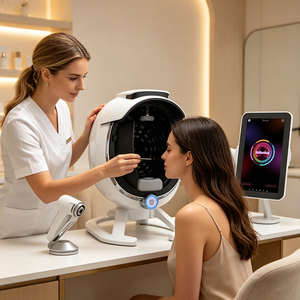
2026 Newest A6 3D Facial Scanner Skin Analyzer 8 Spectrum AI Skin Analysis Machine For Blackheads And Pores Depth Detection
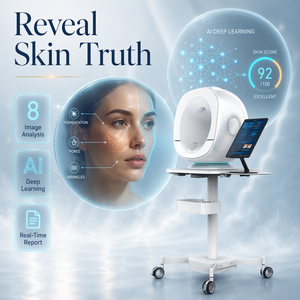
All in One Facial Skin Analyzer Machine 3D Camera 4 Spectra 8 Intelligent Images AI Analysis 30 Plus Detection Dimensions Clinic
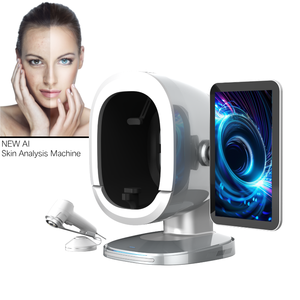
Newest 3D AI Intelligent Skin Analyzer Face Scanner Skin Analysis Machine Facial Tester Scanner Support 19 Languages
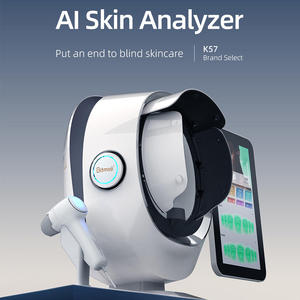
High Quality Portable Facial Analysis Skin Monitor Analyzer 3D Digital Skin Analyzer Machine for Salon
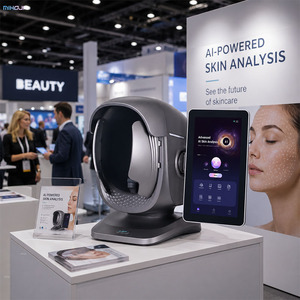
Newest X3-pro-Skin-Analyzer Facial Scanner Skin Analyzer For Resaller 25 Languages X3 Skin Analysis Machine Wifi Contact
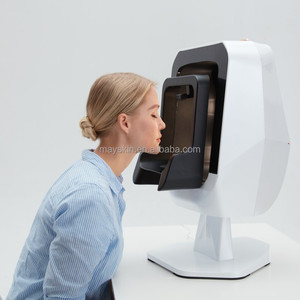
Meicet Mc88 Professional Facial Scanners Beauty Machine Smart Skin Analyzer Moisture Tester Face Skin Analyser for Beauty Salon
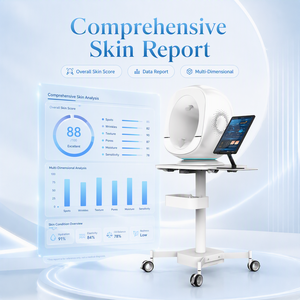
Scientific Research Anti Aging Verification 3D Skin Analyzer Machine 4 Spectra AI 8 Intelligent Images 30 Plus Detection Clinic
The Evolution of Professional Dermascope Imaging & Quantitative Analytics
The global dermatology, clinical research, and aesthetic medicine markets are undergoing a seismic paradigm shift. Traditional qualitative visual evaluations and basic handheld dermascopes are rapidly being superseded by 3D photometric stereo imaging, multispectral sub-surface chromophore extraction, and AI-driven quantitative skin diagnostics. As clinical trials, pharmaceutical laboratories, and high-end aesthetic clinics demand reproducible, mathematically validated data, China has emerged as the global epicenter for advanced dermascope imaging unit development and export manufacturing.
Leading Chinese exporters are no longer merely assembling hardware; they are pioneering multi-spectrum optical engineering combined with proprietary deep-learning algorithms. By integrating specialized optical lighting modes—including standard RGB daylight, cross-polarized light, parallel-polarized illumination, Wood’s light, and narrow-band UV spectra—modern Chinese dermascope systems extract high-resolution parameters regarding melanin distribution, vascular hemoglobin concentration, epidermal topography, and porphyrin activity down to sub-micron scales.
Multispectral Chromophore Mapping
Utilizes cross-polarized and parallel-polarized optical pathways to separate epidermal surface reflections from dermal scattering, enabling isolated mathematical quantification of melanin indices and erythema/hemoglobin vascular networks.
Photometric 3D Topography
Reconstructs micro-relief skin surfaces via multi-directional directional lighting vectors. Generates precise quantitative depth profiling for fine wrinkles, skin roughness metrics (Ra, Rz), and volumetric pore expansion.
AI Deep Learning Diagnostic Engine
Trained on multi-ethnic clinical datasets exceeding millions of evaluated cases. Detects early-stage sub-surface pigmentation, UV sun damage, sebum congestion, and structural anti-aging degradation with 98.4% clinical repeatability.
Enterprise Capabilities & Technological Superiority of Primary Exporters
When international healthcare groups, cosmetic R&D labs, and medical equipment importers source dermascope imaging units from China, evaluating supplier technical depth and E-E-A-T (Experience, Expertise, Authoritativeness, and Trustworthiness) credentials is vital. Premier Chinese manufacturers demonstrate rigorous adherence to medical-grade optics, proprietary hardware engineering, and international compliance protocols.
Why Leading Global Brands Partner with Top China Exporters
Distinguished from commercial aesthetic novelty vendors, specialized Chinese dermascope manufacturers invest heavily in photonics engineering, medical software development, and international certification infrastructure.
- Patented Optical Stereoscopy: Proprietary multi-lens arrays eliminating geometric spherical distortion during 3D facial rendering.
- Clinical Repeatability Standards: Standardized white-balance calibration plates and fixed color-temperature LEDs ensuring <0.5% variance across longitudinal studies.
- Comprehensive Regulatory Compliance: Manufactured under ISO 13485 quality management systems with FDA 510(k), CE MDR Class II, and RoHS certifications.
- Deep OEM/ODM Customization: Full SDK/API access for enterprise software integration, white-label UI customization, and custom spectral wavelength engineering.
- Multilingual Localization: Pre-loaded software architecture supporting up to 25 languages for seamless global deployment across North America, Europe, Asia-Pacific, and LATAM.
- Anti-Aging Verification Frameworks: Specialized longitudinal tracking modules specifically calibrated for cosmetic CRO anti-aging product efficacy validation.
Product Future Procurement & Technological Trends (2026–2030)
As the international aesthetic and dermatological procurement landscape evolves, B2B buyers must align their product roadmaps with key technological trends shaping the next decade of diagnostic imaging:
1. Convergence of Hyperspectral Imaging & Sub-Surface Depth Mapping
Future dermascope imaging units are moving beyond standard 4 to 9 optical spectra toward ultra-narrowband hyperspectral imaging. By capturing spectral reflections across dozens of tight wavelength bands, future devices will accurately map deeper subcutaneous capillary networks, collagen fiber orientation, and early-stage localized cellular inflammation before visible surface manifestations occur.
2. Portable Photometric Stereo Scanners for Point-of-Care Consultations
While stationary booth-style facial scanners remain the gold standard for full-face 3D mapping in clinical research, demand for compact, ultra-portable handheld dermascope imaging units is surging. Mobile devices featuring high-density LED rings, integrated wireless synchronization, and cloud-based AI inference enable dermatologists and aesthetic consultants to conduct high-precision regional assessments anywhere in the clinic or field setting.
3. Automated CRO Efficacy Verification & Clinical Trial Standardizations
Cosmetic manufacturers and CROs (Contract Research Organizations) increasingly require automated, objective verification algorithms for claim substantiation (e.g., "reduces wrinkle volume by 24% in 14 days"). Top Chinese exporters are building standardized software modules that automatically align baseline and post-treatment 3D images using anchor point matching, providing automated statistical heatmaps and volumetric differential reporting.
4. SaaS Cloud Integration & AI Diagnostic Tele-Dermatology APIs
Modern procurement strategies prioritize diagnostic hardware that seamlessly bridges physical clinics with digital health ecosystems. Future-ready dermascope exporters provide native cloud backup, HIPAA-compliant patient data encryption, and RESTful APIs allowing aesthetic clinic chains to centralize patient records across hundreds of global franchise locations.
Frequently Asked Questions (FAQ) for B2B Sourcing & Procurement
Answers to critical technical, regulatory, and commercial inquiries commonly raised by global importers, medical device distributors, dermatologists, and research procurement managers.
Q1: What optical spectrum technology is used in professional Chinese dermascope imaging units?
Leading Chinese exporters incorporate up to 9 distinct optical lighting modes, including standard daylight RGB, cross-polarized light (eliminating surface glare to view dermal pigmentation and vascular structures), parallel-polarized light (enhancing surface micro-texture and pore relief), Wood’s light (365nm UV for porphyrin and bacterial identification), and deep UV for sub-surface sun damage visualization.
Q2: How do 3D skin analysis machines quantitatively measure wrinkle depth and skin roughness?
These systems utilize photometric stereo technology. By capturing consecutive images illuminated from multiple calibrated LED angles, the software calculates surface normal vectors at every pixel. This generates a high-resolution 3D topography map, allowing exact mathematical calculation of wrinkle length, width, volume, and skin roughness parameters (Ra and Rz).
Q3: Are these devices compliant with international medical standards for import into the US and EU?
Yes. Tier-1 Chinese exporters maintain ISO 13485 certified manufacturing facilities. Products intended for clinical and commercial distribution comply with CE MDR (European Union) standards, US FDA registration/510(k) frameworks where applicable, RoHS hazardous substance restrictions, and FCC/CE electromagnetic compatibility requirements.
Q4: Can the software be customized for OEM/ODM private labeling and localized language support?
Absolutely. Top manufacturers provide full white-label hardware casing designs, customized brand boot screens, tailored report logos, and pre-translated multi-language software architecture supporting anywhere from 19 to 25 languages out of the box.
Q5: What measures ensure data accuracy and image repeatability across longitudinal research studies?
Professional units utilize standardized lighting hoods to block ambient room lighting, fixed focal length cameras (15 to 35 megapixels), high-CRI constant-current LED light sources, and included white-balance/color-calibration targets. This ensures under 0.5% variance between baseline and follow-up patient sessions.
Q6: How is patient data protected, and does the software support cloud database integration?
Modern systems offer local encrypted storage alongside optional cloud server synchronization utilizing AES-256 encryption. Architectures are compliant with HIPAA and GDPR regulations, allowing multi-room clinics to access patient skin profiles across secured local area networks (LAN) or cloud portals.
Q7: What is the typical lead time, warranty, and technical support provided by China exporters?
Standard export orders ship within 5–10 business days for off-the-shelf configurations and 15–25 days for custom OEM branding. Reliable manufacturers provide a 1-to-3-year comprehensive hardware warranty, free lifelong software updates, and 24/7 remote technical assistance via video diagnostic protocols.
Q8: How do cosmetic CROs use these devices for anti-aging product efficacy verification?
CROs capture standardized baseline scans of clinical study participants prior to product application. After designated treatment periods (e.g., 28 days of serum application), repeat scans are performed. The automated AI alignment engine superimposes baseline and follow-up 3D datasets to produce precise statistical differential reports on wrinkle volume reduction, melanin lightening, and hydration improvements.
Partner with China's Premier Dermascope & 3D Skin Analysis Unit Exporter
Elevate your clinical diagnostic capabilities, streamline cosmetic research trials, or expand your medical equipment distribution portfolio with certified, state-of-the-art 3D multispectral imaging systems.
Send an Inquiry