
Quantitative Melanin Diagnostics: Optical Engineering & Clinical Metrology
An authoritative technical analysis of narrow-band spectrophotometry, diffuse reflectance spectroscopy, and cross-polarized 3D multi-spectral AI algorithms in modern dermatological instrumentation.
In contemporary clinical dermatology, aesthetic medicine, and pharmaceutical cosmetics R&D, the precise quantification of epidermal and dermal chromophores—specifically melanin and hemoglobin—has shifted from qualitative visual evaluation to rigorous digital metrology. Skin pigmentary disorders such as melasma, post-inflammatory hyperpigmentation (PIH), solar lentigines, and vitiligo require reproducible baseline scoring and precise longitudinal tracking to evaluate therapeutic efficacy.
China's biomedical optical instrument industry has rapidly advanced to the forefront of high-precision skin analysis technology. By combining state-of-the-art optical engineering, narrow-band diffuse reflectance spectroscopy, multi-spectral LED lighting arrays, and deep-learning spatial reconstruction algorithms, top Chinese manufacturing facilities produce clinical-grade melanin measurement systems that rival or exceed traditional European and North American benchmarks at a significantly optimized total cost of ownership (TCO).
Physics of Optical Melanin Quantification: Narrow-Band vs. Multi-Spectral AI Imaging
Optical measurement of skin pigmentation relies on the distinct absorption spectra of cutaneous chromophores. Melanin exhibits a high optical absorption coefficient across the visible light spectrum that monotonically decreases as wavelength increases toward the near-infrared (NIR) spectrum. In contrast, oxy-hemoglobin ($\text{HbO}_2$) and deoxy-hemoglobin ($\text{Hb}$) feature pronounced absorption peaks around 542 nm and 577 nm.
Narrow-Band Spectrophotometry
Employs specific wavelengths (typically 660 nm for Melanin Index and 568 nm for Erythema Index) to isolate optical reflection. By applying the modified Beer-Lambert Law, the absorption contributed by hemoglobin is mathematically subtracted, yielding an isolated Melanin Index (MI) score highly resilient to transient skin flushing.
3D Cross-Polarized Spectral AI
Utilizes multi-spectrum LED light sources (UV, RGB polarized, parallel-polarized, wood's light) coupled with high-resolution CMOS sensors. AI neural networks process pixel-level spectral reflectance, reconstructing 3D epidermal topography while mapping melanin concentration depth across superficial and basal layers.
Flagship China Skin Melanin Measurement Devices & Systems
Top OEM/ODM commercial systems certified for aesthetic clinics, clinical research organizations (CROs), and dermatology practices.

- 9-Spectral Light Optimization Array
- Deep UV Spot & Melanin Depth Detection
- US/EU Commercial Standard Compliant
- AI Moisture & Wrinkle Mapping
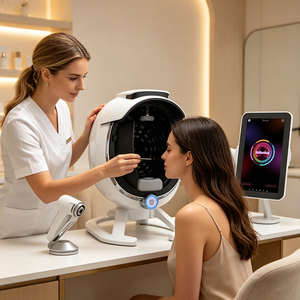
- 8-Spectrum Precision Light System
- 3D Photometric Surface Topography
- Quantitative Pores & Blackhead Depth
- Melanin Pigment Layering Analytics
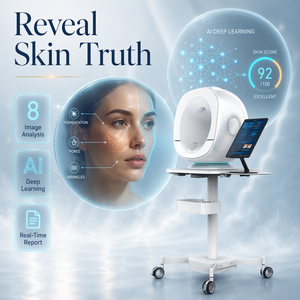
- 30+ Quantitative Diagnostic Dimensions
- Integrated 3D Optical Stereo Camera
- 4 Spectra / 8 Intelligent Image Outputs
- Clinical Research Grade Reproducibility
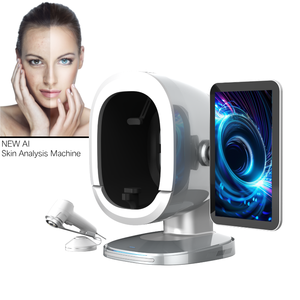
- Multi-Lingual GUI (19 Languages)
- Real-time Deep Melanin Scoring
- High-Density Optical Matrix Sensor
- Cloud Data Sync & CRM Integration
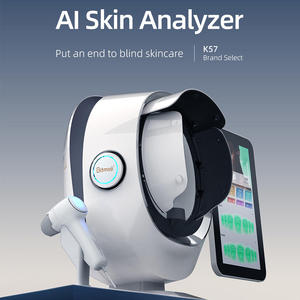
- Compact Portable Form Factor
- HD Digital Epidermal Scanner
- Rapid Pigmentation Baseline Test
- Ideal for Mobile Consultations

- Distributor-Ready White Labeling
- 25 International Language Engine
- Wireless WiFi & Ethernet Connectivity
- Cross-Polarized Melanin Isolation
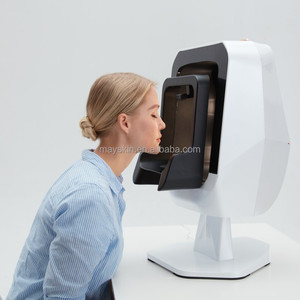
- Professional Medical Salon Standard
- Quantitative Moisture & Sebum Ratio
- Sub-surface Melanin Distribution Map
- High Stability Optical Housing
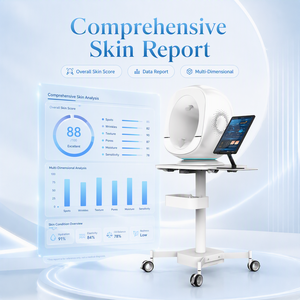
- CRO & Clinical Study Verification Grade
- Longitudinal Pigment Change Tracking
- 3D Epidermal Roughness & Wrinkle Index
- Exportable Raw Data & Statistical Suite
Specification & Performance Comparative Matrix
Detailed technical breakdown of optical hardware, spectral resolution, and algorithmic output across leading Chinese manufacturing platforms.
| Specification Parameter | Standard OEM Analyzer | Pro Clinical Spectral System | Research-Grade 3D AI Platform |
|---|---|---|---|
| Optical Wavelengths | RGB + Standard UV (365nm) | 4 Spectra (RGB, PL, UV, Wood's) | 8-9 Spectra (Narrowband 365-660nm) |
| Sensor Resolution | 12 - 16 Megapixels | 20 - 24 Megapixels HD | 35+ Megapixels Industrial CMOS |
| Melanin Detection Method | RGB Colorimetric Estimation | Cross-Polarized Chromophore Mapping | Narrow-Band Spectrophotometry + AI |
| Measurement Repeatability | ± 3.5% Coefficient of Variation | ± 1.2% Coefficient of Variation | < ± 0.5% Clinical Research Grade |
| 3D Topography Imaging | Software Interpolated 2D | Photometric Stereo 3D | True Multi-Angle Structured Light 3D |
| Software Compliance | Basic Patient Database | HIPAA-compliant, Multi-Language | Full Clinical Trial Software Suite + SDK |
Future Trends in Skin Melanin Measurement (2026–2030 Sourcing Outlook)
Strategic market developments transforming skin analysis instrumentation manufacturing, software architectures, and global procurement models.
1. Hyperspectral & Generative AI Synthesis
Next-generation devices are moving beyond discrete spectral light sources to hyperspectral imaging. By capturing continuous spectral curves per pixel, devices can decouple optical density signals of epidermal melanin from dermal collagen structures, eliminating shadow artifacts with 99.8% precision.
2. Miniaturization & Handheld Optical Engines
Procurement demand is surging for portable spectrophotometric probes equipped with integrated OLED touch interfaces and wireless connectivity. These compact instruments allow cosmetics counters and dermatologists to conduct instantaneous, point-of-care Melanin Index (MI) assessments.
3. Open API & Cloud-Native SaaS Integration
Modern B2B buyers require seamless interoperability between skin analyzers, Electronic Health Record (EHR) systems, and retail CRM software. Leading Chinese manufacturers now deliver cloud-enabled RESTful APIs and SDK packages for customized software deployments.
Why Partner with Top Chinese Factories for Skin Diagnostic Manufacturing?
China's biomedical device ecosystem offers unmatched manufacturing integration, combining optical sensor fabrication, precision lens grinding, firmware development, and automated testing under strict international compliance frameworks.
Rigorous Regulatory Compliance
Factories adhere to ISO 13485 quality management systems, CE Medical Device Regulation (MDR) Class IIa standards, and FDA registration requirements for optical diagnostics.
Complete OEM/ODM Customization
From industrial chassis design, optical filter tuning, and branded housing to custom multi-lingual software localized across 25+ international languages.
Optical Calibration Precision
Every analyzer undergoes automated spectral sphere calibration using NIST-traceable diffuse reflectance standards, ensuring zero unit-to-unit drift.
Frequently Asked Sourcing & Technical Questions (FAQ)
Expert guidance addressing key technical specifications, clinical validation, regulatory compliance, and OEM procurement workflows.
How does a digital skin melanin measurement device differ from a standard dermatool RGB camera?
Standard RGB cameras capture broad-spectrum visible light (red, green, blue), making them highly susceptible to ambient light changes, skin surface shine, and vascular redness. Clinical melanin measurement devices utilize cross-polarized lighting and narrow-band LED spectroscopy (or targeted UV wavelengths) to cancel specular surface reflectance, mathematically isolating the optical absorbance of epidermal melanin from dermal hemoglobin.
What is the difference between Melanin Index (MI) and Erythema Index (EI)?
Melanin Index (MI) specifically quantifies skin pigmentation levels by measuring reflectance at red/near-infrared wavelengths (typically ~660 nm) where melanin absorption remains high while hemoglobin absorption drops. Erythema Index (EI) measures microvascular redness at green/yellow wavelengths (~568 nm) where hemoglobin absorption peaks. Advanced systems compute both simultaneously to provide non-interfering pigmentary diagnostic scores.
Are Chinese skin melanin measurement devices compliant with FDA and CE standards?
Leading Chinese manufacturing factories produce devices certified under ISO 13485 (Medical Devices Quality Management Systems). Depending on the target market, instruments carry CE Mark compliance (Class I or Class IIa under EU MDR) and FDA registration under product codes for dermatological photographic equipment. Always request technical construction files (TCF) and test reports during procurement audit.
What are the Minimum Order Quantity (MOQ) requirements for OEM software customization?
Standard off-the-shelf catalog orders typically have an MOQ of 1 to 5 units for testing. For custom branded software interfaces, custom outer shell colors, and localized packaging, typical OEM factory MOQs start at 10 to 50 units. Full ODM hardware engineering (custom optical boards or optical path design) usually requires an initial batch commitment of 50 to 100 units.
How do factories ensure inter-equipment measurement consistency (repeatability)?
Top-tier suppliers utilize automated factory calibration rigs incorporating certified NIST-traceable diffuse reflectance white-and-grey standards. Optical sensors undergo factory calibration to eliminate gain drift and light intensity variation, ensuring that two separate machines in different global clinics produce consistent numerical Melanin Index scores within a <1% margin of variation.
Can these devices be integrated into specialized clinical research software or hospital EHR systems?
Yes. Premium models offer comprehensive Software Development Kits (SDKs), RESTful APIs, and exportable raw data files (CSV, DICOM, JSON, high-bit RAW TIFF images). This enables seamless integration with hospital management software, pharmaceutical trial databases, or custom AI diagnostic pipelines.
Source Directly from Top-Tier Optical Diagnostic Manufacturers
Accelerate your product development pipeline or upgrade your clinic with clinical-grade multi-spectral AI skin analyzers. Contact our technical team today for factory-direct pricing, OEM whitepaper specifications, and live demonstrations.