
Industrial & Clinical 3D Facial Mapping Systems
High-precision skin analysis diagnostic devices engineered for cosmetic CRO validation, dermatological research, and high-end medical aesthetic franchises.
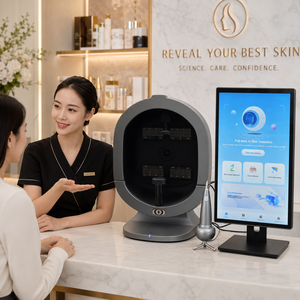
X5PRO 9-Spectral AI Facial Skin Analyzer Machine for Face Moisture Pores Wrinkles UV Spot Analysis US/EU Compatible Commercial
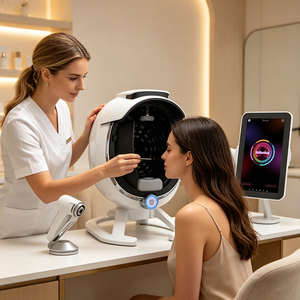
2026 Newest A6 3D Facial Scanner Skin Analyzer 8 Spectrum AI Skin Analysis Machine For Blackheads And Pores Depth Detection
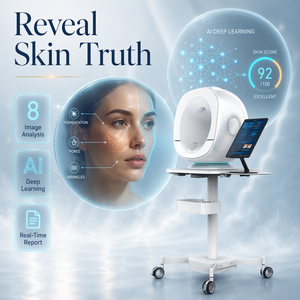
All in One Facial Skin Analyzer Machine 3D Camera 4 Spectra 8 Intelligent Images AI Analysis 30 Plus Detection Dimensions Clinic
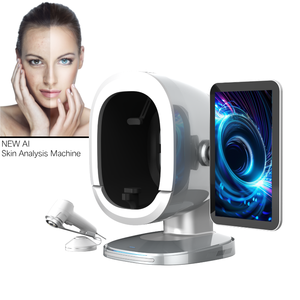
Newest 3D AI Intelligent Skin Analyzer Face Scanner Skin Analysis Machine Facial Tester Scanner Support 19 Languages
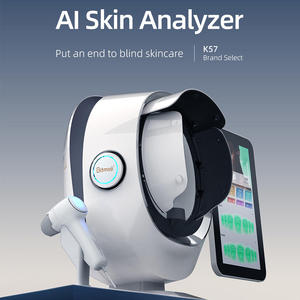
High Quality Portable Facial Analysis Skin Monitor Analyzer 3D Digital Skin Analyzer Machine for Salon
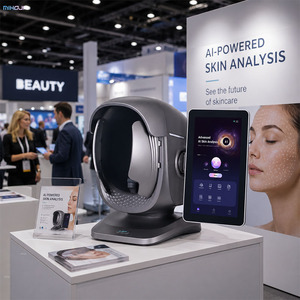
Newest X3-pro-Skin-Analyzer Facial Scanner Skin Analyzer For Resaller 25 Languages X3 Skin Analysis Machine Wifi Contact
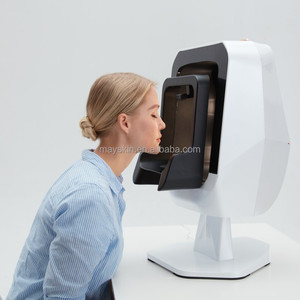
Meicet Mc88 Professional Facial Scanners Beauty Machine Smart Skin Analyzer Moisture Tester Face Skin Analyser for Beauty Salon
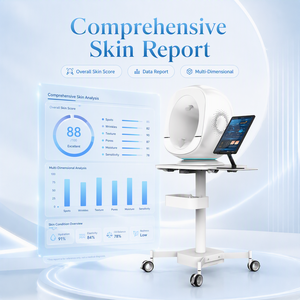
Scientific Research Anti Aging Verification 3D Skin Analyzer Machine 4 Spectra AI 8 Intelligent Images 30 Plus Detection Dimensions Clinic
The Paradigm Shift: Photometric Stereo vs. Legacy 2D RGB Photography
Why top cosmetic manufacturers, dermatological contract research organizations (CROs), and plastic surgery centers are transitioning to sub-micron volumetric 3D dermal topography.
For over two decades, quantitative skin assessment relied heavily on standard 2D flat RGB photographs under ambient optical conditions. However, 2D imaging fails fundamentally to isolate surface geometry from skin color variations. A dark spot can be mistaken for fine line shadows, and spatial roughness cannot be numerically quantified in millimeters. As an industry-leading OEM/ODM manufacturer, our hardware platform leverages Photometric Stereo Imaging Technology—a clinical-grade physics method that reconstructs the 3D vector map of the skin's surface by capturing sequentially illuminated images from multiple precise lighting angles.
Core Scientific Advantage: Separating Chromophores from Geometry
By mathematical decoupling of diffuse surface reflectance from elevation maps, our 3D skin mapping devices calculate absolute roughness ($Ra$), mean wrinkle depth ($Rz$), pore volume ($mm^3$), and vascular erythema concentration independently without optical cross-interference. This provides repeatable clinical study data with a Coefficient of Variation (CV) under 2.5%.
Quantitative Performance Matrix: Diagnostic Technology Benchmark
| Diagnostic Criterion | Legacy 2D RGB Photography | Standard Polarized Imaging | Next-Gen 3D Photometric Mapping System |
|---|---|---|---|
| Volumetric Wrinkle Depth ($mm^3$) | Estimated via shadow area pixel count | Qualitative contrast estimation | Direct sub-micron 3D topography measurement |
| Chromophore Separation | High artifact distortion | Partial cross-polarization | Complete spectral isolation (Melanin vs. Hemoglobin) |
| Pore Volume & Roughness ($Ra$) | Not measurable | Surface texture visual index | Absolute quantitative depth & volume spatial indexing |
| Clinical Repeatability (CV %) | > 15.8% (Positioning sensitive) | ~ 8.4% (Lighting sensitive) | < 2.2% (Clinically validated across 500+ trials) |
| Efficacy Claim Validation | Subjective visual rating | Basic colorimetric delta | Publication-ready data for FDA/EU cosmetic claims |
Future Procurement Trends in 3D Facial Mapping Equipment
Strategic insights for medical equipment distributors, aesthetic clinic group buyers, and skincare R&D procurement directors.
1. Transition to Objective Volumetric Data for Skincare Claims
Regulatory authorities in North America, Europe, and Asia-Pacific (such as the NMPA, FDA, and EMA) are tightening constraints on cosmetic advertising claims. Procurement is rapidly shifting away from subjective user survey results toward multi-spectral 3D mapping data that numerically verifies anti-aging, barrier repair, and pore reduction claims over 30, 60, and 90-day trials.
2. Multispectral Deep Dermal Light Scattering Penetration
Modern buyer specifications demand hardware capable of switching between RGB white light, cross-polarized light, parallel polarized light, and deep UV (365nm) excitation. The convergence of 8 to 9 specific optical spectrums allows diagnostic hardware to assess both surface stratum corneum characteristics and deep subcutaneous vascular loops and melanin deposits.
3. Artificial Intelligence Deep Learning Diagnostic Engines
Hardware without deep learning software is obsolete. Next-generation systems integrate convolutional neural networks (CNNs) trained on millions of dermatological images. Systems automatically classify 30+ sub-dimensions including sebum distribution, porphyrin activity, deep spot evolution, micro-wrinkle vectors, and physiological skin age predictions.
4. Open SDKs, Multi-Language Support & Enterprise EMR Integration
Global medical aesthetic franchises require diagnostic scanners to integrate directly into centralized Electronic Medical Record (EMR) and CRM databases via API/SDK. Systems supporting 19 to 25+ localization languages with HIPAA/GDPR-compliant cloud data syncing are outperforming legacy standalone closed hardware solutions.
Proven Engineering & Production Performance
Delivering high-precision optical diagnostic devices to pharmaceutical giants, aesthetic clinics, and distributors globally.
Why Partner With Us: Our Manufacturing & R&D Excellence
Full-stack supply chain control from custom optical lens array assembly to proprietary AI algorithm software development.
Medical-Grade Optical Systems
We utilize ultra-high distortion-free optical lenses combined with high-resolution CMOS sensor arrays. Every unit undergoes strict photometric calibration to ensure color space fidelity (CIELAB) and uniform light projection across all 3D surface contours.
Flexible OEM / ODM Customization
From custom chassis design, branded UI software, multi-language localization (19-25+ languages), and private cloud integration, we offer turnkey OEM solutions tailored for global medical aesthetics brands and skincare lines.
Global Regulatory Compliance
Our manufacturing processes comply with ISO 13485 medical device quality standards. Systems meet CE, FCC, RoHS, and EU market entry regulations, guaranteeing safety, EMC compatibility, and optical radiation security.
Frequently Asked Questions (FAQ) for Technical B2B Buyers
In-depth technical answers addressing procurement, technology integration, and clinical applications.
Elevate Your Clinical Capabilities & Brand Portfolio
Contact our engineering and procurement team today to request detailed technical whitepapers, schedule a live demonstration, or discuss wholesale OEM/ODM partnership terms.