
Flagship 3D & AI Skin Diagnostic Systems
Engineered for clinical trials, cosmetic CROs, aesthetic clinics, and commercial dermatology networks worldwide.
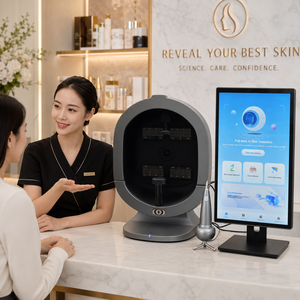
X5PRO 9-Spectral AI Facial Skin Analyzer Machine for Face Moisture Pores Wrinkles UV Spot Analysis US/EU Compatible Commercial
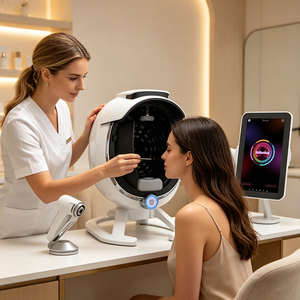
2026 Newest A6 3D Facial Scanner Skin Analyzer 8 Spectrum AI Skin Analysis Machine For Blackheads And Pores Depth Detection
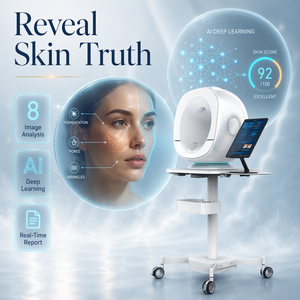
All in One Facial Skin Analyzer Machine 3D Camera 4 Spectra 8 Intelligent Images AI Analysis 30 Plus Detection Dimensions Clinic
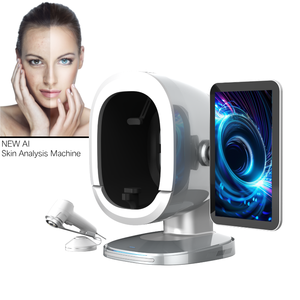
Newest 3D AI Intelligent Skin Analyzer Face Scanner Skin Analysis Machine Facial Tester Scanner Support 19 Languages
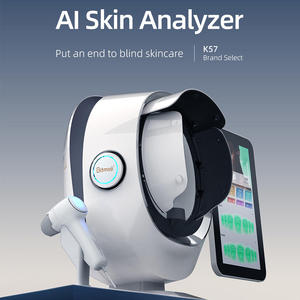
High Quality Portable Facial Analysis Skin Monitor Analyzer 3D Digital Skin Analyzer Machine for Salon
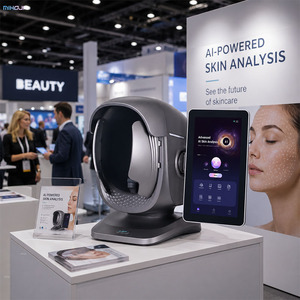
Newest X3-pro-Skin-Analyzer Facial Scanner Skin Analyzer For Resaller 25 Languages X3 Skin Analysis Machine Wifi Contact
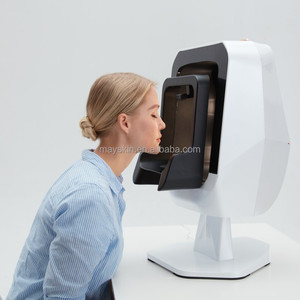
Meicet Mc88 Professional Facial Scanners Beauty Machine Smart Skin Analyzer Moisture Tester Face Skin Analyser for Beauty Salon
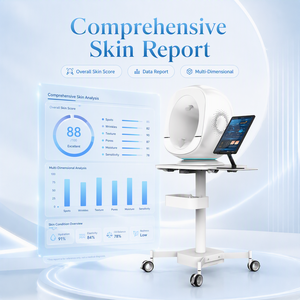
Scientific Research Anti Aging Verification 3D Skin Analyzer Machine 4 Spectra AI 8 Intelligent Images 30 Plus Detection Clinic
Executive Whitepaper: The Evolution of Quantitative 3D Dermal Topography
In the rapidly advancing disciplines of clinical dermatology, pharmaceutical R&D, and evidence-based aesthetic medicine, traditional qualitative visual skin assessments are no longer sufficient. Modern clinical trials and premium patient consultations demand objective, repeatable, and micrometric-accurate diagnostic data. As a world-leading 3D surface skin scanner manufacturer & supplier, our engineering paradigm leverages state-of-the-art multi-spectral illumination and advanced Photometric Stereo Imaging to map the complete micro-relief of human skin in three dimensions.
"Unlike conventional 2D photography, which relies heavily on ambient lighting angles and prone to shadow distortion, quantitative 3D photometric topography isolates skin curvature, elevation, volume, and chromophore concentrations into independent physical channels."
By capturing multiple high-resolution images under calibrated directional light vectors, our proprietary algorithms reconstruct the exact surface normal vectors for every pixel on the targeted dermis. This mathematical elevation modeling permits sub-micron measurement of wrinkle depression depth (Ra, Rz parameters), pore volume quantification (mm³), skin roughness, and volumetric shifts following dermatological interventions or cosmetic topical application.
Sub-Surface Chromophore Unmixing
Separates skin spectra into distinct concentration maps for Melanin (hyperpigmentation, solar lentigines) and Hemoglobin (erythema, rosacea, vascularization) using polarimetric signal decomposition.
Photometric Stereo Micro-Relief
Calculates 3D surface vectors from multi-angle light emission, completely eliminating color interference to isolate pure physical topography and fine line indentations.
AI-Driven Deep Learning Analytics
Neural networks trained on over 5,000,000 multi-ethnic clinical skin profiles provide automated grading for 30+ dermatological dimensions with clinical reproducibility.
Optical Architecture & Spectral Analysis Matrix
Understanding the hardware and optical differentiation is essential when sourcing skin scanners for contract research organizations (CROs), hospital research labs, or high-end cosmetic franchise setups. Below is an engineering overview of spectral bands utilized in our 3D hardware line:
| Optical Illumination Spectrum | Wavelength / Polarity Range | Dermal Target & Pathologies Identified | Clinical & Research Application |
|---|---|---|---|
| Standard RGB Daylight | 400 nm – 700 nm Visible | Surface texture, pore opening diameter, visible acne vulgaris | Baseline photographic documentation & patient aesthetic consultations |
| Cross-Polarized Light | Linear Cross-Polarization Filters | Sub-epidermal erythema, capillaries, vascular inflammation | Laser treatment monitoring, rosacea management, post-peel recovery |
| Parallel-Polarized Light | Co-Directional Polarization | Epidermal micro-relief, superficial stratum corneum hydration | Barrier function analysis, moisturizing efficacy validation |
| UV / Deep Violet Light | 365 nm – 405 nm Wavelength | Porphyrins (Propionibacterium acnes), deep UV melanin spots | Acne therapy optimization, early sun-damage risk profiling |
| 3D Photometric Stereo Grid | Multi-Angle LED Array (RGB+IR) | Wrinkle depth (Ra/Rz), volumetric collapse, structural sagging | Anti-aging clinical trial quantification (Botox, fillers, collagen R&D) |
Future Procurement Trends in 3D Skin Diagnostic Technologies
As the global cosmetic clinical testing market expands toward $3.5 Billion by 2030, procurement directors, distributors, and clinic owners must align their capital expenditure with emerging technology shifts. Based on global market analysis and our R&D roadmap, four macro trends are reshaping the skin scanner hardware ecosystem:
Convergence of Generative AI & Predictive Aging Simulation
Modern buyers are shifting from static diagnostic tools to predictive aging engines. Future skin scanners do not merely measure current wrinkle depth—they run deep generative models to simulate structural dermal sagging over 3, 5, and 10-year timelines, allowing preventative anti-aging treatments to be proven numerically.
Cloud-Connected Multi-Clinic Diagnostic Networks
Enterprise aesthetic chains require centralized data synchronization. Modern procurement specs mandate cloud-native database management, multi-device cross-calibration, and instant synchronization between branch handheld scanners and central hospital EMR/CRM systems via secure RESTful APIs.
Regulatory Demand for Non-Invasive Quantitative Proof
Regulatory bodies worldwide (including FDA, EU Cosmetics Regulation, and NMPA) are tightening guidelines around marketing claims for skincare products. Claims like "reduces wrinkle volume by 35%" require rigorous, peer-reviewed 3D optical validation, driving cosmetic manufacturers directly to certified 3D scanner suppliers.
Ergonomic Handheld Photometric Modalities
While large desktop booths remain essential for full-face imaging, compact, hand-held 3D diagnostic scanners with built-in real-time preview screens are gaining massive traction for targeted body skin, localized scar mapping, and point-of-sale retail consultation environments.
Why Partner With Us: Our Manufacturing & Engineering Advantage
As a dedicated original equipment manufacturer (OEM) and technology innovator, our facilities combine optical physics laboratories, clean-room assembly lines, and proprietary software development units under one roof. We empower global brand owners, medical device distributors, and pharmaceutical research houses with full-stack custom solutions.
Full OEM/ODM & White-Label Hardware Customization
We offer end-to-end white-label services, including custom industrial chassis design, private-label branding, customized UI/UX themes, multi-language software localized into 25+ languages, and bespoke sensor configurations.
Rigorous Quality Assurance & International Certifications
Our production lines operate under ISO13485 Medical Quality Systems. Every device undergoes automated optical calibration, spectral sphere alignment, and burn-in testing to guarantee CE, FCC, RoHS, and FDA compliance standards.
SDK & API Integration for Enterprise Software Developers
We provide comprehensive C++, Python, and Web REST API SDKs. Software teams can seamlessly embed our 3D raw point cloud generation and spectral analysis algorithms into custom client portals or telemedicine platforms.
B2B Procurement & Technical FAQ
Key technical and commercial answers for equipment procurement officers, clinic directors, and research investigators:
Q1: How does a 3D skin surface scanner differ from standard 2D skin analyzers?
Standard 2D skin analyzers utilize flat RGB photography, which measures surface color variations but cannot measure depth, elevation, or texture volume accurately due to lighting glare and shadows. A true 3D surface skin scanner employs photometric stereo optics or structured light projection to generate a physical 3D topographic model (point cloud) of the dermal surface. This enables absolute micrometric quantification of wrinkle depth (in micrometers µm), pore depth, scar tissue volume, and skin roughness independently of skin color or ambient light changes.
Q2: Can your 3D skin scanners be used to substantiate cosmetic product efficacy claims?
Yes. Our 3D skin scanners are explicitly engineered to provide publishable, objective data required by regulatory agencies and clinical research organizations (CROs). The software exports validated numerical metrics—such as Ra (arithmetic average roughness), Rz (maximum peak-to-valley height), pore volume in mm³, and melanin/hemoglobin concentration indices—enabling cosmetic manufacturers to empirically prove claims such as "reduces fine lines by 28% in 14 days."
Q3: What optical spectra are included in your multi-spectral AI diagnostic devices?
Our advanced models feature up to 9 distinct illumination spectra, including RGB Natural Sunlight, Cross-Polarized Light (isolating vascular redness and erythema), Parallel-Polarized Light (highlighting surface texture and lipids), UV Light (365nm for deep pigment and porphyrin detection), Wood's Light, and dynamic directional LED vectors for 3D reconstruction.
Q4: What is the calibration lifecycle and measurement reproducibility of your scanners?
Devices are factory-calibrated using optical target plates with sub-micron tolerances. Onboard auto-calibration protocols allow users to verify optical intensity and geometric alignment in under 10 seconds prior to clinical trials. Our devices achieve a test-retest reproducibility score exceeding 99.4%, ensuring that changes recorded in longitudinal studies reflect actual biological treatment outcomes rather than instrument drift.
Q5: Do you provide OEM branding, software localization, and custom SDK integration?
As an established original manufacturer, we provide full white-label OEM and ODM services. This includes customized exterior colorways and logo printing, customized desktop/mobile application interfaces, software UI translated into over 25 languages, and complete Windows/Android SDK APIs for integrating imaging hardware directly into proprietary medical databases or clinical CRM systems.
Q6: What lead time and warranty support can international buyers expect?
Standard OEM production lead times range from 10 to 20 business days depending on order volume and custom housing requirements. All machines ship with a comprehensive 2-Year Factory Warranty, lifetime software algorithm updates, and 24/7 technical remote diagnostic support via dedicated engineer channels.
Ready to Elevate Your Skin Diagnostic & R&D Capabilities?
Whether you are seeking a factory-direct wholesale order, customized OEM/ODM white-label solutions, or equipping a multi-center clinical study, our optical engineering team is standing by.