
Featured Advanced Skin Surface Profiler Systems
Explore top-rated 3D skin analyzers, optical profilometers, and multi-spectral facial diagnostic systems deployed across pharmaceutical CROs, aesthetic research clinics, and dermatological centers globally.

X5PRO 9-Spectral AI Facial Skin Analyzer Machine for Face Moisture Pores Wrinkles UV Spot Analysis US/EU Compatible Commercial
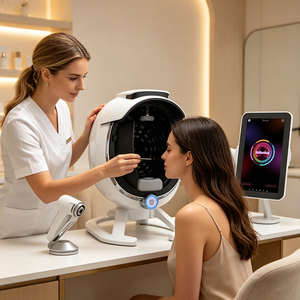
2026 Newest A6 3D Facial Scanner Skin Analyzer 8 Spectrum AI Skin Analysis Machine For Blackheads And Pores Depth Detection
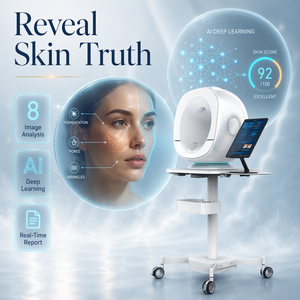
All in One Facial Skin Analyzer Machine 3D Camera 4 Spectra 8 Intelligent Images AI Analysis 30 Plus Detection Dimensions Clinic
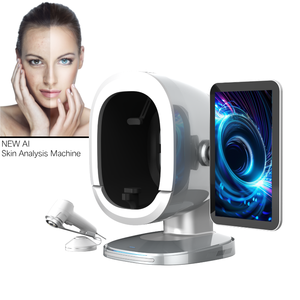
Newest 3D AI Intelligent Skin Analyzer Face Scanner Skin Analysis Machine Facial Tester Scanner Support 19 Languages

High Quality Portable Facial Analysis Skin Monitor Analyzer 3D Digital Skin Analyzer Machine for Salon

Newest X3-pro-Skin-Analyzer Facial Scanner Skin Analyzer For Resaller 25 Languages X3 Skin Analysis Machine Wifi Contact

Meicet Mc88 Professional Facial Scanners Beauty Machine Smart Skin Analyzer Moisture Tester Face Skin Analyser for Beauty Salon
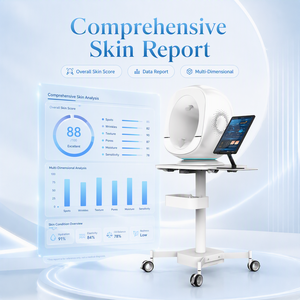
Scientific Research Anti Aging Verification 3D Skin Analyzer Machine 4 Spectra AI 8 Intelligent Images 30 Plus Detection Clinic
The Evolution of Advanced Skin Surface Profiling in Clinical & Industrial Dermatology
Modern clinical dermatology, pharmaceutical cosmetic development, and aesthetic medicine have transitioned permanently from subjective visual evaluation to quantitative, objective micro-topographical measurement. At the heart of this paradigm shift is the advanced skin surface profiler—a sophisticated optical diagnostic system designed to capture, reconstruct, and measure the three-dimensional micro-relief of human skin in vivo with sub-micron precision.
Traditionally, evaluating epidermal micro-roughness, fine lines, deep rhytids, and pore volume relied upon mechanical contact stylus instruments or silicone replica moulding (e.g., Silflo impressions) combined with optical line profilometry. While functional, silicone replication introduces physical artifacts, distortion, and extended patient processing times. Today's state-of-the-art skin surface profiler suppliers provide non-contact, camera-based 3D surface topography platforms—most notably led by patented Photometric Stereo Imaging technology—delivering instantaneous, reproducible digital elevation maps of skin topography.
Biophysical Fundamentals of Optical Surface Profilometry
The human stratum corneum exhibits a complex surface geometry comprising primary lines (macro-wrinkles), secondary lines (fine cutaneous folds), micro-depressions (pores and follicular openings), and structural unevenness caused by photoaging, intrinsic aging, or pathological conditions such as psoriasis and eczema. To accurately characterize these features, an advanced skin surface profiler utilizes multispectral illumination (spanning ultraviolet, visible cross-polarized, parallel-polarized, and near-infrared wavelengths) combined with high-resolution image sensors.
Photometric Stereo Reconstruction
By illuminating skin from multiple precisely calibrated angles within milliseconds, software algorithms compute localized surface normals at every camera pixel. This generates accurate 3D heightmaps (z-axis resolution < 1 µm) without parallax error.
Multispectral Chromophore Unmixing
Advanced spectral separation differentiates melanin, hemoglobin (vascularity), and collagen reflection profiles. This isolates epidermal topographical changes from deep dermal vascular erythema and dyschromia.
Quantitative Roughness Metrics
Computes standardized ISO 25178 3D areal surface parameters including Sa (arithmetical mean height), Sq (root mean square height), Sz (maximum height), as well as volumetric skin collapse metrics in mm³.
Why Clinical Researchers & B2B Buyers Trust Leading Profiler Suppliers
When selecting an advanced skin surface profiler supplier, global pharmaceutical enterprises, cosmetic Contract Research Organizations (CROs), and top-tier aesthetic clinics evaluate suppliers based on scientific validation, mathematical reproducibility, software compliance, and hardware longevity. Platforms such as the patented Antera 3D® (developed by Miravex Limited in Dublin, Ireland) have established the gold benchmark in optical skin analysis worldwide.
Key Enterprise Pillars of Precision Profiling Suppliers
- ✓ Peer-Reviewed Scientific Validation: Over 500 published clinical studies validate the repeatability and accuracy of optical photometric profilers across diverse Fitzpatrick skin types.
- ✓ Automated Baseline Matching & Image Registration: Advanced visual matching algorithms eliminate repositioning errors in multi-week clinical trials (e.g., Day 0 vs. Day 28 anti-aging product claims).
- ✓ Multi-Spectrum Spectral Illumination: High-power LEDs spanning multiple spectral bands allow immediate conversion between surface topography, deep dermal pigment analysis, and capillary vascularity mapping.
- ✓ Exportable Raw Data for R&D: Complete compliance with 21 CFR Part 11 and ISO standards, enabling seamless integration into corporate biostatistical software and CRO database architecture.
Core Technical Performance Comparison
Comparative analysis between legacy mechanical/2D systems and modern 3D photometric surface profilers:
| Parameter | Legacy 2D / Stylus | Next-Gen 3D Profiler |
|---|---|---|
| Capture Time | 15-30 Mins (Replicas) | < 1.0 Second (In-Vivo) |
| Z-Axis Spatial Resolution | 5.0 - 10.0 µm | < 0.1 - 1.0 µm |
| Lighting Artifacts | High Sensitivity | Zero (Unmixed Normals) |
| Color & Hemoglobin Separation | Impossible | Integrated Multispectral |
| Volumetric Measurement | Indirect Estimate | Direct True 3D (mm³) |
Future Procurement Trends in Skin Surface Profilers (2026–2030)
As global regulatory bodies (such as the US FDA, EU MDR, and China NMPA) tighten requirements for scientific substantiation in cosmetic claims and dermatological therapy approvals, enterprise buyers must anticipate key technological shifts in skin surface profiling procurement over the next decade.
1. Deep Learning & AI Predictive Topography
Next-generation profilers integrate neural networks trained on millions of clinical dermal profiles. These AI models predict age-related micro-structural degradation, skin sagging vectors, and long-term efficacy trajectories of topical formulations before structural changes become visible to the naked eye.
2. Ultra-Portable & Handheld In-Vivo Devices
While traditional clinical profilers were bulky stationary rigs, modern procurement demands ergonomically engineered handheld systems. These enable clinical investigators to evaluate hard-to-reach anatomical zones (such as nasolabial folds, periorbital contours, and scalp micro-relief) with equal optical precision.
3. Hyper-Spectral Subsurface Imaging
Future profilers are expanding beyond standard 4 to 9 spectra into true hyperspectral imaging. By capturing dozens of discrete optical bands, suppliers enable researchers to simultaneous track surface micro-roughness alongside subsurface collagen matrix density, hydration levels, and cellular lipid barrier integrity.
4. Cloud-Connected Multi-Center Clinical Trial Sync
Enterprise procurement departments are prioritizing profilers equipped with encrypted cloud API integration. This allows multi-center multinational clinical trials to stream standardized topographical data instantly to centralized biostatistical teams, ensuring 100% data integrity and audit readiness.
5. Multi-Lingual Software Localizations
With aesthetic clinical trials expanding rapidly across Asia-Pacific, Latin America, and the Middle East, leading suppliers now provide software natively localized in 19 to 25+ languages. This reduces operator error across global study sites and simplifies staff onboarding.
6. ISO-Calibrated Automatic Profilometry Standard
Hardware self-calibration using certified optical calibration blocks is becoming mandatory. Modern profilers self-verify optical lens alignment and illumination intensity upon boot, eliminating baseline drift across multi-year research studies.
Frequently Asked Questions by Professional Equipment Buyers
Q: What is the difference between a 2D facial scanner and an advanced 3D skin surface profiler?
A 2D facial scanner captures flat RGB photos under specific illumination to estimate color features, superficial pigmentation, and visual lines. In contrast, an advanced 3D skin surface profiler uses technique such as Photometric Stereo Imaging or optical fringe projection to measure actual physical surface heights, depths, and volumes in 3D space. This provides absolute quantitative metrics (e.g., wrinkle depth in micrometers or pore volume in cubic millimeters) that are completely immune to changes in ambient room lighting.
Q: How do skin surface profilers quantify wrinkle reduction and pore tightness for clinical claims?
Skin surface profilers capture baseline 3D topographical maps before treatment (Day 0) and compare them with follow-up maps (e.g., Day 14, Day 28, Day 60). Proprietary image matching software aligns the exact micro-region of interest (ROI). The system then calculates percentage reductions in ISO surface roughness parameters (Sa, Sq, Sz), maximum depression depth, and total wrinkle volume, generating publication-ready statistical graphs and color-coded 3D elevation maps.
Q: Can an advanced skin profiler distinguish between hyperpigmentation and surface texture changes?
Yes. Leading profilers utilize multi-spectral cross-polarized lighting and mathematical unmixing algorithms. Cross-polarized light eliminates specular glare from the skin surface to analyze melanin and hemoglobin absorption within the dermis and epidermis, while parallel-polarized or directional lighting isolates purely surface micro-relief. This ensures that dark spots (dyschromia) are not falsely calculated as skin depressions or wrinkles.
Q: What maintenance and optical calibration procedures are required for clinical study compliance?
Professional suppliers provide precision optical calibration targets (usually high-precision ceramic or glass substrates with micro-etched relief). Routine calibration takes less than two minutes and verifies field-of-view geometry, sensor responsiveness, and LED light intensity. Suppliers should also provide software calibration logs that satisfy Good Clinical Practice (GCP) and ISO 13485 audit standards.
Q: Is specialized training required for research staff to operate 3D skin profiling equipment?
Modern high-performance profilers feature automated positioning controls, intuitive multi-lingual user interfaces, and automated report generation. While clinical researchers benefit from basic training on ROI selection and patient positioning, operating the profiler requires minimal technical overhead, allowing technicians and aesthetic consultants to obtain reliable, reproducible measurements within their first day of operation.
Q: How do I evaluate minimum order quantities (MOQ), custom OEM branding, and global delivery times?
Top trusted suppliers maintain flexible procurement channels catering to both single-unit clinical purchases and bulk commercial OEM/ODM deployments for global aesthetic franchise networks. Lead times typically range from 3 to 10 business days for standard models, with comprehensive global warranty, technical service level agreements (SLAs), and remote software update support included.
Request Clinical Specifications & B2B Procurement Quotations
Connect directly with our senior optical engineering and clinical diagnostic specialists. Receive tailored product recommendations, OEM customization options, and global wholesale pricing for your facility.