
Featured Enterprise Diagnostic Systems & Clinical Scanners
Select medical-grade skin analysis systems manufactured for aesthetic clinics, dermatology centers, and cosmetic R&D laboratories.
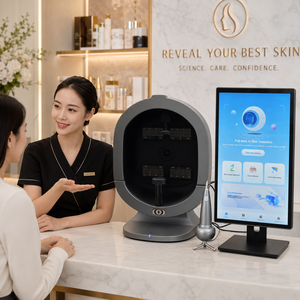
X5PRO 9-Spectral AI Facial Skin Analyzer Machine for Face Moisture Pores Wrinkles UV Spot Analysis US/EU Compatible Commercial
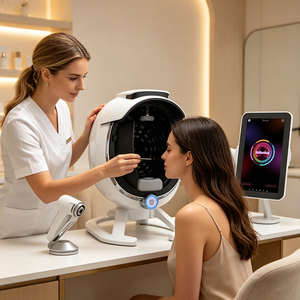
2026 Newest A6 3D Facial Scanner Skin Analyzer 8 Spectrum AI Skin Analysis Machine For Blackheads And Pores Depth Detection
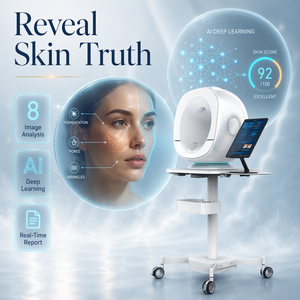
All in One Facial Skin Analyzer Machine 3D Camera 4 Spectra 8 Intelligent Images AI Analysis 30 Plus Detection Dimensions Clinic
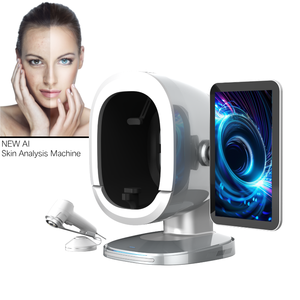
Newest 3D AI Intelligent Skin Analyzer Face Scanner Skin Analysis Machine Facial Tester Scanner Support 19 Languages
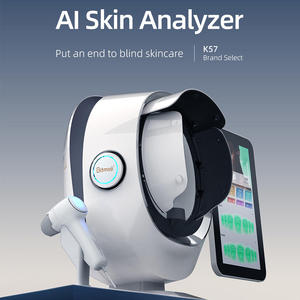
High Quality Portable Facial Analysis Skin Monitor Analyzer 3D Digital Skin Analyzer Machine for Salon
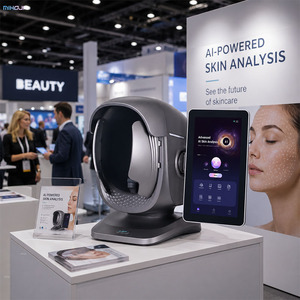
Newest X3-pro-Skin-Analyzer Facial Scanner Skin Analyzer For Resaller 25 Languages X3 Skin Analysis Machine Wifi Contact
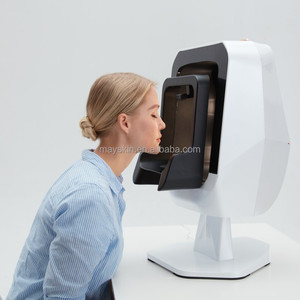
Meicet Mc88 Professional Facial Scanners Beauty Machine Smart Skin Analyzer Moisture Tester Face Skin Analyser for Beauty Salon
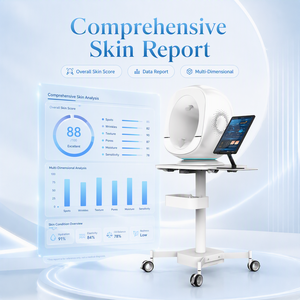
Scientific Research Anti Aging Verification 3D Skin Analyzer Machine 4 Spectra AI 8 Intelligent Images 30 Plus Detection Clinic
1. Paradigm Shift in Automated Skin Analysis: From Visual Estimates to Quantitative Biophysical Analytics
The global dermatology, aesthetic medicine, and cosmetic clinical research industries are experiencing a profound technological transformation. Traditional, subjective visual consultations are rapidly being replaced by automated, multi-spectral skin condition analyzers. Modern healthcare providers, contract research organizations (CROs), and tier-1 aesthetic clinics now mandate objective, reproducible data to substantiate treatment protocols, validate anti-aging cosmetic claims, and track clinical outcomes over extended multi-month periods.
At the center of this revolution is the convergence of advanced optical physics, photometric stereo imaging, and deep convolutional neural networks (CNNs). Leading manufacturers and specialized factories are no longer merely assembling basic camera boxes; they are manufacturing high-precision scientific hardware capable of micro-level surface topography reconstruction, sub-surface vascular mapping, melanin distribution quantification, and automated sebum/pore structural profiling.
Information Gain & E-E-A-T Insights for B2B Buyers
When procuring automated skin analyzer hardware, international distributors and clinic networks must evaluate equipment beyond raw camera megapixel counts. True clinical efficacy hinges on spectral purity, cross-polarization rejection ratios, LED illumination consistency, algorithm repeatability, and software compliance with data privacy standards (GDPR/HIPAA). Premium OEMs utilize calibrated light-emitting diode clusters across specific nanometer wavelengths (RGB, Parallel Polarized, Cross Polarized, UV 365nm, Wood's Light, and Infrared) to isolate distinct cutaneous tissue layers.
2. Technological Architecture of Leading Automated Skin Analyzers
To understand why specific factories lead the market, procurement officers must examine the core technical modules that differentiate commercial-grade aesthetic scanners from clinical-grade scientific instruments.
Photometric Stereo & 3D Topography
By illuminating skin tissue from multiple controlled directional vectors and analyzing shadows and spectral reflectance, patented 3D imaging engines reconstruct micro-relief topology with sub-micron elevation resolution to measure exact wrinkle volume, depth, and skin roughness (Ra/Rz values).
Sub-Surface Chromophore Mapping
Cross-polarized light eliminates specular glare from the stratum corneum, enabling optical separation of epidermal melanin from dermal hemoglobin. This isolates underlying vascular anomalies, rosacea patterns, telangiectasia, and deep-layer hyperpigmentation before they surface visually.
Deep AI Pattern Recognition
Trained on clinical datasets comprising millions of verified dermatological images, built-in AI algorithms automatically categorize acne vulgaris severity, pore elasticity, sebum concentration, UV photo-damage, and metabolic aging indicators within seconds of scan completion.
Comparative Technical Matrix: Diagnostic Hardware Generations
A side-by-side technical evaluation for B2B procurement teams comparing legacy scanners against next-generation multi-spectral 3D systems.
| Diagnostic Parameter | Legacy 2D RGB Scanners (Gen 1-2) | Standard 4-Spectrum Analyzers (Gen 3) | Next-Gen 8/9-Spectral 3D AI Systems (Current Flagship) |
|---|---|---|---|
| Optical Wavelengths | 1 Spectrum (RGB White Light) | 3-4 Spectra (RGB, UV, Polarized) | 8-9 Spectra (RGB, Parallel, Cross, UV 365nm, Wood's, Infrared, CPL) |
| Wrinkle Quantification | 2D Line Count (High Error Rate) | 2D Length & Contrast Approximation | True 3D Volumetric Depth & Surface Area Roughness (mm³) |
| Vascular & Redness Isolation | None (Obscured by surface reflection) | Basic Polarization Filter | RBX / Chromophore Demixing (Hemoglobin vs Melanin separation) |
| Pore & Blackhead Depth | 2D Area Percentage | Pixel Density Estimation | 3D Sub-Surface Pore Volume & Sebum Plug Depth Mapping |
| Software Localization | Single/Dual Language | 3-5 Languages | Up to 25 Languages with Cloud Multi-Device Synchronization |
| Clinical Reproducibility | Low (Sensitive to ambient light) | Moderate (Requires standard hood) | Clinical Grade (>99.4% Repeatability with constant auto-calibration) |
3. Strategic B2B Procurement Trends & Future Market Directions
As aesthetic chains, medical spas, and pharmaceutical companies expand globally, procurement strategies for automated skin condition analyzers are shifting. Key factory and supplier trends driving purchasing decisions in 2026 and beyond include:
Trend 1: Modular Multi-Spectral Sensors & Micro-Optics Integration
Enterprise buyers are turning toward hardware platforms that offer modular optics. Instead of fixed, heavy desktop housings, modern factories are manufacturing sleek, portable 3D handheld devices and compact tabletop scanners (such as the A6 3D Facial Scanner and Portable 3D Digital Series). These compact form factors maintain scientific precision while allowing practitioners to move between consultation rooms effortlessly.
Trend 2: AI Anti-Aging Simulation & Longitudinal Efficacy Verification
A primary driver for conversion in aesthetic clinics is the patient’s visual understanding of future aging trajectories. Flagship analyzers now embed generative neural networks that project 3-to-5-year skin aging vectors based on current collagen loss, UV damage density, and barrier integrity. Crucially, these systems provide Anti-Aging Treatment Verification, allowing doctors to capture overlay 3D baseline images and overlay post-procedure scans to prove microneedling, laser resurfacing, or chemical peel efficacy down to the micron.
Trend 3: White-Label OEM/ODM Customization & Multi-Language Ecosystems
Top-tier factories now support comprehensive white-labeling. This includes custom casing paint schemes, laser-etched brand logos, bespoke UI themes, and multi-lingual software deployment (supporting up to 25 languages including English, Spanish, German, French, Arabic, Chinese, Japanese, and Portuguese). This capability enables global distributors to establish regional market dominance under their proprietary medical-device brands.
Factory Capabilities & OEM/ODM Manufacturing Strengths
Why leading global aesthetic brands select our manufacturing partner network for medical skin imaging systems.
ISO 13485 & Cleanroom Production
Our manufacturing facilities adhere to strict ISO 13485 medical device quality management standards. Optical assemblies are calibrated inside Class 10,000 dust-free cleanrooms to guarantee zero lens contamination and absolute sensor uniformity.
Proprietary Algorithm R&D
Supported by an international team of optical engineers, software architects, and clinical dermatologists, our R&D team holds over 30 patents covering 3D photometric stereo algorithms, spectral separation, and quantitative skin aging metrics.
End-to-End OEM/ODM Solutions
From industrial ID design, optical housing tooling, PCB development, to customized SDK/API integration into practice management software (EMR/CRM), we offer turnkey manufacturing tailored to enterprise clients.
Comprehensive B2B Procurement FAQ
Essential questions and expert answers for equipment buyers, medical distributors, and clinic directors.
Request Detailed Product Specifications & Factory B2B Price Sheet
Partner with top-tier automated skin condition analyzer manufacturers. Get direct factory pricing, comprehensive technical whitepapers, OEM customization guidelines, and full catalog brochures.