
Featured Cosmetic Efficacy Evaluation & Facial Analysis Systems
Standardized clinical research equipment engineered for cosmetic manufacturers, research laboratories, aesthetic clinics, and dermatological CROs worldwide.
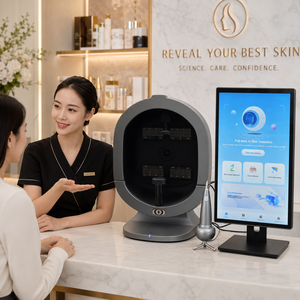
X5PRO 9-Spectral AI Facial Skin Analyzer Machine for Face Moisture Pores Wrinkles UV Spot Analysis US/EU Compatible Commercial
- 9 High-Precision Optical Spectra
- Deep Moisture & UV Spot Mapping
- US/EU Power & CE Regulatory Standard
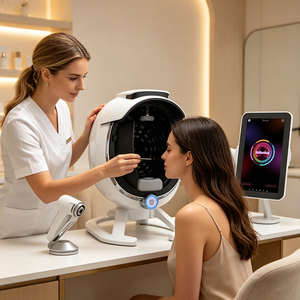
2026 Newest A6 3D Facial Scanner Skin Analyzer 8 Spectrum AI Skin Analysis Machine For Blackheads And Pores Depth Detection
- 3D Surface Topography Scanner
- Pore Depth & Sebum Quantification
- 8-Spectrum Photometric Reconstruction
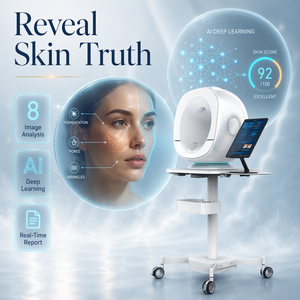
All in One Facial Skin Analyzer Machine 3D Camera 4 Spectra 8 Intelligent Images AI Analysis 30 Plus Detection Dimensions Clinic
- 30+ Diagnostic Dermatological Dimensions
- Integrated Ultra-HD 3D Camera System
- Clinical Research Comparative Module
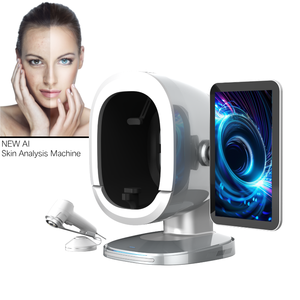
Newest 3D AI Intelligent Skin Analyzer Face Scanner Skin Analysis Machine Facial Tester Scanner Support 19 Languages
- Multi-Lingual Enterprise Software (19 Languages)
- Automated Efficacy Report Engine
- High Precision Facial Alignment Hardware
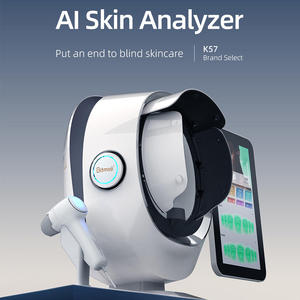
High Quality Portable Facial Analysis Skin Monitor Analyzer 3D Digital Skin Analyzer Machine for Salon
- Compact Ergonomic Enclosure
- Real-Time Digital Texture Scoring
- Instant Consultation Visualizer
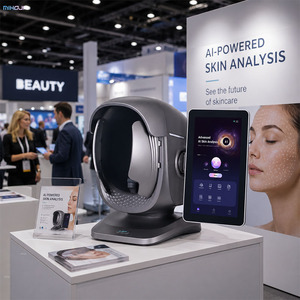
Newest X3-pro-Skin-Analyzer Facial Scanner Skin Analyzer For Resaller 25 Languages X3 Skin Analysis Machine Wifi Contact
- Wireless Cloud Sync & Wi-Fi Connectivity
- 25 Global Language Localizations
- Optimized for Wholesalers & Resellers
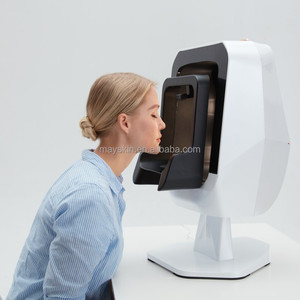
Meicet Mc88 Professional Facial Scanners Beauty Machine Smart Skin Analyzer Moisture Tester Face Skin Analyser for Beauty Salon
- High-Precision Hydration Sensor Array
- Vascular & Redness Mapping Engine
- Commercial Salon & Medi-Spa Optimized
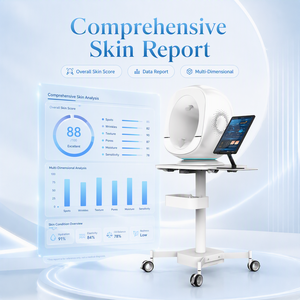
Scientific Research Anti Aging Verification 3D Skin Analyzer Machine 4 Spectra AI 8 Intelligent Images 30 Plus Detection Clinic
- Clinical Anti-Aging Verification Algorithm
- 3D Volumetric Wrinkle & Roughness Tracking
- Peer-Review Publication Standards
The Strategic Evolution of Cosmetic Efficacy Evaluation: Transitioning from Subjective Scoring to Quantitative 3D Photogrammetry
In the modern skincare and pharmaceutical landscape, regulatory bodies such as the European Commission (EC No 655/2013), US FDA, and China National Medical Products Administration (NMPA) have dramatically escalated compliance criteria for cosmetic claim substantiation. Traditional visual grading by dermatologists—once the benchmark for efficacy verification—is increasingly recognized as subject to intra-observer variability, environmental lighting discrepancies, and cognitive bias.
To maintain market access and gain competitive consumer trust, cosmetic brand manufacturers, Contract Research Organizations (CROs), and clinical research institutes must deploy high-precision cosmetic efficacy evaluation systems. Advanced equipment utilizing multispectral imaging, photometric stereo reconstruction, and deep-learning AI algorithms can isolate skin layers, measure micron-level surface micro-relief, map sub-surface chromophores (melanin and hemoglobin), and compute absolute volumetric anti-aging changes over longitudinal trial periods.
Information Gain Insight: Modern 3D multispectral evaluation systems eliminate positioning artifacts by standardizing light incidence angles and polarizations, delivering sub-10 micron spatial accuracy for scientific publication and claim validation.
Key Global Development Trends in Cosmetic Efficacy Testing Equipment
As artificial intelligence integrates deeper into dermatological optical hardware, four macro engineering trends are redefining how cosmetic formulas are evaluated.
1. Multi-Spectral Polarization & Chromophore Separation
Modern diagnostic systems have evolved beyond basic RGB lighting. The integration of cross-polarized, parallel-polarized, UV fluorescence (365nm), and near-infrared (NIR) light channels allows clinical instruments to mathematically separate surface reflection from epidermal and dermal absorption. By isolating pure spectral signals, research systems can separately measure hemoglobin concentrations (erythema, vascularity) and melanin distribution (pigmentation, age spots) without cross-contamination.
2. Photometric Stereo 3D Surface Reconstruction
Unlike conventional 2D flat imaging that relies on subjective visual estimation, true 3D skin scanners utilize Photometric Stereo Photogrammetry. By illuminating the subject from multiple controlled directional illumination angles, the system calculates surface normals at every pixel. This generates high-resolution 3D heightmaps, allowing researchers to quantify wrinkle volume (mm³), surface roughness parameters (Ra, Rz, Sq), pore depth, and skin elasticity recovery with sub-micron elevation resolution.
3. Deep-Learning AI Neural Network Classification
Artificial Intelligence has transformed skin diagnostics from manual region-of-interest (ROI) drawing to automated multi-dimensional feature recognition. Trained on millions of standardized clinical dermatological images, deep neural networks automatically segment fine lines, deep wrinkles, acne lesions, vascular expansion, and pore structures. AI neutralizes human error, ensuring consistent trial monitoring across 14-day, 28-day, and 90-day cosmetic study protocols.
4. Cloud-Native LIMS Integration & Multi-Center Trial Sync
With multinational cosmetic brands conducting clinical trials across diverse ethnicities in Europe, North America, and Asia-Pacific, hardware connectivity is critical. Modern cosmetic efficacy machines feature encrypted Wi-Fi/Ethernet cloud syncing, seamless integration with Laboratory Information Management Systems (LIMS), and real-time SDK data pipelines to centralized clinical research databases.
Future Sourcing Drivers for Enterprise B2B Buyers & Cosmetic R&D Directors
When global procurement managers and chief scientific officers evaluate cosmetic efficacy testing suppliers, purchasing criteria have shifted drastically from hardware pricing to long-term data integrity and system scalability. OEM/ODM customization capability, international optical calibration standards, and modular software architectures now dictate global purchasing decisions.
Modular Multi-Spectral Hardware Upgrades
Enterprise buyers favor modular chassis designs that accommodate optical upgrades (e.g., adding specialized UV spectrum bands or 3D camera sensors) without requiring complete hardware overhauls.
Standardized ISO / FDA Optical Calibration Targets
Factories providing NIST-traceable color calibration boards, rigid chin-rest stabilization mounts, and automatic luminance compensation algorithms are favored by certified testing laboratories.
Custom Software SDK & White-Label UI Localizations
Cosmetic brands deploying analyzers to global retail outlets require white-label software, custom reporting logos, and localization support in 20+ languages.
Efficacy Claim Substantiation Matrix
Our evaluation machines provide direct quantitative outputs accepted by global regulatory dossiers for cosmetic packaging claims:
Why Global Brands Partner With Our Factory & Export Division
As a premier designer, manufacturer, and direct exporter of 3D facial skin diagnostic machines, our facility combines medical-grade optical engineering with robust manufacturing scalability. We serve OEM/ODM partners, distributor networks, and scientific research institutes across 40+ countries.
- ISO 13485 & CE Certified Production: Strict quality control protocols ensuring optical calibration stability and electrical compliance (US/EU/UK/JP voltage standard).
- In-House Photometric Software R&D: Proprietary algorithm development for continuous multi-spectral image feature processing and 3D mesh rendering updates.
- Turnkey Global Export Support: Customized export packaging, customs documentation, white-label branding, and dedicated after-sales tech support.
Enterprise Sourcing Specifications
Minimum Order Quantity (MOQ): Flexible 1-unit sample evaluations available for CROs & brand labs; scalable wholesale volume pricing for global distributors.
OEM / ODM Scope: Custom mold engineering, optical camera selection, chassis painting, software GUI white-labeling, multi-lingual translation embedding.
Warranty & Support: 2-Year Comprehensive Hardware Warranty, lifetime cloud software updates, 24/7 remote diagnostic assistance.
Cosmetic Efficacy System Specifications Comparison
Comparative analysis of key structural parameters across leading diagnostic tiers to assist B2B procurement decisions.
| Evaluation Parameter | Standard Commercial Tier | Pro AI 3D Diagnostic Tier | Clinical Research Benchmark Tier |
|---|---|---|---|
| Optical Spectrum Bands | 3-4 Spectra (RGB, UV, PL) | 8-9 Spectra (RGB, Cross-PL, Parallel-PL, UV, NIR) | 12+ Multi-Spectral Narrowband Arrays |
| 3D Topography Method | 2D Shadow Estimation | Photometric Stereo 3D Reconstruction | Laser-Grid Photometric 3D Mesh (<10µm) |
| Diagnostic Dimensions | 10-14 Basic Parameters | 30+ Advanced Parameters | Custom User-Defined Research Metrics |
| Pigment Isolation | Surface Color RGB | RGB + Melanin Sub-Surface Mapping | Spectrophotometric Melanin / Hemoglobin Separation |
| Multi-Language UI | 5 Languages | 19 - 25 Languages Built-in | Unlimited Customizable Language Modules |
| Software & SDK Access | Standard Client App | Cloud Sync + Automated PDF Report Engine | Full Enterprise REST API / LIMS Integration SDK |
| Regulatory Standards | CE, RoHS | CE, US/EU Standard, ISO 13485 Manufacturing | Clinical Trial Audit Protocol Compliant |
Frequently Asked Questions for B2B Sourcing & Importation
Addressing essential technical, operational, and commercial questions for laboratory procurement officers and corporate buyers.
Transform Your Skin Efficacy Evaluation Pipeline
Contact our technical sales team today to request wholesale factory pricing, OEM program details, or technical documentation for our complete range of 3D multispectral facial skin analyzers.