
Featured Clinical Diagnostic & Commercial Skin Scanners
Explore top-tier facial skin analyzers engineered for dermatological laboratories, aesthetic medical centers, cosmetic research organizations (CROs), and commercial beauty enterprises.
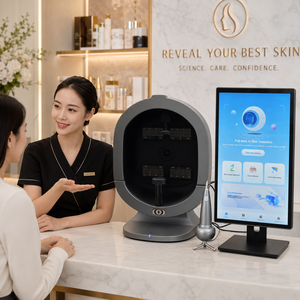
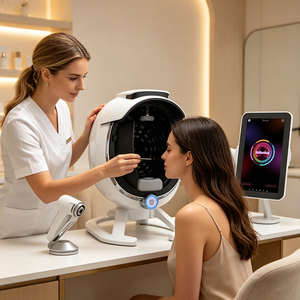
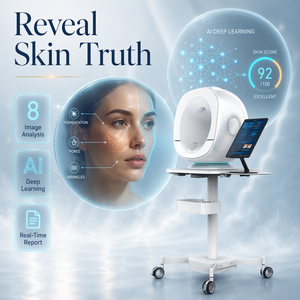
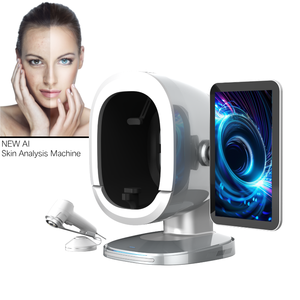
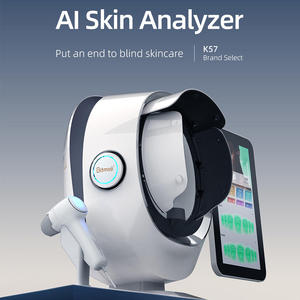
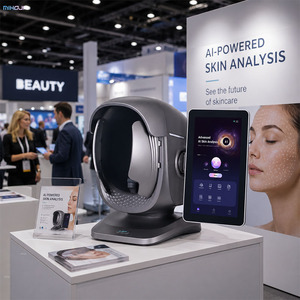
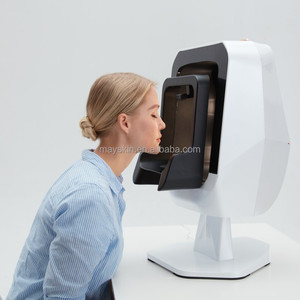
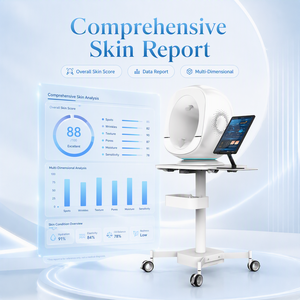
Enterprise Excellence & Pioneering 3D Skin Analysis Heritage
In the rapidly evolving global cosmetic and aesthetic medical sectors, empirical precision is the bedrock of commercial trust. Spearheaded by industry-defining developments such as the Antera 3D® system by Miravex Limited (headquartered at 11 St. Stephen's Green, Dublin, Ireland), quantitative skin imaging has transitioned from qualitative surface consultation to rigorous mathematical biometrics. Miravex Limited has established an unshakeable benchmark in optical engineering, delivering clinical-grade diagnostic hardware and multispectral software platforms trusted by cosmetic manufacturers, Contract Research Organizations (CROs), dermatologists, plastic surgeons, and aesthetic clinics across more than 40 countries worldwide.
Modern skin diagnostics require absolute reproducibility. Whether measuring wrinkle depth reduction in anti-aging active ingredient trials, calculating melanin dispersion under targeted pigment therapy, or evaluating vascular erythema response post-laser treatment, original equipment manufacturers (OEMs) and specialized export factories must adhere to international optical calibration standards (ISO 13485, CE Medical, FDA compliant protocols). By combining patented multispectral stereophotogrammetry with deep-learning optical neural networks, leading exporters ensure that every captured pixel translates into reliable scientific data.
Technical Architecture: Multispectral Optical Decomposition & 3D Modeling
To make informed OEM/ODM procurement decisions, B2B buyers and clinical trial directors must evaluate the underlying hardware and algorithmic architecture of commercial skin analyzers. The technical foundation rests upon three primary pillars: optical spectral separation, volumetric stereophotogrammetry, and AI-assisted dermal segmentation.
Future Procurement Trends in Cosmetic Research Skin Scanners (2026–2030)
As global cosmetic brands shift toward "clean science" and clinically backed efficacy claims, the demand for high-precision diagnostic hardware is skyrocketing. B2B procurement managers and international distributors are recalibrating their sourcing criteria around several key micro and macro industry trends:
1. Transition from Qualitative Consultation to CRO-Grade Verification
Historically, commercial skin scanners were used primarily in beauty salons as visual sales engines to recommend skincare products. However, top exporters are now seeing massive demand from cosmetics manufacturers and CRO laboratories for high-repeatability research devices. Modern procurement specifies sub-micron camera sensor alignment, standardized head-positioning chinrests, and illumination calibration blocks that ensure consistent results across multi-center clinical trials regardless of ambient room lighting.
2. Cloud-SaaS Infrastructure & Multi-Clinic Centralization
Enterprise aesthetic chains and international cosmetic brands operate across hundreds of retail locations and clinical centers. Future-proof diagnostic systems now incorporate secure HIPAA/GDPR-compliant cloud synchronization. Diagnostic scans taken at local branches are seamlessly uploaded to central research databases, enabling corporate dermatologists to conduct remote audits, aggregate longitudinal skin health trends, and refine proprietary product formulations in real time.
3. Modular Multi-Spectrum Hardware & AI Software API Integration
Distributors and OEM brands are increasingly seeking customizable modular platforms. Rather than purchasing closed-system diagnostic boxes, buyers prefer open API hardware architectures. This allows cosmetic companies to integrate custom software skins, white-label diagnostic apps, and proprietary AI algorithms directly onto standard high-resolution camera chassis.
Technical Specification Benchmark Matrix
The following table illustrates the core hardware parameters and diagnostic capabilities across leading OEM skin analyzer tiers available from global exporting factories:
| Specification Metric | Clinical Trial Grade (e.g. Antera 3D® / CRO) | Commercial 9-Spectrum AI (e.g. X5PRO / A6 3D) | Portable Salon Grade (e.g. Portable Monitor) |
|---|---|---|---|
| Primary Optical Spectra | Multispectral LEDs + RBX Absorption Mapping | 9 Spectra (RGB, UV, Polarized, Wood's Light) | 4-5 Spectra (RGB, Standard UV, Polarized) |
| 3D Topography Precision | Quantitative Surface Mapping (<0.05 mm) | Volumetric Reconstruction (Pore/Wrinkle Depth) | Qualitative 3D Overlay Mesh |
| Primary Target Application | Pharma R&D, Efficacy Verification, CROs | Aesthetic Clinics, MedSpas, Flagship Stores | Beauty Salons, Mobile Skin Technicians |
| Software Localization | Multi-language Clinical Suite + Raw Data Export | 19 to 25 Global Languages Built-in | Standard English / Multi-language App |
| Data Repeatability Index | 99.4% (Standardized Calibration Block) | 96.8% (Position Guidance Software) | 92.0% (Manual Alignment) |
| Inquiry Catalog Link | Get Spec Sheet | Get Spec Sheet | Get Spec Sheet |
Comprehensive Buyer's Guide: Sourcing Skin Scanners from Top Exporters
When negotiating OEM/ODM contracts with global skin analyzer manufacturers, purchasing managers must conduct rigorous technical due diligence beyond surface aesthetics and promotional brochures. To guarantee long-term operational ROI and prevent equipment obsolescence, evaluate potential manufacturing partners against four critical criteria:
A. Optical Sensor & Lens Quality
Ensure the factory utilizes high-resolution CMOS industrial sensors (minimum 20MP) paired with distortion-free optical lenses. Sub-standard lenses introduce spherical aberration around the jawline and forehead, severely skewing wrinkle depth calculations and pore counts.
B. Repeatability & Illumination Uniformity
Fluctuating LED color temperatures severely undermine longitudinal skin studies. Top exporters implement constant-current LED drive circuits combined with internal white-balance calibration targets to guarantee that images captured 6 months apart reflect true biological changes rather than light decay.
C. Software SDK & Raw Data Export
For pharmaceutical research and clinical trials, proprietary closed software is a major bottleneck. Demand systems that export raw surface elevation maps (CSV, OBJ, STL formats) and spectral concentration matrices for independent statistical analysis in software like MATLAB or R.
Frequently Asked Questions (B2B Procurement & Technical FAQ)
Address common technical, regulatory, and purchasing queries regarding skin analysis equipment manufacturing and global export compliance.
Ready to Upgrade Your Clinical Research & Diagnostic Capabilities?
Connect directly with leading OEM/ODM export specialists. Receive full product technical specifications, factory pricing, clinical research validation whitepapers, and international shipping options tailored to your business needs.
Get Catalog