
Flagship Facial Porosity & 3D Dermoscopy Analyzers
Precision hardware engineered by qualified medical OEM/ODM factories for aesthetic clinics, CRO research, and global cosmetic brands.

• Moisture, UV Spot & Porosity Mapping
• US/EU Commercial Voltage Compatible
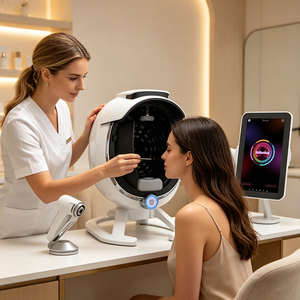
• Blackhead & Pore Depth Volume Detection
• Quantitative Micro-Surface Topography
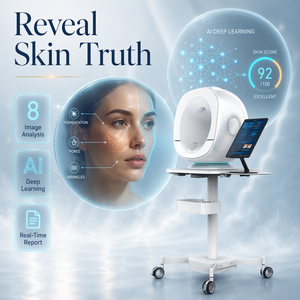
• 8 Intelligent AI Image Reconstructions
• Clinical Grade CRO Validation Standard
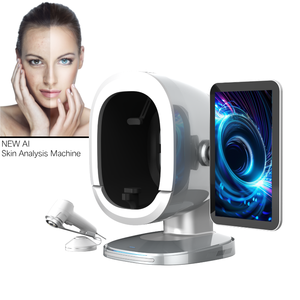
• Follicular Porosity & Sebum Extraction
• Automated Diagnostic Report Generation
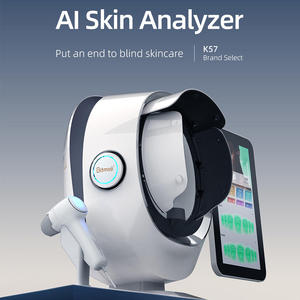
• High-Speed Photometric Stereo Sensor
• Instant Dermal Texture & Pore Scoring
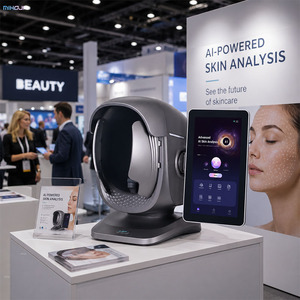
• High-Bandwidth Wi-Fi Cloud Sync
• Optimized for B2B Distributors & Resellers
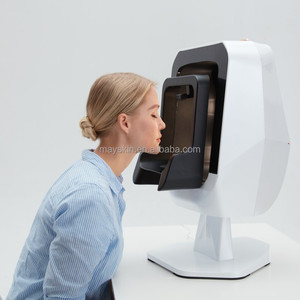
• Sub-surface Erythema & Vascular Tracking
• Ideal for Medical Spa Treatment Benchmarking
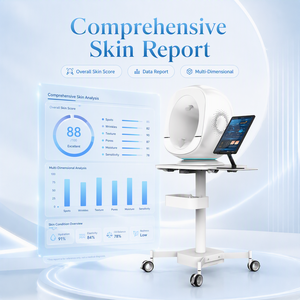
• 30+ Quantitative Micro-Topography Metrics
• Peer-Reviewed Academic & CRO Compliance
1. Technical Foundations of Facial Porosity Analysis in Modern Dermatology
Facial porosity—defined clinically as the density, spatial distribution, volumetric aperture size, and structural depth of micro-follicular orifices—serves as an indispensable bio-marker for dermatological health, sebum excretion velocity, and cutaneous anti-aging therapeutics. In modern clinical dermatology and cosmetic formulation testing, measuring porosity demands far more than simple 2D pixel optical zooming. Leading scientific research institutions and Contract Research Organizations (CROs) require absolute quantitative metric generation: micro-topographical contour displacement, volumetric depression measurement ($\mu m^3$), and spectral absorption profiling of follicular plugs (comedones).
Advanced hardware solutions developed by pioneer manufacturers, such as Dublin-based Miravex Limited with their patented Antera 3D® technology, alongside top OEM/ODM manufacturing exporters, have fundamentally transformed this field. By employing Photometric Stereo Imaging coupled with multispectral light-emitting diodes (LEDs), modern porosity diagnostic equipment captures skin reflection from multiple illumination angles. This mathematical approach reconstructs the surface normal vectors of the epidermis, rendering sub-millimeter 3D elevation maps without mechanical probe contact.
2. Enterprise Manufacturing & OEM/ODM Exporter Capabilities
Sourcing clinical-grade diagnostic equipment requires rigorous vendor qualification. High-precision dermal analysis hardware operates at the intersection of medical optics, high-throughput embedded computing, and deep-learning diagnostic algorithms. Premier manufacturing exporters maintain strict compliance with international medical device management systems including ISO 13485, CE Medical Device Directive (MDD/MDR), and FDA Class II Registration.
When evaluating global exporters and factory platforms, B2B procurement officers must inspect optical calibration standards. Factory-level calibration utilizes certified optical phantom targets with etched micro-grooves ranging from $5\,\mu m$ to $500\,\mu m$. This guarantees that whether an instrument is deployed in a research laboratory in Zurich or an aesthetic clinic chain in Tokyo, volumetric pore measurement variability remains strictly below $\pm 1.5\%$.
Technical Specification Benchmark: Standard vs. Advanced Porosity Analyzers
| Performance Dimension | Commercial Entry-Level Analyzer | Industrial OEM / Clinical Grade (X5PRO / A6 / Antera 3D) |
|---|---|---|
| Optical Sensing Modality | 2D RGB Single-Lens Light Box | 3D Photometric Stereo + Multi-Angle Cross-Polarized LED Ring |
| Spectral Bands Range | 1 to 3 Spectra (Visible RGB) | 4 to 9 Spectra (400nm RGB, 365nm UV, Parallel/Cross-Polarized) |
| Porosity Metrics Calculated | Surface Area Pixel Count (2D Estimate) | Volumetric Depth ($\mu m$), Aperture Diameter, Porphyrin Index, Sebum Volume |
| Spatial Resolution Limit | 50 - 100 microns ($\mu m$) | Sub-10 microns ($<10\,\mu m$) micro-topography |
| Software & SDK Availability | Closed Consumer App | Open API/SDK for Clinical CRO Database & EMR Integration |
| International Compliance | Basic CE RoHS | CE Medical, FDA Class II Registered, ISO 13485 Factory Certified |
3. Technological Evolution & Future Development Trends in Dermal Profilometry
The global market for facial skin analyzers is experiencing a paradigm shift driven by artificial intelligence and spectral imaging miniaturization. Key trends shaping product development through 2026–2030 include:
- AI-Driven Deep Spectral Unmixing: Convolutional Neural Networks (CNNs) trained on tens of thousands of dermatological datasets are replacing manual threshold segmentation. These networks automatically differentiate between morphological pores, ice-pick acne scars, fine line indentations, and hair follicle ostia with over 98.4% diagnostic specificity.
- Hyper-Integrated Multi-Angle Spectral Fusion: Flagship devices like the X5PRO 9-Spectral Analyzer integrate narrow-band UV, deep blue, green, amber, red, and near-infrared illuminators. This allows simultaneous profiling of superficial follicular blockages and deeper dermal vascular ectasia surrounding inflamed pore boundaries.
- Cloud-Connected Longitudinal Tracking: Modern clinical protocols demand comparative timeline mapping. Advanced software algorithms perform automatic image registration (elastic transformation) to align baseline and post-treatment images down to the individual pixel level, compensating for patient head tilting or micro-expressions.
- Customized White-Label OEM Hardware Integration: Global exporters now offer modular hardware platforms allowing cosmetic brands to integrate custom skin diagnostic algorithms, custom branding interfaces, and multi-language localized UI suites (supporting 19 to 25+ global languages).
4. Strategic Sourcing Guide for B2B Buyers & Clinic Distributors
Procuring facial porosity diagnostic equipment for distribution or clinical trial networks involves several critical operational parameters:
1. Lens Distortion & Telecentric Optics: Non-telecentric commercial camera lenses suffer from radial optical distortion at image margins. Enterprise-grade scanners utilize custom telecentric optical modules ensuring magnification remains constant regardless of the working distance, preventing false pore enlargement at the edges of the cheek and nose contours.
2. Cross-Polarization Lighting for Glare Elimination: Epidermal sebum causes specular reflection (glare) that blinds standard optical sensors. Integrated linear cross-polarizers filter out specular light, isolating pure diffuse subsurface scattering. This yields clean image data required for precise automated pore counting.
3. Cloud EMR & HIPAA/GDPR Software Compliance: Exported diagnostic machines must store patient consultation data securely. Systems equipped with AES-256 encrypted database integration ensure full compliance with North American HIPAA and European GDPR privacy laws.
Key Architectural Innovations in Next-Gen Analyzers
Explore the engineering building blocks that power high-precision porosity and micro-topography measurement devices.
Frequently Asked Questions (FAQ) for Global Buyers
Answers to common technical, manufacturing, and shipping inquiries for distributors, CROs, and aesthetic clinic chain buyers.
Request Factory Pricing & OEM/ODM Consultation
Connect directly with our senior optical engineering specialists and international sales representatives to receive factory-direct price sheets, software demo packages, and OEM customization quotes.
Send an Inquiry