
Featured 3D Facial Skin Mapping Systems & Analyzers
High-precision multi-spectral skin imaging equipment engineered for B2B procurement, aesthetic dermatology practice management, and clinical research validation across the Canadian provinces.
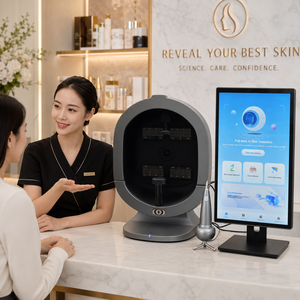
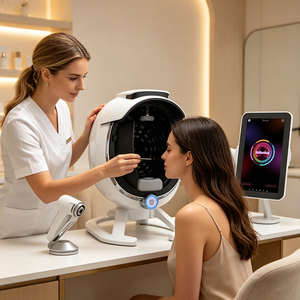
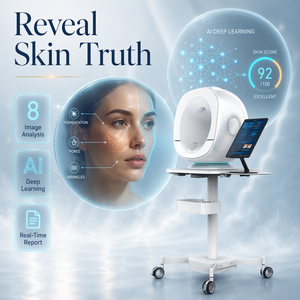
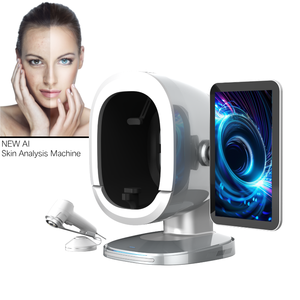
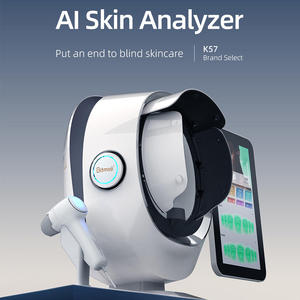
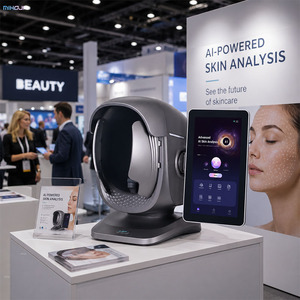
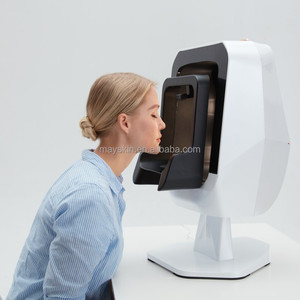
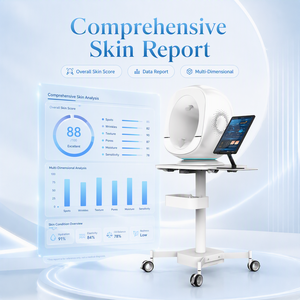
Architectural Engineering of 3D Photometric & Multi-Spectral Mapping
In the rapidly evolving landscape of quantitative aesthetic dermatology, traditional 2D surface photography has reached its mathematical limit. Legacy facial scanners rely on ambient illumination and single-plane RGB image acquisition, rendering them incapable of capturing micro-relief depth, sub-surface chromatic chromophore distribution, or geometric volume changes over time. Modern clinical procurement in Canada requires high-definition 3D Photometric Stereo Reconstruction combined with multispectral waveband isolation.
Our proprietary 3D facial skin mapping systems utilize structured multi-angle light-emitting diode (LED) arrays combined with cross-polarized optical filters. By sequentially illuminating the facial topology from distinct directional vectors, the integrated high-resolution CMOS sensor captures precise intensity variations. Advanced spatial algorithms then calculate directional surface normals at every individual pixel, reconstructing a mathematically rigorous three-dimensional digital elevation model (DEM) of the cutaneous membrane.
Sub-Surface Chromophore Separation
Utilizing specialized spectral wavebands (Standard White Light, Cross-Polarized, Parallel-Polarized, and Targeted Ultraviolet 365nm), our systems separate total diffuse reflectance into independent chromophore maps. Melanin concentration maps isolate epidermal pigmentation from dermal vascular erythema (hemoglobin distribution), enabling objective diagnostic separation between hyperpigmentation and inflammatory rosacea.
Quantitative Wrinkle Volume (mm³)
Unlike qualitative scoring systems, our 3D surface topography algorithms quantify fine lines, rhytids, and deep furrows in absolute physical units. The software measures skin roughness metrics ($Ra$, $Rz$), maximum valley depth, and total wrinkle volume in cubic millimeters ($mm^3$), allowing Canadian aesthetic practitioners to objectively evaluate post-treatment collagen remodeling following RF microneedling or fractional laser therapy.
Pore Topology & Sebum Mapping
The 3D scanning geometry isolates microscopic surface indentations from planar color variances. Pores are classified by volumetric depth, area footprint ($\mu m^2$), and perifollicular inflammation indices. Under UV spectral illumination, porphyrin fluorescent emissions generated by Propionibacterium acnes are quantified, delivering actionable data for targeted acne and sebum control protocols.
Technology Standard Comparison Matrix
| Diagnostic Feature / Capability | Legacy 2D RGB Visualizers | Standard Multi-Spectral Cabinets | Advanced 3D Photometric Mapping Engine |
|---|---|---|---|
| Surface Elevation Topography | Unavailable (Flat Image) | Pseudo-Depth Estimation | Absolute 3D Micron-Level Elevation ($Ra, Rz$) |
| Wrinkle Quantification | 2D Pixel Line Count | 2D Area Calculation | 3D Volume ($mm^3$) & Depth Vector Profile |
| Chromophore Isolation | RGB Color Approximation | Basic Polarization | Melanin / Hemoglobin Spectral Concentration |
| Lighting Calibration | Unregulated Ambient Light | Internal Fixed Bulbs | Automated Closed-Loop LED Multi-Angle Strobe |
| Patient Position Registration | Manual Overlay Matching | 2D Contour Outlines | 3D Spatial Landmark Rigid Matching Engine |
| Clinical Publication Validity | Marketing Visuals Only | Moderate Consistency | Validated for CRO Clinical Trial Protocols |
Localized Application Scenarios in the Canadian Market
Canada’s unique geographic, climatic, and demographic environment presents distinct clinical challenges for skin health specialists. From the extreme seasonal humidity shifts in Ontario and Quebec to the high UV indices reflected by snowpacks in Alberta and British Columbia’s high-altitude regions, Canadian patients exhibit specific dermatological profiles requiring high-precision diagnostic tracking.
Sub-Zero Winter Xerosis & Barrier Breakdown Analysis
Canadian winters subject skin to prolonged low ambient humidity paired with severe indoor heating. This micro-environment causes rapid Transepidermal Water Loss (TEWL) and microscopic stratum corneum fissuring. 3D skin analyzers allow Canadian medi-spas to quantify micro-texture roughness indices before and after deep hydration, lipid-barrier repair, or hyaluronic acid mesotherapy treatments, proving therapeutic efficacy to discerning clients in Toronto, Montreal, and Calgary.
Snow-Reflection UV Photodamage & Erythema Mapping
Fresh snow reflects up to 80% of solar UV radiation, significantly increasing cumulative UV exposure among outdoor enthusiasts in places like Whistler, Banff, and Quebec City. This leads to accelerated photoaging, solar lentigines, and facial telangiectasias. Our systems' sub-surface UV and red spectral modes reveal hidden solar damage and vascular flushing long before it becomes visible to the naked eye, enabling proactive preventative skincare regimens.
Canadian Regulatory Compliance & Operational Integration
Navigating commercial procurement in Canada requires strict adherence to federal and provincial standards. B2B purchasers across Ontario (Public Health Standards), British Columbia, and Alberta must ensure aesthetic diagnostic platforms comply with Canadian electrical safety regulations (CSA / ULC Certification Standards) and federal privacy legislation.
Our software platform features encrypted database structures supporting the Personal Information Protection and Electronic Documents Act (PIPEDA), safeguarding Canadian patient data during cloud backup and multi-clinic synchronization.
To seamlessly serve clinics in Quebec and bilingual regions across Canada, systems support multi-language toggling including English and French (Canada) patient reports, consultation summary sheets, and diagnostic exports.
Canadian aesthetic practices report an average 34% increase in treatment plan conversion rates when utilizing baseline 3D visual diagnostics, directly justifying high-end skincare packages and energy-based device series.
Global Manufacturing Standards & Enterprise Strengths
As a premier global original equipment manufacturer (OEM) and supplier of optical skin analysis systems, our factory infrastructure operates under ISO 13485 medical device quality management frameworks. We provide complete end-to-end support for Canadian distributors, aesthetic franchise chains, and contract research organizations (CROs) seeking reliable, high-volume production with custom hardware and software localization.
Sub-Nanometer Optical Calibration
Every camera sensor and optical lens assembly undergoes rigorous factory spectral calibration using standardized diffuse reflectance targets. This guarantees color reproduction consistency across multiple machines and clinical sites.
500+ Clinical Studies Validation
Rooted in peer-reviewed scientific methodologies published in international dermatology journals, our algorithms deliver reliable, repeatable quantitative metrics required for pharmaceutical trials and cosmetic efficacy validation.
OEM Software SDK & White-Labeling
We offer full OEM customization, including custom exterior housing design, branded software GUIs, dedicated cloud API connectivity, and localized multi-language translation packs (up to 25 languages supported).
Frequently Asked Questions for Canadian B2B Procurement
Ready to Upgrade Your Practice with 3D Skin Mapping Technology?
Connect directly with our engineering specialists and global B2B procurement team. Whether you require single-unit clinic orders, wholesale distribution pricing, or custom OEM factory manufacturing for the Canadian market, we are ready to assist.