
Industry Whitepaper Focus: As the Indian aesthetic dermatology market surges toward a $3.2 Billion valuation by 2030, premier Med Spas and clinical chains across Mumbai, Delhi-NCR, Bengaluru, and Hyderabad are transitioning from manual, subjective skin evaluations to objective, clinical-grade 3D skin analysis machines. This comprehensive guide reviews top Chinese OEM/ODM manufacturing innovations customized for South Asian skin phenotypes (Fitzpatrick Types IV–VI), detailing compliance, technological architecture, and supplier selection benchmarks.
Top-Rated Med Spa Skin Consultation Machines for Export to India
Direct from China's leading ISO13485-certified medical optical device manufacturing hubs
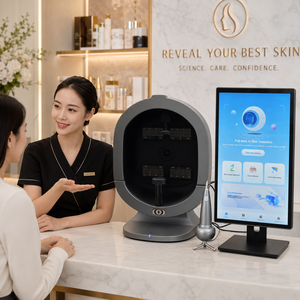
X5PRO 9-Spectral AI Facial Skin Analyzer Machine for Face Moisture Pores Wrinkles UV Spot Analysis US/EU Compatible Commercial
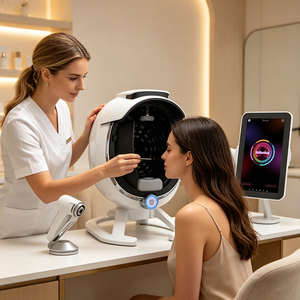
2026 Newest A6 3D Facial Scanner Skin Analyzer 8 Spectrum AI Skin Analysis Machine For Blackheads And Pores Depth Detection
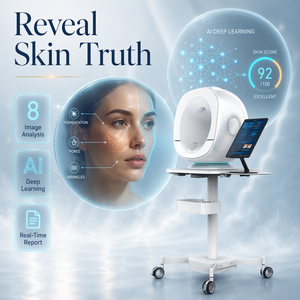
All in One Facial Skin Analyzer Machine 3D Camera 4 Spectra 8 Intelligent Images AI Analysis 30 Plus Detection Dimensions Clinic
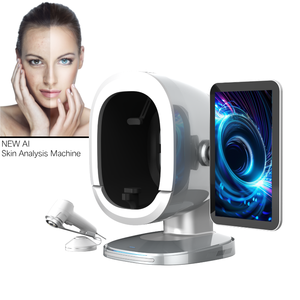
Newest 3D AI Intelligent Skin Analyzer Face Scanner Skin Analysis Machine Facial Tester Scanner Support 19 Languages
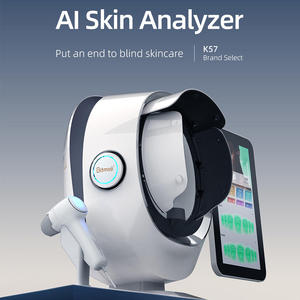
High Quality Portable Facial Analysis Skin Monitor Analyzer 3D Digital Skin Analyzer Machine for Salon
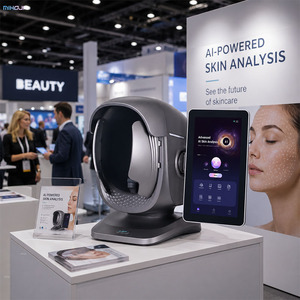
Newest X3-pro-Skin-Analyzer Facial Scanner Skin Analyzer For Resaller 25 Languages X3 Skin Analysis Machine Wifi Contact
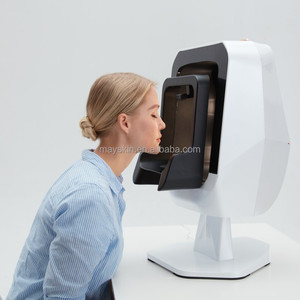
Meicet Mc88 Professional Facial Scanners Beauty Machine Smart Skin Analyzer Moisture Tester Face Skin Analyser for Beauty Salon
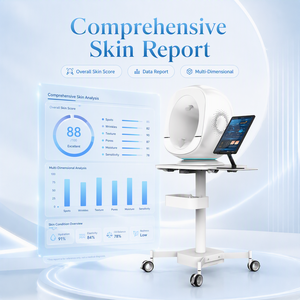
Scientific Research Anti Aging Verification 3D Skin Analyzer Machine 4 Spectra AI 8 Intelligent Images 30 Plus Detection Clinic
1. Localized Market Dynamics: The Boom of AI Skin Diagnostics in India
The Indian medical aesthetics industry is undergoing a paradigm shift. Historically reliant on qualitative, subjective assessments during initial patient intakes, leading aesthetic clinics and cosmetic surgery centers across major metros—such as Delhi-NCR, Mumbai, Bengaluru, Chennai, and Hyderabad—are rapidly upgrading to quantitative diagnostic technology. Indian consumers are increasingly sophisticated, demanding empirical validation before committing to costly laser therapies, micro-needling RF, chemical peels, or anti-aging regimens.
Specialized clinical research highlights that the Indian skin demographic predominantly falls within Fitzpatrick Skin Types IV, V, and VI. These skin types possess unique epidermal characteristics, including higher baseline melanin density, increased susceptibility to Post-Inflammatory Hyperpigmentation (PIH), deeper dermal vascularity, and heightened reactivity to environmental pollutants (PM2.5 particulate damage). Consequently, standard Western diagnostic systems that lack AI algorithm training on dark skin phenotypes often yield miscalibrated tone scores, false-positive erythema reads, or inaccurate pore-depth estimations.
Epidermal Melanin Quantification
Multi-spectral UV and Cross-Polarized light filters map subsurface melanin distribution, differentiating dermal melasma from epidermal sunspots tailored for high-melanin skin profiles.
Vascular & Erythema Sensitivity
Advanced optical filtering reveals concealed vascular congestion, rosacea, and post-acne erythema even beneath dense epidermal pigmentation layers typical of Indian skin tones.
3D Topographical Mapping
Micro-relief surface analysis precisely measures wrinkle depth, acne scarring volume, and pore dilation in quantitative micrometers (µm) to verify therapeutic efficacy.
Chinese direct-factory manufacturers have recognized these localized nuances. By integrating deep-learning neural networks trained on over 5,000,000 multi-ethnic clinical skin images—including massive South Asian datasets—Chinese manufacturers produce consultation systems like the X5PRO 9-Spectral Analyzer and A6 3D Facial Scanner that offer unparalleled diagnostic reliability for the Indian market at a fraction of European or American equipment costs.
2. Clinical Application Scenarios in the Indian Med Spa Environment
Deploying high-precision skin consultation machines fundamentally alters the commercial and clinical trajectory of Indian aesthetic clinics. Below are real-world operational workflows where these devices yield immediate return on investment (ROI):
A. Pre-Treatment Baseline Documentation for High-Risk Procedures
In Indian dermatology clinics, treatments such as Q-Switched Nd:YAG laser toning, Pico lasers, and high-strength TCA peels carry an inherent risk of triggering Post-Inflammatory Hyperpigmentation (PIH) if baseline skin inflammation is underestimated. Utilizing systems with Cross-Polarized and Parallel-Polarized lighting (such as the Meicet Mc88 and X3-Pro Series) allows practitioners to detect occult dermal vascularity and sub-clinical inflammation prior to energy delivery. This diagnostic step enables doctors to pre-treat skin with topical anti-inflammatories, safeguarding patient safety and mitigating legal liability.
B. Conversion Optimization for Multi-Session Aesthetic Packages
One of the primary challenges for clinic owners in Tier-1 and Tier-2 Indian cities (e.g., Pune, Ahmedabad, Chandigarh) is converting walk-in consultation clients into high-ticket multi-session treatment packages (e.g., 6-session anti-aging laser protocols or structured acne scar rehabilitation). AI skin analyzers solve this by rendering invisible skin damage visible. When a patient visualizes their future skin aging projection, subsurface UV spot accumulation, and porphyrin buildup (acne bacteria colonies) via high-definition 3D rendering, conversion rates for recommended procedures jump by an average of 350%.
C. Quantitative Efficacy Tracking for Cosmetic Clinical Trials
India has emerged as a premier hub for cosmetic Contract Research Organizations (CROs) and pharmaceutical formulations testing local botanical and active ingredients (such as Niacinamide, Glutathione, and specialized SPF formulations). Devices equipped with Scientific Research Anti-Aging Verification software (30+ Detection Dimensions) offer quantitative metrics—measuring reduction in wrinkle volume, sebum secretion rates, and melanin indices over 30, 60, and 90-day trials with publication-ready data export formats (CSV/PDF).
3. Technical Benchmarking: Chinese Direct Factory vs. European Legacy Systems
When sourcing diagnostic hardware, Indian clinic procurement teams often compare Chinese OEM manufacturers against European brands such as Miravex (Antera 3D®). While European hardware historically set optical standards, direct factory innovations from top Chinese manufacturers have closed the technical gap while delivering massive financial and operational advantages.
| Evaluation Parameter | Chinese Direct OEM/ODM Manufacturers | European Legacy Diagnostic Brands |
|---|---|---|
| Spectral Range & Modalities | Up to 9–10 Spectra (RGB, UV, PL, Red, Brown, Spot, Moisture, Porphyrin) | 3–4 Spectra (Photometric Stereo / RGB Base) |
| Skin Phenotype AI Calibration | Multi-ethnic AI algorithms optimized for Fitzpatrick Types I–VI (Including South Asian) | Primarily calibrated on Caucasian (Fitzpatrick Types I–III) datasets |
| Software License & SaaS Fees | Zero recurring subscription fees; Free lifetime software & language updates | High annual recurring software license & maintenance contracts |
| Language Engine Integration | Native support for 19 to 25 Languages (English, Hindi, Arabic, Spanish, etc.) | Limited to 5–8 major Western languages |
| CapEx Investment for Indian Importers | Highly competitive factory-direct pricing ($1,200 – $3,500 USD) | High entry cost ($15,000 – $35,000 USD + Import Tariffs) |
| Customization (Private Labeling) | Full OEM/ODM support (Logo hardware printing, software GUI customization) | Rigid, zero OEM/ODM customization options |
For Indian aesthetic franchises aiming to scale rapidly across multiple branch locations, Chinese manufacturers offer a scalable capital expenditure model that drastically reduces payback periods to under 45 days per clinic branch.
4. Engineering & Manufacturing Capabilities of China's Premier Factories
To understand why Chinese manufacturers dominate the global aesthetic consultation market, one must evaluate the manufacturing infrastructure supporting these optical devices:
- ISO13485 & Cleanroom Production Lines: Leading Chinese factories operate state-of-the-art optical assembly facilities. Lenses are calibrated using industrial-grade collimators, ensuring sub-micron alignment of RGB light-emitting diodes (LEDs) and ultra-high-definition CMOS sensors (up to 36 Megapixels).
- Proprietary Photometric Stereo Reconstruction: Similar to clinical benchmark devices, high-end Chinese 3D analyzers utilize multi-directional illumination combined with photometric stereo algorithms. This captures microscopic surface shadows to mathematically calculate skin roughness, pore volume, and fine line depth.
- Cross-Border Supply Chain Integrity for India: Established suppliers maintain robust logistics networks experienced in shipping sensitive optical equipment to major Indian sea and air hubs (Mumbai JNPT, Delhi Indira Gandhi Airport, Bengaluru Air Cargo). Packaging includes custom shock-proof flight cases, vacuum-sealed moisture protection, and reinforced outer frames designed for tropical transport conditions.
- Custom Software Architecture: OEM manufacturers provide modular software structures allowing Indian distributors to integrate localized CRM databases, WhatsApp API notification modules for patient report sharing, and Indian Rupee (INR) clinic pricing calculators directly into the user interface.
Frequently Asked Questions (FAQ) for Indian Procurement Managers
Key regulatory, technical, and operational considerations when importing skin analysis equipment from China
Partner with China's Premier Med Spa Equipment Manufacturers
Whether you operate a chain of medical aesthetic clinics across India, manage a cosmetic distribution network, or seek direct factory OEM/ODM customization for your brand, our engineering team provides end-to-end supply chain support.