
Advanced Cosmetic R&D & Skin Diagnostics Equipment
High-precision 3D facial scanners, spectral analyzers, and formulation validation systems compliant with Russian GOST and EAC laboratory standards.
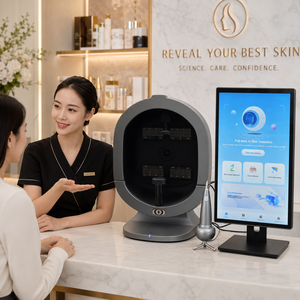
X5PRO 9-Spectral AI Facial Skin Analyzer Machine for Face Moisture Pores Wrinkles UV Spot Analysis US/EU Compatible Commercial
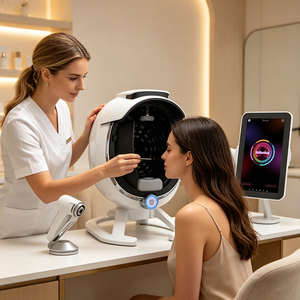
2026 Newest A6 3D Facial Scanner Skin Analyzer 8 Spectrum AI Skin Analysis Machine For Blackheads And Pores Depth Detection
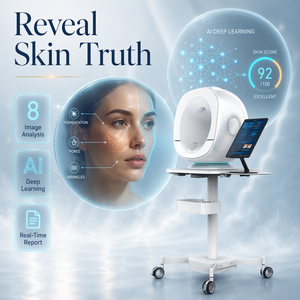
All in One Facial Skin Analyzer Machine 3D Camera 4 Spectra 8 Intelligent Images AI Analysis 30 Plus Detection Dimensions Clinic
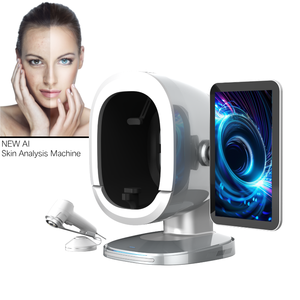
Newest 3D AI Intelligent Skin Analyzer Face Scanner Skin Analysis Machine Facial Tester Scanner Support 19 Languages
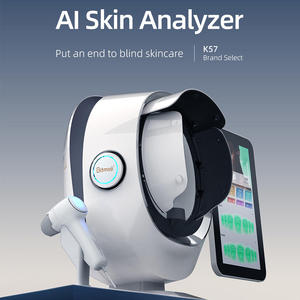
High Quality Portable Facial Analysis Skin Monitor Analyzer 3D Digital Skin Analyzer Machine for Salon
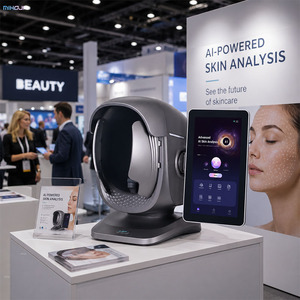
Newest X3-pro-Skin-Analyzer Facial Scanner Skin Analyzer For Resaller 25 Languages X3 Skin Analysis Machine Wifi Contact
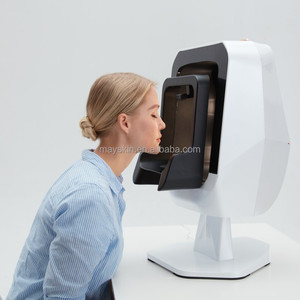
Meicet Mc88 Professional Facial Scanners Beauty Machine Smart Skin Analyzer Moisture Tester Face Skin Analyser for Beauty Salon
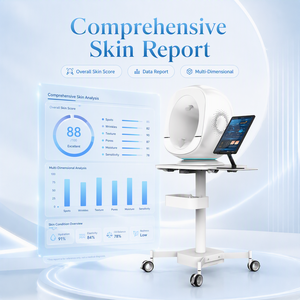
Scientific Research Anti Aging Verification 3D Skin Analyzer Machine 4 Spectra AI 8 Intelligent Images 30 Plus Detection Clinic
Photometric Stereo Imaging
Captures surface topography in high spatial resolution by reconstructing 3D surface gradients using directional multispectral LED illumination under constant geometry.
EAC & TR CU 009/2011 Ready
Engineered to fulfill technical regulations of the Eurasian Customs Union for cosmetic clinical safety, claim validation, and toxicological protocol documentation.
Localized Russian UI & Software
Native multi-language software architecture providing full Russian language operational interfaces, patient report generation, and automated data archiving.
Executive Overview: The Evolution of Cosmetic R&D Equipment Procurement in Russia
The cosmetic manufacturing ecosystem within the Russian Federation is experiencing a profound technological transformation driven by accelerating import substitution policies (Импортозамещение), rising consumer demand for scientifically backed anti-aging formulations, and stringent regulatory enforcement under the Eurasian Economic Union (EAC TR CU 009/2011). Cosmetic formulators, Contract Research Organizations (CROs), and independent testing institutes across major industrial clusters—including Moscow, Saint Petersburg, Novosibirsk, Kazan, and Krasnodar—are rapidly modernizing their laboratory infrastructure.
Historically, cosmetic efficacy claims relied on subjective sensory panels or basic 2D photography, which introduced substantial intra-observer variability and failed to satisfy modern regulatory scrutiny. Today, leading Russian cosmetic manufacturers demand advanced 3D skin analysis devices, photometric stereo scanners, and spectral AI analyzers that deliver reproducible, publication-grade quantitative metrics. Equipping research and development (R&D) laboratories with clinical-grade optical diagnostics allows manufacturers to shorten formulation development cycles, validate active botanical ingredients, and establish undeniable competitive advantage in both domestic and international markets.
Core Diagnostic Parameters Required in Modern Russian Beauty R&D Laboratories
To obtain approval for therapeutic cosmetic lines, anti-pigmentation creams, and barrier-repair emulsions, Russian formulation scientists require precise measurement of five critical physiological parameters:
- Dermal Surface Topography & Roughness (Ra, Rz, Volume): Quantifying fine line depth, micro-relief smoothing, and structural skin rejuvenation following application of peptides, retinoids, or hyaluronic acid complexes.
- Melanin Distribution & Hyperpigmentation Index: Measuring baseline pigment intensity, solar lentigines, and post-inflammatory hyperpigmentation (PIH) clearance across Fitzpatrick phototypes II, III, and IV, which predominate in Eurasia.
- Hemoglobin Concentration & Vascular Erythema: Mapping micro-vascular dilation, rosacea severity, and anti-inflammatory treatment response using polarized multispectral optical filtration.
- Pore Architecture & Sebum Volume: Calculating 3D depth, surface area, and spatial distribution of dilated pores and comedones for acne-prone and oily skin formulations.
- Transepidermal Water Loss (TEWL) & Hydration Surrogates: Correlating optical surface texture metrics with barrier integrity restoration in harsh cold-climate testing environments.
Optical Physics of 3D Skin Analysis: Photometric Stereo vs. Legacy Systems
Understanding the underlying physics of diagnostic equipment is vital for cosmetic laboratory directors when selecting capital equipment. Legacy systems such as 2D digital facial capture units or standard UV Wood's lamps provide visual baseline images but lack the mathematical depth needed for volumetric analysis. In contrast, advanced 3D skin analyzers, such as the patented technologies developed by Miravex Limited (Antera 3D®) and modern multi-spectral AI platforms, employ photometric stereo imaging.
How Photometric Stereo Reconstructs Micro-Relief Topography
Photometric stereo technology illuminates the target dermal zone from multiple predefined angles using calibrated light-emitting diodes (LEDs) emitting across narrow spectral bands (including UV, visible RGB, and cross-polarized infrared). By analyzing the precise shading variation across multiple spatial images captured in milliseconds, the software calculates surface orientation vectors (normal vectors) for every pixel. Integrating these vectors yields a full three-dimensional mathematical mesh of the skin surface with sub-micron depth resolution.
| Diagnostic Parameter | Legacy 2D Facial Imaging | Handheld Photometric Stereo (Antera 3D®) | Multi-Spectral AI Facial Cabinets |
|---|---|---|---|
| 3D Topography Measurement | Qualitative shadow calculation (Low) | Direct mathematical height/depth mesh (<0.1 µm) | Stereo projection mapping (<1.0 µm) |
| Wrinkle Volume Calculation | Not possible (2D pixels only) | Exact volumetric measurement (mm³) | Estimated depth index |
| Melanin / Hemoglobin Concentration | Color RGB filtering (Subjective) | Calibrated spectral absorption coefficients | Multispectral AI algorithmic mapping |
| Portability & Target Precision | Fixed bulky cabinet setup | Handheld ergonomic probe for localized zones | Fixed facial position hood |
| Clinical Publication Acceptability | Marketing visual support only | High (>500 peer-reviewed papers) | Moderate to High for commercial claims |
This mathematical precision allows Russian R&D teams to capture subtle structural improvements in dermal thickness, epidermal smoothing, and pore contraction within 7 to 14 days of product application—significantly accelerating clinical trial timelines compared to traditional 30-day panel evaluations.
Localized Application Scenarios in the Russian Cosmetic Industry
Formulating cosmetics for the Russian consumer market requires addressing distinct regional climatic demands, ethnic skin phototype characteristics, and specific lifestyle stress factors. Below are four primary application scenarios where 3D skin analysis equipment proves indispensable for Russian manufacturers:
1. Cold-Climate & Extreme Thermal Shock Lipid Barrier Formulations (Siberia & Far East)
In regions such as Novosibirsk, Krasnoyarsk, and Yakutsk, winter temperatures frequently drop below -30°C, accompanied by extremely low indoor relative humidity (below 20%). This severe environmental stress leads to acute stratum corneum lipid disruption, micro-fissuring, accelerated trans-epidermal moisture loss, and cold-induced erythema.
R&D Application: Cosmetic manufacturers formulate rich cold-creams, ceramide-replenishing balms, and protective emulsions. By using localized 3D optical analyzers, formulation scientists measure skin roughness (Ra values) and micro-fissure surface depth before and after thermal chamber exposure, quantitatively proving the barrier-restoration speed of their lipid matrices.
2. Urban Pollution & Anti-Oxidative Stress Shields (Moscow & St. Petersburg Agglomerations)
Metropolitan consumers face high exposure to airborne particulate matter (PM2.5), vehicle emissions, and heavy metal dust, accelerating urban extrinsic aging, sub-clinical inflammation, and dull skin tone.
R&D Application: R&D teams in Moscow evaluate detoxifying active ingredients (such as ectoin, niacinamide, and fermented antioxidants). Multispectral cross-polarized imaging quantifies subtle shifts in epidermal hemoglobin concentration (vascular irritation) and surface pore clogging, providing hard data to back "Anti-Pollution Shield" and "Urban Defense" product claims.
3. Quantitative Validation of Native Siberian Botanical Actives (Altai & Baikal Biomes)
With the growth of import-substitution, Russian cosmetic brands are harvesting native botanical bio-actives—such as Siberian Ginseng (Eleutherococcus), Rhodiola Rosea, Sea Buckthorn (Hippophae rhamnoides), and Siberian Cedar Nut oil—to replace imported Western cosmetic actives.
R&D Application: To compete with global cosmetic brands, local manufacturers must prove that wild-harvested Siberian actives match or exceed synthetic benchmarks. 3D spectral equipment provides peer-reviewed quantitative metrics on collagen-density improvement, melanin reduction, and elastic recoil, providing international credibility for Russian domestic cosmetic lines.
4. Medical Cosmetics & Post-Aesthetic Procedure Recovery (Clinical Aesthetic Clinics)
The aesthetic medicine sector in Russia is expanding rapidly, creating high demand for post-procedure recovery cosmetics used following aggressive treatments such as fractional CO2 laser resurfacing, chemical peels, and micro-needling.
R&D Application: Equipment manufacturers provide specialized handheld scanners (such as Antera 3D®) to medical cosmetic brands. Clinicians map the day-by-day reduction of post-laser erythema and skin roughness, establishing exact recovery curves for medical-grade topical formulations.
Localized Industry Trends & Regulatory Landscape in Russia (2025–2030)
Strategic procurement of cosmetic R&D equipment requires alignment with Russia's evolving regulatory framework and shifting supply chain dynamics. Key macro trends shaping the market include:
Mandatory Technical Regulation TR CU 009/2011 Compliance
The Eurasian Customs Union regulation TR CU 009/2011 "On the Safety of Perfumery and Cosmetic Products" mandates rigorous safety, microbiological, toxicological, and efficacy documentation for all products distributed in Russia, Belarus, Kazakhstan, Armenia, and Kyrgyzstan. Diagnostic equipment utilized in clinical efficacy testing must conform to calibrated metrological standards, ensuring reproducible measurements that withstand regulatory audits by Rospotrebnadzor.
Growth of Independent Russian Contract Research Organizations (CROs)
As international testing laboratories reduced operations in the region, domestic Russian CROs and university-affiliated dermatological research centers expanded to fill the void. These research hubs require robust, multi-user diagnostic equipment with localized Russian software interfaces, robust calibration locks, and compliance with ISO 9001 and ISO 22716 Good Manufacturing Practices (GMP).
Integration of Artificial Intelligence & Multi-Language Interface Architecture
Modern laboratory teams require seamless diagnostic software capable of running on Russian OS environments (such as Astra Linux or standard Windows deployments) with multi-language software engines (Russian, English, Chinese). AI-driven automated pore classification, wrinkle depth scoring, and automatic skin age prediction significantly reduce technician training requirements and eliminate operator bias.
Enterprise Authority: Miravex Limited & Antera 3D® Optical Technology
When evaluating suppliers of cosmetic R&D diagnostic systems, enterprise credibility, scientific validation, and long-term technical support are paramount. Miravex Limited, headquartered in Dublin, Ireland, is a global leader in optical skin analysis and medical dermatology imaging technology.
The Miravex Advantage: Proven Scientific Foundation
- Patented Optical Physics: Developed by leading optical physicists from Trinity College Dublin, Antera 3D® utilizes advanced multispectral illumination combined with custom mathematical algorithms to deliver unmatched spatial accuracy.
- 500+ Peer-Reviewed Publications: Antera 3D® is among the most cited 3D skin analysis devices in international dermatological literature, utilized by leading multinational cosmetic conglomerates, pharmaceutical research centers, and academic institutes.
- Versatile Research & Clinical Portability: Unlike rigid diagnostic cabinets, the handheld Antera 3D® probe allows research technicians to measure any anatomical body zone—including contours of the face, neck, decolletage, hands, and arms—with equal precision.
- Comprehensive Data Integrity & Export: Software suite provides absolute baseline vs. post-treatment image alignment, mathematical subtraction maps, and automated data exporting (CSV, PDF, TIFF) for statistical analysis in SPSS, R, or MATLAB.
- Global Logistics & Regional Technical Support: Proven export infrastructure ensuring reliable equipment delivery, calibration services, warranty maintenance, and technician certification across Europe, Asia, and Eurasia.
Frequently Asked Questions (FAQ) for Procurement Officers in Russia
Technical, regulatory, and operational answers for B2B equipment buyers, laboratory directors, and CRO researchers.
3D skin analysis equipment provides objective, quantitative measurement of skin parameters (wrinkle depth, erythema, melanin, texture) required to substantiate cosmetic safety and efficacy claims under EAC TR CU 009/2011. The mathematical data export eliminates subjective human error, offering verifiable audit trails for Russian regulatory submissions.
Yes, our featured equipment lines—including the Antera 3D® and modern multi-spectral AI diagnostic platforms—support multi-language user interfaces, including full Russian language translation for operational software, client diagnostic reports, and data visualization tools.
The equipment quantifies wrinkle depth (mm), wrinkle volume (mm³), surface roughness (Ra, Rz), skin micro-relief restoration, pore volume, melanin index reduction (for brightening creams), and hemoglobin concentration decreases (for anti-rosacea/soothing formulations).
Handheld probes (such as Antera 3D®) offer superior spatial resolution (<0.1 µm depth accuracy) and allow measurement on localized regions anywhere on the body (e.g., crow's feet, lips, neck, arms, body skin). Fixed facial hood units capture whole-face visual overviews quickly but offer lower spatial resolution for localized micro-relief calculations.
The software utilizes patented optical matching algorithms that align follow-up scans with baseline images based on permanent dermal landmarks (such as microscopic vascular patterns and mole coordinates), ensuring exact spatial overlay across 14-day, 30-day, or 90-day clinical trials.
Standard shipment lead times range from 10 to 20 business days depending on destination customs clearance and final city destination (Moscow, Saint Petersburg, Novosibirsk, etc.). All equipment is securely packed in international laboratory-grade flight cases with complete calibration certificates.
Yes, comprehensive B2B supply agreements include initial remote or on-site technician training, software installation support, annual optical calibration protocols, and full warranty coverage with technical service assistance.
Laboratory directors and procurement managers can click the "Send an Inquiry" button anywhere on this page to initiate direct communication with our scientific sales team for customized quotations, technical whitepapers, and live video demonstrations.
Equip Your Cosmetic R&D Laboratory with World-Class 3D Diagnostic Systems
Elevate your formulation efficacy claims, accelerate clinical trials, and ensure full EAC regulatory compliance with clinical-grade 3D skin analysis equipment tailored for the Russian market.
Send an Inquiry