Executive Overview: Facial Porosity Analysis in the Portuguese Medical & Aesthetic Sector
Facial skin porosity—characterized by the volumetric depth, surface pore aperture, follicular distension, and sebum canal obstruction—serves as one of the most critical bio-diagnostic markers in modern clinical dermatology and non-invasive aesthetic medicine. In the Portuguese medical aesthetic market, driven by expanding patient demands in metropolitan centers such as Lisbon, Porto, and the Algarve region, the transition from qualitative visual assessment to quantitative, clinical-grade 3D skin analysis has become mandatory for leading practitioners.
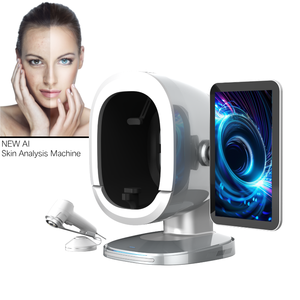
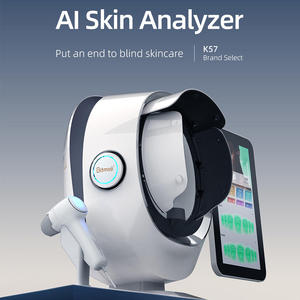
Historically, evaluating facial porosity relied upon manual palpation, standard magnification lamps, or simple 2D digital photographs. However, these methods fail to isolate the micro-topographical variances of the pilosebaceous unit, nor can they distinguish between structural pore stretching caused by dermal collagen degradation versus functional follicular dilation resulting from excessive sebum synthesis. Advanced Facial Porosity Analysis Device Manufacturers have responded by engineering multispectral 3D optical scanners capable of capturing sub-surface skin morphology at microscopic resolutions.
Key SEO & Clinical Insight: Facial porosity in Mediterranean skin phototypes (predominantly Fitzpatrick Types II through IV across Portugal) is heavily influenced by high cumulative solar radiation (UVA/UVB exposure) combined with localized urban micro-pollution. Quantitative porosity tracking allows clinicians to isolate photo-damaged follicular walls from hormonal pore enlargement, enabling ultra-targeted treatment mapping.
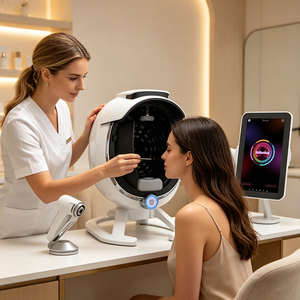
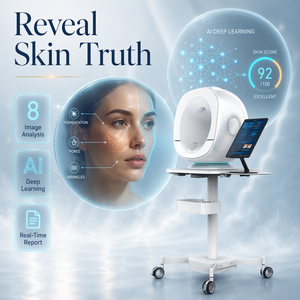
As direct manufacturers and technical suppliers serving Portugal, our clinical imaging platforms utilize patented 3D photometric stereo imaging and multi-wavelength LED technology (ranging from RGB daylight and parallel-polarized light to UV 365nm fluorescence and cross-polarized light). By reconstructing the skin's surface micro-relief in three-dimensional digital mesh space, our devices provide dermatologists, plastic surgeons, aesthetic clinics, and cosmetic Contract Research Organizations (CROs) with absolute empirical metrics regarding pore count, average pore volume ($\mu m^3$), sebum congestion index, and peri-follicular elasticity.
Technological Breakdown: 3D Photometric Stereo & Multispectral Porosity Diagnostics
Understanding the engineering architecture behind state-of-the-art porosity analysis devices is vital for medical procurement directors and clinical researchers. A high-precision facial scanner must overcome optical reflection noise, skin translucency scattering, and anatomical facial curvature to yield reproducible data.
1. Photometric Stereo Surface Topography Reconstruction
Unlike conventional 2D cameras that compress 3D anatomical structures into flat pixels, our optical head incorporates multi-directional light sources positioned at calibrated zenith and azimuth angles. By illuminating the facial surface sequentially from multiple controlled vectors within milliseconds, the system calculates the directional surface normals ($\vec{n}$) across every micro-coordinate. This allows for the exact mathematical reconstruction of the facial micro-relief, measuring pore depth, crater slope, and fine line topography with sub-micron elevation precision.
2. 9-Spectral Optical Channel Differentiation
Modern clinical facial scanners utilize multi-wavelength spectral illumination to segregate dermal layers:
- RGB Standard White Light: Evaluates macro-porosity, surface texture uniformity, and visible skin roughness.
- Parallel-Polarized Light: Enhances specular reflections from the stratum corneum, highlighting surface keratinization and epidermal pore border sharpness.
- Cross-Polarized Light: Eliminates surface glare, penetrating into the superficial papillary dermis to map peri-follicular erythema and micro-vascularization surrounding enlarged pores.
- UV 365nm Deep Fluorescence: Excites endogenous porphyrins produced by Propionibacterium acnes inside clogged pores, enabling exact differentiation between clean open pores and comedonal impactions.
Diagnostic Parameter Matrix & Clinical Measurement Units
| Diagnostic Parameter |
Measurement Technology |
Clinical Metric / Unit |
Dermatological Relevance in Portugal |
| Pore Density Index |
3D Spatial Point Cloud Algorithm |
Pores per $cm^2$ |
Baseline tracking for pore-refining energy-based devices (RF microneedling, fractional laser). |
| Follicular Volume ($\mathbf{V_f}$) |
Photometric Stereo Height Map |
Microns cubed ($\mu m^3$) |
Quantifies structural pore collapse caused by loss of dermal collagen support due to photo-aging. |
| Porphyrin Activity (Sebum) |
UV 365nm Fluorescence Emission |
Fluorescence Intensity / Area |
Identifies active bacterial colonization and oil excretion rate, critical in warm Portuguese climates. |
| Pore Border Elasticity |
Vector Gradient Analysis |
Deformation Ratio ($E_p$) |
Measures the structural integrity of the follicular funnel under dynamic facial expressions. |
| UV Spot & Photo-Damage |
Cross-Polarized UV Spectrum |
Pigment Density ($\Delta E$) |
Evaluates solar elastosis impact on pore distension in coastal regions (Algarve, Cascais). |
Localized Application Scenarios across Portugal's Aesthetic & Medical Hubs
The demand for advanced skin diagnostics in Portugal varies significantly by region due to localized climate conditions, demographic preferences, and the concentration of high-end medical aesthetic clinics. Our facial porosity analysis devices are specifically tailored to meet these operational environments:
Lisbon Metropolitan Area
High-Volume Aesthetic Clinics & Luxury MedSpas
In Lisbon's competitive aesthetic corridors (such as Avenida da Liberdade and Saldanha), patient retention relies heavily on visual consultation proof. Clinics utilize our 3D scanners during initial intake to provide patients with an interactive "Skin Age" score and objective 3D pore maps. Demonstrating real before-and-after pore area reduction following chemical peels, hydradermabrasion, or non-ablative lasers increases treatment plan conversion by over 40%.
Porto & Northern Portugal
Clinical Dermatology Practices & Post-Laser Verification
Dermatologists in Porto and Minho focus extensively on therapeutic interventions for acne vulgaris, rosacea, and oily seborrheic skin. Our 9-spectral devices allow medical practitioners to monitor follicular porphyrin reduction during oral retinoid therapies or photodynamic treatments, offering quantitative validation that meets stringent clinical standards.
Algarve Coastal Region
Anti-Aging & Solar Elastosis Repair Centers
In southern Portugal (such as Faro, Vilamoura, and Quinta do Lago), high UV indexes accelerate photo-aging and structural pore elongation. Medical resorts and cosmetic dermatology clinics leverage 3D volumetric porosity tracking to quantify dermal repair after collagen-stimulating bio-remodeling injections (such as PLLA or calcium hydroxyapatite).
CRO & University Research Integration: Leading academic research institutes in Coimbra and Lisbon utilize our equipment for double-blind clinical trials validating novel topical pore-refining cosmetic actives, ensuring publication-grade data compliant with European testing protocols.
Portugal Market Trends: Regulatory Compliance (Infarmed / EU MDR) & Digital Integration
Operating as a premium medical aesthetic device distributor or clinic in Portugal requires strict adherence to European Union health and safety frameworks. The Portuguese cosmetic and medical equipment market is characterized by several key structural trends:
1. Strict Compliance with EU MDR (Medical Device Regulation 2017/745) and Infarmed Guidelines
Devices imported into and distributed within Portugal must comply fully with CE marking standards and register under Infarmed (Autoridade Nacional do Medicamento e Produtos de Saúde I.P.). Our manufacturing facilities maintain ISO 13485 quality management certification. Every skin analyzer supplied to the Portuguese market carries full electrical safety (IEC 60601-1), electromagnetic compatibility (EMC), and optical radiation safety certifications, eliminating regulatory exposure for clinic owners.
2. GDPR-Compliant Cloud Data Architecture
Under the European General Data Protection Regulation (GDPR), patient skin scans, high-resolution facial images, and personal biometric data must be handled with encrypted security protocols. Our software suites incorporate end-to-end AES-256 bit encryption, local data storage options, and HIPAA/GDPR-compliant cloud backup channels, ensuring patient confidentiality for practices operating throughout Portugal and the broader EU.
3. Multi-Lingual Software Localization (Portuguese, English, Spanish)
To facilitate seamless operational workflow, our devices feature fully localized Portuguese user interfaces, client report generators, and diagnostic summary export functions. Clinics can print or digitally email custom diagnostic skin reports directly to patients in native Portuguese, driving compliance and product sales for home-care regimens.
Upgrade Your Practice with Next-Generation 3D Porosity Analytics
Partner with a leading direct manufacturer. Request complete technical specifications, clinical validation whitepapers, and exclusive wholesale pricing for the Portuguese market.
Contact Us