
Advanced Bio-Optical & Erythema Analysis Systems
Explore our specialized inventory of spectral analyzers, 3D topographical scanners, and optical measurement equipment engineered for CROs, cosmetic manufacturers, and clinical research facilities in Hamburg.
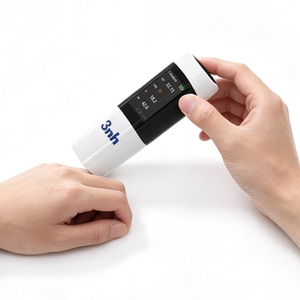
PS02 Skin Tone Analyzer ITA° MI EI CIE LAB Value Skin Pigment Erythema Index Detector
High-precision narrowband reflectance meter providing instant Erythema Index (EI), Melanin Index (MI), and CIELAB color parameters for cosmetic trial validation.
Contact Us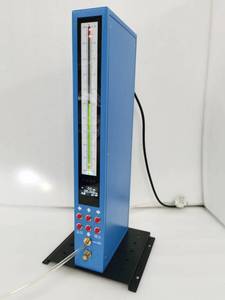
Multi-Function Pneumatic Measuring Instrument - Digital Readout for Taper & Roundness Analysis
High-rigidity pneumatic gauge system engineered for extreme mechanical tolerance verifications in medical device device enclosure manufacturing.
Contact Us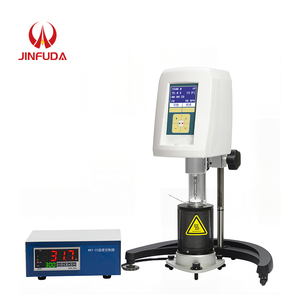
Advanced Quality Inspection Instrument With Reliable Performance Viscosity Device
Rheological quality control device for evaluating topical dermatological gels, creams, and anti-inflammatory micro-emulsions.
Contact Us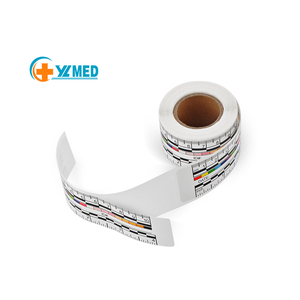
Custom Wound Measure Tools Medical Double Scale Self-Adhesive Tape CE/ISO
Sterile, bio-compatible wound area measurement scales tailored for clinical trial documentation of inflammatory skin flare-ups and lesion boundaries.
Contact Us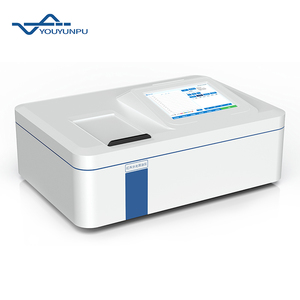
Electronic Infrared Spectrophotometer Concentration Oil Measuring Instrument
Analytical spectrophotometer for measuring lipid concentration, sebum layer disruption, and barrier recovery kinetics post-erythema induction.
Contact Us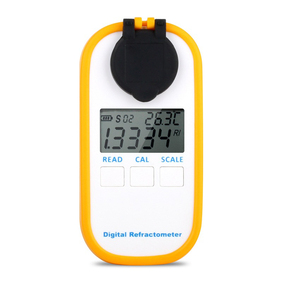
MC2-1 Digital Refractometer High Quality Serum Quality & Concentration Testing Tool
Digital optical refractometer with 0.1 accuracy, ideal for biochemical fluid analysis and clinical laboratory assay standardization.
Contact Us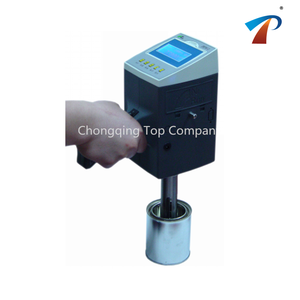
Liquid Viscosity Apparatus / Portable Viscosity Meter / Fluid Measurement Unit
Ergonomic handheld viscometer for batch testing of clinical formulations, excipients, and soothing topical barrier treatments.
Contact Us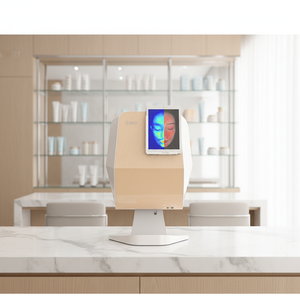
MC88 UV Light Digital Skin Analyzer 5-Spectrum AI 3D Topography Erythema Scanner
Advanced multi-spectral 3D skin imaging platform capable of mapping micro-vascular network, hemoglobin dispersion, and sub-dermal erythema depth.
Contact UsIndustry Whitepaper: Biophysical Engineering of Quantitative Erythema Measurement Systems in Hamburg
Skin erythema—characterized by cutaneous micro-vascular vasodilation and increased dermal blood flow—serves as a primary clinical marker for inflammation, allergic contact dermatitis, ultraviolet (UV) radiation response, and therapeutic efficacy. For contract research organizations (CROs), cosmetic R&D centers, and clinical dermatologists based in Hamburg and the broader Northern Germany life science ecosystem, subjective visual assessment systems (such as the EASI or SCORAD visual indices) no longer satisfy stringent European regulatory mandates (EU MDR 2017/745 and EU Cosmetics Regulation EC 1223/2009). The industry demands absolute, objective, and reproducible quantitative erythema measurement tools capable of differentiating micro-dermal hemoglobin absorption from epidermal melanin interference.
Core Optical Insight: True quantitative erythema measurement requires spectral reflectance isolation at the isosbestic points of oxyhemoglobin ($\text{HbO}_2$) and deoxyhemoglobin ($\text{Hb}$) around 542 nm and 577 nm. Advanced photometric stereo imaging eliminates specular surface reflectance while mapping hemoglobin distribution across micro-topographical 3D skin contours.
1. Spectrophotometric Foundations: Narrowband Reflectance vs. RGB Colorimetry
Legacy color measurement systems rely on standard RGB tricolor sensors or CIELAB $L^*a^*b^*$ space colorimeters. While the $a^*$ value measures the red-green color axis, it is inherently confounded by epidermal melanin concentration and skin surface roughness. Modern bio-optical erythema detectors utilized in Hamburg laboratories employ Narrowband Reflectance Spectrophotometry and Photometric Stereo Imaging.
By pulsing specific green (568 nm) and red (660 nm) optical wavelengths, specialized detectors derive an isolated Erythema Index ($EI$):
Erythema Index (EI) = 100 × [ log10 (1 / R_red) - K × log10 (1 / R_green) ]
Where $R_{\text{red}}$ and $R_{\text{green}}$ represent the diffuse light reflectance factors, and $K$ is a mathematical cross-talk coefficient calibrated to cancel out melanin absorption. This isolation ensures that clinical trials measuring soothing agents, anti-inflammatory topical drugs, or post-laser erythema reduction produce statistically robust data sets across diverse Fitzpatrick skin types (Types I through VI).
Multispectral LED Arrays
Controlled polarized lighting eliminates surface glare, allowing precise sub-dermal light penetration to capture micro-capillary vasodilation.
Photometric 3D Topography
Reconstructs dermal surface geometry to decouple erythema intensity from skin folds, pores, and wrinkle shadows.
DICOM & 21 CFR Part 11
Fully compliant software export formats with cryptographic audit trails tailored for clinical trial documentation in Germany.
Localized Application Scenarios in Hamburg's Life Science Ecosystem
As Northern Germany’s primary hub for clinical research, cosmetic innovation, and specialized medical centers, Hamburg presents unique operational conditions where quantitative optical erythema instruments play a critical role:
Scenario A: Cosmetic R&D & Efficacy Testing in Eppendorf & Bahrenfeld
Hamburg hosts world-renowned cosmetic corporate R&D centers and independent contract research institutes (e.g., around Eppendorf and the Altona science parks). Formulators developing barrier-repair creams, anti-redness serums, and sun care products utilize portable skin analyzers (such as the PS02 Skin Tone Analyzer and MC88 5-Spectrum AI Scanner) to map post-UV or chemical-induced erythema kinetics over time. Rapid quantification of $EI$ decay curves allows researchers to claim scientifically validated "fast soothing" and "redness reduction" properties under European cosmetic claim regulations.
Scenario B: Phase I–IV Clinical Trials at University Medical Center Hamburg-Eppendorf (UKE)
In dermatological clinical trials investigating psoriasis, atopic dermatitis, rosacea, and allergic patch testing, objective bio-optical scoring replaces subjective clinician grading. By standardizing quantitative erythema measurement tools across multi-center trials in Hamburg, research teams eliminate inter-observer variability, achieving lower standard deviations and smaller sample size requirements for statistical power.
Scenario C: Post-Procedure Recovery Tracking in Aesthetic Clinics (Alster & City Center)
High-end cosmetic dermatology practices along the Inner Alster and Winterhude regions leverage 3D multispectral imaging systems to demonstrate procedure safety and treatment progress to patients. Following fractional laser resurfacing, intense pulsed light (IPL) therapy, or microneedling, quantitative mapping provides visual and numerical proof of inflammatory regression, reassuring patients and optimizing recovery protocols.
Bio-Optical Measurement Modalities Comparison
To assist procurement officers and lab directors in Hamburg when evaluating measurement instrumentation, the table below outlines performance characteristics across optical techniques:
| Technology Platform | Primary Spectral Wavelengths | Melanin Separation ($EI$) | 3D Surface Topography | Clinical Trial Suitability |
|---|---|---|---|---|
| Narrowband Reflectance (PS02 / Mexameter Class) | 568 nm / 660 nm | High (Mathematical K-factor) | 2D Planar Surface | Excellent (Field & Lab Trials) |
| Multispectral 3D Stereo (MC88 / Antera 3D Class) | 365 nm – 850 nm (5 Spectrums) | Superior (Hemoglobin Concentration Map) | High-Res 3D Mesh | Gold Standard (CRO & Academic) |
| Standard CIELAB Colorimeters | Full Visible Light (400–700 nm) | Moderate ($a^*$ Redness axis only) | None | Basic Screening Only |
| Digital Viscometry & Refractometry (Formulation Control) | Refractive Index / Shear Rate Optical | N/A (Physical Fluid Properties) | N/A | Essential for QC Formulation |
Localized Regulatory & Market Trends in Northern Germany
Procuring medical and research instruments in Hamburg requires strict alignment with German and European regulatory frameworks:
- EU Medical Device Regulation (MDR 2017/745): Devices intended for diagnostic clinical erythema scoring in medical settings must adhere to Class I/IIa medical device certifications, including CE marking and comprehensive technical documentation.
- DIN EN ISO 13485 Standards: Equipment calibration protocols in Hamburg CROs mandate traceable optical reference standards (such as Spectralon® diffuse reflectance tiles) to ensure annual calibration audit compliance.
- Data Protection (GDPR / DSGVO): Digital skin analysis platforms with patient imaging databases must incorporate local database encryption, anonymized clinical ID tags, and secure export options compatible with German hospital IT infrastructures.
Enterprise Advantages: Why Hamburg Institutions Partner With Us
As a specialized manufacturer and global exporter of quantitative skin assessment devices and precision laboratory instruments, our organization delivers exceptional value to Northern Germany's scientific community:
Direct Logistics & Customs Clearance
Seamless export handling directly into Hamburg Airport (HAM) or Port of Hamburg logistics hubs, fully cleared with EU duty-paid processing.
Certified Optical Precision
Every spectrophotometer unit undergoes rigorous multi-point spectral verification with factory calibration certificates traceable to international radiometric standards.
Dedicated Technical Support
German and English-speaking technical service experts providing remote software integration, on-site setup assistance, and recalibration support.
Frequently Asked Questions for Hamburg Buyers
Answers to common technical, logistical, and compliance questions from lab managers, clinical trial directors, and purchasing agents in Germany.
Q: How does the Erythema Index ($EI$) mathematically isolate redness from dark skin pigmentation?
The Erythema Index ($EI$) uses differential spectral absorption analysis. While melanin absorbs light continuously across the visible spectrum (with higher absorption in the UV and blue regions), hemoglobin displays distinct absorption peaks at 542 nm and 577 nm. Our algorithms calculate the logarithmic inverse reflectance ratios at green and red wavelengths, applying a calibrated subtractive factor ($K$) that cancels out the background melanin absorbance. This yields a pure quantitative value for micro-vascular blood volume regardless of baseline skin color.
Q: What export documentation and CE certifications accompany shipments to Hamburg?
All equipment exported to Germany comes with a complete CE Declaration of Conformity, ISO 13485 / ISO 9001 factory test reports, REACH & RoHS environmental compliance documentation, and detailed customs HS code classifications (typically HS 9027.30 for spectrophotometers and optical analyzers). Commercial invoices include full EORI and VAT details required by German customs authorities (Zollamt Hamburg).
Q: Can measurement data be exported into clinical trial management software (CTMS)?
Yes. Our analysis software platforms (such as those pairing with the PS02 Skin Tone Analyzer and MC88 3D AI Analyzer) support structured data export in CSV, Excel, XML, and DICOM formats. Data fields include timestamped raw spectral values, $EI$, $MI$, CIELAB $L^*a^*b^*$ coordinates, and high-resolution 3D surface height maps, enabling seamless integration into R, SAS, or proprietary CTMS databases used by Hamburg CROs.
Q: How often do the optical sensors require recalibration, and are calibration standards provided?
We recommend performing a quick 5-second baseline calibration before each testing session using the included high-stability white reference tile and dark absorber standard. Full recalibration is recommended annually. We provide accredited re-calibration services and traceable calibration kits specifically for our Hamburg and DACH region customers.
Q: What is the lead time for equipment delivery to research facilities in Hamburg?
Standard analyzer models (e.g., PS02 Handheld Units and MC2-1 Refractometers) are typically dispatched within 3 to 5 business days via express air freight (DHL Express / FedEx Express), arriving in Hamburg within 2 to 3 business days post-dispatch. Customized multi-spectral 3D scanner configurations have a production and testing lead time of 10 to 14 business days.
Request a Technical Quotation or Live Remote Demo for Hamburg
Partner with a global exporter committed to optical excellence. Speak directly with our bio-instrumentation specialists to select the ideal quantitative erythema measurement tool for your laboratory, clinical trial, or aesthetic facility.
Contact Us