
1. Diagnostic Fundamentals: The Biophysics of Skin Barrier Function Assessment
The human skin barrier, primarily localized within the stratum corneum (SC), operates as an exquisitely engineered biological shield. Formed by a unique "brick-and-mortar" structural arrangement—where protein-rich corneocytes represent the bricks and an intracellular lipid matrix (comprising ceramides, cholesterol, and free fatty acids in a 50:25:15 molar ratio) forms the mortar—the barrier serves two vital homeostatic roles: preventing uncontrolled water loss to the external atmosphere and blocking the penetration of environmental xenobiotics, irritants, and pathogens.
In medical dermatology and high-end aesthetic clinical practice, evaluating the functional integrity of this stratum corneum layer has transitioned from qualitative visual inspection to objective, quantitative bio-measurement. Traditional diagnostic parameters rely heavily on Transepidermal Water Loss (TEWL), Stratum Corneum Hydration (SCH) capacitance, and sub-surface vascular erythema indexing. Modern medical device manufacturing has advanced these fundamental metrics by coupling bio-electrical impedance with high-resolution 3D surface topography and multi-spectral polarimetric imaging.
Information Gain Index: Why Legacy Measurement Tools Fail in Tropical Climates
Standard open-chamber TEWL meters and single-spectrum moisture sensors experience high signal drift in regions with ambient relative humidity (RH) exceeding 75%—a constant climate factor in Malaysia (Kuala Lumpur, Penang, Johor Bahru). Modern diagnostic equipment engineered for tropical regions integrates dual closed-chamber micro-evaporimeters alongside multi-spectral AI optical mapping to isolate ambient humidity interference from true stratum corneum moisture diffusion.
Key Biophysical Parameters Quantified by Next-Gen Diagnostic Devices
- Transepidermal Water Loss (TEWL Equivalent Index): Quantifies passive water vapor flux escaping across the stratum corneum barrier ($\text{g/m}^2/\text{h}$), directly signaling lipid bilayer degradation or tight junction impairment.
- Stratum Corneum Hydration (SCH): Employs high-frequency dielectric bioimpedance sensing to evaluate the bound water content within the uppermost 10 to 20 micrometers of the epidermis.
- Porphyrin & Cutaneous Microflora Density: Utilizes 365nm UV fluorescence spectrum imaging to map Propionibacterium acnes colonization and follicular sebaceous activity.
- Sub-Epidermal Vascular Index (Redness Matrix): Employs cross-polarized light filtering to eliminate specular surface reflection, revealing hemoglobin distribution, telangiectasia, and post-inflammatory erythema (PIE).
- Epidermal Surface Roughness ($R_a$, $R_z$ Values): Utilizes 3D photometric stereophotogrammetry to calculate micro-relief depth, desquamation irregularity, and fine wrinkle density.
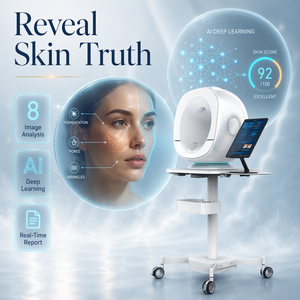
9-Spectral AI Bio-Optical Engine
Combines Parallel-Polarized, Cross-Polarized, UV, Wood's Light, and Deep RGB spectra to segment epidermal and dermal layers down to 2.5mm depth without invasive biopsy.
Quantitative Efficacy Tracking
Provides mathematical before-and-after baseline comparisons, essential for validating cosmetic clinical trials, laser therapy outcomes, and barrier repair therapies.
Tropical Climate Calibration
Software algorithms built specifically to compensate for Southeast Asian ambient heat, sweat gland hyper-activation, and high relative humidity levels.
2. Localized Market Dynamics: Skin Barrier Diagnostics Serving Malaysia
Malaysia's aesthetic dermatology and cosmeceutical sectors have undergone a profound structural evolution over the past five years. Driven by rising consumer sophistication across major metropolitan hubs—such as the Klang Valley (Kuala Lumpur/Selangor), George Town (Penang), and Johor Bahru—patients and consumers no longer accept vague marketing claims regarding "skin rejuvenation" or "deep hydration." There is an acute demand for scientifically validated diagnostic data before purchasing clinical treatments or medical-grade skin care regimens.
Primary Localized Drivers in the Malaysian Aesthetic Market
- Equatorial Climate Stressors & Humidity-Induced Sebum Dysbiosis: Malaysia experiences ambient temperatures between 28°C to 34°C year-round with relative humidity often hovering above 80%. This severe environmental combination leads to rapid skin surface dehydration coupled with hyper-active sebaceous gland excretion. Consumers frequently suffer from "dehydrated-oily skin," a condition where the stratum corneum barrier is severely compromised despite high surface sebum levels. Accurate skin barrier diagnostic devices are mandatory for clinics to differentiate between excess surface lipid production and underlying stratum corneum moisture deficits.
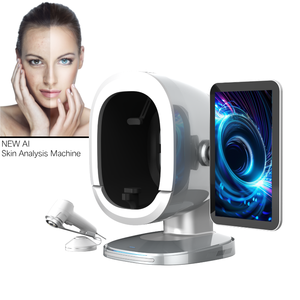
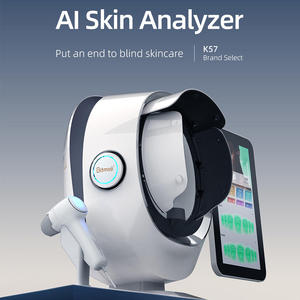
- High Prevalence of Post-Inflammatory Hyperpigmentation (PIH) in FitzPatrick Types III–VI: The demographic distribution in Malaysia comprises predominantly Asian skin phototypes (Fitzpatrick scale III to V). These skin types possess higher baseline melanin content and are exceptionally prone to laser-induced PIH and barrier disruption if pre-treatment diagnostic assessment is inaccurate. Aesthetic clinics in KL and Penang rely on 8-spectrum and 9-spectrum skin analyzers (such as the X5PRO and A6 3D models) to evaluate deep dermal pigment depth and vascular inflammation before performing energy-based device (EBD) procedures.
- Growth of Halal Cosmeceutical R&D and Clinical Testing in Selangor & Cyberjaya: Malaysia leads the global market in Halal-certified personal care product development. Major research laboratories, Contract Research Organizations (CROs), and university dermatological centers require precision diagnostic devices to validate "skin barrier restoration" claims for new formulation patents under strict international ISO 22716 and Good Clinical Practice (GCP) guidelines.
3. Technical Comparison: Standard Surface Imaging vs. Advanced 3D AI Bio-Diagnostic Systems
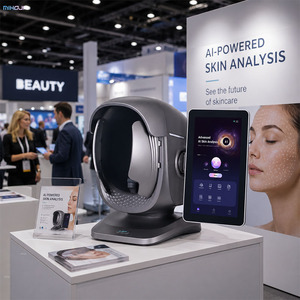
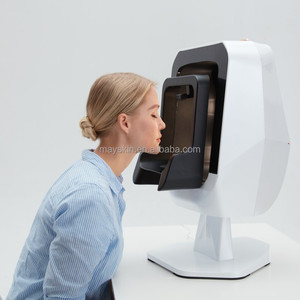
When selecting skin diagnostic equipment for clinical or research facility deployment in Malaysia, procurement teams must understand the architectural distinction between basic digital surface cameras and medical-grade multi-spectral 3D diagnostic scanners.
| Diagnostic Parameter | Legacy Surface RGB Cameras | Advanced 3D AI Multi-Spectral Diagnostic Systems |
|---|---|---|
| Illumination Modalities | Single White Light LED (Standard RGB) | Up to 9 Spectra (Parallel-Polarized, Cross-Polarized, 365nm UV, Wood's Light, RBX) |
| Depth of Sub-Surface Visualization | 0.0mm (Surface Layer Only) | Up to 2.5mm (Dermal-Epidermal Junction & Deep Vascular Architecture) |
| Barrier Integrity Assessment | Qualitative Visual Score (Subjective) | Quantitative TEWL Index, Hydration Dielectric Score, Pore Depth ($\mu\text{m}$) |
| Repeatability & Alignment | Manual Positioning (High Operator Variance) | 3D Spatial Facial Recognition & Automated Morphological Registration |
| Tropical Environmental Compensation | None (High Error Rate in Humid Environments) | Integrated Software Thermal/Humidity Calibration Algorithms |
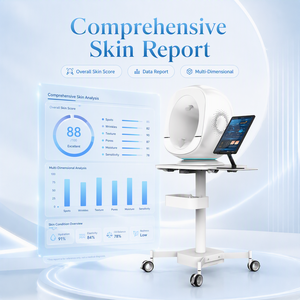
| Clinical Report Generation | Basic Image Snapshot | 30+ Dimension AI Diagnostics with Custom Treatment Mapping & Multilingual Support (19-25 Languages) |
4. Clinical Application Scenarios in Malaysian Practices
Scenario A: Post-Laser Barrier Recovery Protocol in Medical Aesthetics (Kuala Lumpur)
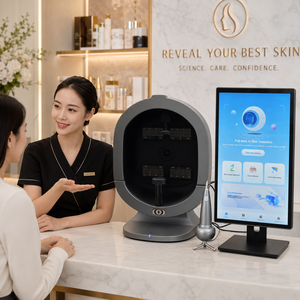
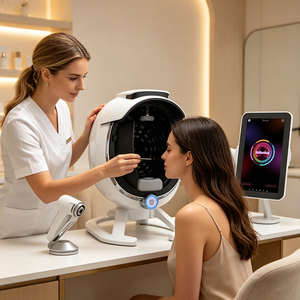
A premier aesthetic clinic in Bukit Bintang, Kuala Lumpur, performs high-fluence Picosecond fractional laser resurfacing for acne scar revision. Post-treatment, patients exhibit significant thermal erythema and stratum corneum disruption. By utilizing the A6 3D Facial Scanner or All in One 3D Camera Machine, the attending medical practitioner captures baseline multi-spectral scans at Day 0, Day 3, Day 7, and Day 14.
The cross-polarized spectrum isolates hemoglobin changes to track erythema subsidence, while the 3D surface topography module measures micro-crusting and epidermal smoothing. This objective data proves to the patient that the prescribed ceramide barrier-repair regimen is accelerating healing, thereby reducing post-op consultation overhead and boosting patient compliance.
Scenario B: Cosmeceutical Efficacy Trials at R&D Labs (Selangor)
A biotechnology firm based in Shah Alam, Selangor, is formulating a novel botanical extract designed to restore skin barrier lipids destroyed by daily UV and urban pollution exposure. To publish peer-reviewed clinical claims and secure Halal certification validation, the lab integrates the Scientific Research Anti Aging Verification 3D Skin Analyzer.
The system's 30+ detection dimensions enable researchers to measure statistically significant changes in pore volume reduction, sebum-hydration ratio stabilization, and micro-texture refinement over a 12-week double-blind clinical trial group.
Factory Compliance & International Standards Assurance
All 8 skin diagnostic devices manufactured and exported to Malaysia comply with international electrical safety, optical radiation safety, and ISO standards (ISO 13485 / CE mark certified). Software packages feature native support for English, Bahasa Melayu, Simplified Chinese, and 22 additional international languages for effortless clinical onboarding.
5. Manufacturing Excellence & B2B Supply Chain Infrastructure
As a leading original equipment manufacturer (OEM) and direct factory source serving Southeast Asia, our manufacturing facilities adhere to rigorous precision optic and medical instrument assembly standards. Producing reliable skin barrier diagnostic systems demands micro-precision optical engineering:
- High-Resolution CMOS Image Sensors: Equipped with industrial Sony imaging sensors offering resolutions up to 36 megapixels for uncompromised micro-relief sharpness.
- Custom Optical Lenses: Custom-ground multi-coated glass lenses designed to prevent chromatic aberration across UV, Visible, and Infrared light bands.
- Solid-State LED Illumination Matrix: High CRI (Color Rendering Index > 95) LEDs engineered for color temperature stability over 50,000 operational hours, ensuring baseline measurements remain consistent year after year.
- Direct OEM/ODM Customization: Full capability to supply custom housing branding, tailored clinical diagnostic software interfaces, SDK/API cloud server integration, and localized power configuration (US/EU/UK standard compatible with Malaysia's Type G electrical outlets).