
Advanced Multispectral Melanin & Facial Diagnostics Systems
Explore our standardized OEM/ODM portfolio of spectral analyzers, 3D dermal scanners, and quantitative pigment measurement tools exported across Johannesburg, Cape Town, Pretoria, and Durban.

X5PRO 9-Spectral AI Facial Skin Analyzer Machine for Face Moisture Pores Wrinkles UV Spot Analysis
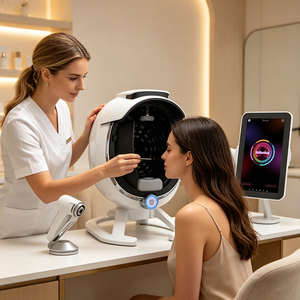
2026 Newest A6 3D Facial Scanner Skin Analyzer 8 Spectrum AI Machine For Blackheads & Pores Depth Detection
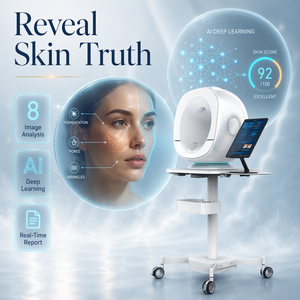
All in One Facial Skin Analyzer Machine 3D Camera 4 Spectra 8 Intelligent Images AI Analysis Clinical Scanner
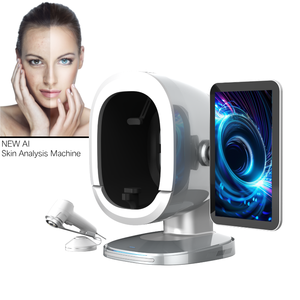
Newest 3D AI Intelligent Skin Analyzer Face Scanner Skin Analysis Machine Supporting 19 Multi-Language Systems
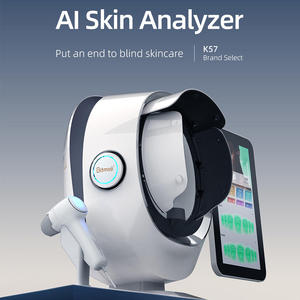
High Quality Portable Facial Analysis Skin Monitor Analyzer 3D Digital Diagnostic Machine for Aesthetic Clinics

Newest X3-Pro Skin Analyzer Facial Scanner for Resellers & Distributors with 25 Languages & Cloud Integration
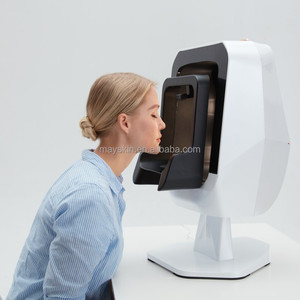
Meicet Mc88 Professional Facial Scanners Beauty Machine Smart Skin Moisture & Pigmentation Tester
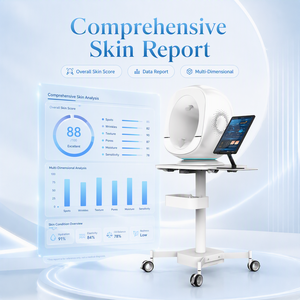
Scientific Research Anti Aging & Pigment Verification 3D Skin Analyzer Machine with 30+ Detection Dimensions
Quantitative Melanin Bio-Imaging in Diverse African Skin Phenotypes
Overcoming the limitations of qualitative visual scales through narrowband optical reflectance and photometric stereo decomposition.
Biophysical Optics of Melanin Detection
Melanin optical quantification relies on differential light absorption across specific wavelengths of the electromagnetic spectrum. Epidermal melanin absorbs light strongly in the ultraviolet (UV) and short visible regions, decaying exponentially toward the near-infrared (NIR) spectrum. Our skin melanin measurement devices utilize Narrow-Band Reflectance Spectrophotometry (NBRS) coupled with multispectral illumination (ranging from 365nm UV to 850nm NIR). By measuring the precise diffuse reflectance coefficient $R_{\lambda}$, the system isolates epidermal melanin concentration from dermal hemoglobin ($Hb$ and $HbO_2$) interference, calculating a calibrated Melanin Index (MI):
MI = 100 * log10(1 / R_red)
Fitzpatrick Types IV–VI & PIH Challenges
In South Africa’s multi-ethnic demographic landscape—where Fitzpatrick Skin Types IV, V, and VI represent a major proportion of clinical consultations—dermal melanosome density is significantly elevated. Traditional dermatoscopy often fails to distinguish hyperpigmentary disorders (such as melasma, post-inflammatory hyperpigmentation [PIH], and solar lentigines) from underlying vascular erythema. Our 3D imaging hardware employs cross-polarized filter arrays that eliminate stratum corneum specular glare, revealing deep melanocyte activity and dermal pigment migration with micron-level spatial resolution.
Photometric Stereo Topography
Based on technology refined over 15 years of clinical research (originally established in landmark systems like the Antera 3D® engine), our skin scanners capture surface lighting from multiple independent angles. By mathematical inversion of the shading model, the software reconstructs the 3D surface topography of the skin simultaneously with chromophore distribution maps. This allows dermatologists and cosmetic researchers to separate structural skin changes (wrinkles, pores, roughness) from pigmentation density (melanin distribution).
OEM/ODM Manufacturing Rigor & South Africa Export Architecture
Delivering high-precision, clinically validated diagnostic hardware from world-class manufacturing lines to South African medical facilities.
Manufacturing & Calibration Standards
As a global manufacturer and exporter specializing in dermatological analysis systems, our production facilities strictly comply with ISO 13485 Quality Management Systems for medical devices. Each melanin measurement device undergoes rigorous spectral optical calibration against NIST-traceable reflectance standards. Our multi-element lens assemblies feature anti-reflective coatings tailored for NIR and UV light transmission, maintaining intra-device measurement variances under 0.02% across ambient temperature shifts.
South African B2B Logistics & Customs Compliance
We provide streamlined B2B shipping pathways directly into South Africa’s main economic hubs, including Johannesburg (OR Tambo hub), Cape Town International, and Durban Port. Our export documentation packages include full CE declarations of conformity, RoHS compliance certificates, electrical safety testing reports, and optimized HS codes (e.g., 9018.90 for electro-medical instruments) to streamline customs clearance via the South African Revenue Service (SARS) and support local SAHPRA registration processes.
SDK & Custom Software Integration
For academic institutions, contract research organizations (CROs), and cosmetic manufacturers in South Africa, our engineering team offers custom software development kits (SDKs). Integrate objective Melanin Index (MI), Erythema Index (EI), and 3D surface volume measurements directly into private clinical databases or clinical trial management software. Systems support multi-language GUIs (including English, Afrikaans, French, and Portuguese) to facilitate broader African continental deployment.
Localized Application Scenarios Across South African Sectors
How private aesthetic practices, research labs, and pharmaceutical firms in Gauteng, Western Cape, and KwaZulu-Natal utilize quantitative melanin diagnostics.
Aesthetic Dermatology Clinics in Sandton & Rosebank
High-end medical aesthetic clinics in Johannesburg’s northern suburbs frequently perform laser skin resurfacing, Q-switched Nd:YAG procedures, and chemical peels on patients with Fitzpatrick Phototypes III–V. Establishing baseline Melanin Index (MI) maps prior to energy-based treatments is critical to prevent post-laser hyperpigmentation. Using our handheld and facial analyzers, clinicians can track sub-clinical melanin migration, optimizing laser fluences and quantifying depigmentation therapy success over 6- to 12-week intervals.
Cosmeceutical Clinical Trials in Western Cape
Contract Research Organizations (CROs) and university research units in Cape Town conduct clinical efficacy trials for topical depigmentation agents (such as niacinamide, kojic acid, tranexamic acid, and tyrosinase inhibitors). Replacing subjective visual grading scales with our high-resolution multispectral analysis provides publication-ready numerical delta metrics ($\Delta MI$), proving statistically significant reduction in epidermal pigmentation for global regulatory filings.
High-UV Exposure Solar Damage Clinics in Durban & Coastal KZN
KwaZulu-Natal’s subtropical climate exposes residents to consistently high UV indices year-round, leading to actinic keratosis, solar elastosis, and localized mottled hyperpigmentation. Coastal dermatology practices utilize our UV-spectrum mapping (365nm band) to expose hidden sun damage in deep epidermal layers before it becomes visible to the naked eye, driving preventative patient compliance and targeted UV-protection regimens.
South Africa Market Trends & Regulatory Dynamics
Analyzing demographic shifts, SAHPRA regulatory mandates, and the rising demand for safe skin-brightening diagnostics.
1. Shift from Hazardous Bleaching to Objective Diagnostics
South Africa’s Department of Health has imposed stringent prohibitions on illegal skin-lightening products containing hydroquinone, mercury, and potent topical corticosteroids. Consequently, the legal cosmetic market has shifted dramatically toward scientifically validated, non-toxic depigmenting formulations. Practitioners and skincare clinics now rely on quantitative melanin index scanners to monitor gradual, safe pigment reduction, establishing client trust through transparent digital data rather than dangerous quick-fix solutions.
2. SAHPRA & SABS Compliance Integration
The South African Health Products Regulatory Authority (SAHPRA) continues to enforce stricter oversight on non-invasive medical diagnostic equipment. Importing distributors require devices with comprehensive electrical safety compliance (IEC 60601-1) and electromagnetic compatibility (EMC) test certifications. As an established OEM manufacturer, our devices are supplied with ready-to-file technical dossiers that simplify import permitting and compliance verification by South African testing agencies (SABS).
3. Growth in Medical Tourism & Darker Skin Aesthetics
South Africa—particularly Cape Town and Johannesburg—remains a hub for medical tourism across Sub-Saharan Africa. Patients seeking advanced dermatological solutions for skin of color require precise diagnostic protocols. The integration of 3D skin depth imaging and multispectral melanin profiling positions South African clinics at the forefront of global aesthetic innovation for darker skin phototypes.
Technical Specification Matrix & Diagnostic Capabilities
Comparing core spectral parameters and optical measurements across our clinical skin analyzer models.
| Diagnostic Parameter | X5PRO 9-Spectral AI | A6 3D Facial Scanner | All-in-One 3D Camera | Handheld / Salon Portable |
|---|---|---|---|---|
| Illumination Spectra | 9 Bands (RGB, Cross-Polarized, Parallel-Polarized, UV 365nm, Wood's Light, NIR) | 8 Bands (Cross-Polarized, UV, Red/Green Light) | 4 Spectra / 8 Intelligent Light Angles | Dual-Polarized Light Engine |
| Melanin Quantification | Epidermal/Dermal Concentration Index (0–100 MI Scale) | Surface & Deep Melanin Spot Mapping | Multi-Dimensional Melanin & Vascular Separation | Qualitative & Relative Spot Density |
| Spatial Resolution | High Precision Optics (up to 15 Megapixels) | 12 Megapixels 3D Mapping Sensor | 10 Megapixels 3D Sensor | 5 Megapixels Macro Optical Sensor |
| 3D Topography Metrics | Roughness ($Ra, Rz$), Wrinkle Depth ($mm$), Pore Volume ($mm^3$) | Pore Depth & Surface Contour Depth | 3D Volumetric Contour Mapping | Basic Surface Texture Index |
| Target Application | Advanced Dermatology Clinics & CRO Research | Medical Aesthetics & Laser Centers | Polyclinics & Cosmeceutical Centers | Aesthetic Salons & Mobile Consultations |
| Export Compliance | CE Medical, ISO 13485, IEC 60601-1, SAHPRA Document Ready | CE, ISO 13485, RoHS | CE, ISO 9001, RoHS | CE, FCC, RoHS |
Frequently Asked Questions (Procurement & Clinical FAQ)
Addressing common technical, shipping, calibration, and operational questions from South African buyers.
Why Partner With Us: Scientific Authority & Production Scale
Building upon decades of bio-photonic engineering to deliver unmatched diagnostic performance.
Proven Clinical Research Pedigree
Rooted in scientific excellence validated by over 500+ published peer-reviewed medical papers, our underlying optical algorithms match the clinical stringency demanded by top-tier pharmaceutical labs, CROs, and academic dermatology institutes globally. We transform subjective visual skin observation into reproducible quantitative metrics.
Global B2B Supply Chain Excellence
Serving clients in more than 40 countries, our export supply chain is structured to provide fast, reliable delivery, zero-defect optical assembly, and standardized documentation. We support B2B importers, medical device distributors, and private hospital networks across Southern Africa with direct wholesale pricing and tailored OEM partnerships.
End-to-End Hardware & Software Ownership
From circuit design and optical light-engine alignment to proprietary AI software algorithms, we maintain total ownership over our diagnostic systems. This ensures long-term software updates, continuous algorithm improvement, continuous component availability, and prompt technical support without reliance on third-party licenses.
Request a Commercial Quotation or Clinical Specification Sheet
Connect directly with our international export engineering team to discuss B2B pricing, wholesale supply terms, OEM customization, and air-freight logistics to South Africa.
Contact Us