
Featured Multi-Spectral & 3D Facial Skin Analyzers
Engineered for high-accuracy pigment mapping, vascular erythema quantification, and surface texture diagnostic in South American skin phototypes.
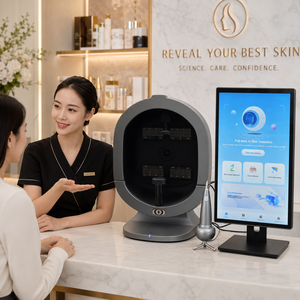
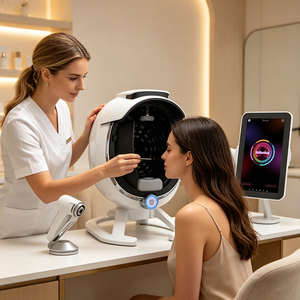
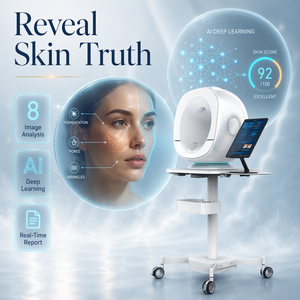
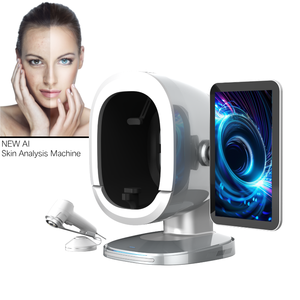
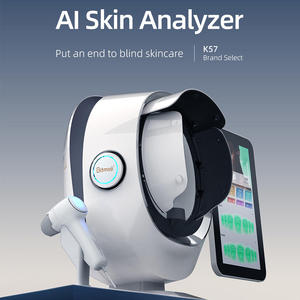
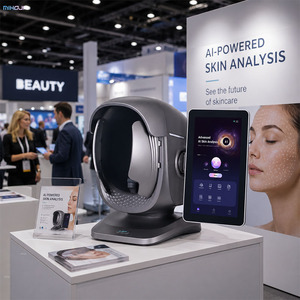
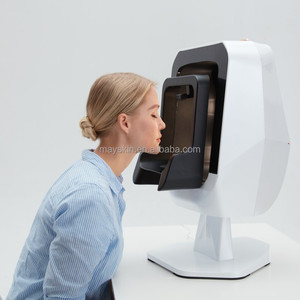
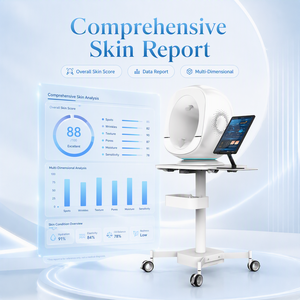
1. Biophysical Foundations of Skin Tone Uniformity & Quantitative Dyschromia Diagnostics
Skin tone uniformity is a primary visual indicator of dermatological health, youthful cellular turnover, and structural integrity. In aesthetic medicine and clinical dermatology, evaluating hyperpigmentation, erythema, and uneven melanin dispersion requires transitioning from subjective visual scales (such as Fitzpatrick skin typing or visual Melasma Area and Severity Index - MASI) to non-invasive, objective, optical-based quantitative measurement systems.
As an international medical-grade optics manufacturer and specialized exporter serving the Peruvian healthcare and aesthetic sectors, our skin tone uniformity scanners integrate Photometric Stereo 3D Topography alongside Multi-Spectral Polarized Light Mapping. By isolating light reflection wavelengths across RGB, Cross-Polarized, Parallel-Polarized, UV, and Wood's light spectra, our optical hardware mathematically unmixes skin CHROMOPHORES—specifically Melanin and Hemoglobin.
Optical Chromophore Unmixing Principle
Skin reflectance spectral data is governed by the modified Lambert-Beer law. By illuminating the skin under polarized narrow-band spectral configurations, our proprietary algorithms decouple epidermal surface reflections from deep dermal backscattering. This allows independent measurement of Epidermal Melanin Distribution Index (MDI) and Dermal Hemoglobin Concentration Index (HCI), eliminating confounding visual artifacts caused by oil, moisture, or surface texture geometry.
Key Diagnostic Metrics Quantified by Our Scanners
Melanin Dispersion Variance (ITA°)
Calculates the Individual Typology Angle (ITA°) across localized anatomical facial zones to track sun spots, solar lentigines, and post-inflammatory hyperpigmentation (PIH) with numerical repeatability.
Vascular Erythema & Hemoglobin Index
Isolates micro-vascular ectasia, telangiectasia, and rosacea-induced redness by mapping oxygenated and deoxygenated hemoglobin absorbances in cross-polarized light mode.
3D Roughness & Surface Topography (Ra/Rz)
Measures surface roughness (Ra) and micro-relief depth (Rz) utilizing multi-directional shadow analysis, isolating tactile unevenness from chromatic dyschromia.
2. Market Dynamics & Localized Application Scenarios in Peru
The Peruvian medical aesthetics, plastic surgery, and clinical dermatology markets are experiencing unprecedented growth. Cities such as Lima (Miraflores, San Isidro, Surco), Arequipa, Trujillo, and Cusco represent expanding hubs for cosmetic dermatology, laser skin resurfacing, and specialized depigmentation therapies.
Unique Environmental & Phototype Challenges in Peru
Operating a medical aesthetic clinic or cosmetic research hub in Peru requires addressing specific geographical and demographic skin profiles:
- High Solar Radiation & Andean UV Indices: Peru experiences some of the highest solar UV radiation levels globally due to its equatorial proximity and high-altitude Andean cities (where UV indices frequently exceed 14–16). This environment induces high rates of solar elastosis, stubborn melasma, and actinic dyschromia.
- Predominance of Fitzpatrick Phototypes III, IV, and V: The majority of the Peruvian population possesses skin phototypes III through V. These phototypes carry a significantly elevated risk of Post-Inflammatory Hyperpigmentation (PIH) following invasive procedures (e.g., Q-switched Nd:YAG, Picosecond lasers, chemical peels, micro-needling).
- Coastal Atmospheric Contrast vs. High-Altitude Aridity: High coastal humidity in Metropolitan Lima contrasts sharply with the low atmospheric humidity and intense UV exposure of high-altitude regions like Cusco and Arequipa, resulting in distinct skin barrier disruption patterns and localized tone unevenness.
Localized Clinical Application Scenarios for Peruvian Practices
| Clinical Application Scenario | Peruvian Target Demographic / Region | Optical Scanner Diagnostic Objective | Clinical ROI / Value Metric |
|---|---|---|---|
| Pre- & Post-Depigmentation Protocol Audit | Aesthetic clinics in Lima & Trujillo handling stubborn Melasma patients. | Quantify sub-surface dermal vs. epidermal melanin depth under UV & Wood's spectrum prior to topical hydroquinone or cysteamine therapy. | 300% increase in patient treatment adherence through objective digital percentage-improvement reporting. |
| Laser & Energy-Based Device Safety Screening | Dermatology centers in Arequipa utilizing Picosecond, IPL, or CO2 Fractional Lasers. | Assess baseline vascular inflammation (hemoglobin density) to adjust fluence parameters and prevent post-laser PIH in Phototypes IV-V. | Zero incidence of unintended post-treatment hyperpigmentation lawsuits or patient dissatisfaction. |
| High-Altitude Solar Damage & Actinic Mapping | Medical spas and dermatologists in Cusco, Huancayo, and high-altitude Andean centers. | Detect invisible deep UV spots and actinic sun damage before macules become clinically visible on the epidermis. | Boost preventative sun care product sales and early-stage IPL/laser protocol consultations. |
| Cosmeceutical Product Efficacy Claims Verification | Peruvian skin care manufacturers, distributors, and contract research orgs (CROs). | Validate skin brightening, skin tone evening, and antioxidant cosmetic product performance with clinical statistical rigor. | Publication-ready scientific trial data supporting regional registration and commercial marketing claims. |
3. Enterprise Manufacturing Strengths & Technological Superiority
As a specialized manufacturer and global exporter of high-precision dermato-diagnostic equipment—benchmarked against world-class systems such as Miravex Antera 3D®—our factory incorporates rigorous ISO13485 quality control protocols, proprietary optical calibration, and modular AI software design.
Clinical-Grade Optical Repeatability
Our instruments utilize high-CRI (Color Rendering Index > 95) LEDs coupled with custom interference filters. This guarantees less than 1.5% variance between consecutive baseline scans, meeting strict international CRO clinical study standards.
Full 3D Elevation & Texture Mapping
Unlike standard 2D flat skin cameras, our systems capture 3D elevation topographies. This allows independent calculation of pore depth, fine lines, acne scarring volume, and surface smoothness (Ra, Rz) completely separated from color pigments.
Multi-Language & Localization Architecture
Software interfaces natively support 25 languages including Spanish (Español Neutral) and English. Includes customized patient report generation with clinic branding, exportable PDF/Excel formats, and cloud CRM backup compatibility.
4. Localized Procurement FAQs for Peruvian Importers & Clinics
Direct responses to common logistical, regulatory, and technical inquiries from buyers in Lima, Arequipa, Trujillo, and regional Peru.