
Featured Cosmetic R&D Analytical Instruments
Export-grade optical skin analyzers, 3D surface profilers, and multi-spectral scanners engineered for rigorous cosmetic formulation testing and clinical efficacy documentation in Manila.
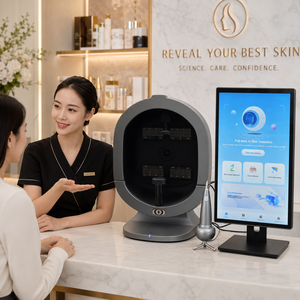
X5PRO 9-Spectral AI Facial Skin Analyzer Machine
- 9 Optical Light Spectra (UV, RGB, PL, Wood's)
- Deep Moisture & Sub-Dermal Pigment Analysis
- US/EU Power & Protocol Compatible
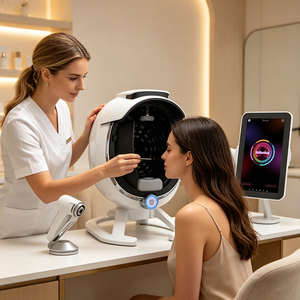
2026 Newest A6 3D Facial Scanner Skin Analyzer
- 8 Spectrum High-Resolution AI Sensor
- Blackhead & Pore Volumetric Depth Profiling
- Clinical Anti-Aging Efficacy Tracking
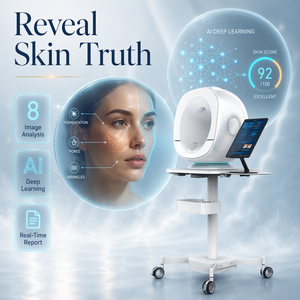
All in One Facial Skin Analyzer Machine 3D Camera
- 4 Precision Optical Spectra Imaging
- 30+ Quantitative Skin Parameters
- Automated Clinical Report Generator
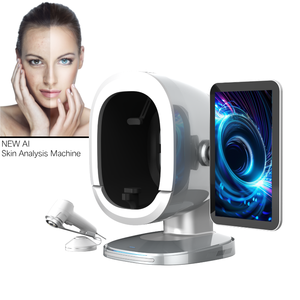
Newest 3D AI Intelligent Skin Analyzer Face Scanner
- Multi-Lingual System (19 Languages)
- High-Density Dermal Topography Map
- Ideal for R&D Formulation Benchmarking
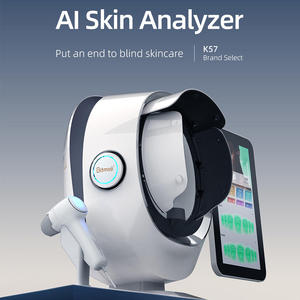
Portable 3D Digital Facial Analysis Skin Monitor
- Compact Ergonomic Lab Design
- Real-Time Sebum & Hydration Metering
- High Precision Optical Zoom Lens
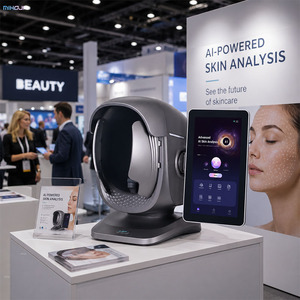
Newest X3-Pro Commercial Facial Scanner Analyzer
- 25 Language Software Architecture
- Wi-Fi Direct Cloud Database Integration
- Precision Vascular & Redness Analysis
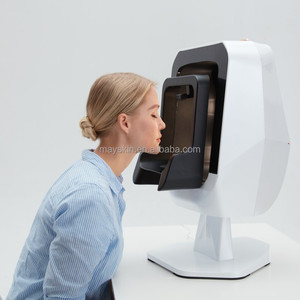
Meicet Mc88 Smart Quantitative Skin Analyzer
- Cross-Polarized Light Sub-Surface Profiling
- Epidermal Melanin Concentration Index
- Rigid Calibration for Lab R&D Repeatability
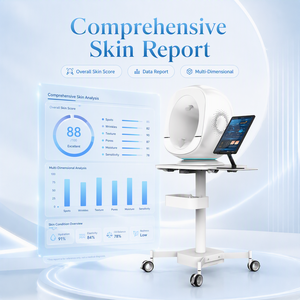
Scientific Research Anti-Aging 3D Skin Profiler
- Clinical-Grade 30+ Dimension Mapping
- 4 Spectra / 8 Intelligent Image Engine
- Designed for CRO Efficacy Verification
Navigating the Manila Cosmetic R&D & OEM/ODM Manufacturing Ecosystem
Strategic insights into formulation science, regulatory compliance (FDA Philippines), and climate-adapted skincare engineering in Metro Manila and CALABARZON industrial hubs.
Shift Toward Clinical Efficacy Claims in the Philippines
The cosmetic industry in Metro Manila—spanning key manufacturing nodes in Valenzuela, Quezon City, Pasig, and nearby industrial zones like Laguna International Industrial Park—is undergoing a rapid transition from basic OEM filling to sophisticated product formulation. Driven by strict enforcement of the ASEAN Cosmetic Directive (ACD) and FDA Philippines Administrative Order No. 2015-0038, local brands can no longer rely on superficial marketing claims. Quantitative validation of skin whitening, UV protection, barrier restoration, and anti-acne efficacy is now a imperative prerequisite for market registration and consumer trust.
Formulation Challenges for Tropical & High-Humidity Climates
Manila's tropical climate, characterized by elevated ambient temperatures (averaging 28°C to 34°C) and relative humidity exceeding 80%, presents unique dermatological conditions. Consumers experience heightened sebum secretion, enlarged pore visibility, hyperpigmentation from intense solar irradiance, and elevated risk of pollution-induced skin inflammation. Modern R&D equipment exported to Manila must be capable of precise sub-surface melanin tracking, sebum excretion indexing, and transepidermal water loss (TEWL) measurement under high heat and humidity constraints.
Technical Breakthrough: Photometric Stereo Spectroscopy vs. Legacy Skin Profiling
Why leading cosmetic scientists and CRO laboratories in the Philippines are adopting multi-spectral 3D skin analysis technology over traditional visual inspection methods.
| Analytical Parameter | Legacy Wood's Lamp / 2D Imaging | Advanced 3D Multispectral AI R&D Equipment | R&D Value for Manila Manufacturers |
|---|---|---|---|
| 3D Topography & Wrinkles | Qualitative 2D shadow visual assessment | Quantitative depth, volume (mm³), & rough roughness (Ra, Rz) | Validates anti-aging peptide efficacy within 14-day trials. |
| Melanin & Hemoglobin Separation | Overlapped RGB surface color photography | Spectral separation of epidermal melanin & dermal hemoglobin | Accurate testing for local whitening actives (Papain, Kojic Acid). |
| Pore & Sebum Quantification | Manual pore counting via magnification glass | Automated volumetric pore profiling & sebaceous pore distribution | Essential for mattifying & non-comedogenic formulation validation. |
| Repeatability & Positioning | High intra-observer error rate (>25%) | Sub-millimeter optical alignment with AI landmark tracking (<1.5% variance) | Publication-grade data for clinical dossiers submitted to regulatory bodies. |
| UV & Sun Damage Mapping | Basic superficial fluorescent reflection | Deep UV multispectral sub-surface photodamage quantification | Proves SPF & PA++++ post-sun exposure recovery performance. |
Photometric Stereoscopy
By illuminating the skin surface from multiple calibrated directions using LED light arrays, our analyzers calculate exact surface normals to reconstruct micro-relief 3D topography without physical contact.
Sub-Surface Optical Mapping
Utilizing targeted light absorption coefficients, the system isolates melanin chromophores from vascular erythema, giving R&D chemists clear quantitative data on sub-surface spot clearance.
AI-Powered Efficacy Scoring
Machine learning algorithms trained on over 500,000 Asian skin profiles evaluate baseline vs. post-treatment scans, automatically producing statistical significance charts (p-value calculation ready).
Top 10 Essential Cosmetic Manufacturer R&D Equipment Categories
A comprehensive purchasing blueprint for R&D Directors, QC Managers, and OEM/ODM Laboratory Exporters operating in the Philippines.
Multi-Spectral 3D Facial Skin Analyzers
The cornerstone of modern claim substantiation. Combines RGB, Cross-Polarized, Parallel-Polarized, and UV spectra with high-definition 3D sensors to map fine lines, pore volumes, moisture levels, and subsurface pigmentation changes quantitatively over time.
High-Precision Rotational Rheometers & Viscometers
Essential for evaluating cosmetic emulsion stability, shear thinning properties, yield stress, and texture consistency across extreme climate storage conditions typical of the Southeast Asian region.
Vacuum Emulsifying Pilot Homogenizers
Enables benchtop-to-production scale-up of nano-emulsions, creams, and serums. Precise control over agitation speed, vacuum degassing, and jacketed heating ensures droplet uniform sizes under 2 microns.
In-Vitro SPF & Sun Protection Analysis Systems
Measures critical wavelength, broad-spectrum UV protection, UVA/UVB absorption ratios, and photostability of sunscreen lotions prior to costly human in-vivo clinical testing.
Digital Transepidermal Water Loss (TEWL) Meters
Quantifies skin barrier function integrity and water evaporation rates. Crucial for formulating barrier-repair creams, ceramide lotions, and intense hydration products targeting damaged skin barriers.
Accelerated Stability Test Cabinets & Photostability Chambers
Simulates harsh climate conditions (40°C / 75% RH) to evaluate active ingredient degradation, phase separation, color shifting, and packaging interactions for products exported from Manila.
High-Performance Liquid Chromatography (HPLC) Systems
Provides analytical concentration verification of key bioactive compounds—such as Niacinamide, Retinol, Vitamin C, and Hydroquinone limits—ensuring strict adherence to regulatory safety standards.
Laser Diffraction Particle Size Analyzers
Monitors micro-encapsulation efficiency, pigment dispersion uniformity in color cosmetics, and emulsion droplet size distribution to prevent creaming or sedimentation over extended shelf lives.
Automated Texture Analyzers for Cosmetics
Measures mechanical attributes including firmness, stickiness, spreadability, payout, and extrusion force for lipsticks, gels, compact powders, and thick cosmetic balms.
Microbiological Challenge & Preservative Efficacy Testing Units
Ensures cosmetic formulations remain free from bacterial and fungal contamination under tropical conditions, fulfilling ASEAN Cosmetic Directive antimicrobial efficacy requirements.
Localized Application Scenarios in Manila Cosmetic R&D Labs
How leading Philippine formulation engineers utilize multi-spectral skin profiling equipment across real-world research workflows.
Scenario A: Whitening Active Validation
Goal: Prove the depigmenting efficacy of a new Kojic Acid & Niacinamide serum on Fitzpatrick Type IV-VI skin.
Method: Baseline skin scans record epidermal melanin indices. Subjects apply serum twice daily over 28 days. Multispectral cross-polarized light isolates deep brown spots, revealing statistically significant reductions in melanin density without skin redness.
Scenario B: Anti-Pollution & Barrier Repair
Goal: Benchmark urban skin recovery for formulations sold in high-density areas like Metro Manila.
Method: 3D micro-topography maps skin roughness (Ra values) before and after environmental dust exposure. Post-treatment application of ceramide barrier cream shows accelerated micro-relief smoothing and a 42% decrease in transepidermal moisture loss.
Scenario C: Sebum Control & Pore Reduction
Goal: Validate claims for mattifying clay masks and anti-acne toner formulations.
Method: Parallel-polarized lighting highlights surface shine while 3D volumetric analysis calculates exact pore opening depths. R&D teams obtain concrete percentage reductions in active pore volume to print directly on product packaging.
Why Global Cosmetic Brands Trust Our R&D Manufacturing Direct Export
From precision optical engineering to localized technical installation in Manila—delivering end-to-end reliability, calibration, and support.
Strict ISO 13485 Manufacturing
Our state-of-the-art optical hardware production lines adhere to international ISO 13485 quality standards, ensuring zero drift in LED light spectrum output across thousands of measurement cycles.
Open SDK & Data Integration
Easily export raw DICOM image files, CSV quantitative matrices, and automated PDF clinical trial summaries into your lab’s Enterprise LIMS or statistical modeling software.
Direct Factory Technical Support
We provide direct air-freight export to Manila, complete with custom pre-calibration for 220V/60Hz grid standards, remote engineer calibration, and rapid localized replacement parts dispatch.
Frequently Asked Questions by Manila Procurement Managers
Everything you need to know about importing, calibrating, and utilizing clinical skin analyzers for cosmetic R&D in the Philippines.
Q: How do your 3D skin analyzers help Manila manufacturers comply with FDA Philippines standards?
Under FDA Philippines regulations and ASEAN Cosmetic Directive guidelines, cosmetic manufacturers making specific efficacy claims (such as anti-wrinkle, skin brightening, sun defense, or oil control) must hold verifiable technical documentation. Our 3D skin analyzers convert qualitative visual changes into objective, reproducible numerical data (e.g., melanin concentration reduction percentages, volumetric wrinkle depth in mm³). This empirical data provides robust scientific evidence for your product safety and efficacy dossiers submitted during regulatory audits.
Q: Are these devices pre-configured for the 220V/60Hz electrical supply used in the Philippines?
Yes, absolutely. All equipment manufactured for export to Manila and the surrounding provinces is configured with wide-range power supplies supporting 100V–240V at 50/60Hz, fitted with standard Type A/B or Type G electrical plugs compatible with Philippine commercial lab outlets. In addition, optical sensors feature built-in voltage surge filtering to maintain measurement stability under variable laboratory power conditions.
Q: Can high humidity in Manila impact optical skin measurement accuracy?
High ambient humidity can introduce surface moisture artifacts if uncorrected. Our clinical skin analyzers incorporate sealed optical housings, anti-fogging coated lens assemblies, and dynamic lighting calibration algorithms. Software protocols include humidity compensation baselines, ensuring that epidermal reflection and sebum readings remain perfectly accurate whether testing is conducted in climate-controlled cleanrooms or standard R&D facilities in Luzon.
Q: What is the typical logistics lead time for shipping equipment to Manila factories?
We offer expedited air-freight export direct to Ninoy Aquino International Airport (NAIA) or sea-freight through the Port of Manila. Standard air shipping lead times range from 5 to 9 business days, including door-to-door customs clearance assistance. Every shipment is packaged in heavy-duty flight cases with internal shock absorbers and moisture-absorbent silica barriers to guarantee immaculate hardware condition upon arrival.
Q: Does the software support multiple languages and custom lab branding?
Yes. Our analysis software supports over 19 to 25 languages, including English and custom localized report formats. Philippine OEM/ODM exporters can easily brand generated PDF diagnostic reports with their own laboratory logo, company credentials, clinical trial metadata, and customizable parameter thresholds tailored specifically for local or export client presentations.
Q: What warranty and technical calibration services are provided post-purchase?
All R&D skin analysis machines come standard with a 2-Year Full Factory Warranty and lifetime software updates. We provide remote setup support, video call calibration guidance, and standardized optical calibration targets. If maintenance is required, our engineering team provides rapid component replacement dispatch to ensure minimal downtime for your formulation trial schedules in Metro Manila.
Upgrade Your Cosmetic R&D Lab in Manila Today
Get direct factory pricing, comprehensive technical specifications, and clinical study whitepapers tailored for Philippine OEM/ODM cosmetic manufacturers and exporters.