
Featured Clinical 3D Skin Analysis Machines & Systems
Verified diagnostic instruments compliant with international medical aesthetic standards, available for expedited shipment to Mexico.

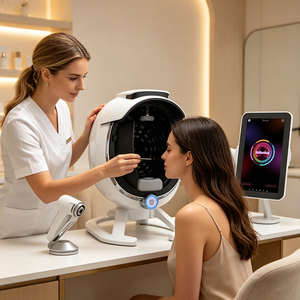
X5PRO 9-Spectral AI Facial Skin Analyzer Machine
- 9 High-Resolution Light Spectra
- Deep Moisture & Pore Mapping
- US/EU Compatible Dual Voltage
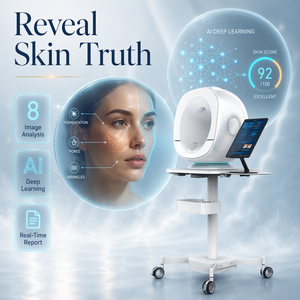
2026 Newest A6 3D Facial Scanner Skin Analyzer 8 Spectrum AI
- 8 Spectral AI Sub-Dermal Detection
- Blackhead & Pore Depth Profiling
- Real-time 3D Mesh Reconstruction
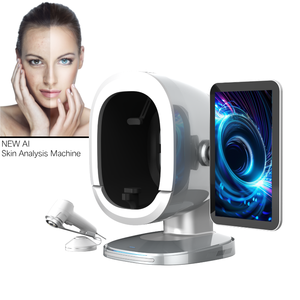
All in One Facial Skin Analyzer Machine 3D Camera 4 Spectra
- 30+ Diagnostic Parameters
- Clinical CRO Grade Imaging
- Automated Consultation Reports
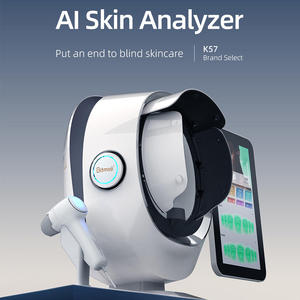
Newest 3D AI Intelligent Skin Analyzer Face Scanner 19 Languages
- 19 Language Interface (Inc. Spanish)
- High Sensitivity Optoelectronic Sensor
- Exportable Medical Data Files
High Quality Portable Facial Analysis Skin Monitor 3D Digital
- Compact & Ergonomic Chassis
- Rapid Optical Capture (<3 Sec)
- Designed for MedSpas & Salons

Newest X3-pro-Skin-Analyzer Facial Scanner 25 Languages
- 25 International Multi-Language Support
- Wireless Cloud Sync & Database
- Reseller & Distributor Firmware Option
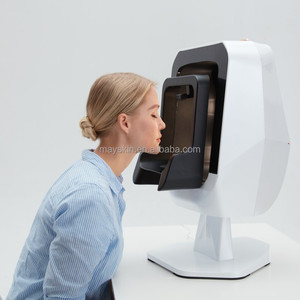
Meicet Mc88 Professional Facial Scanner Smart Skin Analyzer
- Smart Hydration & Sebum Sensor
- Comprehensive Aging Index Score
- Salon & Clinic Management Software
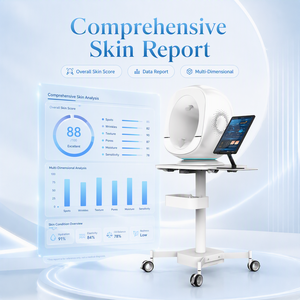
Scientific Research Anti Aging Verification 3D Skin Analyzer
- 30+ Quantitative Metrics (Ra, Rz, Volume)
- 4 Light Spectra + Sub-Dermal Pigment
- Clinically Validated Efficacy Tracking
The Evolution of 3D Dermal Diagnostics & Spectral Analysis in Mexico
Unlocking Quantitative Precision for Aesthetic Medicine, Clinical CROs, and Cosmetic R&D Across Latin America
The Mexican medical aesthetic and dermatological landscape has undergone a profound paradigm shift over the last decade. Rapid urbanization, combined with rising disposable income and booming medical tourism hubs in cities such as Mexico City (CDMX), Guadalajara, Monterrey, Tijuana, and Cancún, has elevated patient expectations. Modern patients no longer accept subjective visual consultations; they demand empirical, data-driven validation before committing to costly aesthetic interventions, anti-aging therapies, or laser resurfacing treatments.
Central to this transformation is the shift from conventional 2D RGB skin photography to advanced 3D photometric stereo imaging and multispectral optical analysis—pioneered globally by systems like the Antera 3D® (originally developed by Miravex Limited) and leading OEM/ODM clinical-grade skin analyzers manufactured in specialized high-tech factories. Traditional 2D flat imagery fails to capture the structural topography of the skin, such as fine line depth, pore volume, depression contours, and spatial roughness. Furthermore, standard flash photography is severely hindered by surface glare and ambient lighting inconsistency.
In contrast, modern 3D skin analysis devices utilize controlled, multi-directional illumination combined with precise mathematical algorithms (photometric stereoscopy) to reconstruct a millimeter-precise three-dimensional topography of the skin surface. By illuminating the skin with specific light wavelengths—ranging from cross-polarized white light to ultraviolet (UV) and narrow-band spectral LEDs (visible blue 465nm, green 525nm, red 630nm, and near-infrared 850nm)—these instruments mathematically separate the reflectance of melanin and hemoglobin from structural surface variations.
For importers, distributors, and clinic owners in Mexico, selecting a direct-from-factory manufacturing partner with proven export expertise guarantees not only access to cutting-edge optoelectronic hardware but also full compliance with regional regulatory standards (such as COFEPRIS customs clearances, electrical NOM certifications) and localized software support in Spanish.
Technical Breakdown: Photometric Stereo 3D vs. Standard RGB/UV Analyzers
Understanding the Optical Physics of Sub-Dermal Light Absorption and Dermal Surface Mapping
To appreciate why high-end dermatology practices in Mexico are upgrading to 3D multispectral instruments, one must examine the optical physics governing skin imaging. Skin color and texture are defined by two distinct physical properties: surface topography (wrinkles, pores, scars) and chromophore distribution (melanin concentration in the epidermis, vascular hemoglobin in the dermis).
| Diagnostic Feature | Traditional 2D RGB/UV Analyzers | Antera 3D® & Advanced 3D Multi-Spectral Systems |
|---|---|---|
| Surface Topography | Qualitative 2D visual estimates; susceptible to shadows | Quantitative 3D surface depth (Ra, Rz values), pore volume in mm³ |
| Melanin Quantification | Estimated by RGB pixel darkness (confounds redness & dark skin) | Spectral absorption analysis isolating pure melanin distribution |
| Vascular & Redness Mapping | Basic red-channel extraction; high margin of error | Hemoglobin separation tracking telangiectasia, rosacea, and erythema |
| Wrinkle Measurement | Length & area in pixels only | True physical depth (µm), width, volume, and mean depression profile |
| Lighting Sensitivity | Requires darkroom box setup; high spatial footprint | Handheld/compact enclosed LED optics, immune to ambient light variability |
| Clinical Efficacy Proof | Basic subjective visual side-by-side matching | Statistical % reduction graphs, heatmaps, and publication-ready metrics |
By utilizing multi-wavelength LEDs and cross-polarized optics, advanced 3D skin analyzers emit light that penetrates the skin to specific, controlled depths. Because melanin absorbs light primarily in the blue-green spectrum while hemoglobin absorbs strongly in the green-yellow spectrum, the device's internal camera captures multiple images under varying illumination angles. Proprietary mathematical algorithms compute the differential light intensity to derive an absolute chromophore concentration map.
This degree of quantitative precision offers a significant competitive edge for Mexican clinical trial centers, cosmetic contract research organizations (CROs), and aesthetic dermatologists who must prove treatment efficacy for procedures such as IPL (Intense Pulsed Light), Q-switched lasers, microneedling RF, and chemical peels.
Localized Application Scenarios Across Mexican Aesthetic & Clinical Sectors
Addressing Fitzpatrick Types III–V, Solar Elastosis, and High-Growth Aesthetic Trends in Mexico
Melasma & PIH Tracking in High-UV Zones
In sunny coastal and high-altitude regions of Mexico (e.g., Cancún, Cuernavaca, CDMX), UV exposure leads to high rates of melasma and Post-Inflammatory Hyperpigmentation (PIH) among patients with Fitzpatrick skin types III through V. 3D spectral analyzers precisely isolate hyper-pigmented lesions from underlying vascular redness, preventing over-treatment with laser wavelengths that could trigger rebound hyperpigmentation.
Injectable & Dermal Filler Volumization
Mexican aesthetic clinics specializing in Hyaluronic Acid (HA) fillers, biostimulators (Sculptra, Radiesse), and Botulinum Toxin injections rely on 3D volumetric analysis. The software calculates exact volume gains (in cubic millimeters) in the nasolabial folds, cheekbones, and tear troughs post-injection, proving immediate tangible ROI to patients and boosting clinic retention rates.
Cosmetic R&D Efficacy Validation
Mexican skincare formulation labs and cosmetic manufacturers require empirical proof to back marketing claims such as "reduces fine lines by 35% in 14 days." By utilizing standardized 3D dermal topography (measuring Ra surface roughness and Rz maximum peak-to-valley height), cosmetic manufacturers produce publication-grade statistical data for domestic and export market approval.
Direct Factory Advantages & Supply Chain Excellence for Mexican Importers
Unrivaled OEM/ODM Capability, Regulatory Assurance, and Technical Support Ecosystem
Sourcing clinical diagnostic equipment across international borders requires a manufacturing partner who understands both optical engineering excellence and international logistics. As a primary exporter serving the Mexican market, our manufacturing infrastructure delivers comprehensive end-to-end benefits designed to maximize distributor profitability and operational reliability:
ISO 13485 & CE/FDA Standards
Our state-of-the-art manufacturing facilities operate under strict ISO 13485 medical device quality management systems. Every optical sensor, camera module, and LED array undergoes rigorous calibration against NIST-traceable physical standards before shipment.
Complete Spanish Localization
All diagnostic software, patient-facing PDF reports, user manuals, and training video courses are fully localized into native Spanish (Español de México), ensuring zero operational barriers for your clinical staff or client base.
Seamless COFEPRIS & Logistics
We provide full regulatory documentation packages (Certificates of Free Sale, ISO certificates, technical datasheets, schematics) required for COFEPRIS registration and smooth customs clearance through major Mexican ports (Manzanillo, Veracruz, CDMX Airport).
OEM/ODM Firmware & Branding
For large aesthetic clinic chains, franchise networks, or regional equipment brands in Mexico, we offer full OEM customization, including custom chassis colorways, laser-engraved logos, custom GUI branding, and tailored software reports.
B2B Buyer FAQ: Importing & Operating 3D Skin Analyzers in Mexico
Clear Answers for Medical Distributors, Procurement Managers, and Clinic Directors
How does an Antera 3D® equivalent device differ from lower-cost 2D face scanners?
Lower-cost 2D face scanners rely primarily on basic RGB camera photos taken inside a plastic darkbox with standard LED illumination. They calculate "wrinkles" and "pores" purely by identifying dark pixel clusters, which leads to high error rates when analyzing different skin tones or under shifting ambient light. Clinical 3D skin analysis devices utilize photometric stereoscopy—capturing multiple images under multi-directional, cross-polarized light wavelengths—to mathematically reconstruct the actual 3D physical surface (depth, volume, roughness in micrometers) while independently measuring dermal melanin and hemoglobin absorption.
What electrical voltage and plug standards are supplied for Mexico delivery?
All our exported skin analyzers feature auto-switching universal power supplies compatible with Mexico's standard electrical grid (110V-120V / 60Hz AC). Devices are shipped with Type B standard grounded plugs compliant with NOM (Normas Oficiales Mexicanas) safety requirements.
Is the analytical software available in Spanish, and are there ongoing license fees?
Yes! The software interface, client diagnostic database, and printable before-and-after consultation reports are fully localized in native Spanish. Furthermore, unlike subscription-based systems, our factory export packages include lifetime software licenses with zero compulsory monthly or annual maintenance fees.
What support documentation is provided for COFEPRIS registration and customs clearance in Mexico?
We provide a complete export documentation bundle including ISO 13485 certification, CE Declaration of Conformity, detailed technical specifications, optical safety test reports, and Certificate of Origin (COO). Our logistics team works directly with your Mexican customs broker (Agente Aduanal) to ensure swift clearance through ports such as Manzanillo, Veracruz, or Mexico City (AICM).
What is the estimated delivery timeframe to major cities in Mexico?
Standard air express shipments (via DHL, FedEx, or UPS Express) typically arrive in Mexico City, Guadalajara, Monterrey, or Cancún within 5 to 7 business days from dispatch. For bulk distributor orders shipped via sea freight to Manzanillo or Veracruz, transit time ranges between 18 to 25 days.
How is warranty service, sensor recalibration, and technical repair handled locally?
All instruments are backed by a comprehensive 2-Year Direct Factory Warranty. In the rare event of a hardware issue, we maintain modular component replacement protocols: diagnostic logic boards and optical sensors can be swapped modularly. Remote technical support is available via real-time video link with our optical engineers, and replacement parts are dispatched via express courier within 48 hours.
Can the system software integrate with our existing clinic management software?
Yes, our software supports DICOM standards and offers flexible CSV/PDF/JPEG data exports, allowing easy integration into existing Electronic Health Record (EHR) systems, CRM software, or local clinic management platforms used throughout Latin America.
How does a 3D skin analyzer generate direct return on investment (ROI) for a medical spa in Mexico?
Aesthetic clinics report an average 35% increase in treatment plan conversion rates when using 3D quantitative diagnostics during patient consultations. By showing objective sub-dermal damage (sun spots, vascular erythema, deep collagen loss) and providing empirical visual proof of improvement after 3 to 6 sessions, patient retention, package upsells, and trust skyrocket.
Elevate Your Practice or Distribution Business in Mexico Today
Partner directly with a leading manufacturer of clinical 3D skin analysis devices. Access direct factory pricing, full OEM/ODM branding customization, comprehensive Spanish software, and guaranteed export logistics for Mexico.